
 By Raul Delapena Setiawan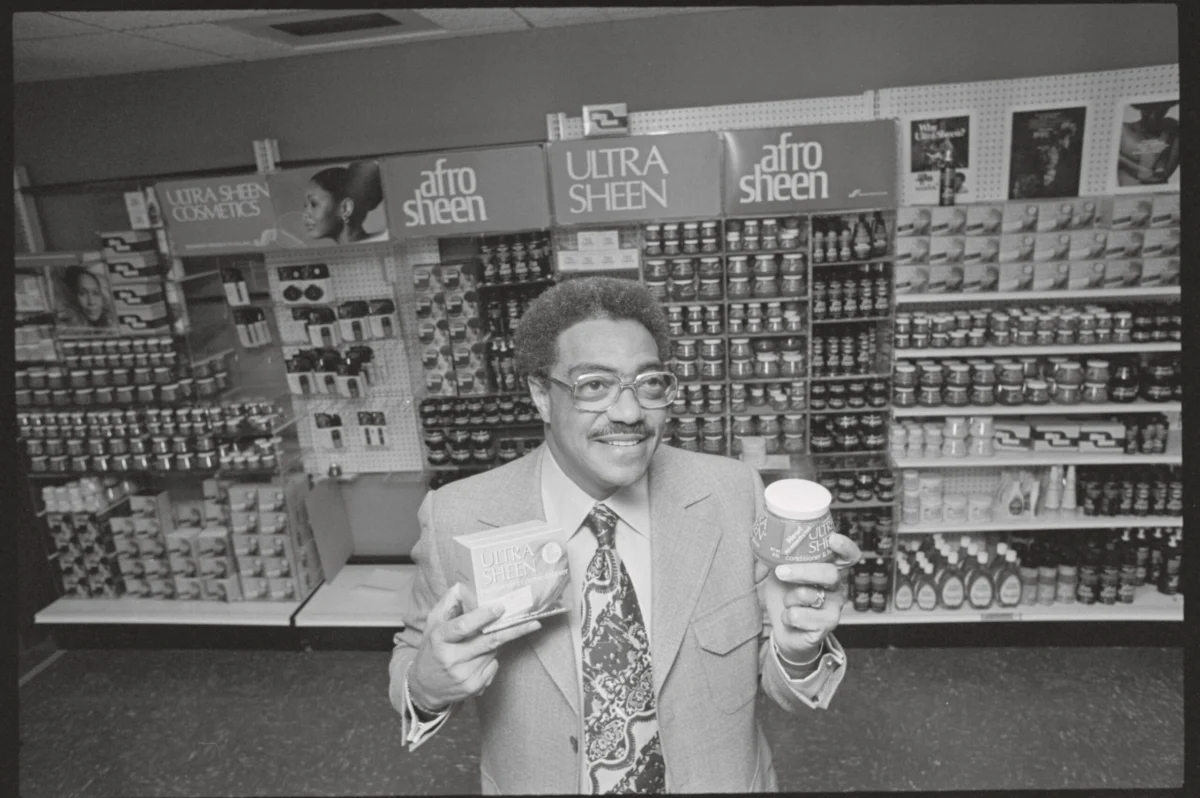
George E. Johnson, a towering figure in the American beauty industry and a pioneer who fundamentally reshaped the market for textured hair care, has passed away at the age of 99. His death, confirmed to The New York Times by his second wife, Madeline Murphy Rabb, was attributed to complications from a respiratory illness.
Johnson’s legacy is defined not merely by his entrepreneurial success, but by his role as a cultural architect. By founding Johnson Products Company in 1954, he created a bridge between corporate America and Black consumers, legitimizing a market that had been long ignored by mainstream beauty retailers. From the humble origins of a Mississippi sharecropper’s shack to the boardrooms of the American Stock Exchange, Johnson’s life story serves as a quintessential study in vision, accessibility, and economic empowerment.
The Origins: From Mississippi to the Chicago Beauty Scene
Born into the difficult realities of the Jim Crow-era South, George Johnson’s journey began in a sharecropper’s shack in Mississippi. His early life was marked by the systemic challenges facing Black Americans in the early 20th century, yet he possessed an unrelenting drive to improve his station. After relocating to Chicago, Johnson began to understand the nuances of the local economy and the specific, unmet needs of his community.
In 1954, alongside his first wife, Joan, Johnson launched the Johnson Products Company. At the time, the beauty industry was starkly segregated, with few products designed specifically for the care and styling of Black hair. Johnson recognized that professional-grade care shouldn’t be confined to exclusive, high-end salons. He began his venture by trial-testing products with local barbers, gaining invaluable insight into what the customer truly required. This grassroots approach allowed him to refine his formulations before scaling, setting the stage for what would become an empire.
Strategic Brilliance: The Power of Mass Market Retail
Johnson’s genius was not just in his chemistry, but in his distribution strategy. While many of his contemporaries in the Black cosmetics space pursued the department store franchise model—a path that often led to limited visibility and stunted growth—Johnson took a different approach. He was adamant about "putting products where the people are."
In a 1973 interview with WWD, Johnson articulated his philosophy clearly: "We don’t limit the availability of our products. We put them where the people are. Most Black people in the inner city shop in variety, drug and discount stores. Food chains are just now waking up to cosmetics."
By securing shelf space in mainstream drug and discount outlets, Johnson Products Company bypassed the traditional barriers to entry that kept Black brands on the periphery. This strategy turned Ultra Sheen and Afro Sheen into household names, becoming essential components of the daily beauty rituals for millions of Americans.
Chronology: Milestones of an Empire
The trajectory of Johnson Products Company is a historical roadmap of Black economic advancement in the United States.
- 1954: George and Joan Johnson establish Johnson Products Company in Chicago.
- 1970: The company diversifies into cosmetics, launching the "Ultra Sheen Facial Fashions" line.
- 1971: Johnson Products Company makes history by becoming the first Black-owned company to be listed on the American Stock Exchange.
- 1973: The company reaches a peak of fiscal dominance, with sales exceeding $24.2 million, largely driven by its hair care staples and aggressive advertising.
- 1993: The company is acquired by Ivax Corp.
- 2009: Procter & Gamble, which had acquired the brand through subsequent corporate shifts, sells the Johnson Products Co. unit to RCJP Acquisition Inc.
- 2020: The brand experiences a modern renaissance under the stewardship of Godrej Consumer Products, returning to major retail shelves including Walmart, Walgreens, and Amazon.
Cultural Impact: Advertising and "Soul Train"
Johnson was among the first entrepreneurs to grasp the power of television as an advertising medium for Black audiences. Recognizing that his consumer base was underserved by traditional network media, he strategically aligned his brand with the cultural phenomenon that was Soul Train.
Sponsoring the show was not just a marketing decision; it was a cultural endorsement. By placing Ultra Sheen and Afro Sheen at the center of the music, fashion, and dance movement that Soul Train represented, Johnson ensured his brand was synonymous with Black pride and aspirational style. In 1973, he noted that the $1.6 million investment in Soul Train advertising was the company’s most effective tool for brand recognition. It was a masterclass in demographic-specific marketing that influenced decades of subsequent corporate branding strategies.
Beyond the Boardroom: Economic Leadership and Philanthropy
Johnson’s influence extended far beyond hair care. He was a pillar of the Chicago business community, serving as the chairman of the Independence Bank of Chicago. As one of the nation’s first Black-owned banks, the institution played a critical role in providing capital to minority entrepreneurs who were systematically denied loans by larger, white-owned institutions. Johnson held a 26 percent stake in the bank and served as its chairman until its sale in 1995.
His commitment to social mobility was further demonstrated through the George E. Johnson Foundation and Educational Fund. Dedicated to providing financial support to minority students in inner-city communities, the fund sought to dismantle the educational barriers that Johnson himself had faced in his youth. His life was a reflection of the belief that personal success is hollow if it does not contribute to the advancement of the community from which it emerged.
Official Responses and Industry Legacy
The news of Johnson’s passing has elicited tributes from across the beauty and business sectors. His second wife, Madeline Murphy Rabb, has highlighted the strength and tenacity that defined his 99 years.
Industry analysts reflect on his career as the blueprint for the modern "inclusive beauty" movement. Before the current industry shift toward diverse product ranges, George E. Johnson was already proving that there was massive, untapped demand for specialized hair care. His success forced the hand of major retailers and competitors, eventually paving the way for the robust, multi-billion-dollar Black beauty market that exists today.
Implications: The Enduring Value of an Icon
The story of George E. Johnson is a testament to the idea that true innovation occurs at the intersection of cultural insight and operational excellence. By refusing to accept the "department store" ceiling, he built a company that was financially resilient and culturally relevant.
Even today, as Johnson Products Co. continues to operate under the ownership of Godrej Consumer Products, the brand’s identity remains rooted in the standards set by Johnson in the 1950s. The fact that the products remain available at major retailers like Walmart and Amazon confirms the long-term validity of his original retail strategy.
As we reflect on his life, it is clear that George E. Johnson was more than a businessman. He was a pioneer who used his platform to demonstrate that Black consumers were not a "niche" market, but a foundational pillar of the American economy. His legacy is one of persistence, economic justice, and an unwavering commitment to the dignity of the consumer. He leaves behind a transformed industry, a blueprint for future entrepreneurs, and a lasting reminder that in business, as in life, the best path forward is to "go where the people are."
 Neng Nana
  Ali Ikhwan
  Lina Hope