
 By Iffa Jayyana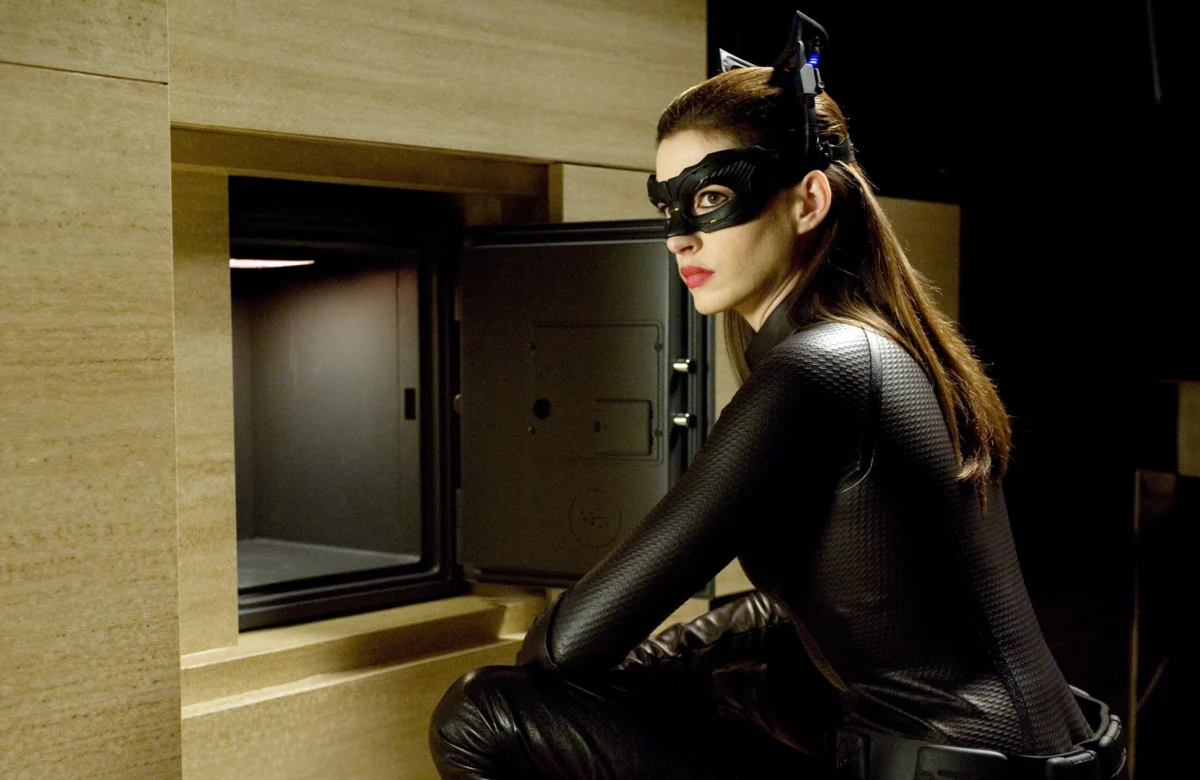
In the high-stakes world of Hollywood casting, preparation is often the difference between a career-defining role and a missed opportunity. Yet, for Anne Hathaway, the process of landing her iconic role as Selina Kyle in Christopher Nolan’s The Dark Knight Rises was defined by a bizarre, high-energy case of mistaken identity.
In a recent appearance on the Happy Sad Confused podcast, the Academy Award-winning actress revealed that for an entire week leading up to her high-pressure meeting with director Christopher Nolan, she had been meticulously channeling the manic, chaotic energy of DC Comics’ Harley Quinn. Convinced that Nolan was casting for the Joker’s partner-in-crime rather than Gotham’s most infamous cat burglar, Hathaway committed to a performance that she had to abandon—and transform—in the middle of their professional encounter.
The Misguided Audition: A Week of ‘Demonic’ Preparation
Hathaway’s creative process for the meeting was both rigorous and entirely off-base. She arrived at the studio operating under the assumption that the "female role" in the final chapter of Nolan’s Dark Knight trilogy would be a villainous counterpart to Batman.
"I knew I was meeting with Chris for the female role in the Batman trilogy, the next installment," Hathaway told host Josh Horowitz. "I thought that I’d gamed it out. I was just like, ‘It can’t be Catwoman because Michelle Pfeiffer was so iconic.’ So, I thought, ‘It’s going to be Harley Quinn!’"
For seven days, Hathaway lived and breathed the persona of a psychopath. She curated her wardrobe to reflect the jester-inspired aesthetic of the character, sporting striped tops and eccentric flats, and she adopted a manic, unpredictable demeanor.
"I spent a week developing demonic Harley Quinn energy," she confessed. "I was wearing weird jester flats and a striped top. I was just, in my mind, vibrating with this energy."
The true test arrived two hours into the meeting. As the conversation unfolded, Nolan casually mentioned the character’s name, shattering Hathaway’s week-long preparation in an instant. "Chris is like, ‘So, the part’s Catwoman,’ and I was like, ‘Transform!’"
Hathaway’s ability to pivot—what she described as changing personalities "like a psychopath"—allowed her to maintain her composure. She immediately discarded the jester-like energy, reframing her outfit and attitude to fit the slinkier, more calculated allure of Selina Kyle. "I just then decided, ‘Well, this top is very sensual,’" she joked.
Chronology of a Collaboration: From Gotham to the Stars
The serendipitous meeting in 2011 marked the beginning of a transformative professional relationship between Hathaway and Nolan. Despite the initial confusion regarding the character, Nolan saw the range he required for the complex, morally ambiguous Selina Kyle.
Hathaway’s performance in The Dark Knight Rises (2012) was met with critical acclaim, silencing doubters who had questioned her ability to follow in the footsteps of previous portrayals of the character. This success served as a cornerstone for the pair’s future collaborations.
Two years after the conclusion of the Dark Knight trilogy, Nolan cast Hathaway as Dr. Amelia Brand in his ambitious space epic, Interstellar (2014). The film solidified their creative synergy, with Nolan tapping into Hathaway’s capacity for emotional depth and intellectual gravitas. Now, more than a decade after their first collaboration, the duo is reuniting for the highly anticipated project The Odyssey, scheduled for a July 17 release from Universal Pictures.
Supporting Data: The ‘Toxic’ Backdrop of the 2010s
The importance of the Catwoman role for Hathaway cannot be overstated, particularly when viewed through the lens of her public image at the time. Following her 2013 Academy Award win for Les Misérables, Hathaway became the target of a pervasive and largely unexplained internet backlash. The phenomenon, often dubbed "Hathahate," saw public opinion sour rapidly, with the actress becoming a frequent subject of ridicule.
In a 2024 interview with Vanity Fair, Hathaway reflected on how this period of "toxic identity" hindered her professional prospects. She recounted searching for her own name online, only to find the most popular search query was: "Why does everyone hate Anne Hathaway?"
"A lot of people wouldn’t give me roles because they were so concerned about how toxic my identity had become online," Hathaway admitted. "I had an angel in Christopher Nolan, who did not care about that and gave me one of the most beautiful roles I’ve had in one of the best films that I’ve been a part of."
This narrative underscores the "lifeline" role that Nolan played in Hathaway’s career. While other directors were wary of the perceived PR liability, Nolan’s commitment to his casting choices—rooted in performance quality rather than social media optics—provided Hathaway the platform to pivot from the backlash and re-establish her standing as one of the most versatile actors of her generation.
Official Responses and Industry Implications
While Nolan has famously remained private regarding his casting process, industry analysts note that his preference for working with "repeat collaborators" like Hathaway, Cillian Murphy, and Michael Caine serves as a stabilizing force in his productions. By fostering an environment of trust, Nolan allows actors to take risks—even those that begin with a total misunderstanding of the character.
The anecdote about the "Harley Quinn mix-up" highlights the high-pressure environment of A-list auditions. For many actors, the "game" of predicting a director’s vision is a standard part of the process, yet rarely does it lead to such a dramatic, on-the-spot reversal.
From an industry perspective, Hathaway’s story serves as a case study in adaptability. Casting directors and directors look for the "chameleon" quality she described. Her ability to shift gears from the frantic energy of a villainous jester to the cool, feline composure of a thief in the span of a single afternoon conversation likely confirmed to Nolan that he had found the right person to inhabit the dual nature of Selina Kyle.
The Legacy of the ‘Dark Knight’ Casting
Looking back, the fact that Hathaway prepared for a different character entirely adds a layer of depth to her portrayal of Catwoman. It highlights the inherent similarities between the two DC villains: both are outsiders who operate on the fringes of society, both possess a degree of psychological complexity, and both require an actress capable of conveying instability.
As the industry looks toward the release of The Odyssey, the partnership between Hathaway and Nolan remains one of the most consistent and fruitful in modern cinema. It is a relationship built not just on talent, but on the mutual understanding that at the heart of the most demanding roles is an actor’s willingness to "transform."
Whether she is playing a NASA scientist navigating a wormhole or a cat burglar navigating the streets of Gotham, Hathaway’s career trajectory proves that in the vacuum of public opinion, a strong artistic ally is the most valuable asset an actor can possess. Her journey from the "toxic" years of the mid-2010s to her continued success under Nolan’s direction serves as a reminder that the perception of a star is often secondary to the craft they bring to the screen.
As fans prepare for The Odyssey this summer, they can appreciate that Hathaway’s path to the screen was paved with unexpected, high-stakes improvisations—and a testament to the resilience of a performer who refused to be defined by a single, manufactured narrative.
 Siti Muinah
  Ammar Sabilarrohman
  Layla Zulfa