
 By Nana Muazin
In the rapidly evolving digital economy of 2025, the mechanism by which a business collects revenue is as critical as the product or service itself. For the modern entrepreneur, a payment system is not merely a utility; it is a fundamental pillar of customer experience, security, and operational efficiency. Choosing the wrong provider can lead to inflated transaction fees, technical bottlenecks, and, most damagingly, cart abandonment.
As we move further into 2025, the market is saturated with options. While this abundance of choice is theoretically beneficial, it often leads to "analysis paralysis" for small business owners who are already stretched thin. This comprehensive guide evaluates the top payment systems, the metrics that matter, and the strategic implications of your selection.
What Defines a Modern Payment System?
To select the right tool, one must first understand the architecture of the industry. A payment system is a sophisticated bridge—a platform or network that facilitates the secure transfer of funds from a buyer’s account to a merchant’s account.
These systems are not just simple credit card readers. They encompass a complex ecosystem including:
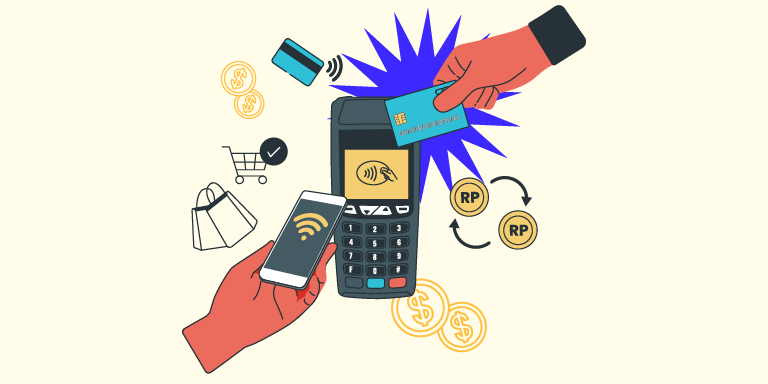
- Payment Gateways: The front-end technology that captures and encrypts customer data at the point of sale.
- Merchant Accounts: Specialized bank accounts that allow businesses to accept credit and debit card payments.
- Mobile Wallets: Digital interfaces like Apple Pay or Google Pay that store payment credentials securely.
It is vital to distinguish these from Point-of-Sale (POS) software (which manages inventory and sales reporting) and Accounting software (like Xero or QuickBooks). While many providers now bundle these functions, they are distinct entities in the payment lifecycle.
The Strategic Framework: How to Evaluate Your Options
When selecting a payment provider, the decision-making process should be grounded in five core pillars. These metrics formed the basis of our 2025 analysis:
1. Payout Velocity
Cash flow is the lifeblood of any small business. While traditional banking systems may take days to settle funds, modern fintech solutions often offer "next-day" or even "instant" payouts. For founders operating with tight margins, the latency between a customer’s transaction and the availability of funds in the business account is a critical competitive differentiator.
2. Conversion Optimization (Ease of Payment)
The "checkout friction" phenomenon is the primary cause of shopping cart abandonment. If a payment system requires too many clicks, redirects to a third-party site, or fails to support modern autofill features, customers will leave. The ideal system integrates seamlessly into your existing UI, allowing for a frictionless transition from "add to cart" to "purchase complete."

3. Geographical Accessibility
A business that aspires to scale globally must prioritize a system that supports multi-currency settlement and local payment methods (such as SEPA in Europe or Alipay in Asia). Restricting your business to a local-only processor can inadvertently cap your market growth.
4. Transparent Price Structures
The industry is notorious for "hidden" fees, including interchange-plus pricing, monthly service fees, chargeback penalties, and international processing surcharges. A transparent provider offers a clear, predictable fee structure that allows for accurate revenue forecasting.
5. Security and Compliance
In an era of rising cybercrime, trust is a currency. Any system you choose must be PCI-DSS (Payment Card Industry Data Security Standard) compliant. This ensures that you are protected against data breaches and that your customers’ sensitive financial information is handled with institutional-grade security.
Top 6 Payment Systems for 2025
1. Stripe: The Developer’s Choice
Stripe has cemented its position as the gold standard for digital-first businesses. Its API-first approach allows for near-infinite customization, making it the preferred choice for SaaS platforms and modern e-commerce sites.
- Pros: Seamless in-site checkout, robust developer tools, and an expansive ecosystem of integrations.
- Drawback: It can be overly technical for non-developers; advanced setups often require a dedicated engineer.
- Pricing: Generally follows a transparent flat-rate structure (e.g., 2.9% + 30¢ per transaction).
2. PayPal: The Trusted Standard
PayPal remains the most recognized name in digital payments. Its primary advantage is consumer trust; users are significantly more likely to complete a purchase if they see a "Pay with PayPal" button.
- Pros: High consumer trust, global reach, and simple "Express Checkout" features.
- Drawback: Often redirects users away from your site, which can disrupt the branding experience.
- Pricing: Tends to be higher for international transactions and currency conversions.
3. Authorize.net: The Versatile Veteran
For businesses that require a more traditional merchant account setup with high-end fraud protection, Authorize.net is a powerhouse. It is highly compatible with a vast array of existing banking infrastructures.
- Pros: Advanced fraud detection suite, excellent for high-volume merchants, and highly stable.
- Drawback: The interface feels dated compared to newer fintech players.
- Pricing: Often involves a monthly gateway fee in addition to per-transaction costs.
4. Amazon Pay: Leveraging the Giant
Amazon Pay allows your customers to use the payment information already stored in their Amazon accounts. It is a massive conversion driver for mobile users who don’t want to re-enter credit card details.
- Pros: Immediate consumer familiarity, high trust, and seamless integration with existing e-commerce platforms like Shopify or BigCommerce.
- Drawback: You are essentially tethering your checkout process to a competitor’s ecosystem.
- Pricing: Competitive, but often includes additional processing fees.
5. Square: The King of In-Person Payments
If your business operates a brick-and-mortar storefront or a pop-up market, Square is unmatched. Its hardware is intuitive, and its software ecosystem handles inventory and employee management alongside payments.
- Pros: Best-in-class POS hardware, excellent virtual terminal for remote payments, and easy-to-use reporting tools.
- Drawback: Can be more expensive for high-volume online-only businesses compared to Stripe.
- Pricing: Flat-rate fees with no monthly subscriptions for basic hardware users.
6. SecurePay: The Emerging Alternative
SecurePay offers a robust, all-in-one approach that is particularly useful for startups that need to handle diverse payment types immediately upon launch.
- Pros: Extensive feature set and API capabilities that rival larger providers.
- Drawback: Lower brand recognition among consumers, which can occasionally lead to hesitation at the checkout stage.
- Pricing: Highly competitive, with frequent trial opportunities for new businesses.
Implications for Small Business Strategy
The choice of a payment system is not a static decision. As your business scales, your requirements will change. A startup might prioritize the low-barrier entry of a service like Stripe, while a mature enterprise might negotiate lower transaction rates with a processor like Authorize.net to improve net margins.
The Human Factor: Trust and Conversion
It is worth noting that the "best" system is often the one that your customers recognize. If your target demographic is older, the familiarity of PayPal may result in higher conversion rates than a more modern, anonymous gateway. Conversely, if you are targeting tech-savvy Gen Z consumers, a frictionless "one-click" experience integrated into your site is mandatory.
The Regulatory Landscape
As of 2025, regulatory bodies are increasing scrutiny on data privacy and payment processing fees. Businesses should ensure that their chosen provider is not only compliant today but is actively investing in updates to meet future regulations like the evolving PSD3 framework in Europe or updated FTC guidelines in the United States.
Frequently Asked Questions (FAQ)
Q: Should I use multiple payment gateways?
A: In some cases, yes. Larger businesses often implement "payment orchestration," using multiple gateways to provide backup options if one fails or to offer customers more regional payment choices. However, for small businesses, this adds unnecessary complexity.
Q: Are there monthly fees?
A: It depends. Many modern "Payment Service Providers" (PSPs) like Stripe and Square charge only per-transaction fees. Older "Merchant Account" providers often charge monthly maintenance fees, PCI compliance fees, and gateway fees. Always read the fine print.
Q: What is the biggest mistake businesses make when choosing a provider?
A: Ignoring the "hidden" costs of chargebacks and international fees. A processor might look cheap on the surface, but if they hit you with heavy fees every time a customer disputes a charge, your effective rate could be much higher than a "more expensive" competitor.
Final Thoughts: Growth Beyond Payments
Mastering your payment infrastructure is a foundational step, but it is only the beginning of your growth journey. In 2025, sustainable scaling requires a mastery of marketing, customer retention, and digital strategy.
For those looking to deepen their expertise, consider accessing structured educational resources. Platforms like Foundr+ provide comprehensive courses on these exact topics, offering over 1,000 lessons on building, scaling, and streamlining your business. By combining the right technical tools with expert knowledge, you set your business on a trajectory of growth that is both efficient and resilient.
Disclaimer: Pricing and feature sets for payment providers are subject to change. Always consult the official documentation of the provider and evaluate your specific business volume before finalizing your contract.
 Suro Senen
  Evan Lee Salim
  Ammar Sabilarrohman