
 By Sagoh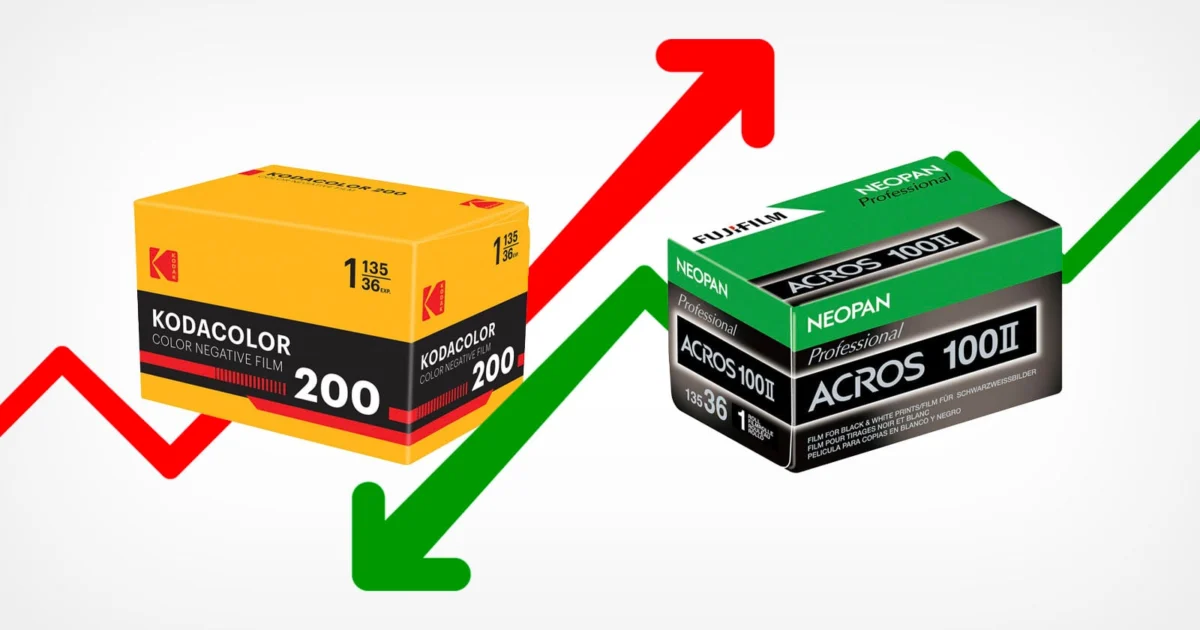
For years, the narrative surrounding analog photography has been dominated by a singular, anxiety-inducing theme: the "price hike." As supply chains fluctuated, raw material costs rose, and the industry faced the existential pressures of a post-digital world, many enthusiasts feared that film photography would eventually be priced into oblivion. However, a groundbreaking new report from Analog Cafe suggests that the reality is far more nuanced—and surprisingly stable—than the prevailing "skyrocketing cost" rhetoric might suggest.
By tracking 37 distinct film stocks across 13 major international retailers, the latest Film Price Watch report provides a data-driven look at the current state of the analog market. The findings challenge the common perception that film is becoming an inaccessible luxury, revealing instead a market that is largely tracking with—or even underperforming—standard global inflation rates.
Main Facts: The Market Stabilizes
The core takeaway from the Analog Cafe report is that the era of aggressive, unchecked film price increases may be decelerating. According to the study, the average cost of film increased by just 2.5% over the first half of 2026.
When placed in the context of global economic health, this figure is particularly illuminating. Economists generally view a 3% annual inflation rate as a hallmark of a healthy economy. Rates significantly higher than this indicate a loss of purchasing power, while stagnant or negative inflation can lead to wage decline. By clocking in at 2.5% for the six-month period, film pricing is performing in line with, or even slightly better than, the broader inflationary pressures seen in other consumer goods sectors.
Furthermore, this 2.5% rise was not a steady climb; rather, it represents a composite of shifts occurring after a period of total price stability in the preceding six months. When viewed as a year-long trajectory, the stability of film prices in 2026 stands in stark contrast to the volatile jumps seen in previous years, suggesting that the industry may have reached a new, sustainable price plateau.
Chronology: The Evolution of Film Costs
To understand where we are, we must look at where we have been. The report provides a historical lens by comparing current prices to the 1990s—a period often romanticized by film enthusiasts as the "golden age" of affordability.
The 1990s vs. Today: An Inflation-Adjusted Reality
It is common for photographers to recall purchasing a roll of Kodak Gold 100 for roughly $4.60 in the 1990s. When adjusted for modern inflation, that $4.60 would equate to approximately $11.40 today.
Crucially, the report notes that the modern equivalent—Kodak Gold 200 (36 exposures)—currently averages $10.34. Not only are photographers getting 12 additional frames compared to the standard 24-exposure rolls of the past, but the inflation-adjusted cost is actually lower than it was three decades ago. This data point serves as a vital correction to the "good old days" narrative. While the sticker price has undoubtedly risen, the real value of the product—taking into account both frame count and the declining purchasing power of the dollar—has remained competitive.
The 2025–2026 Pivot
The report highlights that in the United States, inflation hit 4% in 2025. In this environment, the fact that film price increases have stayed below that threshold marks a significant victory for the analog community. By maintaining a lower-than-average price hike, film has transitioned from being an outlier in terms of rising costs to becoming one of the most stable consumer goods on the market.
Supporting Data: Winners and Losers
While the market average suggests stability, the report is quick to point out that the experience of the individual consumer varies wildly depending on their film stock of choice. The market is currently experiencing a divergence, with certain products seeing price corrections while others continue to climb.
The Price Risers
Some films have seen notable increases, likely driven by specific supply chain bottlenecks or shifts in manufacturing costs. The most significant movers include:
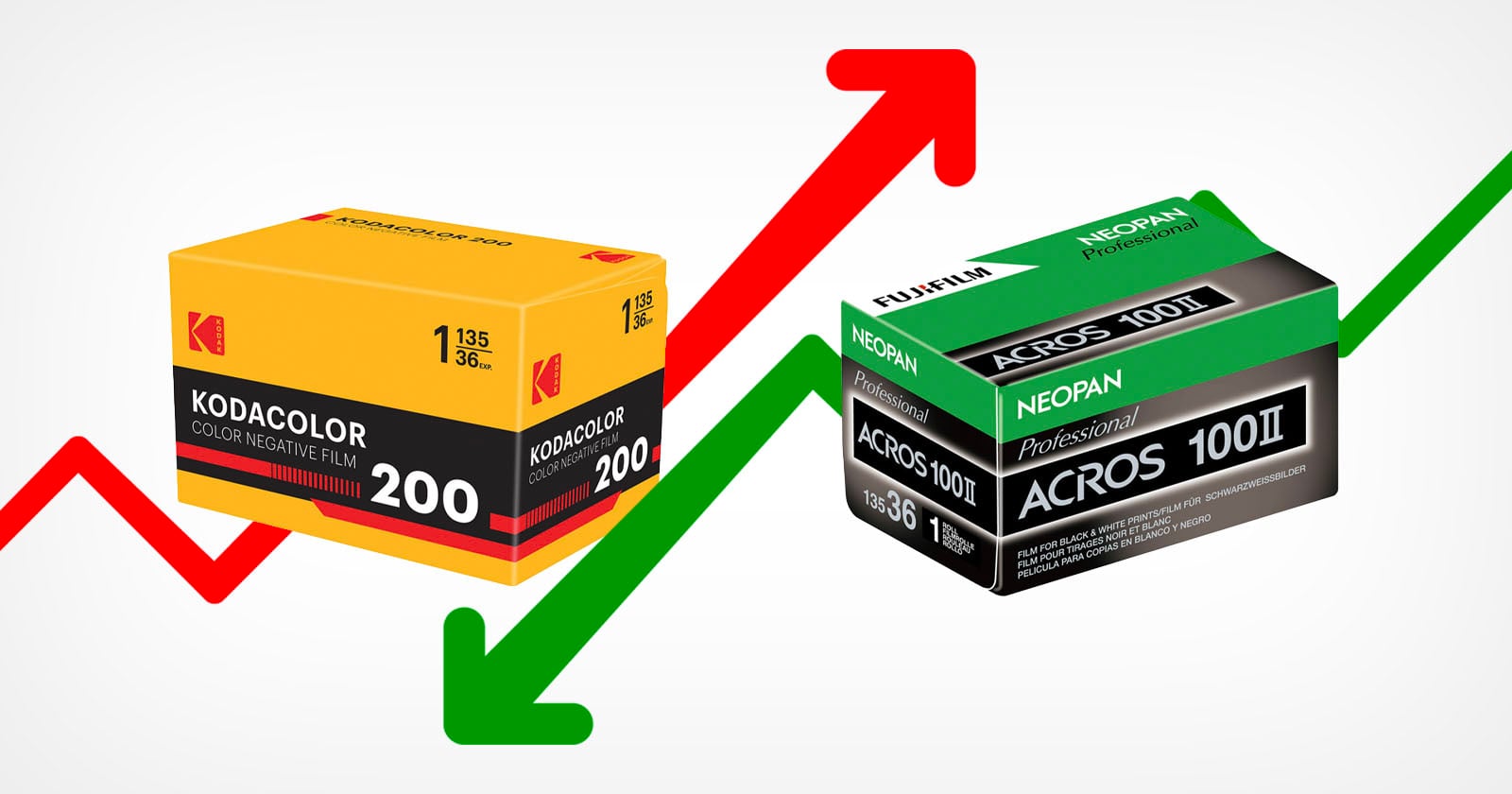
- Kodak Kodacolor 200: +10.5%
- Ilford XP2 Super 400: +10.4%
- Ilford FP4 Plus 125: +9.2%
Other notable films seeing upward price adjustments include Kentmere Pan 200, Lomography Lomochrome Metropolis, and Ilford HP5 Plus 400. These increases suggest that popular black-and-white stocks and specific color-negative emulsions are currently subject to higher demand-to-supply pressure.
The Price Fallers
Conversely, several stocks have seen a decrease in price, offering relief to photographers who were previously priced out. These include:
- Kodak Ektapan (T-Max) 400: -4.9%
- Ilford Delta Professional 3200: -3.5%
- Kodak UltraMax 400: -2.6%
Other films, such as Fujifilm Neopan Acros 100, Lomography Lomochrome Purple, and the recently introduced Harman Phoenix 200, have also seen price reductions. This decline suggests that retailers may be adjusting their pricing strategies to clear inventory or to align with more competitive wholesale rates, further contributing to the overall market equilibrium.
Official Perspectives and Industry Implications
The Analog Cafe report does not just present numbers; it offers a philosophical shift in how we perceive the analog hobby. The researchers argue that the "film is dying" or "film is becoming too expensive" narrative is largely driven by sticker shock rather than economic reality.
The Psychology of Pricing
A primary reason for the persistent belief that film is "getting more expensive" is the psychological hurdle of comparing 2026 prices to prices from five or ten years ago without accounting for the global economic shift. Because the cost of living, housing, and food has spiked globally, consumers are more sensitive to price increases in hobbyist sectors. However, the report indicates that film has managed to avoid the worst of these spikes compared to other non-essential goods.
The Sustainability of the Hobby
The report concludes that the analog ecosystem is, for the time being, robust. By staying within a healthy inflation corridor, film manufacturers and distributors are maintaining a delicate balance: high enough to cover the complex, capital-intensive manufacturing processes required for film, but low enough to ensure the continued growth of the user base.
The implications for the industry are profound. If film pricing remains stable, it provides a degree of predictability that allows photographers to plan their creative work without fear of sudden, prohibitive cost increases. It also encourages newcomers to enter the space, as the barrier to entry—while higher than in the digital-dominant era—is no longer a moving target.

Conclusion: A New Baseline for Analog
The Analog Cafe study serves as a necessary reality check for the photography community. While the costs of our favorite rolls have indeed risen from the sub-$5 prices of yesteryear, they are not behaving in a vacuum. When compared to the broader economic landscape, the 2.5% increase is a sign of a maturing, stabilizing market.
For the photographer in the field, this news provides a sense of cautious optimism. The analog revival is no longer just a trend; it has become an established market sector that is successfully weathering global economic storms. As we move through the remainder of 2026 and into 2027, the focus will likely shift from the cost of film to the sustainability of supply. If manufacturers can continue to keep prices in line with global inflation, the analog community can look forward to a future where their craft is not only preserved but remains a viable, accessible form of artistic expression.
Ultimately, the data shows that film photography is not becoming a "rich person’s hobby." It is simply adapting to the same economic realities as every other industry, and in many cases, it is doing so with a surprising degree of resilience and fairness to the consumer. For those who feared the worst, the latest price watch is a welcome testament to the enduring, and increasingly stable, demand for the analog medium.
 Raul Delapena Setiawan
  rifanmuazin
  Ammar Sabilarrohman