
 By Evan Lee Salim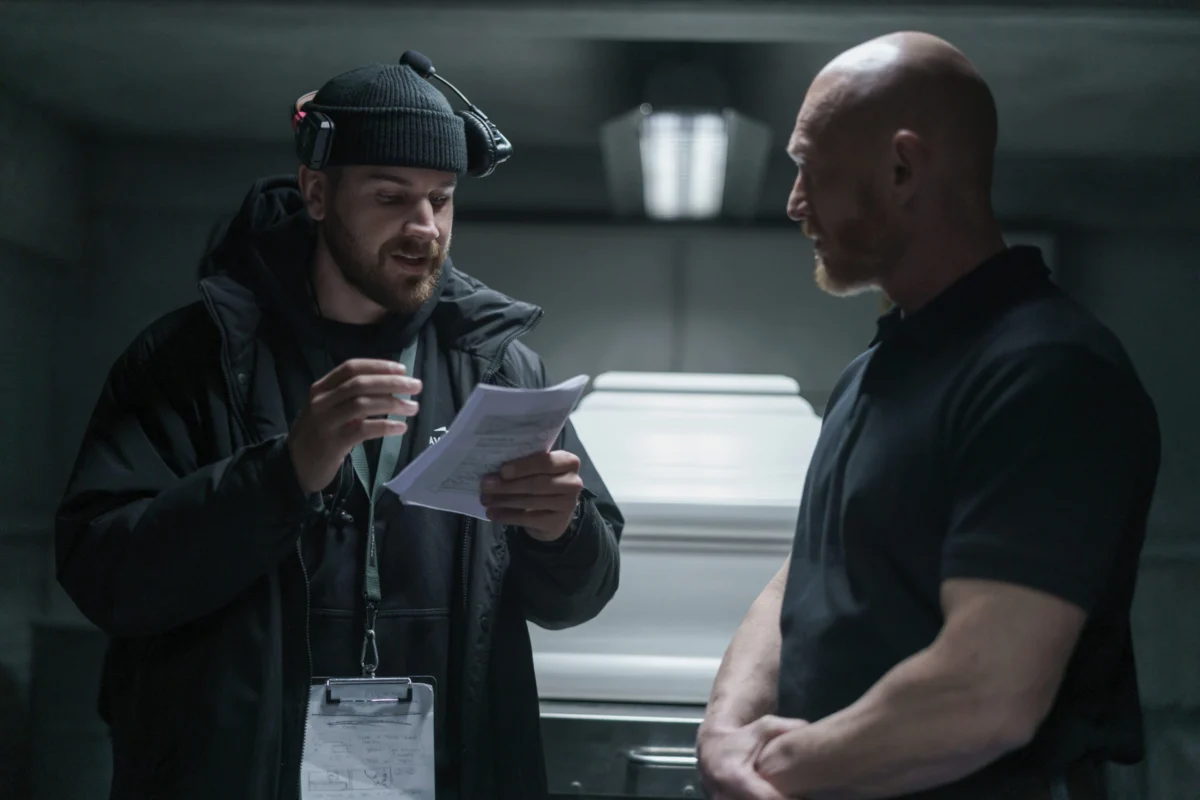
SPOILER ALERT: The following article contains significant plot revelations regarding "Evil Dead Burn," currently in theatrical release.
The Evil Dead franchise has long been cinema’s ultimate sandbox for the macabre, a blood-soaked playground where the rules of reality are routinely shredded by the Necronomicon. However, with the latest installment, Evil Dead Burn, director Sébastien Vaniéck has arguably pushed the boundaries of the series further than ever before. Known for his claustrophobic, high-tension debut Infested, Vaniéck has injected a new, visceral intensity into the long-running horror staple, delivering a film that is as emotionally harrowing as it is physically grotesque.
From the controversial opening act—which defies one of the most sacred taboos in Hollywood—to its mind-bending post-credits sequences, Evil Dead Burn is a testament to the creative freedom granted to modern horror auteurs by Ghost House Pictures and franchise creator Sam Raimi.
A Legacy of Carnage: The Origins and Narrative Arc
The Evil Dead franchise, birthed from Sam Raimi’s low-budget 1981 masterpiece, has evolved into a complex, loosely connected tapestry of trauma and demonic possession. Evil Dead Burn serves as a spiritual successor to both the 2013 Fede Álvarez-directed reboot and 2023’s Evil Dead Rise. While the narratives are not strictly linear, they exist in a shared universe where the presence of the Book of the Dead acts as a catalyst for familial disintegration.
Evil Dead Burn centers on a family grappling with the sudden, tragic death of Will (George Pullar). His widow, Alice (Souheila Yacoub), is forced to navigate not only the grief of her loss but the harrowing revelation of the domestic abuse she endured during their marriage. As the family gathers, they are thrust into a nightmare scenario as Deadites begin to possess their souls one by one. The film, shot primarily in the rugged, atmospheric landscapes of New Zealand, leans heavily into the claustrophobia of domestic trauma, using the supernatural elements to manifest the internal psychological decay of the characters.
Defying Cinema’s Golden Rule
Few cinematic transgressions are treated with as much disdain by audiences as the harming of a canine companion. Yet, early in the film, Vaniéck makes the bold decision to kill the family dog. It is a calculated move designed to signal to the audience that in Evil Dead Burn, no one—and nothing—is safe.
"If you don’t do that in Evil Dead, in which movie do you do that?" Vaniéck explains in an exclusive interview with Variety. "These are the most insane, wild, and basically evil movies. There’s no limit; I can’t have limits!"
Vaniéck acknowledges that he knew this specific beat would alienate segments of the audience, yet it was essential to establishing the stakes. The "badass" twist, however, involves the dog’s eventual return in a mutated, undead form, reinforcing the film’s central tenet: death is merely the beginning of a much more agonizing experience.
The Craft of Practical Terror
In an era dominated by digital artifice, Vaniéck insisted on a return to tactile, practical effects. For a filmmaker who admits he isn’t particularly phased by standard cinematic gore, the challenge was to create imagery that truly repulsed the viewer.
"When I see it in movies, I’m not disgusted," Vaniéck notes. "It doesn’t deter me too much because I know how much it’s fake. But when I see the teeth on the sidewalk in American History X, that’s the moment I can’t watch the screen anymore."
This philosophy informed the film’s most intense sequences, including the visceral car fight where the character Tia (Luciane Buchana) is impaled by a car seat headrest. Rather than relying on green screens, Vaniéck and his team worked with New Zealand-based crews to build the apparatus, ensuring the physical presence of the weapon was captured in-camera.
The fire sequences, which required real flames on set, were among the most challenging to execute. By lighting scenes with actual fire, Vaniéck captured a naturalistic, flickering terror that CGI often fails to replicate. Even the film’s final, monstrous entity was achieved through practical prosthetics, with only minor digital enhancements added to refine the creature’s features.
Character Dynamics: The Psychology of Horror
The film’s most chilling sequence occurs at the dinner table following Will’s funeral. Eschewing traditional action, Vaniéck relies on sound design, meticulous editing, and the raw acting ability of his cast to build an unbearable level of tension.
"We rehearsed a lot with the actors to be sure that they knew when to grab the glass, when to grab the corkscrew," Vaniéck says. "That was one of the scenes I’m most proud of—the idea of acting without lines."
The film also tackles the "unthinkable" choice central to the Evil Dead lore: would you kill a loved one to save yourself? In a scene where Joseph (Hunter Doohan) finds himself unable to strike down his possessed father, Vaniéck highlights the franchise’s core metaphor. The Deadites are not just monsters; they are the externalized manifestations of human baggage—be it grief, abuse, or lingering familial resentment.
Official Responses and Creative Freedom
Vaniéck’s partnership with Sam Raimi and producer Rob Tapert was defined by a rare degree of autonomy. While many franchise films are shackled by studio interference, Vaniéck claims he was granted carte blanche regarding the tone and the specific nature of the violence.
"Ghost House Pictures, Sam Raimi, and his team told me that the movie would be 100% my style," Vaniéck states. "As soon as I told them what I understood about Evil Dead, and that we were on the same page, they just let me do the movie I had in mind."
This creative trust was vital. Vaniéck admits that without the assurance of total artistic control, he likely would have remained in France to produce a smaller, independent project. Instead, the collaboration resulted in a film that honors the legacy of the franchise while pushing into new, darker territory.
Implications for the Future of the Franchise
The post-credits sequences of Evil Dead Burn have sent shockwaves through the horror community. Specifically, the surprise return of Ellie (Alyssa Sutherland), the antagonist from Evil Dead Rise, suggests that the franchise is moving toward a more interconnected, perhaps even multiverse-adjacent, narrative structure.
Vaniéck remains tight-lipped about the implications of this cameo, noting that the inclusion was a studio request that he was happy to accommodate. "I don’t know what they will do in the future, I don’t know what’s in the other movie and if she’ll be here or not," he admits.
However, the director is clear about his own future with the series. While he appreciates the "amazing playground" that Evil Dead provides, he believes the franchise requires constant reinvention. "The only one who can do two Evil Dead movies is Sam Raimi," he says. "It’s a franchise that needs a fresh vision and fresh directors all the time. Fans want to be surprised."
Conclusion: A New Standard for Horror
Evil Dead Burn is not merely another chapter in a long-running saga; it is a masterclass in modern horror filmmaking. By prioritizing practical effects, grounded character work, and a relentless, "no-limits" approach to narrative stakes, Sébastien Vaniéck has successfully carved his own legacy into the Evil Dead mythos.
The film serves as a reminder that when given the right tools and the trust to experiment, directors can turn even the most established franchises into something raw, terrifying, and profoundly human. As audiences leave the theater, the question remains: if a grandmother can be a weapon, and a dead spouse can return from the grave, who—or what—is actually safe? The answer, as Vaniéck has clearly demonstrated, is absolutely no one.
 Nila Kartika Wati
  Siti Muinah
  Ammar Sabilarrohman