
 By Muslim
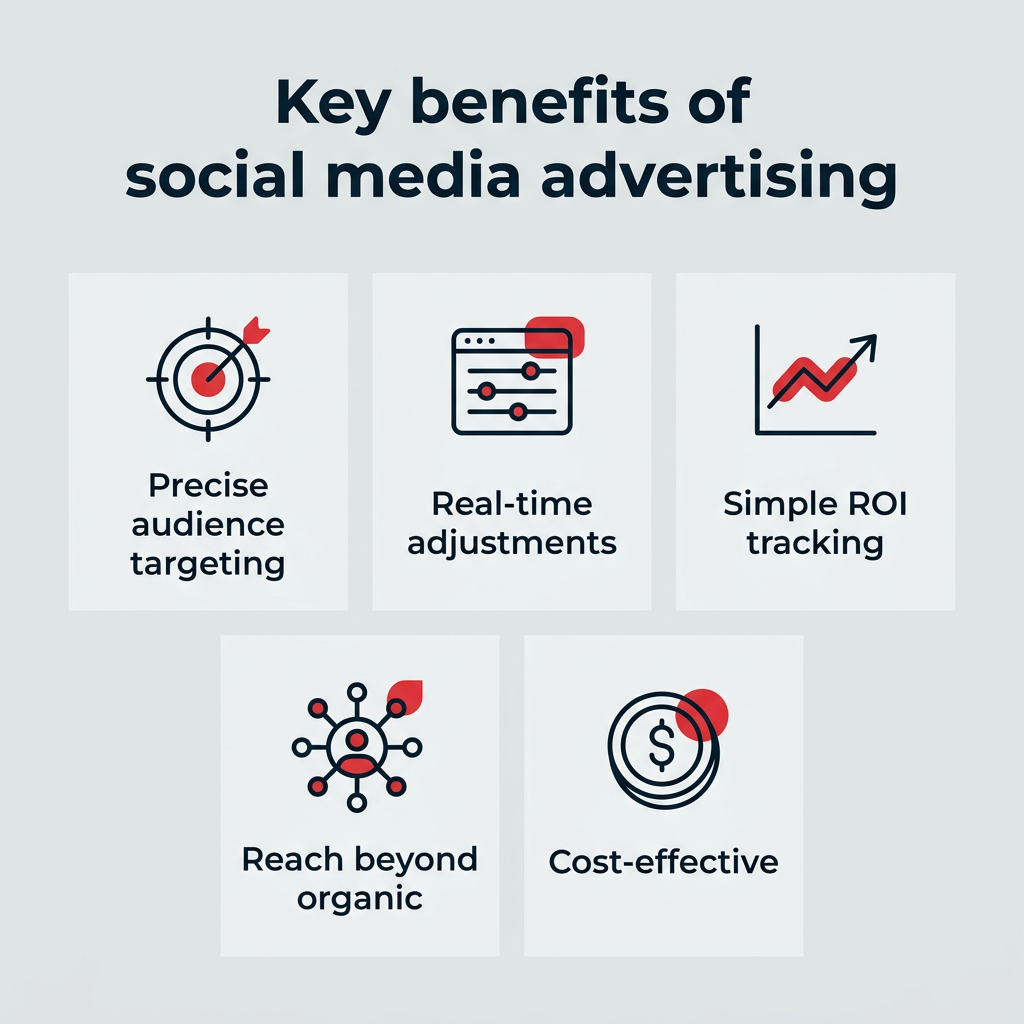
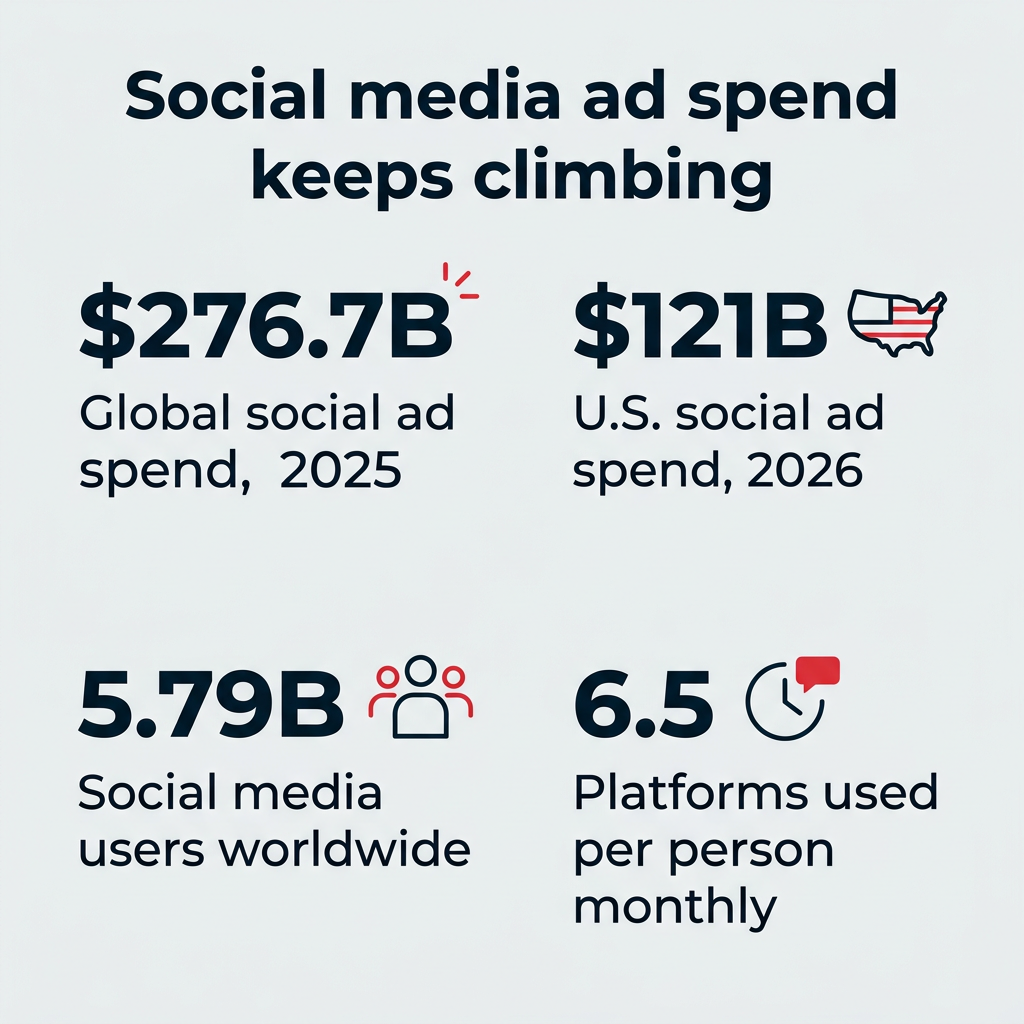
NEW YORK — The global advertising landscape is undergoing a seismic transformation as social media platforms transition from community-building tools into the world’s most sophisticated paid-reach engines. According to the latest industry projections, global social media ad spend is expected to reach a staggering $338.75 billion by 2026. This surge represents more than just a budgetary increase; it signals a fundamental shift in how brands communicate, target, and convert the modern consumer.

As organic reach continues to decline under the weight of tightening platform algorithms, the "pay-to-play" model has become the standard for businesses ranging from Fortune 500 giants to local boutiques.
Main Facts: The Transition from Organic to Paid Dominance
Social media advertising is defined as a digital strategy where brands pay for the placement of content to reach specific target audiences on platforms like Meta (Facebook and Instagram), TikTok, LinkedIn, X (formerly Twitter), and Pinterest. Unlike "organic reach"—the number of people who see content naturally through the platform’s algorithm—"paid reach" allows for surgical precision in audience delivery.

The core of this industry’s growth lies in its ability to offer measurable Return on Ad Spend (ROAS). In the current market, social advertising is no longer a sub-department of social media marketing; it is a distinct, data-driven discipline. While social media marketing encompasses the broad practice of brand building, community management, and organic posting, social media advertising is the high-octane fuel that scales those efforts.
"When you post a Reel and reply to comments, that’s marketing," explains industry analysts. "When you pay to put that same Reel in front of 50,000 people who fit your ideal customer profile, that’s advertising." The consensus among experts is that the two must work in tandem: organic efforts identify what resonates, and paid budgets scale the winners.

Chronology: The Evolution of the Social Ad Ecosystem
The journey to a $338 billion market has been marked by several distinct eras of digital evolution:
- The Era of Experimentation (2005–2012): Early social ads were often static banners or basic "sponsored stories" on Facebook. Brands viewed these as secondary to traditional search engine marketing.
- The Pivot to Mobile and Video (2013–2019): The rise of Instagram and the acquisition of the platform by Meta shifted the focus to visual storytelling. This period saw the birth of the "Influencer" and the first sophisticated targeting tools based on user interests and behaviors.
- The Algorithmic Lockdown (2020–2023): As platforms became saturated, organic reach for brands plummeted (often falling below 2-5%). This forced a mass migration toward paid advertising to maintain visibility. Concurrently, TikTok disrupted the market with short-form video, forcing legacy platforms to innovate.
- The Era of AI and Frictionless Commerce (2024–2026): We are currently in a period defined by AI-optimized bidding and "Social Commerce," where the distance between seeing an ad and completing a purchase is reduced to a single click within the app.
Supporting Data: The Economics of Attention in 2026
To understand the scale of the industry, one must look at the granular costs of reaching consumers. As competition intensifies, the Cost Per Thousand Impressions (CPM) and Cost Per Click (CPC) have become the primary benchmarks for success.
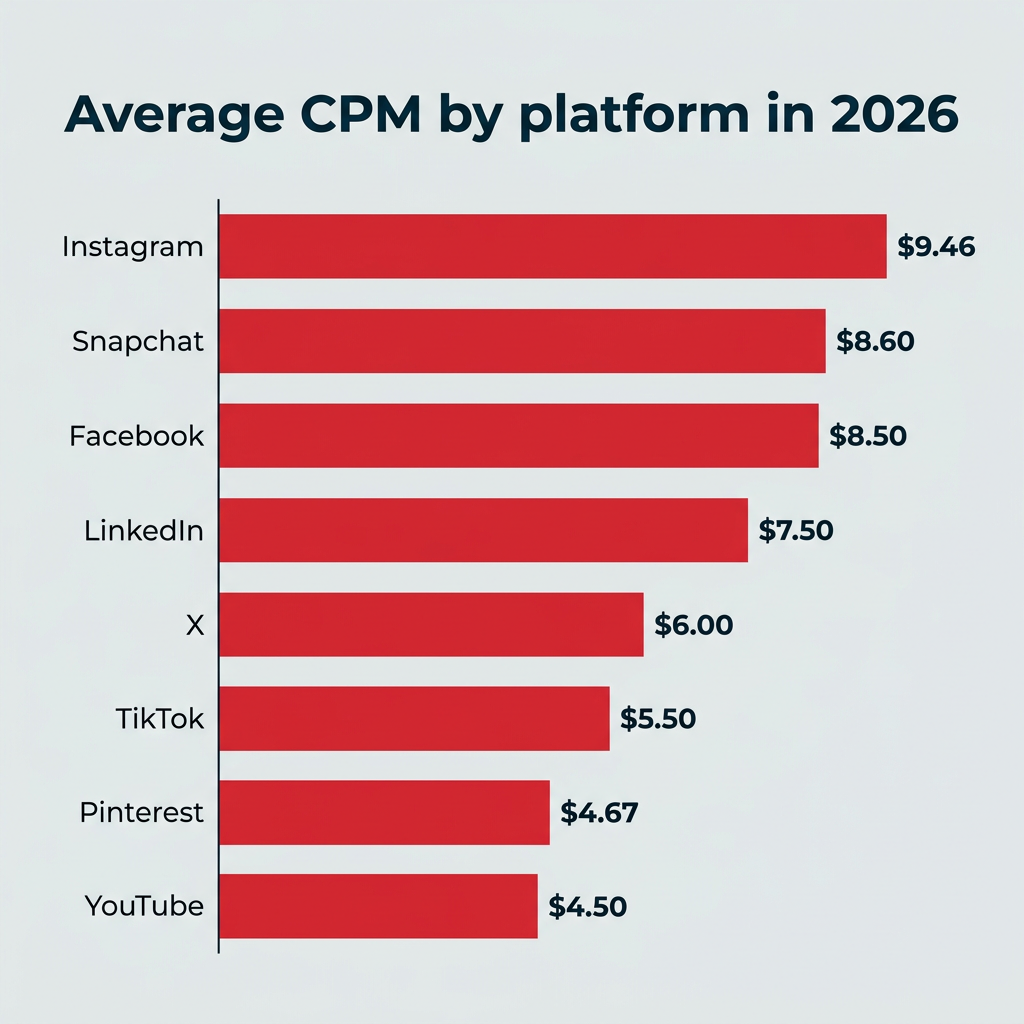
According to 2026 projections and current market data, the average CPM across major platforms hovers between $4 and $10. However, the disparity between platforms reveals the strategic intent of each network:
| Platform | Average CPM (2026 Est.) | Average CPC | Primary Strategic Value |
|---|---|---|---|
| $9.46 | $0.50 – $0.75 | High-visual engagement & Brand Affinity | |
| $8.00 – $9.00 | $0.40 – $0.70 | Broad reach & Demographic Targeting | |
| $6.00 – $9.00 | $5.00 – $12.00 | B2B Lead Generation & Professionalism | |
| TikTok | $4.00 – $7.00 | $0.50 – $1.00 | Viral potential & Gen Z/Alpha reach |
| YouTube | $4.00 – $5.00 | $0.10 – $0.30 | High-intent video consumption |
| $4.67 | $0.10 – $1.50 | Visual search & "Planning" intent | |
| Snapchat | $8.60 | $0.50 – $1.00 | Augmented Reality & Youth engagement |
| X (Twitter) | $5.00 – $7.00 | $0.25 – $0.50 | Real-time news & Public discourse |
The data indicates that while YouTube and Pinterest offer lower entry costs for clicks, LinkedIn remains the most expensive territory due to the high value of B2B decision-makers. Meanwhile, U.S. social network ad spending alone is expected to exceed $121 billion by the end of 2026, driven by a 12-15% annual growth rate in video-based placements.
Official Responses: Expert Insights on Strategy
For brands to navigate this high-cost environment, experts emphasize a shift from "spending" to "investing." Cedric Bruce-Kotey, Senior Manager of Paid Social at Hootsuite, suggests that the complexity of the current market requires a hypothesis-driven approach.
"Optimizing ads is all about testing hypotheses. That means test, test, and test some more," Bruce-Kotey states. "You need to determine which creative resonates best, explore new platforms your audience might be on, and take advantage of new features and placements that may help give you an edge."
Bruce-Kotey further emphasizes that "campaign success" is no longer a monolithic metric. "To determine success, you have to start with a clear goal or OKR (Objectives and Key Results). Understanding your ultimate goal is critical. It ensures you choose the right social network and find the right advertising solution within that platform."
This strategic framework focuses on four pillars:

- Objective Selection: Choosing between awareness, traffic, leads, or conversions to allow the platform’s AI to optimize delivery.
- Audience Granularity: Utilizing "Lookalike Audiences" and "Retargeting" to find users who mirror a brand’s best customers.
- Creative Native-ness: Developing ads that do not look like ads, but rather like the content users already consume.
- Agile Budgeting: Using daily and lifetime budgets that allow for real-time adjustments based on performance.
Field Reports: Case Studies in Modern Social Advertising
The theoretical benefits of social advertising are best illustrated through recent successful campaigns that leveraged platform-specific nuances:
1. The Creator Synergy: Good Protein
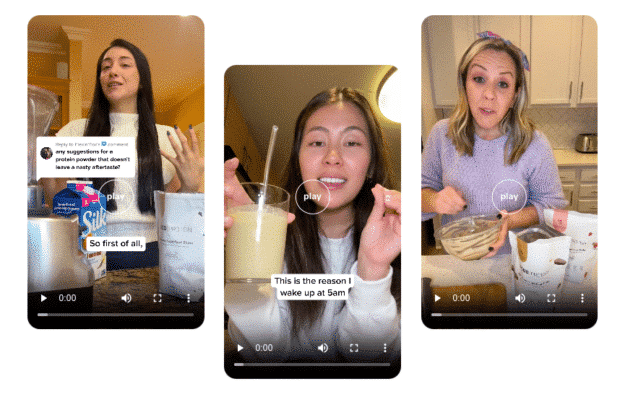
The health-supplement brand Good Protein demonstrated the power of "Spark Ads" on TikTok. By promoting content created by independent creators rather than just brand-produced videos, they bridged the "trust gap." This approach—combining creator reviews with brand responses—increased their average watch time by 25%.
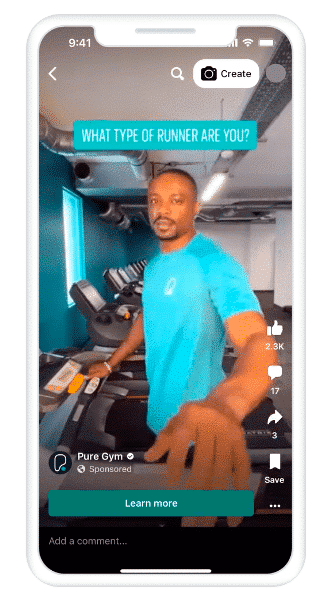
2. The Authenticity Factor: PureGym
PureGym moved away from high-gloss, expensive production in favor of "lo-fi" handheld Reels ads. By mirroring the aesthetic of a standard user’s post, they saw a 5.6x increase in "Thruplays" (video completions). The implication is clear: in 2026, authenticity often out-performs high production value.
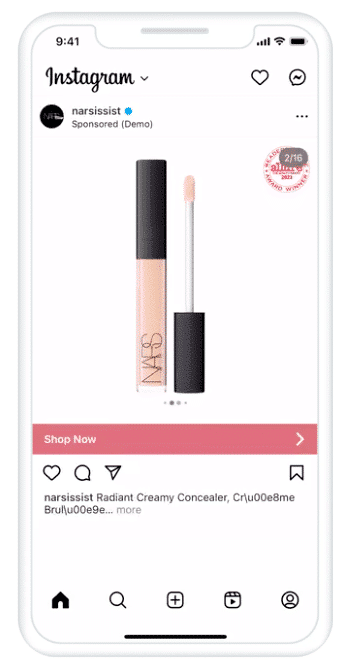
3. Frictionless Commerce: NARS Cosmetics
NARS Cosmetics utilized Instagram Shop ads to remove the "click-away" barrier. By allowing customers to check out within the app rather than redirecting them to an external website, the brand saw a 6% increase in ROI and a 24% decrease in the cost per purchase.
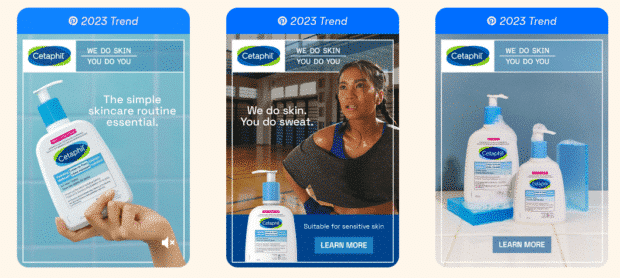
4. Intent-Based Targeting: Cetaphil
On Pinterest, Cetaphil used keyword research to align their ads with trending searches like "simple skincare routine." By pairing their products with the "Pinterest Trend Badge," they achieved a 4.5% increase in brand awareness, proving that social ads can function as a form of "visual SEO."
Implications: The Future of the Digital Marketplace
The massive influx of capital into social media advertising has profound implications for the future of global business.
For Small Businesses: The precision of social targeting has democratized advertising. A local bakery can now use "geofencing" to show ads only to people within a two-block radius, a level of efficiency traditional media (radio, print) could never provide. However, as CPMs rise, small businesses face the risk of being priced out of broader "awareness" campaigns, necessitating a hyper-focus on conversion and niche targeting.
The Convergence of Search and Social: Social media is increasingly behaving like a search engine. With Gen Z using TikTok and Instagram to find products rather than Google, social advertising is absorbing budgets that were previously reserved for Search Engine Marketing (SEM).
AI and Automation: The next frontier is the total automation of ad creative. Platforms are already rolling out tools that automatically generate hundreds of variations of a single ad to find the one that performs best for a specific user. This reduces the "creative burden" on brands but increases the need for sophisticated data oversight.
Privacy and Data Ethics: As regulations like GDPR and CCPA evolve, platforms are moving toward "Privacy-Enhanced Technologies." This means advertisers will have to rely more on "first-party data" (information they collect themselves) rather than third-party tracking, making direct-to-consumer relationships more valuable than ever.

In conclusion, social media advertising in 2026 is no longer an "alternative" to traditional marketing; it is the cornerstone of the modern commercial ecosystem. With over $338 billion at stake, the brands that master the balance of data-driven targeting and authentic creative storytelling will be the ones that define the next decade of global trade.
 Basiran
  Nana Muazin
  Nila Kartika Wati