
 By Nana Muazin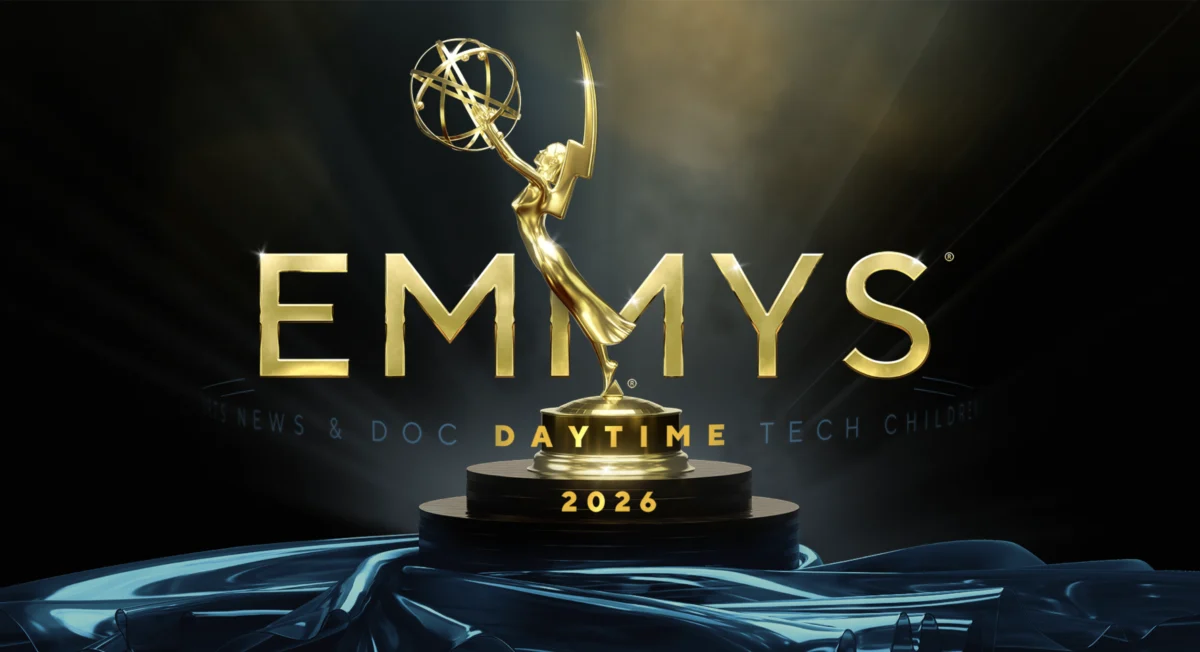
The landscape of daytime television is undergoing a period of profound transformation, and the 53rd annual Daytime Emmy Awards are arriving to reflect that shift. As the National Academy of Television Arts & Sciences (NATAS) begins the rollout of this year’s nominees, the industry is witnessing a blend of established icons and fresh, innovative storytelling that continues to define the medium.
With the announcement phase currently underway, the early nominations highlight a mix of industry stalwarts and recent fan favorites. Notably, The Kelly Clarkson Show, which recently concluded its run, has secured recognition in both the Talk Series and Talk Host categories. Similarly, Sherri has earned a nod for its host, signaling the enduring power of talk-variety formats even as the distribution models for such programs shift. These early indicators set the stage for what promises to be one of the most significant ceremonies in recent memory.
A Legacy of Recognition: NATAS and the Daytime Emmys
Administered by the New York-based National Academy of Television Arts & Sciences, the Daytime Emmys serve as the definitive benchmark for quality across an expansive array of programming genres. From the high-stakes emotional arcs of daytime dramas to the utility of culinary and instructional programs, the awards celebrate the diversity of content that occupies our screens throughout the day.
The reach of the ceremony extends to entertainment news, adventure programming, and the complex, high-pressure world of legal and courtroom dramas. While the current focus remains on the unveiling of nominees, anticipation is already building regarding the special honors. NATAS has confirmed that the Lifetime Achievement honorees, the inductees for the prestigious Gold & Silver Circles, and the host for the upcoming ceremony will be revealed in the coming weeks, promising a gala that honors the past as much as it celebrates the present.
Chronology of the Ceremony: Shifting Seasons
For decades, the Daytime Emmys were synonymous with the month of June—the traditional start of summer and a time when television networks would look back on the previous broadcast year. However, in a strategic pivot that began last year, NATAS has moved the ceremony to mid-fall.
This transition is not merely a scheduling preference; it represents a broader realignment of the television industry’s awards calendar. The 2026 event is officially scheduled to take place as a single, consolidated ceremony on Friday, October 30, in Los Angeles. By hosting the event in the autumn, the Academy aligns itself with the start of the new broadcast season, offering a more cohesive narrative for the industry. This shift allows for a more focused celebration, one that serves as a bridge between the accomplishments of the past year and the creative momentum of the future.
Structural Evolution: The 2026 Rule Changes
Perhaps the most significant aspect of this year’s awards cycle is the sweeping set of rule changes announced earlier this spring. These modifications are not merely procedural; they are designed to modernize the awards to better reflect the current state of television production and consumption.
The most notable shift is the transition to "episode-based" submissions, a format mirroring that of the Primetime Emmys. Under the previous guidelines, programs were often limited in how they could showcase their work. Now, producers are permitted to enter multiple submissions for different episodes. This "primetime format" allows for a more granular look at the quality of a series, providing creative teams with the opportunity to showcase specific narrative highs or technical triumphs that might have otherwise been lost in a single-episode submission.
The New Math of Nominations
To ensure consistency and fairness, NATAS has implemented a new, rigorous formula for determining the number of nominations in any given category. By basing the number of nominees on the total volume of submissions, the Academy aims to maintain prestige while acknowledging the competitive nature of modern content creation. The scale is as follows:
- 10–29 submissions: 5 nominations
- 30–59 submissions: 6 nominations
- 60–89 submissions: 7 nominations
- 90–119 submissions: 8 nominations
- 120–149 submissions: 9 nominations
- 150+ submissions: 10 nominations
For smaller, niche categories with fewer than ten submissions, the Academy has established a default of 50% of the submission total, rounded up. Furthermore, categories with three or fewer submissions will generally not yield a nomination, though the National Awards Committee reserves the right to bestow an award based on a "standard of excellence," ensuring that exceptional work does not go unrewarded simply due to a lack of competition.
Refinement of Eligibility and Category Structure
The Academy has also tightened its definitions regarding performance and genre. A significant change has been introduced for Guest Actors in daytime dramas: to qualify for the guest category, a performer must now be seen in a maximum of 19% of the episodes aired or streamed for the first time during the 2025 calendar year. Those who exceed this threshold are required to compete in the more competitive Leading, Supporting, or Emerging Talent categories. This rule is designed to prevent "category fraud," where recurring stars might attempt to compete against true guest performers.
Additionally, the category of "Science and Nature" programming has been officially eliminated within the Daytime branch. Programs that would have previously vied for this award are now directed to submit their work to the Primetime, News & Doc, or Children’s & Family categories, depending on their specific content and distribution. This move reflects the reality that the lines between "daytime" and "primetime" content have blurred significantly in the era of streaming, where content is consumed on demand rather than according to a fixed schedule.
Finally, in a move to streamline the submission process, daytime dramas and non-fiction programs will now enter into the same categories, with the exception of writing and directing. However, the Academy has built in a safety valve: these categories will be automatically split if both the drama and non-fiction tracks reach at least 10 submissions each.
Official Responses: A Commitment to Innovation
NATAS leadership has been vocal about the intent behind these changes. Adam Sharp, President and CEO of the National Academy, emphasized that the organization is not merely reacting to industry shifts but actively participating in the evolution of television storytelling.
"We’re proud to honor the extraordinary talent and creative teams whose work continues to define and elevate daytime television," Sharp stated during the initial announcement of the nomination process. "As the Daytime landscape evolves and new forms of storytelling emerge, we remain committed to recognizing the innovation happening across the industry."
This sentiment was echoed by Rachel Schwartz, head of the Daytime Emmy Awards, who highlighted the human element of the industry. "Each year, the Daytime Emmy Awards celebrate the creativity, passion, and dedication that drive this vibrant community of storytellers," Schwartz said. "Congratulations to this year’s nominees, whose work continues to entertain, inspire, and connect with audiences every day. We look forward to celebrating their remarkable achievements in Hollywood this October."
Behind the Scenes: The Production Team
The ceremony itself is the product of a massive collaborative effort under the umbrella of NATAS Productions. With Adam Sharp and Lara Gates serving as executive producers, the team is tasked with the daunting challenge of balancing the weight of history with the need for modern spectacle.
The return of Leon Knoles as the ceremony’s director for the fifth consecutive year provides a sense of continuity. Knoles, a veteran of televised awards shows, is well-versed in the specific rhythm of the Daytime Emmys and is expected to bring a polished, high-energy aesthetic to the October 30 broadcast.
Implications for the Industry
The implications of these changes are far-reaching. By aligning with the Primetime format, the Daytime Emmys are asserting their relevance in an era where "daytime" is increasingly an outdated label. The quality of production in daytime talk and drama has often rivaled—and occasionally surpassed—that of primetime counterparts, and these new rules allow that quality to be evaluated on a more equitable playing field.
As the remaining nominations are announced, the industry is watching closely to see which shows and performers will benefit from the new submission rules. Will the episode-based submission process lead to a more diverse array of nominees? Will the tightening of eligibility for guest actors force a more honest appraisal of the work done by recurring performers?
The 53rd annual Daytime Emmys are more than just an awards show; they are a manifesto for the future of the medium. By embracing change, refining their structure, and doubling down on the celebration of creative excellence, the National Academy of Television Arts & Sciences is ensuring that the Daytime Emmys remain a vital, respected, and essential part of the global entertainment landscape.
As we await the final list of nominees, one thing is certain: the work being done in this sector is as vibrant, challenging, and essential as ever. October 30 will serve as a night to recognize that the evolution of television is not an ending, but a new beginning.
 Nila Kartika Wati
  Siti Muinah
  Ammar Sabilarrohman