
 By Nana Wu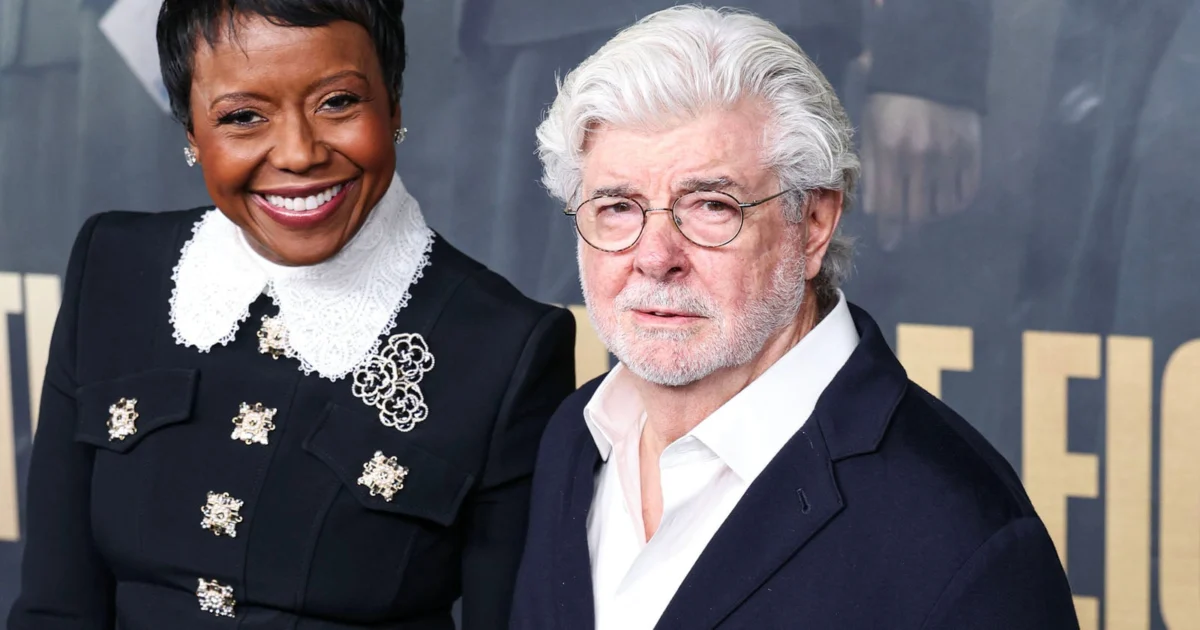
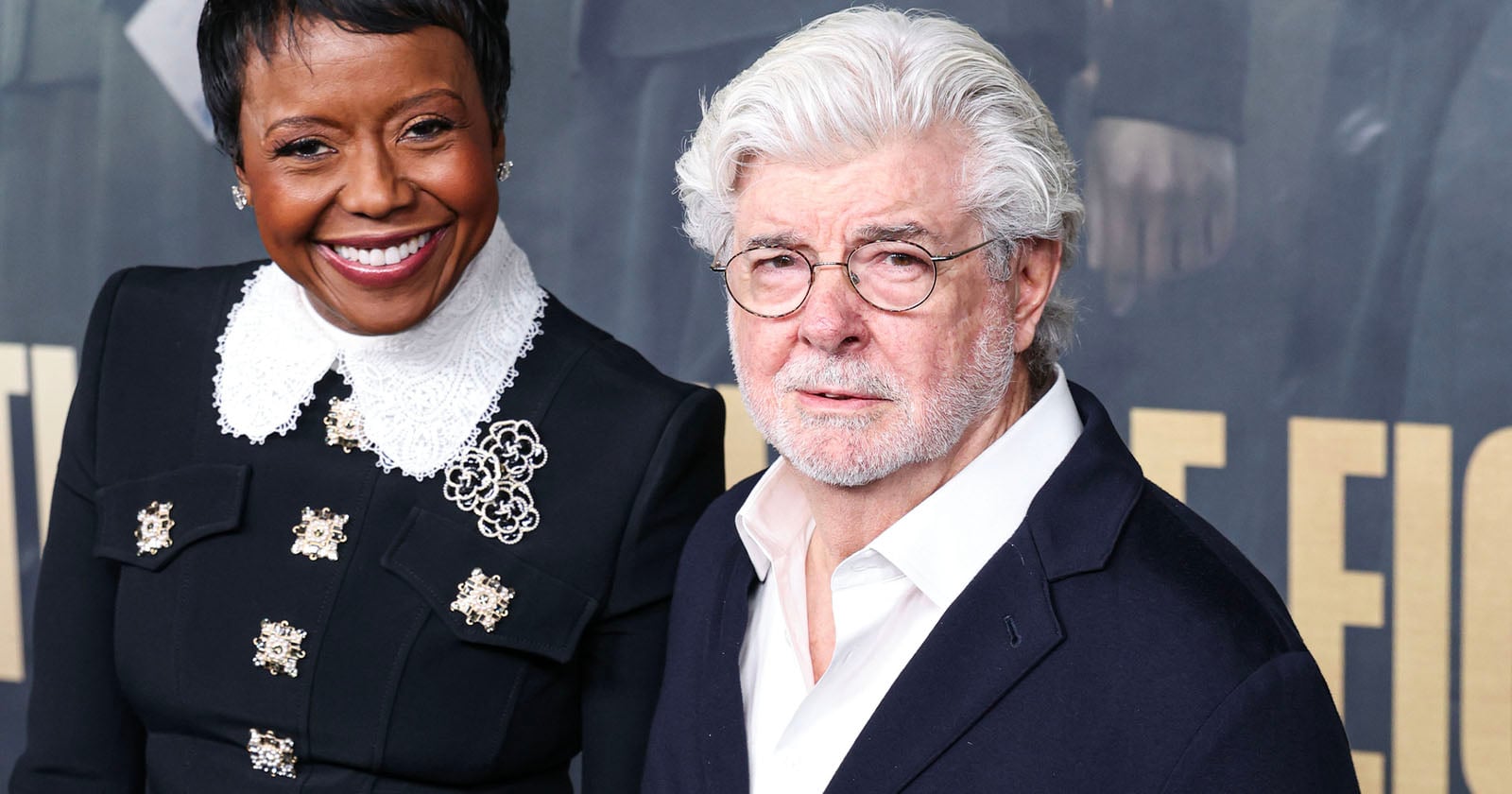
George Lucas, the visionary architect of the Star Wars galaxy and a foundational figure in modern cinematic technology, has weighed in on the most contentious debate in contemporary Hollywood: the role of Artificial Intelligence. In a wide-ranging conversation with A Rabbit’s Foot, the retired filmmaker characterized AI not as an existential threat to the medium, but as an inevitable evolution of creative expression, comparing the current hand-wringing over generative tools to the historical resistance against the automobile.
For an industry grappling with deep-seated anxieties regarding labor rights, authorship, and the authenticity of the image, Lucas’s endorsement carries significant weight. His perspective offers a pragmatic, if provocative, lens through which to view the rapid industrial shift toward synthetic production.
The Core Argument: AI as Inevitable Progress
Lucas’s defense of AI is rooted in a historical perspective that prioritizes the inevitability of technological advancement. Drawing a parallel to the transition from horse-drawn transport to the combustion engine, he suggests that those currently mourning the "death" of traditional filmmaking are failing to account for the unstoppable momentum of progress.
"It’s very much like sitting here saying, ‘Well, I believe the horse and the buggy is really where it’s at,’" Lucas remarked. "These cars, they break down, they need gas, there’s all kinds of problems with them and pretty soon they’ll be making them into tanks, and then they’ll be killing people. It’s terrible. There’s nothing you can do about it."
For Lucas, the "problems" associated with AI—ranging from deepfakes to copyright infringement—are not reasons to halt development, but rather challenges for the technology itself to solve. He posits that AI possesses the innate capability to self-regulate, suggesting that the same systems that can generate a fake image can also be deployed as the ultimate verification tool.
"If you want AI that tells you when something is fake and where it came from, AI can do that," Lucas argued. "Humans can’t, we’re not that smart."
A Chronology of Innovation: From Willow Springs to Skywalker Ranch
To understand why Lucas is so comfortable with the rapid adoption of new technology, one must look at his career trajectory, which has been defined by a restless desire to push the boundaries of what is visually possible.
1966: The Automotive Roots
Before he was a household name, a young George Lucas was an obsessive student of kinetics. His early work as a cameraman on the 1966 film Grand Prix showcased his fascination with speed and mechanical precision. His student film, 1:42.08 to Qualify, documented a racer’s attempt to qualify at Willow Springs. By strapping cameras alongside the driver to capture gear shifts and instrument panels, Lucas demonstrated a preference for visceral, machine-aided immersion long before CGI existed.
1975: The Birth of ILM
When Lucas began pre-production on Star Wars, he encountered a fundamental problem: the technology required to bring his vision to the screen did not exist. In response, he founded Industrial Light & Magic (ILM). In the late 70s, ILM became the world’s premier laboratory for practical effects, motion control photography, and optical compositing. It was here that Lucas bridged the gap between traditional film craft and the digital future.
1990s–2012: The Digital Pioneer
Lucas was a primary driver behind the transition from celluloid to digital cinema. He pushed for the adoption of high-definition digital cameras and spearheaded the use of fully computer-generated characters (most notably Jar Jar Binks in The Phantom Menace). By the time he sold Lucasfilm to Disney in 2012 for $4 billion, he had transformed the film industry into a software-driven enterprise.
Supporting Data and Industry Context
Lucas is not a lone voice in this endorsement. The industry is currently witnessing a tectonic shift as legendary filmmakers align themselves with emerging tech giants.
- Martin Scorsese’s Pivot: Recently, Martin Scorsese—a director often associated with the preservation of traditional cinematic language—joined the AI image company Black Forest Labs as an adviser. His involvement suggests that the divide between "auteur" and "technologist" is narrowing.
- The ILM Legacy: The systems developed under Lucas’s leadership at ILM now underpin the visual effects of almost every major blockbuster. The shift to AI is widely viewed by industry analysts as the natural successor to the motion-control systems of the 1970s and the CGI revolution of the 1990s.
- Economic Impact: The integration of AI tools into post-production workflows is already reducing costs for asset generation, rotoscoping, and background synthesis, allowing smaller production houses to achieve "blockbuster" aesthetics with a fraction of the traditional headcount.
Ethical Implications: Agency and Responsibility
Perhaps the most significant aspect of Lucas’s commentary is his stance on individual responsibility. He dismisses the idea that technology itself is inherently "evil" or "dishonest," placing the burden of ethics squarely on the human user.
"The whole idea is you’re a human being, you’re responsible for what you say and what you do," Lucas stated. "If you’re doing something that’s illegal, you should be punished for that. Whatever you do, you should be recognized. It’s just like real life."
This philosophy reflects a libertarian approach to creative tools: the tool is neutral; the intent is the variable. By emphasizing that humans must remain "responsible" for the outputs of their AI assistants, Lucas is attempting to frame AI as a collaborative partner rather than an autonomous replacement.
However, critics of this view argue that the sheer scale and speed of AI-generated misinformation create a "responsibility gap." When a system can generate thousands of images or clips in seconds, the ability of an individual to oversee and take accountability for that output becomes exponentially more difficult.
The Future of Cinema: A New Renaissance?
The implications of Lucas’s stance are profound for the next generation of filmmakers. If the creator of Star Wars—a man who essentially "wrote the book" on modern visual effects—is inviting AI into the fold, it signals that the industry has passed the point of no return.
Democratization vs. Devaluation
The promise of AI is the democratization of high-end filmmaking. If a single creator can use AI to build worlds that previously required a $200 million budget and a crew of hundreds, we may be on the cusp of a new independent cinema movement. However, the risk remains that the "human touch"—the idiosyncratic imperfections that define great art—could be lost in a sea of algorithmically perfect, yet soulless, imagery.
The Human Element
Lucas’s historical record suggests he is not interested in replacing humans; he is interested in expanding the "cameraman’s" toolbox. In his early automotive work, he used the camera to extend the reach of the human eye. Today, he views AI as an extension of the human mind.
As the debate continues to rage, the industry finds itself at a crossroads. We are currently witnessing the "horse and buggy" moment that Lucas describes. Whether the future of cinema becomes a "tank" that destroys the industry or a vehicle that carries us into a new era of artistic expression remains to be seen. But one thing is certain: George Lucas, ever the futurist, has already shifted his focus to the horizon.
 Raul Delapena Setiawan
  rifanmuazin
  Ammar Sabilarrohman