
 By Azzam Bilal Chamdy
In an era defined by rapid geopolitical shifts and evolving social dynamics, the ability to accurately gauge public sentiment is more critical than ever. The Pew Research Center remains at the forefront of this effort, providing data-driven insights that shape policy discussions and academic research worldwide. Central to these efforts are the Spring 2026 Global Attitudes Survey and the American Trends Panel (ATP) Wave 190. These initiatives, which utilize rigorous, multi-modal sampling techniques, offer a window into how the public perceives democracy, international relations, and identity in a complex world.
Main Facts: The Scope of the 2026 Research Initiatives
The Pew Research Center’s 2026 research output is anchored by two distinct but complementary projects. The Spring 2026 Global Attitudes Survey serves as a broad, international investigation into how populations across various socioeconomic strata view pressing global issues. This survey is a massive, cross-national undertaking, relying on a hybrid approach of telephone, face-to-face, and online interviews to capture a truly representative snapshot of global sentiment.
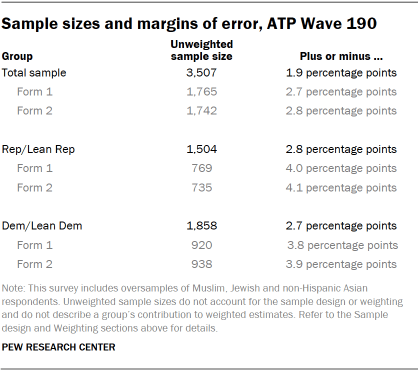
Simultaneously, the American Trends Panel (ATP) Wave 190 focuses on the U.S. domestic landscape. Conducted between March 23 and March 29, 2026, this wave surveyed 3,507 U.S. adults. With a survey-level response rate of 87%, the ATP stands as a gold standard for domestic polling, utilizing address-based sampling (ABS) to ensure that the voices of Americans from all walks of life are heard.

The primary objective of these studies is to standardize the measurement of human attitudes across borders and demographics, allowing for meaningful comparisons that are grounded in statistical rigor rather than anecdotal observation.
Chronology: From Recruitment to Data Synthesis
The integrity of a survey is built long before the first question is asked. The process for the ATP Wave 190, for example, is a testament to the logistical complexity of modern polling.
- March 20, 2026: Pre-notification postcards were mailed to telephone participants to ensure awareness and boost response rates.
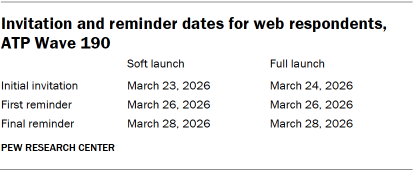
- March 23, 2026: The survey field period officially began. This included a "soft launch" for both web and phone respondents, allowing researchers to test the logic of the questionnaire and ensure that survey instruments were functioning correctly on various devices (PCs, tablets, and smartphones).
- March 24, 2026: The full-scale launch commenced. All remaining sampled panelists were sent invitations to participate.
- March 23–29, 2026: The active data collection window. During this week, participants were engaged through various channels—including email, SMS, and live telephone calls—to maximize the breadth of the respondent pool.
- Post-March 29, 2026: Following the closure of the field period, the data underwent rigorous cleaning, quality assurance checks, and complex weighting processes to correct for nonresponse and ensure that the final dataset accurately reflected the U.S. population.
Supporting Data: Ensuring Representativeness and Precision
One of the most significant challenges in modern survey research is "sampling bias"—the risk that a poll only reflects the views of those who are most likely to respond. To combat this, Pew employs sophisticated oversampling and weighting techniques.
Addressing Demographic Gaps
In the ATP Wave 190, researchers purposefully oversampled Muslim, Jewish, and non-Hispanic Asian adults. By increasing the sample size for these historically harder-to-reach or smaller groups, Pew ensures that their perspectives are not "washed out" in the broader national average. Once the data is collected, these groups are mathematically weighted back to reflect their true proportions in the total U.S. population.
Standardization of Variables
To make international comparisons possible, Pew standardizes demographic variables:
- Ideology: Respondents are categorized along a left-center-right scale, adapted to the political nuances of each surveyed country.
- Religious Identification: Pew analyzes groups only when the sample size is large enough to provide statistically reliable results, though smaller groups remain included in national totals.
- Education: By utilizing the UNESCO International Standard Classification of Education (ISCED), Pew can compare the educational attainment of a college graduate in Germany with one in Brazil, despite different national systems.
- Economic Classification: Utilizing World Bank per capita gross national income data, Pew distinguishes between high- and middle-income countries. This classification is vital for context, as it helps determine whether attitudes toward issues like globalization or democracy are driven by economic prosperity or other cultural factors.
Official Responses and Quality Assurance
The validity of the data is upheld by a multi-layered quality assurance protocol. During the development of the 2026 questionnaires, Pew researchers collaborated closely with SSRS (a public opinion research firm) to ensure questions were neutral and unbiased.
Once the data was collected, researchers performed "data quality checks" to identify "satisficing"—a phenomenon where respondents rush through a survey, selecting the first answer or leaving questions blank. In the case of Wave 190, five respondents were identified as having provided insufficient or low-quality data and were removed from the final dataset.
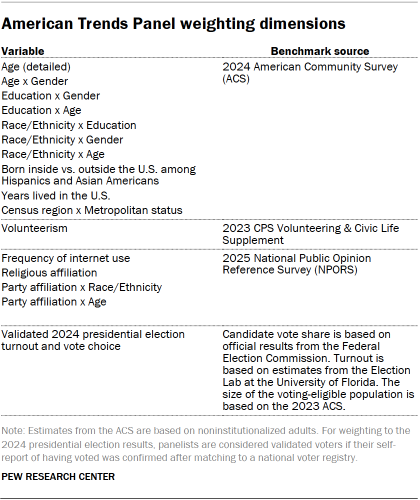
Furthermore, the weighting process is a two-stage calibration effort. First, base weights are applied based on the probability of recruitment into the panel. Second, these weights are calibrated against known census benchmarks and trimmed at the 1st and 99th percentiles to ensure that a few extreme responses do not disproportionately skew the results. This ensures that the final margin of error—reported at +/- 1.9 percentage points for the full sample—is both accurate and defensible.
Implications: Why This Research Matters
The findings generated by these methodologies are not merely abstract statistics; they form the bedrock for understanding the current state of global affairs. By looking at how national identity, perceptions of China, and satisfaction with democratic institutions differ across high- and middle-income nations, Pew provides a clearer picture of the world’s fault lines.
The Power of Methodology
The meticulous nature of this research has profound implications for public discourse:
- Informing Public Policy: Policymakers use these findings to understand where public support for international engagement is waning or strengthening.
- Tracking Historical Trends: Because these methodologies have been refined over years (with the ATP utilizing address-based sampling since 2018), they allow for longitudinal studies that track how societal attitudes change over a decade or more.
- Combating Misinformation: In an age where digital polls and social media "surveys" often create echo chambers, Pew’s commitment to transparency—publishing their methodology, margin of error, and response rates—provides a necessary anchor of objective truth.
The Challenges Ahead
Despite the precision of these methods, the research acknowledges the limitations of modern polling. As noted in the survey documentation, factors such as question wording and the inherent difficulties of reaching certain populations continue to introduce the potential for bias. By being transparent about these limitations and documenting the "final dispositions" of every respondent, the Pew Research Center invites the scientific community to engage with their data critically.
Conclusion
The 2026 Global Attitudes Survey and the American Trends Panel represent more than just numbers on a page. They are the result of thousands of man-hours, sophisticated statistical modeling, and a commitment to the rigorous pursuit of human understanding. As we move further into the decade, the ability to listen to the public—accurately and without bias—remains one of the most vital tools in navigating the complexities of our interconnected world. By maintaining such high standards for data collection, the Pew Research Center ensures that the stories told by the data are as accurate as they are revealing.
 Pevita Pearce
  Neng Nana