
 By Ali Ikhwan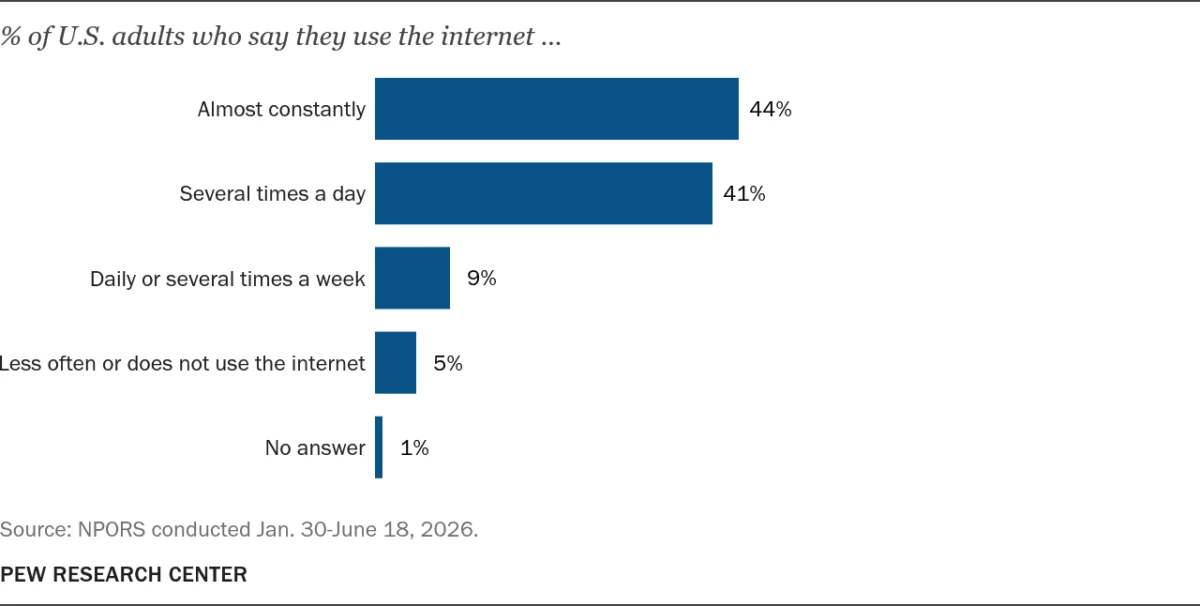
In an era of rapidly shifting social norms, technological ubiquity, and a polarized political climate, understanding the collective psyche of the American public is a monumental task. The Pew Research Center has long been the gold standard for this pursuit, and at the heart of its modern methodology lies the National Public Opinion Reference Survey (NPORS). As an annual, rigorous examination of U.S. adults, NPORS serves as a critical barometer for the nation’s political, religious, and social landscape.
The 2026 iteration of the survey, conducted between January 30 and June 18, 2026, provides a granular look at the current state of the union. By leveraging address-based sampling from the U.S. Postal Service’s Computerized Delivery Sequence File, Pew ensures that the survey reaches a representative cross-section of the country, moving beyond the limitations of traditional, panel-only polling.
The Evolution of Survey Methodology
The methodology behind NPORS is a testament to the complexity of modern social science. Unlike many commercial polling efforts that rely on pre-established survey panels—groups of individuals who have already agreed to participate in recurring research—NPORS is designed to capture a fresh, randomized perspective.
Respondents are selected through a sophisticated address-based sampling technique. This process, which utilizes the USPS’s comprehensive delivery database, allows researchers to reach households that might otherwise be invisible to digital-only polling firms. Participants are offered the flexibility to respond via paper, online portals, or telephone, ensuring that the "digital divide"—the gap between those with constant internet access and those without—does not skew the results.
However, the transition from legacy telephone-based polling to a multi-mode approach is not without its challenges. Pew has been transparent about the fact that NPORS estimates may differ from historical data gathered via older methodologies. This is not necessarily an indication of inaccuracy, but rather a reflection of the "mode effect." As the medium of communication changes, so too does the way people express their views. For instance, respondents might feel more comfortable disclosing sensitive religious or political affiliations in an anonymous paper survey compared to a live phone conversation. Pew has dedicated extensive resources to analyzing these shifts, ensuring that longitudinal trends remain robust despite the changing delivery mechanisms of the 21st century.
A Chronology of Insight: From 2020 to 2026
The NPORS data archive represents a unique historical record of the United States during a period of profound transformation. Since 2020, the survey has tracked the nation through a global pandemic, significant economic fluctuations, and intense cycles of political transition.

- 2020-2022: The early years of the current NPORS format captured the immediate aftermath of the COVID-19 pandemic. During this time, the survey provided vital data on how isolation influenced religious participation and how the rapid shift to remote work and learning accelerated the reliance on home broadband.
- 2023-2024: These years saw the refinement of the multi-mode approach. By standardizing the paper and online questionnaires, the Center improved the reliability of its comparative datasets. These years were marked by a focus on the stabilization of political party affiliations and the slow, steady decline of traditional religious identification.
- 2025-2026: The most recent data reflects a society that has fully integrated digital tools into daily life, with "constant" internet use becoming the norm for a plurality of the population. The 2026 survey, in particular, provides a "snapshot" of a nation bracing for the next phase of its political future.
Analyzing the 2026 Data: Political and Social Benchmarks
The 2026 NPORS findings offer a stark, data-driven look at where Americans stand today.
Political Party Affiliation
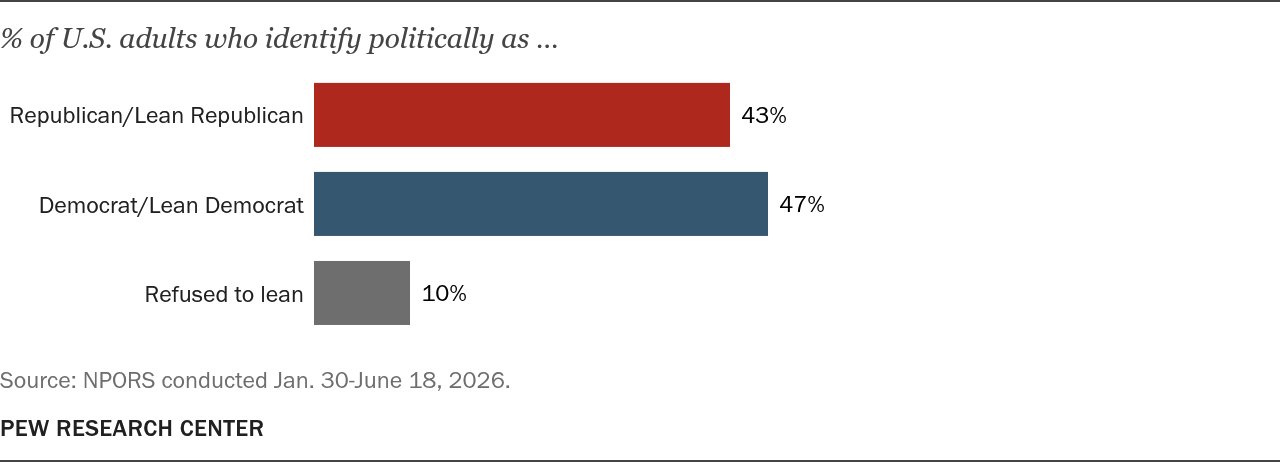
The political landscape remains deeply divided. According to the 2026 survey, 47% of U.S. adults identify as Democrat or lean toward the Democratic Party, while 43% identify as Republican or lean toward the Republican Party. A significant 10% of the population refuses to lean toward either major party, a cohort that remains a subject of intense scrutiny by political analysts. This narrow gap underscores the volatility of the American electorate, where small shifts in voter turnout or sentiment can have outsized impacts on national outcomes.
Religious Affiliation
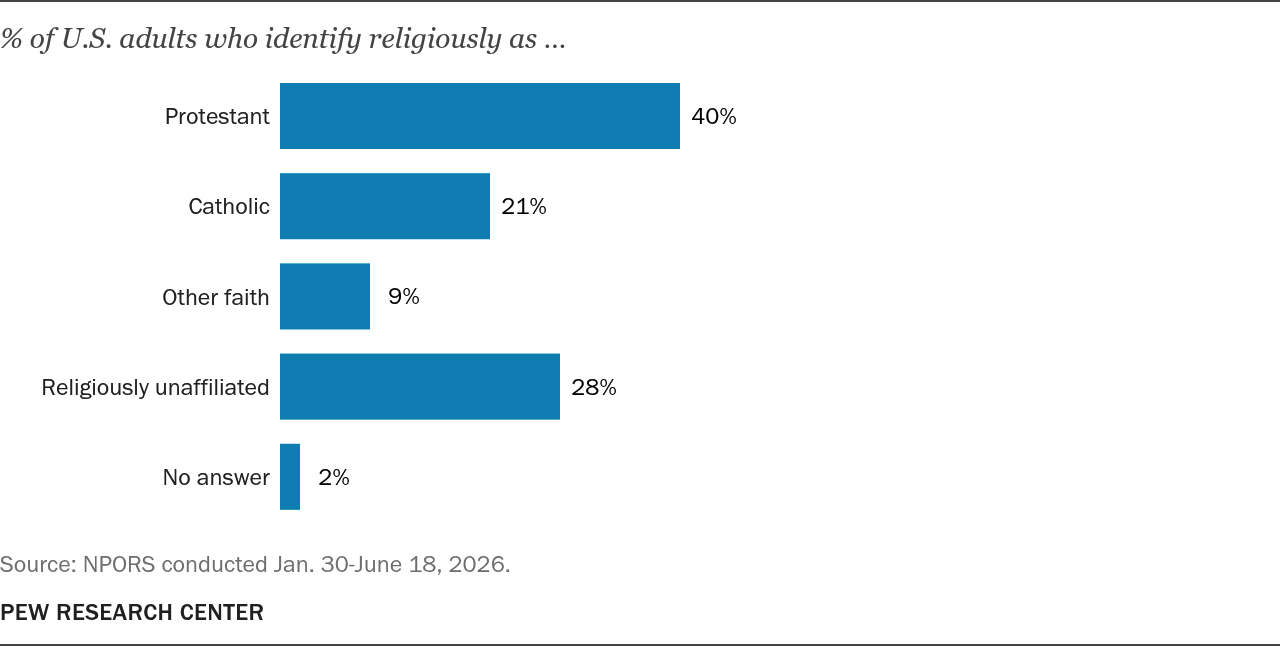
The religious fabric of the country continues to evolve. While Christianity remains the dominant religious identification, it is not monolithic. The 2026 NPORS data indicates that 40% of adults identify as Protestant and 21% as Catholic. Perhaps most notably, the number of "religiously unaffiliated" individuals—often referred to as the "nones"—now stands at 28%. This shift represents a decades-long trend that has seen a slow, steady move away from traditional institutional religion toward secularism or individualized spirituality. Only 9% of respondents identify with faiths outside of the Christian tradition, and 2% declined to provide an answer.
The Digital Lifestyle
The ubiquity of the internet is perhaps the most striking finding in the 2026 dataset. When asked about their frequency of internet use, 44% of U.S. adults reported being online "almost constantly." An additional 41% reported using the internet "several times a day." Combined, this means that 85% of the population is deeply tethered to the digital world. Only 5% of the population reported low usage or no internet access at all, suggesting that the digital divide, while still a matter of socioeconomic concern, has narrowed significantly in terms of basic access.
Implications for Public Policy and Societal Health
The implications of these findings extend far beyond academic interest. For policymakers, the NPORS data serves as a guide for resource allocation. For example, the high percentage of "almost constant" internet users suggests that public services, health portals, and government information must be mobile-first and digital-native to be effective.
Furthermore, the data on political and religious affiliation serves as a reality check for the media and political campaigns. The fact that 10% of the public refuses to lean toward either party suggests that the two-party system is failing to capture the full spectrum of American ideology. For religious institutions, the growth of the "religiously unaffiliated" population acts as a mandate to re-evaluate their outreach and relevance in an increasingly secularized public square.

The transparency of the NPORS methodology—including the public release of questionnaires and raw datasets—is a cornerstone of the Pew Research Center’s mission. By allowing the public and other researchers to audit their process, the Center maintains the integrity of the data, which is essential in an era of rampant misinformation and skepticism toward "the elites" or "the media."
Official Perspectives: The Value of Rigor
The Pew Research Center maintains that the value of NPORS is not just in the numbers, but in the methodology that produces them. By refusing to rely on "convenience samples"—such as those found on social media or in non-randomized online polls—the Center avoids the pitfalls of selection bias.
The "Methodology Report" for each year is not merely a technical document; it is a declaration of principles. It details how the Center accounts for non-response, how it adjusts for demographic imbalances, and how it ensures that every segment of the American population—from the rural retiree to the urban professional—has an equal chance of being heard.
When critics question the findings of a specific survey, the Center points to these rigorous, transparent protocols. By documenting how they handle the shift in survey modes, the Center provides a bridge between the past and the future, ensuring that long-term trends—such as the decline of religion or the rise of political polarization—are not merely artifacts of how the questions were asked, but are genuine reflections of change in the American soul.
Conclusion: Looking Ahead
As we look toward 2027 and beyond, the National Public Opinion Reference Survey will undoubtedly remain a vital instrument for understanding the American condition. The consistency of the survey allows for the tracking of trends that move too slowly for the 24-hour news cycle to detect, but which ultimately shape the nation’s future.
Whether it is the increasing reliance on digital communication, the shifting landscape of faith, or the entrenched nature of our political divisions, NPORS provides the foundational data necessary for an informed citizenry. In a time where the truth is often obscured by partisan rhetoric and algorithmic silos, the empirical, methodical, and transparent nature of the NPORS is a lighthouse, guiding us back to the reality of who we are as a nation.

For those interested in exploring the data further, the full suite of 2026 questionnaires, the detailed methodology statement, and the raw datasets are available through the Pew Research Center’s official website. This access ensures that the dialogue remains open, evidence-based, and focused on the common goal of understanding the complex, beautiful, and often contradictory tapestry that is the United States of America.
 Pevita Pearce
  Neng Nana