
 By Evan Lee Salim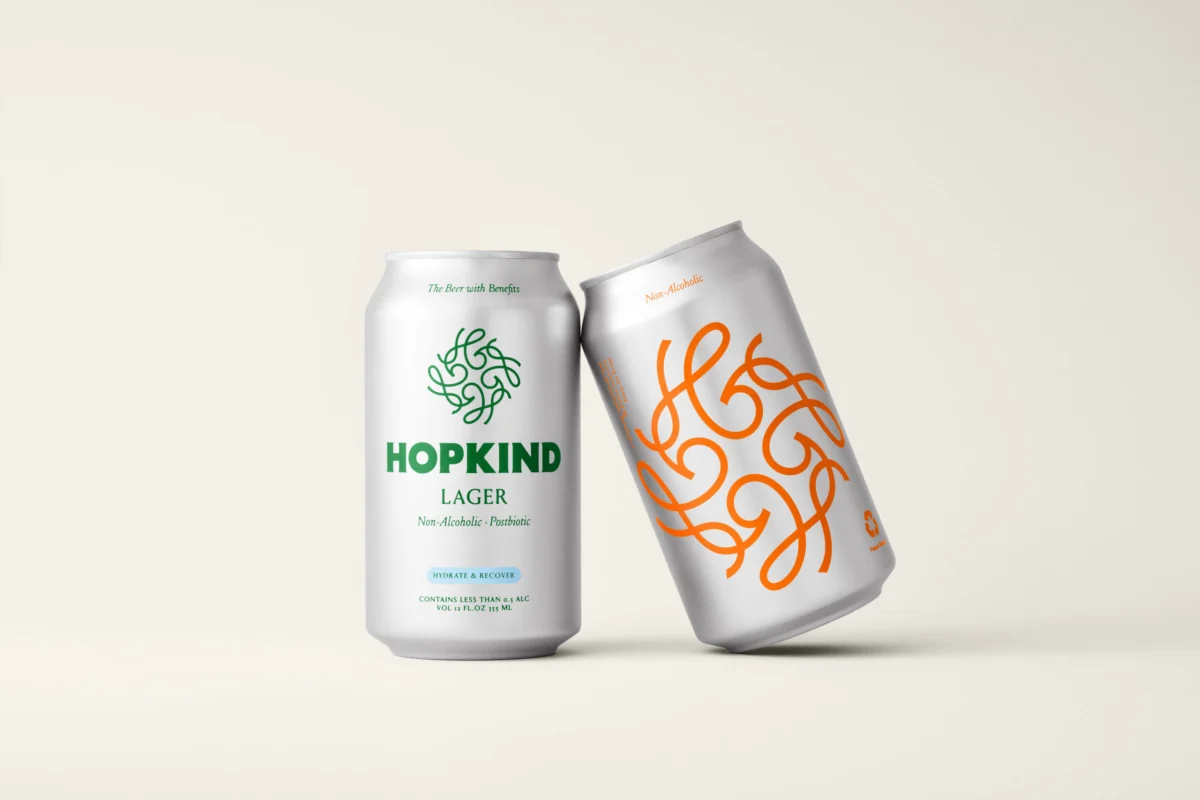
The intersection of personal wellness and social ritual has long been a fraught terrain for the modern consumer. For decades, the choice has been binary: sacrifice your health for the communal experience of a drink, or forgo the drink entirely in favor of a virtuous, albeit often isolating, wellness regimen. Now, a new venture is looking to dismantle this dichotomy.
Adam Klausner and Mads Hansen, the creative forces behind the microbiome-focused skincare brand Symbiome, have announced their pivot from topical health to the beverage industry. Alongside business partner Rob Hoppenheim, the trio is set to launch Hopkind, a functional non-alcoholic (NA) beer designed to bridge the gap between performance science and social indulgence.
The Core Concept: Redefining the "Social Drink"
Launching officially on August 2, Hopkind arrives at a moment when the non-alcoholic beverage category is experiencing an unprecedented surge. However, the founders argue that the current market—saturated with mocktails and stripped-down beers—often misses the mark regarding actual health outcomes.
"For years, beverages have fallen into two distinct camps: products that prioritize wellness and products that preserve social ritual," said Klausner. "We saw a clear opportunity to create something that delivers both, and importantly, tastes delicious. We didn’t want to create another soda-like NA drink; we wanted to create a craft beer experience that actually leaves you feeling better than when you started."
The brand’s philosophy is rooted in the belief that "functional" should not be a buzzword, but a measurable biological benefit. By leveraging their background in the science of the microbiome, the founders are positioning Hopkind not as a substitute, but as an upgrade.
Chronology: From Microbiome Research to the Brewhouse
The genesis of Hopkind can be traced back to the collaborative efforts at Symbiome. The skincare brand was built on the premise of restoring the skin’s native microbiome through precise, science-backed formulations. It was here that Klausner and Hansen began working closely with renowned scientists Dr. Larry Weiss and Dr. Julia Durack.
- The Inception (2022): Following the success of Symbiome, the team began exploring other areas where consumer products failed to live up to biological reality. They identified the alcohol industry as a space ripe for "biological optimization."
- The Research Phase (2023): Dr. Weiss and Dr. Durack were brought in to oversee the formulation of a beverage that could incorporate performance-grade supplements without compromising the flavor profile of a traditional brew.
- The Prototyping (Early 2024): The team underwent several iterations to balance the bitterness of hops with the chemical stability of ingredients like L-citrulline and Senactiv.
- The Launch (August 2024): After perfecting the recipes for their inaugural IPA and lager, the company secured its initial supply chain and distribution strategy, setting the stage for a late-summer rollout.
The Science of the Sip: Supporting Data and Formulations
What separates Hopkind from the sea of existing non-alcoholic beers is its commitment to physiological impact. The company has moved beyond simply removing alcohol to actively adding performance-enhancing compounds.
The inaugural lineup features two primary brews: a crisp lager and a hop-forward IPA. Both are formulated using traditional fermentation techniques, ensuring the sensory experience of a craft beer remains intact. However, the "functional" layer is where the product diverges significantly from market standards.
Key Ingredients and Benefits:
- Senactiv: A plant-based, proprietary sports performance ingredient known to increase ATP (energy) production and improve muscle glycogen replenishment.
- L-Citrulline: An amino acid widely utilized in sports science to improve blood flow, reduce fatigue, and assist in vascular health.
- Microbiome-Friendly Fermentation: Drawing from their skincare expertise, the scientists ensured that the fermentation process supports a healthy gut environment, avoiding the bloating and inflammatory responses often associated with heavy sugar or artificial additive-laden beverages.
"Consumers increasingly expect thoughtful formulations," said Rob Hoppenheim. "The days of ’empty calories’ are numbered. People want products that contribute positively to how they feel, perform, and recover. We are applying the same rigor to this beer that we applied to our clinical skincare line."
Official Responses and Strategic Vision
The leadership team is acutely aware that launching a functional beverage requires more than just a good recipe; it requires a sophisticated distribution strategy that avoids the pitfalls of the hyper-competitive grocery store shelf.
"It’s going to be a very tri-state area focused," Klausner noted regarding the initial rollout. "We are establishing partnerships with distributors in Connecticut, New Jersey, and New York. But beyond that, we are looking at non-traditional doors."
Klausner emphasizes that the brand’s "story" is its greatest asset. In a noisy retail environment, he believes that the nuance of a functional NA beverage can be lost. Therefore, Hopkind is prioritizing locations where the consumer has the time to engage with the product’s mission—such as wellness centers, high-end gyms, boutique grocery retailers, and co-working spaces.
"If you’re in a loud, crowded bar, the bartender isn’t going to explain the cellular health benefits of the drink in your hand," Klausner added. "Our retail strategy is about finding the right environment for education."
Implications for the Beverage and Wellness Industries
The launch of Hopkind signals a broader shift in the "wellness economy." As consumers become increasingly literate in nutritional science, the demand for "functional food" is migrating into the alcohol-alternative sector.
1. The "NA" Evolution
Non-alcoholic beer is no longer just for those avoiding alcohol due to addiction or pregnancy; it is becoming a performance tool for athletes and health-conscious professionals. Hopkind’s entry into this market suggests that the next phase of NA beer will be defined by "what it adds," rather than "what it removes."
2. Cross-Industry Migration
The migration of skincare founders into the beverage space is a testament to the blurring lines between beauty, health, and lifestyle. If the Symbiome team can successfully translate their reputation for scientific integrity into a beverage, it could set a template for other "science-first" brands to diversify their portfolios into CPG (Consumer Packaged Goods).
3. The Future of Social Rituals
Hopkind challenges the cultural assumption that a social gathering requires a buzz. By providing a beverage that promotes muscle recovery and cellular health, the company is attempting to rebrand the social drinking experience from an "event" into a "recovery moment."
Conclusion: A New Standard?
As August 2 approaches, the industry will be watching closely to see if Hopkind can achieve what many have failed to do: create a non-alcoholic beer that satisfies the palate of a craft beer enthusiast while simultaneously appealing to the high-performance standards of a biohacker.
By leaning on the expertise of Dr. Weiss and Dr. Durack, Klausner and his team have moved beyond the marketing gimmicks that define much of the current beverage market. Whether Hopkind becomes a staple in the gym bag or the dinner table remains to be seen, but the brand’s arrival is a clear indicator that the future of the social drink is, quite literally, functional.
 Lina Hope
  Asep Darmawan
  Suro Senen