
 By Nila Kartika Wati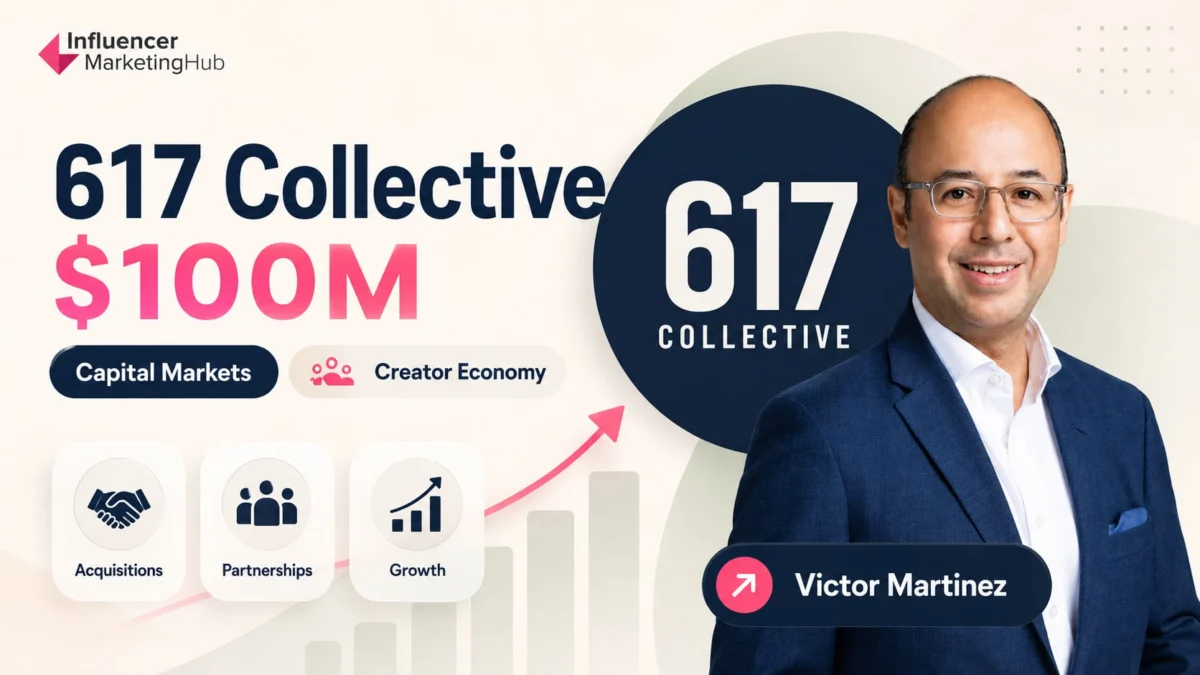
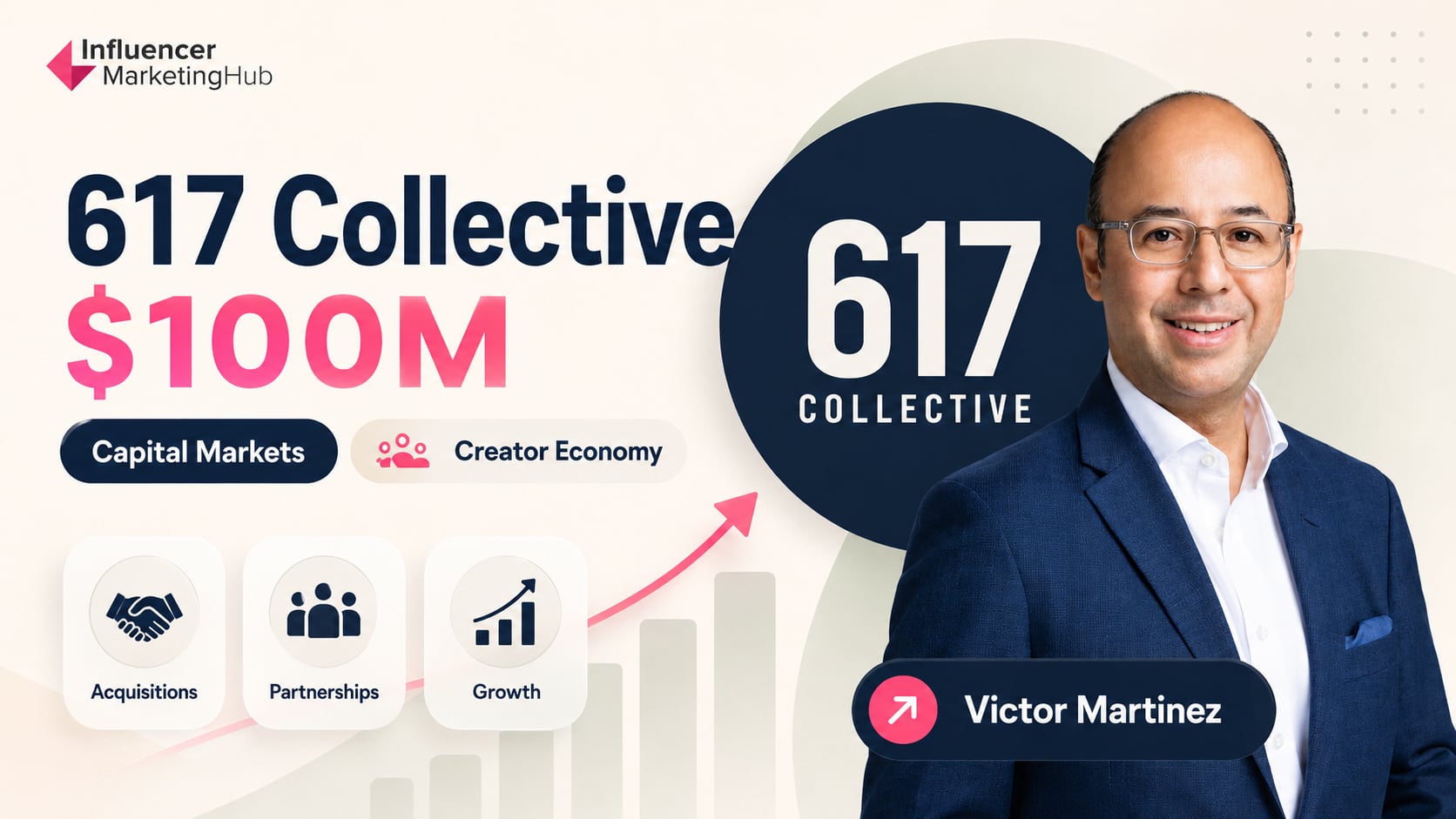
In a move that signals a seismic shift for the creator economy, 617 Collective—a New York-based acquisition platform—has appointed former Citi and JPMorgan investment banking veteran Victor Martinez as Partner and Head of Capital Markets. This high-profile hire marks a definitive transition for the firm, moving it from an opportunistic startup into a sophisticated institutional player capable of deploying $100 million in acquisition capital within the current calendar year.
As the marketing services landscape undergoes rapid consolidation, 617 Collective is attempting a delicate balancing act: providing the financial muscle and structural rigor of a Wall Street-backed holding company while maintaining the autonomy and "founder-first" culture of the independent agencies it acquires.
The Mandate: Scaling Without Standardizing
The appointment of Martinez, who boasts over two decades of experience in capital formation and public-market positioning for media and technology firms, is no mere corporate formality. It is a strategic acknowledgment that the "founder-friendly" ethos of 617 Collective cannot survive the competitive pressures of the modern M&A landscape without institutional-grade infrastructure.
Martinez’s mandate is to cultivate the lender relationships and financing structures necessary to compete against industry titans—such as Omnicom, Publicis, and Stagwell—that are currently aggressively absorbing creator-economy players. For 617 Collective, the challenge is to scale its footprint without falling into the "roll-up trap," where centralized back-office operations and standardized delivery eventually stifle the creative agility of the acquired firms.
Chronology: From Boutique Origins to Institutional Ambition
The trajectory of 617 Collective has been remarkably swift, reflecting the frenetic pace of consolidation in the influencer marketing and creative services sector.
- August 2025: 617 Collective launches as a private investment-backed holding company, targeting Northeast-based agencies with revenues between $1 million and $5 million.
- January 2026: The firm makes its first major move, acquiring Oklahoma-based creative studio Nominee Design. Simultaneously, the company strengthens its operations by appointing Cynthia Monroy, a veteran CFO, as Managing Partner to oversee integration and day-to-day management.
- April 2026: Expanding its geographic and niche focus, 617 Collective acquires Zanahoria Azul, a Miami-based talent management agency specializing in U.S. Hispanic and Latin American markets.
- Mid-2026: With the appointment of Victor Martinez as Head of Capital Markets, the firm pivots toward aggressive expansion, setting a goal to deploy $100 million in capital to secure a larger market share of the fragmented creative services industry.
The Market Landscape: Why the Creator Economy is Ripe for Capital
The timing of 617 Collective’s institutional push is rooted in the explosive growth of the creator economy. Estimates for the industry’s valuation remain bullish, with Influencer Marketing Hub suggesting an addressable market reaching $480 billion by 2027. Despite this staggering growth, the sector remains structurally fragmented, populated by thousands of boutique agencies.
This fragmentation has created a unique opening for M&A. Data from Quartermast Advisors reveals a 17.4% increase in creator-economy transactions throughout 2025, with marketing services agencies accounting for a significant fifth of all deals. While broader U.S. deal activity has seen fluctuations, marketing and communications M&A has maintained a robust year-over-year growth trajectory, rising 22% in recent reporting periods.
The competitive pressure is intense. Giants like Publicis Groupe have spent hundreds of millions to secure "creator stacks," such as their acquisition of the influencer platform Influential and Latin American giant BR Media Group. Against these multi-billion-dollar entities, 617 Collective’s decision to professionalize its financial operations is a defensive and offensive necessity.
Supporting Data: The "Permanent Capital" Model
The philosophy driving 617 Collective draws clear inspiration from the "permanent capital" models popularized by firms like Constellation Software and Tiny. These entities prioritize the long-term holding of assets rather than the "buy-to-flip" strategies that have historically defined agency acquisition cycles.
By keeping leadership, culture, and client relationships intact, 617 Collective seeks to preserve the inherent value of the agencies it acquires. However, the move to hire a Wall Street banker suggests that "founder-friendly" is not synonymous with "hands-off." To provide the strategic support needed to grow these agencies, the holding company must possess the ability to structure debt, manage liquidity, and navigate complex financing rounds—tasks that fall squarely under Martinez’s purview.
Official Perspectives: The Tension Between Culture and Finance
The leadership at 617 Collective has been unusually transparent about this evolution. When the Nominee Design deal closed, Managing Partner Cynthia Monroy noted, "We built 617 Collective to be the opposite of a roll-up." Yet, upon the announcement of Martinez’s hire, she characterized the move as part of the "continued institutionalization of 617 Collective."
This phrasing reflects an acknowledgment of a fundamental tension: can an organization provide Wall Street-grade financial resources without inevitably evolving into the consolidated, bureaucratic network it claims to oppose?
Industry analysts, including those at the marketing consultancy Ebiquity, warn that the "holding company" model carries inherent risks. As firms accumulate multiple agencies under a single capital structure, clients often face concerns regarding conflict-of-interest, data-sharing protocols across competitive accounts, and the erosion of independent creative voices. For 617 Collective, the test will be whether it can maintain its promise of operational independence even as it builds a unified capital markets office and shared strategic infrastructure.
Implications: The Future of Agency Consolidation
The implications of 617 Collective’s strategy are twofold. First, it sets a new benchmark for mid-sized acquisition platforms. It is no longer enough to be a "boutique" buyer; to remain relevant in a market flooded with private equity and holding company capital, firms must now mirror the sophisticated financing structures of their larger competitors.
Second, the move serves as a bellwether for the broader agency landscape. If 617 Collective succeeds in its $100 million deployment, it could prove that a hybrid model—combining institutional finance with decentralized operations—is a viable alternative to the traditional, heavy-handed roll-up.
However, the road ahead is fraught with complexity. As 617 Collective moves into its next phase, the market will be watching to see if its future acquisitions retain the entrepreneurial spirit that made them attractive targets in the first place. If the "institutionalization" process begins to supersede the "founder-friendly" mission, the firm risks losing its primary competitive advantage: its ability to attract the very founders who are wary of the traditional, corporate-network environment.
Conclusion
Victor Martinez’s arrival at 617 Collective is more than an executive hire; it is the final piece of a puzzle designed to transform a fledgling holding company into a powerhouse within the creator economy. By bridging the gap between Madison Avenue creativity and Wall Street capital, 617 Collective is betting that it can rewrite the rules of agency M&A. Whether this strategy will lead to a new era of decentralized growth or simply mirror the consolidation it seeks to avoid remains the defining question for the firm as it enters its next stage of aggressive expansion in 2026.
 Iffa Jayyana
  Siti Muinah
  Asro
Asro 