
 By Neng Nana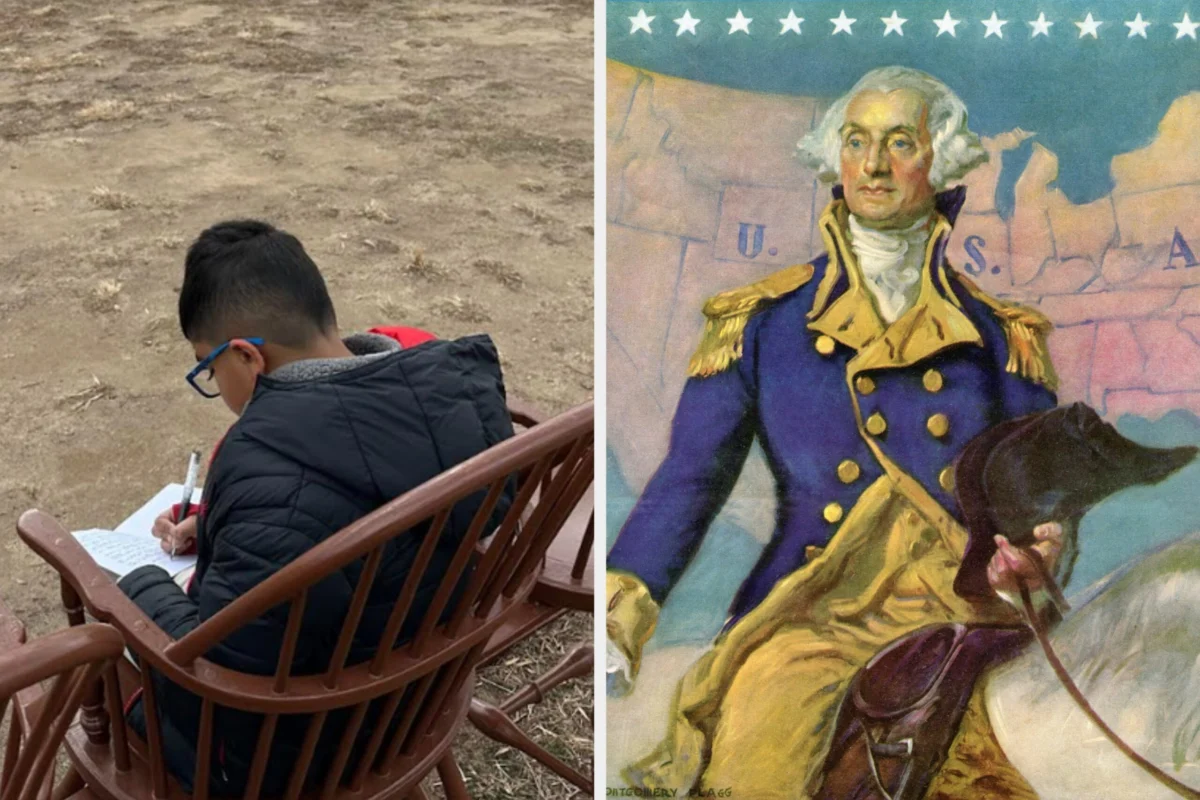
Introduction: The Weight of a Nine-Year-Old’s Pen
In the quiet, low-stakes ecosystem of an elementary school literary magazine, a routine editorial process recently spiraled into a profound meditation on democracy, censorship, and the burgeoning political consciousness of a child. For nine-year-old Tayz, the invitation to contribute to his school’s spring publication was an opportunity to engage with history. Instead of selecting a whimsical narrative or a poem about nature, he chose to draft a letter to the nation’s first president, George Washington.
What began as a creative exercise in historical inquiry quickly transformed into a complex negotiation between a child’s unfiltered convictions and the institutional caution of school administrators. At the heart of this conflict was a single, piercing phrase: the "Limited States of America." This article explores the fallout of that submission, the delicate parental balancing act that followed, and the broader implications for how we nurture—or suppress—the voices of the next generation.
The Genesis of a Critique
Tayz has always possessed an intellect that seems to operate on a frequency slightly out of sync with his peers. While his contemporaries often gravitate toward the escapism of fantasy or the adrenaline of competitive sports, Tayz’s curiosities lean toward the structural: the mechanics of World War II, the philosophical weight of mythology, and the inherent contradictions of human behavior.
When prompted to submit a piece for the school newsletter, Tayz looked back 250 years to the founding of the republic. His goal was not merely to honor a historical figure but to interrogate the distance between the American ideal and its modern reality. He wrote about the paradox of a world that offers the instant connectivity of the internet while failing to facilitate basic human empathy. He tackled climate change, the fragility of voting rights, and the prevalence of misinformation.
However, the passage that triggered a series of meetings among teachers and administrators was his critique of the current executive office. He wrote: "Our current president wants to make it a Limited States of America, only offering good things to a few people that he likes, instead of all Americans."
Chronology of a Curated Controversy
The trajectory of the essay provides a window into how institutional gatekeeping functions, even at the primary school level:
- Submission: Tayz submitted his letter to the literary magazine’s editorial board, comprised of school faculty and staff.
- The Editorial Pivot: Within days, the submission moved from the pile of routine entries to a point of contention. Educators, fearing potential backlash from parents or the broader community, flagged the paragraph as "too overtly political."
- The Consultation: The editor, acting with what appeared to be genuine professional care, reached out to Tayz’s mother, Ami J. Shah. The goal was not to silence the child, but to request an editorial revision that would sanitize the political critique while preserving the rest of the essay.
- The Stand: Tayz was presented with a choice: modify his language to fit the magazine’s editorial standards or withdraw the piece entirely. He chose the latter.
- The Aftermath: Following the publication of his mother’s personal account of the event, the essay found a new home in Skipping Stones magazine, allowing his original voice to reach a wider, more receptive audience.
The Parental Dilemma: Diplomacy Meets Parenting
For Ami J. Shah, a former U.S. diplomat and nonprofit executive, the situation presented a distinct professional and personal challenge. How does a parent, trained in the arts of negotiation and public service, guide a child through their first encounter with institutional suppression?
Shah’s initial reaction was a mixture of pride and profound melancholy. The pride stemmed from her son’s capacity for synthesis—his ability to distill complex sociopolitical frustrations into a sharp, metaphorical critique. The grief, however, was for the loss of innocence; the fact that a nine-year-old had already internalized the cynicism of the national mood was a sobering realization.
"I didn’t want my son to learn that disagreement automatically means suppression," Shah reflected. Yet, she recognized the validity of the school’s position from a pragmatic standpoint. Educational institutions, much like national newspapers, operate within boundaries. They must navigate the competing interests of community stakeholders, donor relations, and a commitment to neutrality.
The challenge for any parent in this position is to teach a child that their voice has inherent value, even if it is not universally welcomed or platformed. It is the distinction between having a right to speak and having a right to a specific microphone.
The "Limited States": Deconstructing the Political Maturity of Children
The concerns raised by the school board reflect a common societal anxiety: at what age are children "ready" to engage with political realities? The underlying assumption is that children exist in a vacuum, protected from the tensions of the adult world until a certain age threshold is met.
The reality, however, is that children are sponges for the atmosphere of their environment. They observe the discord at the dinner table, the tone of news broadcasts, and the general anxieties of their parents. They notice inequality long before they possess the vocabulary to articulate it with nuance. When we label a topic "too political" for a child, we are often not protecting them from the subject matter itself, but rather protecting the institution from the discomfort of the child’s perspective.
Tayz’s essay suggests that children are not just passive observers of history; they are actively trying to locate themselves within it. They are attempting to understand what it means to be a citizen in a nation that frequently fails to live up to its own founding documents.
Implications: The Risk of Erasure
The decision to reject the essay carries long-term implications for how students interact with authority and self-expression. If the primary lesson a child learns is that their deep, thoughtful critiques are unwelcome, the result may not be the creation of a more "neutral" student, but rather the cultivation of self-censorship.
The editorial process, when used to prune "controversial" thought, risks turning a literary magazine into a venue for superficial work. It signals to students that their writing is only valuable if it remains within the comfortable margins of the status quo.
Furthermore, the ordeal highlights the importance of institutional courage. If schools are meant to be the training grounds for democratic participation, they must be willing to host the very debates that characterize a healthy democracy. By opting for the path of least resistance, the school inadvertently denied its students a chance to engage with a peer’s genuine, albeit challenging, perspective.
Conclusion: Beyond the Cutting Room Floor
In the end, the incident proved to be a transformative moment for both the parent and the child. Tayz did not succumb to the pressure to conform, opting instead to seek a platform that valued his original vision. His lighthearted suggestion to "submit it to The New York Times" and his subsequent musings on a future in law and politics indicate that his curiosity remains intact.
For those watching, the story serves as a reminder that the next generation is paying closer attention than we often give them credit for. They are identifying the contradictions, questioning the fairness of the systems they inherit, and searching for the language to describe the world they occupy.
As for the school, life has returned to the typical rhythms of field trips and spelling tests. But for Tayz, the lesson was learned: the world may not always be ready to hear what he has to say, but that is rarely a reason to stop saying it. The "Limited States of America" may have been excluded from a single school newsletter, but in its rejection, it found a much louder, more permanent resonance.
 Ammar Sabilarrohman
  rifanmuazin
  Suro Senen