
 By rifanmuazin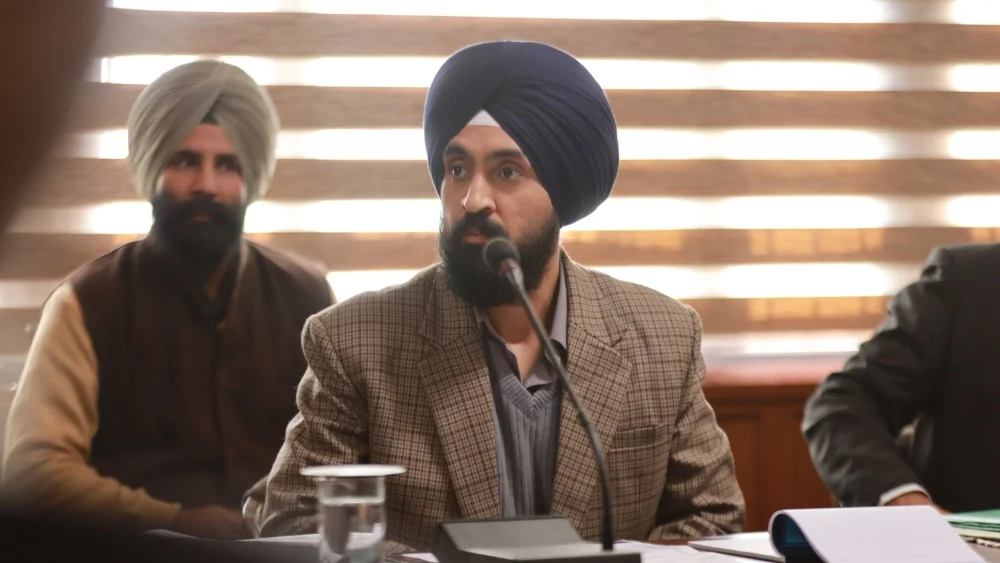
The release of Satluj—directed by Honey Trehan and starring global sensation Diljit Dosanjh—is a cinematic event defined as much by its haunting content as by its precarious existence. A film that chronicles the harrowing 1990s extrajudicial killings in Punjab, Satluj has become a lightning rod for debates surrounding historical memory, state power, and the reach of censorship in contemporary India.
At its core, the film is an investigative drama centered on the life of Jaswant Singh Khalra, a human rights activist whose commitment to truth set him on a fatal collision course with the state machinery. Yet, the film’s narrative extends beyond the biography of one man; it functions as a visceral, spiritual, and deeply political examination of how power operates when it seeks to erase the evidence of its own atrocities.
The Narrative Arc: A Descent into the Shadows of Punjab
The film opens with a gloomy, atmospheric prologue that establishes the chilling normalcy of state-sanctioned violence. In the shadow of the night, Punjab police officers discuss executions with the same casual detachment one might reserve for the weather. These killings, framed under the pretext of maintaining order and curbing insurgency, form the grim backdrop of the 1990s.
The narrative shifts to the protagonist, Jaswant Singh Khalra, played with profound, quiet intensity by Diljit Dosanjh. Khalra, an ordinary bank manager, is introduced as a man of modest, kindly disposition. His journey into the heart of darkness begins when an elderly aunt reports her husband missing after a police encounter. What starts as a simple, empathetic gesture—a search for a lost relative—quickly spirals into an investigation of state-sponsored systematic disappearance.
As the title suggests, the Satluj River, a major waterway flowing through Punjab, serves as a central, symbolic character. In the film, the riverbanks act as the final, silent repository for the bodies of those the state deemed "disposable." While the plot is structured as a mystery, Trehan ensures the audience understands that the horror is an "open secret." Everyone in the community is aware that authorities are disappearing dissenters, yet the pervasive culture of fear keeps the truth buried.
Khalra’s investigation becomes a process of unearthing a massive, illicit machinery. He discovers a terrifying paper trail—mass cremations of individuals who remained officially listed as "missing" in police records. His transformation from a bystander to a full-time activist is not portrayed as a heroic choice made with bravado, but as a moral imperative. As he gathers evidence to bring international attention to these killings, he inadvertently marks himself as the next target of the state.
A Chronology of Controversy: The Struggle for Release
The path to Satluj’s audience has been fraught with institutional hurdles that mirror the suppression depicted on screen. Originally titled Punjab ’95, the film was slated for a prestigious premiere at the 2023 Toronto International Film Festival (TIFF). However, it was abruptly removed from the lineup, with no clear explanation provided at the time.
The saga continued throughout 2024. After a prolonged battle with India’s Central Board of Film Certification (CBFC), which reportedly demanded over 120 cuts, the film finally secured a path to digital release. On July 3, 2024, it arrived on the Indian streaming platform Zee5. The victory was short-lived. Within 48 hours, the film was pulled for Indian viewers, followed by a total withdrawal from international platforms just one week later.
This "ancillary drama" is, perhaps, the most poignant aspect of the film’s mission. The censorship it faced reinforces the very themes Trehan explores: the suppression of truth, the discomfort of the state with historical accountability, and the fragility of dissent in a digital age. The film’s forced invisibility has, ironically, galvanized interest, with rogue community screenings occurring across India, transforming the act of watching the film into an act of resistance.
The Aesthetic of Duty: Spirituality and Performance
Director Honey Trehan, known for his keen eye for character-driven drama, employs a "didactic yet intimate" style in Satluj. The film is anchored by Diljit Dosanjh’s performance, which marks a significant departure from his pop-star persona. Dosanjh disappears into the role, portraying Khalra not as an archetypal hero, but as an "ego-less saint."
The film’s tone is liturgical, framing Sikh duty as a moral compass that must navigate the "casual cruelty" of the state. This is bolstered by the technical team: cinematographer K. U. Mohanan captures the landscape of Punjab with a haunting, melancholic beauty, while composer Marc Marder’s score resonates with the "pit of one’s stomach," emphasizing the visceral nature of the trauma depicted.
Despite its 164-minute runtime, which occasionally suffers from pacing issues and repetitive narrative beats, Satluj maintains a delicate balance between the ethereal and the grounded. Trehan populates the screen with a gallery of remarkable supporting actors, ensuring that every encounter, no matter how brief, feels like a piece of a larger, tangible reality. The film acts as a courtroom testimony, using the lingua franca of Indian social drama to speak truth to power.
Contextualizing the Crisis: The Political Backdrop
The 1980s and 1990s in Punjab were a period of intense volatility, marked by the rise of the Khalistan separatist movement, the assassination of Prime Minister Indira Gandhi, and the subsequent anti-Sikh riots. Satluj references these historical tremors, yet notably avoids getting bogged down in the minutiae of separatist politics.
By keeping the focus on the machinery of state violence—the dehumanization of victims through labels like "terrorist" or "insurgent"—the film appeals to a wider, mass audience. By ignoring the specific political ideologies of the victims, Trehan forces the viewer to confront the universal danger of a state that is empowered to grant itself a "death sentence" without due process. This approach, while perhaps frustrating to those seeking a comprehensive political history, serves as a powerful, broad-reaching rebuttal to government overreach.
Implications: The Medium as the Message
The enduring legacy of Satluj is its success in turning the act of viewership into an archival excavation. The film asks: Who owns the history of the marginalized? By focusing on the "suppressed history and stripped personhood" of those who disappeared, Trehan has created a work that serves as a living record.
The implications for the Indian film industry are significant. Satluj serves as a case study for the "fascistic process" of film censorship. When a government demands over 120 cuts to a project, the final product becomes a testament to what the state wishes to forget. Yet, in the case of Satluj, the bloat of the uncompromised vision—and the stubborn persistence of its release—only adds to its gravity.
In the final analysis, Satluj is more than a biopic of Jaswant Singh Khalra. It is a meditation on the cost of conscience. Through the quiet, persistent gaze of its protagonist and the unflinching direction of Honey Trehan, the film ensures that the secrets held by the banks of the Satluj River remain in the public consciousness. Even as the state attempts to pull the film from digital shelves, the story has already escaped the boundaries of the screen, echoing the very struggle for transparency that Khalra gave his life to ignite. The film functions as a moral mirror; for the audience, the "wrenched emotional impact" is not just a cinematic experience, but a challenge to remain awake in a world that often prefers the comfort of state-mandated silence.
 Nila Kartika Wati
  Siti Muinah
  Ammar Sabilarrohman