
 By Neng Nana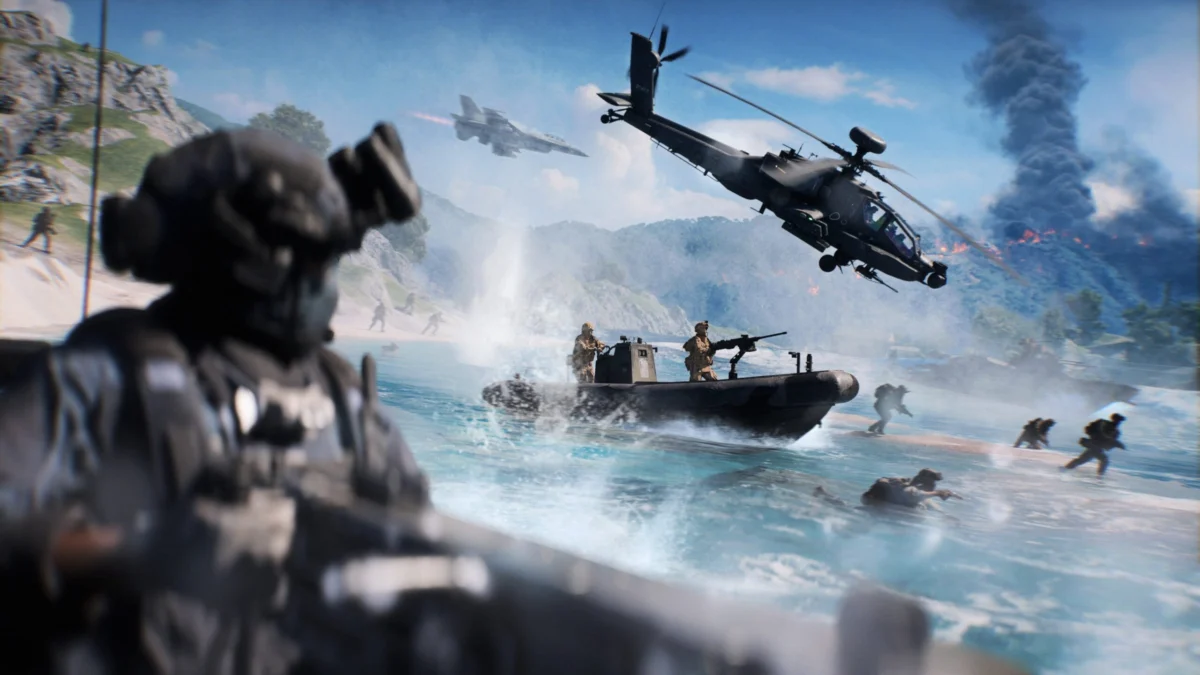
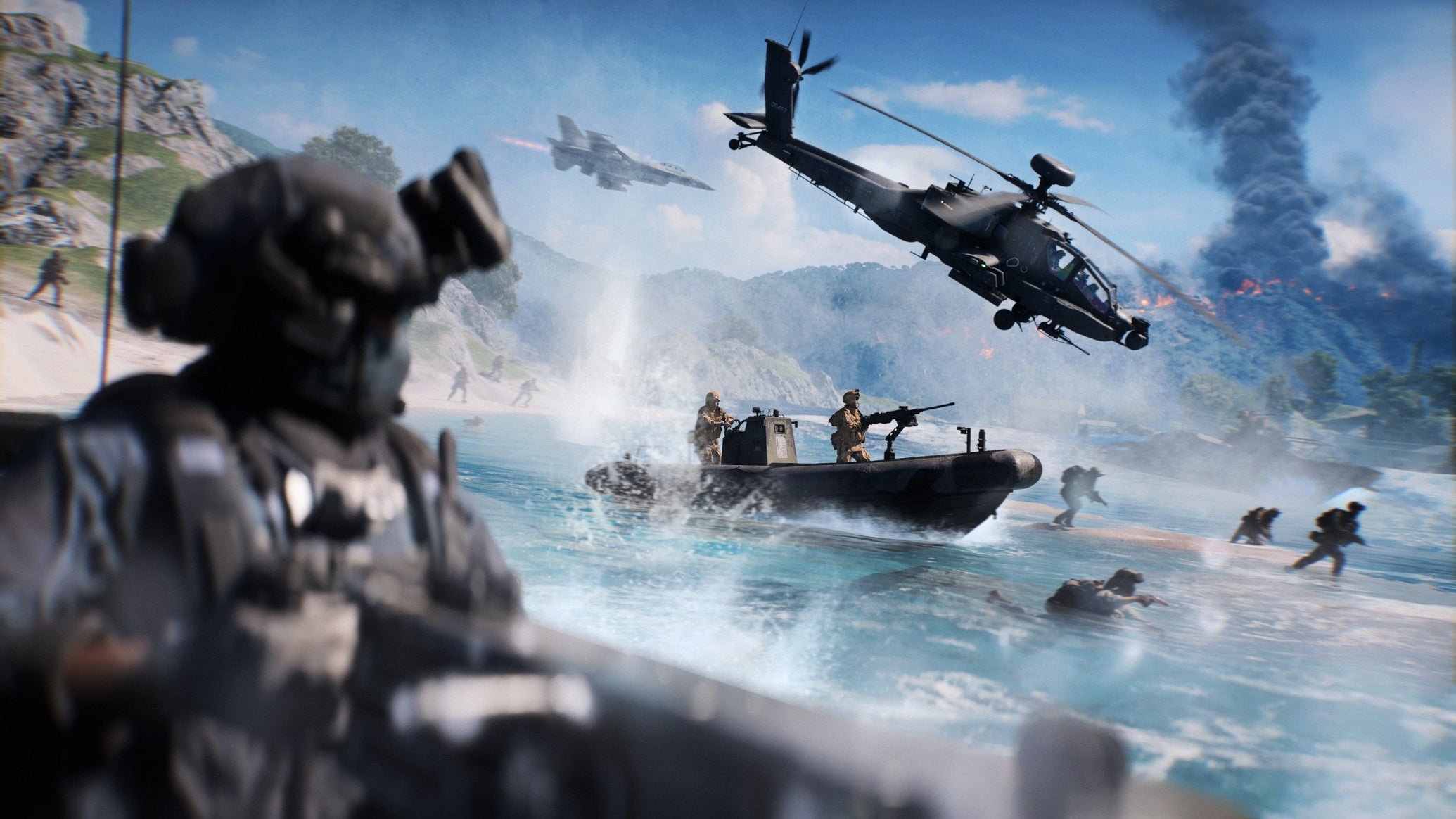
The release of Season 4 for Battlefield 6 marks a significant pivot point for the franchise. At the heart of this update is "Tsuru Reef," a map of unprecedented scale that promises to redefine the boundaries of modern tactical warfare. As the developer, Battlefield Studios, continues to refine its vision for the series, Tsuru Reef stands as a testament to their ambition—a sprawling, multi-domain playground that attempts to reconcile the game’s recent past with the high-octane, vehicle-heavy legacy of the franchise’s golden era.
The Evolution of the Battlefield: From CQC to Open Warfare
When Battlefield 6 first launched, it faced a peculiar identity crisis. While the underlying engine and gunplay were lauded for their mechanical polish, the initial map roster felt strangely constrained. The launch maps were predominantly focused on dense, close-quarters combat (CQC). While these maps were undeniably high-quality and competitive, they lacked the "only in Battlefield" grandiosity that long-time fans associated with the series. The community felt as though they were being fed a diet of focused, infantry-centric skirmishes, while the classic, sprawling battlegrounds of Battlefield 3 and 4 remained a distant memory.
The narrative of Battlefield 6 has been one of gradual expansion. The introduction of the Season 3 remake of Golmud proved that the player base was not just ready for larger maps—they were hungry for them. The success of that map provided the data-driven validation the developers needed to go all-in on Tsuru Reef. If Golmud was a nostalgic nod to the past, Tsuru Reef is a bold statement of intent for the future, designed specifically to be the "showcase" map that veterans and newcomers alike can point to when defining the franchise’s identity.
A Chronology of Escalation: The Road to Tsuru Reef
The development path toward Tsuru Reef began in the wake of the lukewarm reception to the game’s initial scale. Recognizing that the "less is more" approach to map design wasn’t resonating with the hardcore segment of the player base, Battlefield Studios initiated a strategic shift in their level design philosophy.
- Launch Phase: The emphasis was on high-density, infantry-focused zones with limited vehicle utility. This allowed for intense, skill-based gunplay but alienated fans of the series’ signature sandbox chaos.
- The Feedback Loop: Following the launch, community sentiment analysis highlighted a demand for larger sightlines and more vehicle-friendly terrain.
- The Mid-Cycle Correction: Season 3’s Golmud acted as a proof-of-concept. The player engagement numbers for that map confirmed that large-scale, combined-arms warfare was the primary driver of retention for the Battlefield audience.
- The Season 4 Expansion: Tsuru Reef represents the culmination of this learning process. It is the largest map in the game to date, incorporating nine distinct capture points and a massive aquatic theater of operations.
Architectural Ambition: Deconstructing Tsuru Reef
Tsuru Reef is, by design, an overwhelming experience. Stretching across a vast archipelago, the map is intended to be a microcosm of every playstyle available in the Battlefield ecosystem. During a three-hour preview session, it became evident that the map is structured as a series of specialized zones connected by transit routes that demand careful traversal.
The Naval Component
Perhaps the most notable feature of the map is the return of server-synced waves—a technical triumph that brings a dynamic, unpredictable element to naval warfare. Navigating the water is not merely about moving from Point A to Point B; it is about utilizing the environment to shield oneself from shore-based anti-tank fire. However, the implementation of naval combat here is a "work in progress." While the mechanics of the boats themselves are robust, the map’s capture point distribution often forces naval units into awkward, static roles. The ability to use boat-mounted mortars to shell capture points from safety remains a point of contention that will likely require balancing in future patches.
The Infantry Experience
The recent "gunplay update" has been instrumental in making a map of this size playable. By reducing accuracy at long range, the developers have forced players to commit to their engagements and manage their rate of fire. This change is vital for Tsuru Reef, where the distance between objectives is immense. Without this mechanical change, the map would likely have devolved into an inescapable sniper gallery.
Despite this, there is a recurring issue with "compartmentalization." Because the map caters to every playstyle, certain areas feel like they were cordoned off specifically for infantry, while others are exclusively for vehicles. This limits the "fluidity" of the combat, as players often find themselves trapped in their preferred roles rather than organically adapting to the shifting needs of the battlefield.

Tactical Data and Weaponry Integration
Season 4 brings three new weapons, with the Bren 3 Carbine emerging as the clear standout. Its versatility allows it to excel in the medium-range engagements that define the transitions between capture points on Tsuru Reef. The VSSM, particularly when kitted with the full-auto modification, offers a high-risk, high-reward option for players willing to operate within the more claustrophobic, mountainous regions of the map.
Supporting data from the preview event suggests that the map’s vehicle economy is highly sensitive. By staggering the spawn times of high-tier vehicles and tying others to specific objective captures, Battlefield Studios is attempting to prevent the map from becoming dominated by air superiority early in the match. The inclusion of two transport helicopters per team at the start of the round is a deliberate choice to encourage rapid deployment and squad cooperation, essential in a map where the "travel time" is a significant tactical consideration.
Official Responses and Developer Intent
In various community updates, Battlefield Studios has been transparent about the challenge of balancing scale with intensity. Their official stance is that Tsuru Reef is not meant to replace the game’s more intimate maps, but to provide a "variety of pace."
"Our goal with Tsuru Reef was to push the engine to its limits while ensuring that every class—from the recon sniper to the assault engineer—feels like they have a critical role to play," said a lead developer during the press briefing. They acknowledged the feedback regarding the "static" nature of naval combat, noting that they are monitoring telemetry to see if the capture radius for water-based objectives needs adjustment. The studio views this map as a living project, one that will evolve based on how the community utilizes the space over the coming months.

Implications for the Future of Battlefield 6
The introduction of Tsuru Reef signals that Battlefield 6 is entering a "maturity phase." The experimental period of the game’s first year is over. The developers now have a clear roadmap based on what the players have proven they enjoy.
However, the risk remains that Tsuru Reef may become a "niche" map. Like the elaborate item on a restaurant menu that is delicious but rarely ordered, Tsuru Reef is a spectacle of design that may struggle to maintain consistent player counts compared to the more familiar, faster-paced maps. It is a map that demands time, coordination, and patience—commodities that are increasingly rare in modern online gaming.
The Verdict on Scale
The success of Tsuru Reef will ultimately hinge on whether the player base embraces the "slower" pace of large-scale combat. It is an impressive technical achievement that proves Battlefield can still handle massive, complex environments. Yet, it also highlights the inherent difficulty in designing for everyone. By attempting to satisfy the infantry purist, the tank operator, and the naval captain simultaneously, the developers have created a map that is brilliant in parts, but occasionally disjointed in its execution.
As Season 4 progresses, the true test will be the community’s adaptation. If players find ways to bridge the gap between these specialized zones, Tsuru Reef could become the definitive Battlefield experience. If they continue to retreat to the familiar, it will remain a beautiful, oversized monument to the studio’s ambition—a map that players visit for the spectacle, but leave when they want to get back to the fight.

Regardless of its long-term popularity, Tsuru Reef serves a vital purpose: it proves that the Battlefield DNA is still intact, and that the developers are willing to take the risks necessary to ensure the franchise remains the king of large-scale, combined-arms warfare.
 Sagoh
Sagoh  Lina Irawan
  Asep Darmawan