
 By Asep Darmawan
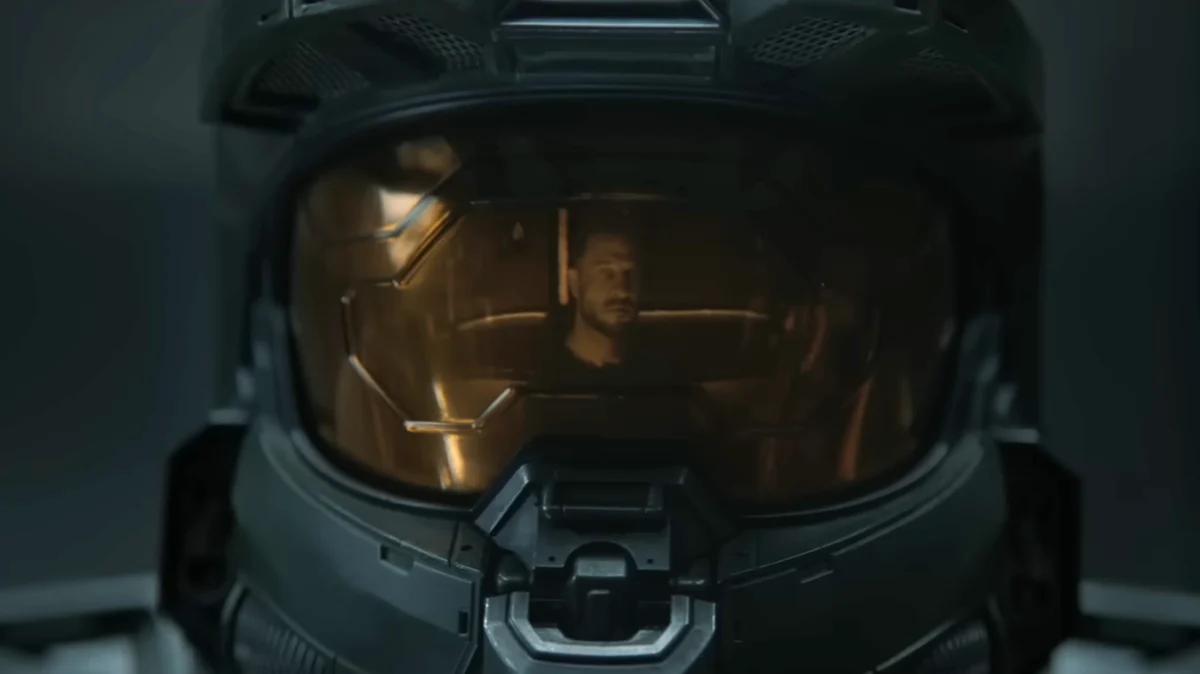
The race to secure intellectual property (IP) has become the new "gold rush" of the streaming era. As traditional television audiences fragment and the subscription video-on-demand (SVOD) market reaches a saturation point, major streamers have turned their gaze toward the world of video games. However, a recent revelation highlights that the marriage between Silicon Valley and the gaming industry is far from seamless.
According to reports from Puck News, a monumental deal that would have seen Netflix acquire exclusive rights to adapt Xbox’s vast portfolio of gaming properties for television and film has collapsed. The sticking point? A $300 million valuation gap that left both parties at an impasse.
The Financial Tug-of-War: $500M vs. $800M
The proposed deal was intended to be a watershed moment for content acquisition. Netflix, seeking to bolster its library with established, "fan-first" franchises, reportedly approached Xbox with a bid of $500 million. This sum was intended to secure exclusive rights to adapt a wide swathe of Xbox’s gaming catalogue into serialized television and feature-length films over a seven-year period.
For Netflix, the strategy was clear: leverage the deep engagement of gaming communities to reduce customer churn. However, Xbox leadership—spearheaded by CEO Asha Sharma and the company’s business affairs division—viewed the valuation through a different lens. Rather than accepting the half-billion-dollar offer, Xbox countered with a request for $800 million.
The gap of $300 million proved insurmountable. Internally, Netflix executives, including CFO Spence Neumann, reportedly questioned the return on investment (ROI) for such a high-stakes, long-term commitment. With the departure of former CCO Bela Bajaria—the executive who initially courted the deal—the momentum behind the partnership stalled, ultimately leading to the breakdown of negotiations.
A Chronology of the Negotiations
To understand why this deal failed, one must look at the shifting landscape of game-to-screen adaptations over the past five years.
- 2020–2022: The "Golden Era" Begins: The massive success of various high-profile adaptations began to shift the perception of gaming IP in Hollywood. Studio executives moved from viewing games as "risky" to viewing them as "essential."
- Early 2024: Netflix, facing increased pressure from competitors like Amazon Prime and HBO, initiated high-level talks with Xbox to secure a pipeline of content. The strategy was designed to lock in future hits before other streamers could bid.
- Mid-2024: The negotiations reached their peak. Reports indicate that the discussions were not merely about single titles, but a sweeping "blanket" licensing agreement that would have given Netflix a "right of first refusal" on upcoming Xbox projects.
- Late 2024: The deal officially fell apart. The counter-offer from Xbox was deemed too expensive by Netflix’s financial oversight committees, leading to a pivot toward individual, project-by-project licensing deals rather than a corporate-wide umbrella agreement.
Supporting Data: The Value of Gaming IP
Why would Netflix be willing to pay half a billion dollars for IP? The data surrounding recent game adaptations provides a compelling narrative.
The success of HBO’s The Last of Us and Amazon’s Fallout demonstrated that gaming audiences—when treated with respect—are some of the most loyal viewers in existence. Fallout, in particular, saw a massive spike in concurrent players for the associated games following the show’s debut. This "halo effect" is exactly what platforms like Netflix are desperate to replicate.
However, the industry is not without its failures. While The Super Mario Bros. Movie generated over $1 billion at the box office, other attempts have struggled. The tepid reception of this year’s Street Fighter and Mortal Kombat 2 projects underscores the volatility of the market. Studios are realizing that simply slapping a familiar name on a script does not guarantee an audience. As a result, the "premium" being charged for gaming IP is becoming a point of contention; streamers are no longer willing to pay inflated prices for projects that aren’t guaranteed, critical, or commercial successes.
Official Responses and Strategic Shifts
In a statement provided to Puck News, Xbox maintained a diplomatic tone, emphasizing that their relationship with the streamer remains intact.

"We have received record-breaking interest in our IP," an Xbox representative stated. "Netflix is a valued partner and we are excited for the forthcoming release of our Minecraft and Diablo animated series together, among other adaptations."
This official stance suggests that while the "Mega-Deal" is dead, the professional relationship is far from over. By pivoting to smaller, bespoke licensing agreements, Xbox avoids the potential pitfalls of an exclusive deal that might undervalue specific franchises. For Netflix, the strategy is safer: they can pick and choose the projects that align with their current content roadmap without tying up $800 million in capital that could be used for other high-profile acquisitions.
Implications: The Future of Cross-Media Strategy
The failure of this deal signals a maturation in the relationship between Silicon Valley and the game industry.
1. The Death of "Blanket" Licensing
The failure to reach an agreement on an $800 million package deal indicates that "blanket" licensing—where a streamer buys rights to a company’s entire portfolio—may be a relic of the past. Companies like Xbox, which own dozens of high-value franchises, are increasingly aware that each property has its own distinct market value. Expect to see more competitive bidding wars for individual franchises rather than massive, all-encompassing deals.
2. The Rise of the Gaming "Studio-Publisher"
Xbox is essentially operating as a major Hollywood studio. With projects like the live-action Gears of War film, an upcoming Call of Duty feature, and animated series for Minecraft and Diablo, Microsoft is no longer just a platform holder; they are a content factory. This shift changes their leverage in negotiations. They no longer need a single streamer to distribute their content, which gives them the power to demand higher prices or shop their wares to the highest bidder on a case-by-case basis.

3. Increased Scrutiny on ROI
For streamers, the era of "spending for the sake of market share" is ending. With Wall Street demanding profitability from streaming divisions, CFOs are putting every contract under a microscope. The $300 million gap between Netflix’s offer and Xbox’s demand serves as a cautionary tale: unless the content can be proven to generate sustained subscriber growth, the "gaming gold rush" will likely cool down into a more calculated, risk-averse investment strategy.
Conclusion
The collapse of the Netflix-Xbox deal is not a sign of a failing relationship, but a sign of a maturing industry. Gaming IP has undoubtedly cemented its place as the premier source material for the next generation of entertainment. However, the price of entry has become a battleground. As Xbox continues to build out its own cinematic universe, and Netflix continues to search for the next Stranger Things-sized hit, both companies will likely continue to dance around one another—negotiating, competing, and occasionally collaborating—as they navigate the increasingly blurred lines between the console and the cinema screen.
 Nana Wu
 Iffa Jayyana
 Suro Senen
