
 By Jia Lissa
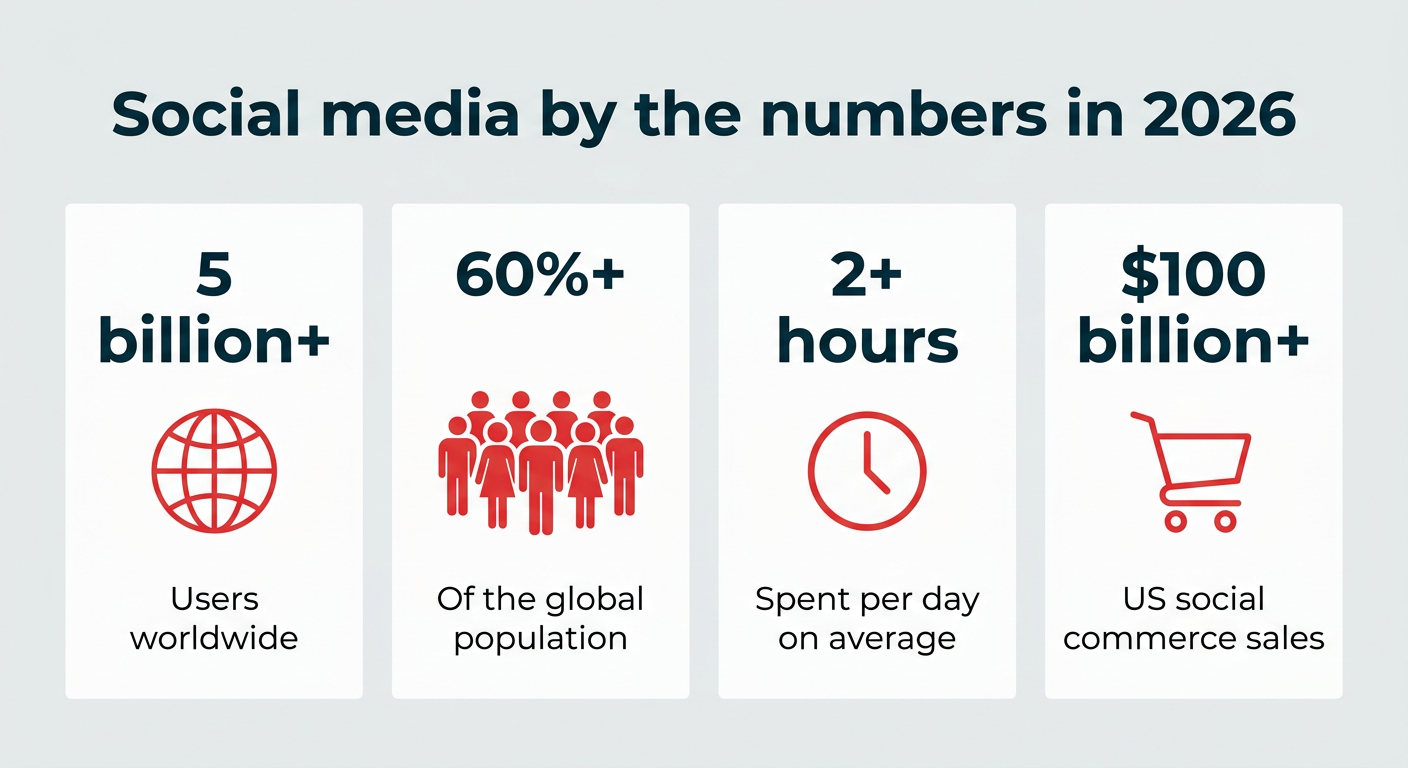
Social media has transformed from a niche academic experiment into the primary fabric of global communication. As of 2026, more than 5 billion people—over 60% of the world’s population—interact with social platforms daily. This evolution represents more than just a series of successful apps; it marks a fundamental shift in how human beings consume information, conduct commerce, and maintain relationships.
The history of social media is not a straight line of progress but a complex narrative of technological innovation, shifting user behaviors, and the constant tension between privacy and connectivity. By examining the milestones from the early computerized bulletin boards of the 1970s to the AI-driven, decentralized landscapes of today, we can better understand the forces shaping our digital future.

I. Main Facts: Defining the Social Media Ecosystem
Social media is defined as a collection of online platforms that allow users to create personal profiles, connect with others, and share user-generated content in real-time. Unlike the "one-to-many" broadcast model of traditional media (television, newspapers), social media operates on a "many-to-many" model.
The Four Pillars of Social Media
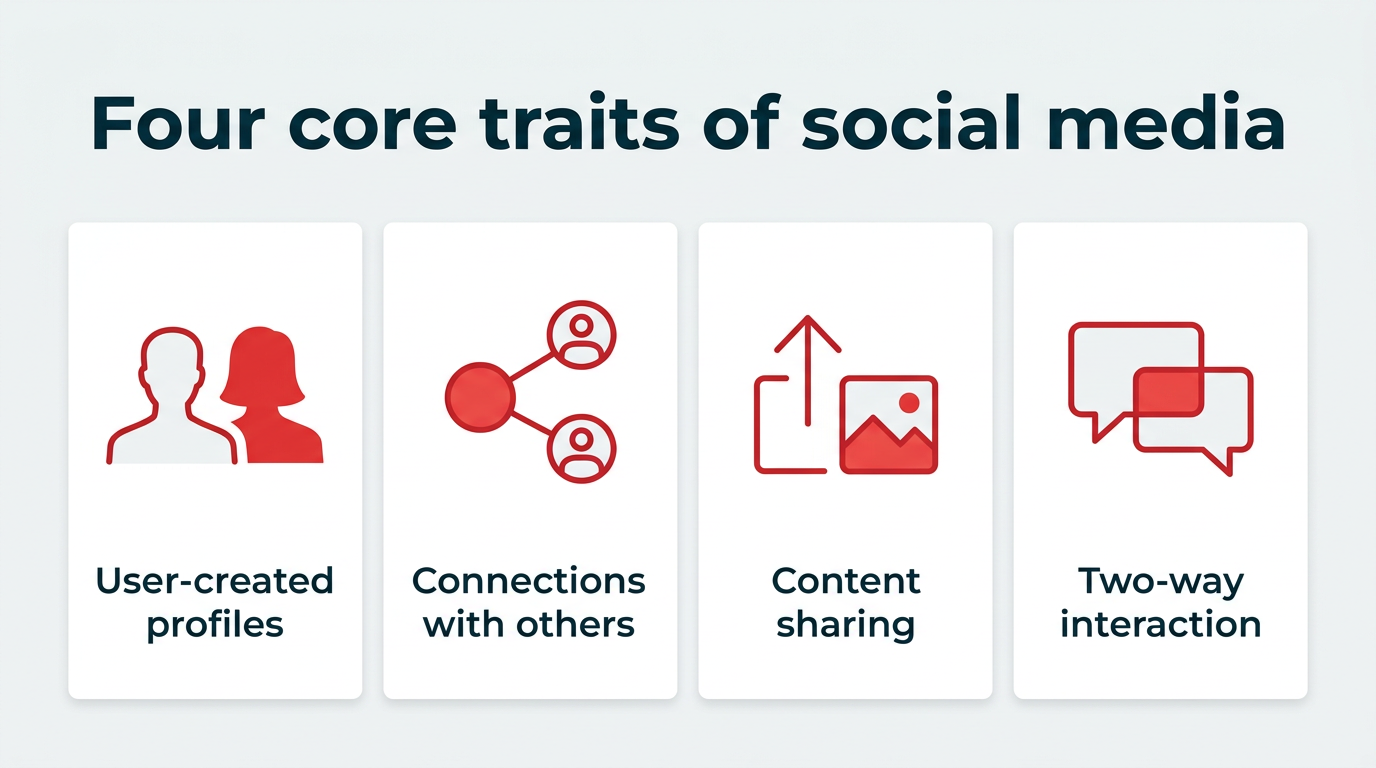
To distinguish a social network from a simple website or chat tool, historians and technologists generally look for four core traits:

- User Profiles: A digital identity representing the individual.
- Network Connections: The ability to link with other users (the "social graph").
- User-Generated Content (UGC): The primary value is created by users, not the platform owner.
- Real-Time Interaction: Features like feeds, comments, and likes that allow for immediate engagement.
Today, the scale of this ecosystem is staggering. The average user spends approximately 2.5 hours per day across various platforms, making social media the most significant attention-capture mechanism in human history.
II. Chronology: The Six Eras of Social Media
1. The Proto-Social Era (1973–1994)
Long before the World Wide Web was a household term, networked computers were being used for social interaction.
- 1973: Community Memory. One of the first public computerized bulletin board systems was established in Berkeley, California, allowing users to post messages via shared terminals.
- 1979-1980: Usenet. Developed by Tom Truscott and Jim Ellis, this distributed discussion system allowed users to post messages to "newsgroups," laying the groundwork for modern forums like Reddit.
- 1988: Internet Relay Chat (IRC). This popularized real-time group text conversation, a precursor to modern messaging apps.
- 1994: GeoCities. By allowing everyday users to create personal web pages, GeoCities democratized the concept of "having an online presence."
2. The Birth of the Profile (1997–2003)
This era introduced the concept of the "social network" as we know it today.
- 1997: SixDegrees.com. Widely recognized as the first true social media site, it allowed users to create profiles and list connections.
- 1999: LiveJournal. This platform combined blogging with social networking, fostering early online communities based on shared interests.
- 2002: Friendster. Friendster brought social networking into the mainstream, though it eventually succumbed to technical debt and the rise of more agile competitors.
- 2003: Myspace and LinkedIn. Myspace became the cultural hub for teens and musicians, while LinkedIn carved out a niche for professional networking that remains dominant today.
3. The Facebook Hegemony and Web 2.0 (2004–2010)
This period saw social media move from a curiosity to a daily habit for millions.
- 2004: TheFacebook. Launched by Mark Zuckerberg at Harvard, it quickly expanded to other universities and then the general public, eventually becoming the world’s largest social network.
- 2005: YouTube and Reddit. These platforms introduced massive-scale video sharing and community-driven content aggregation.
- 2006: Twitter. With its 140-character limit, Twitter introduced "microblogging" and the concept of the real-time global town square.
- 2007: The Hashtag. Proposed by user Chris Messina, the hashtag (#) revolutionized how content was categorized and how movements were organized.
4. The Mobile and Visual Revolution (2010–2016)
As smartphones became ubiquitous, social media shifted from text-heavy desktop interfaces to visual-first mobile apps.
- 2010: Instagram. Focused on filtered photography, Instagram tapped into the visual nature of mobile life. It was acquired by Facebook in 2012 for $1 billion.
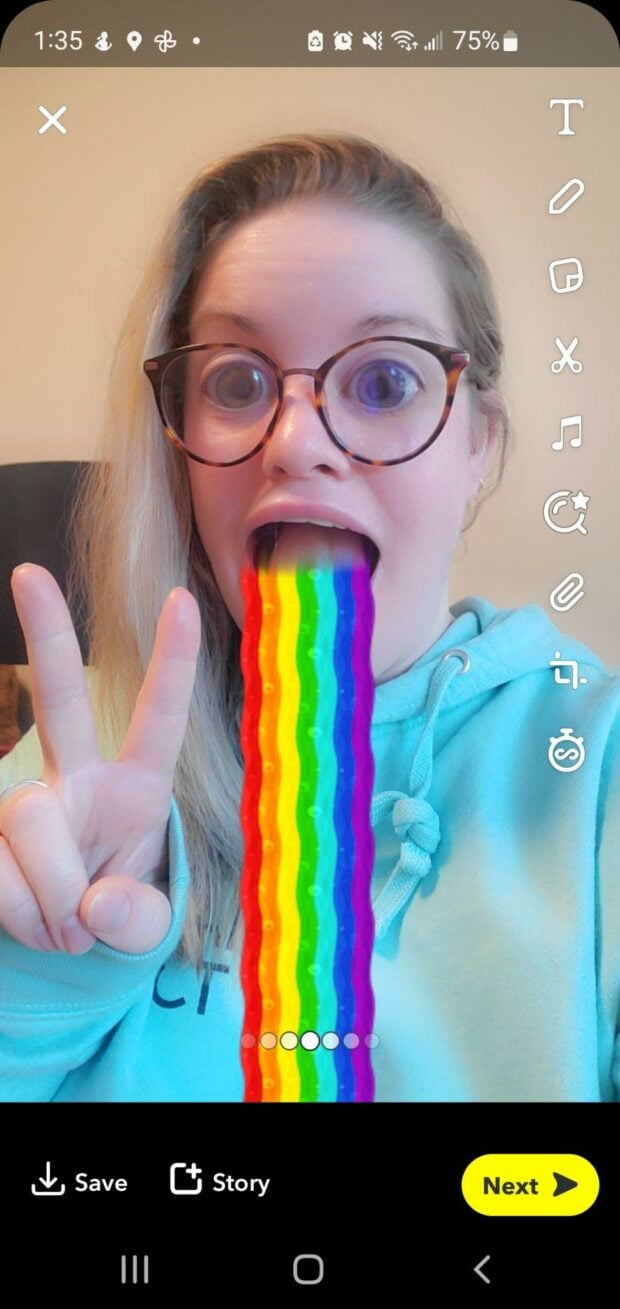
- 2011: Snapchat. By introducing ephemeral content (messages that disappear), Snapchat appealed to a younger demographic seeking privacy and authenticity.
- 2013: Vine. Though short-lived, Vine’s six-second video format pioneered the short-form video genre.
- 2016: Instagram Stories. By copying Snapchat’s ephemeral format, Instagram solidified its dominance in the visual space.
5. The Algorithm and Creator Era (2016–2022)
The focus shifted from "who you know" (the social graph) to "what you like" (the interest graph).
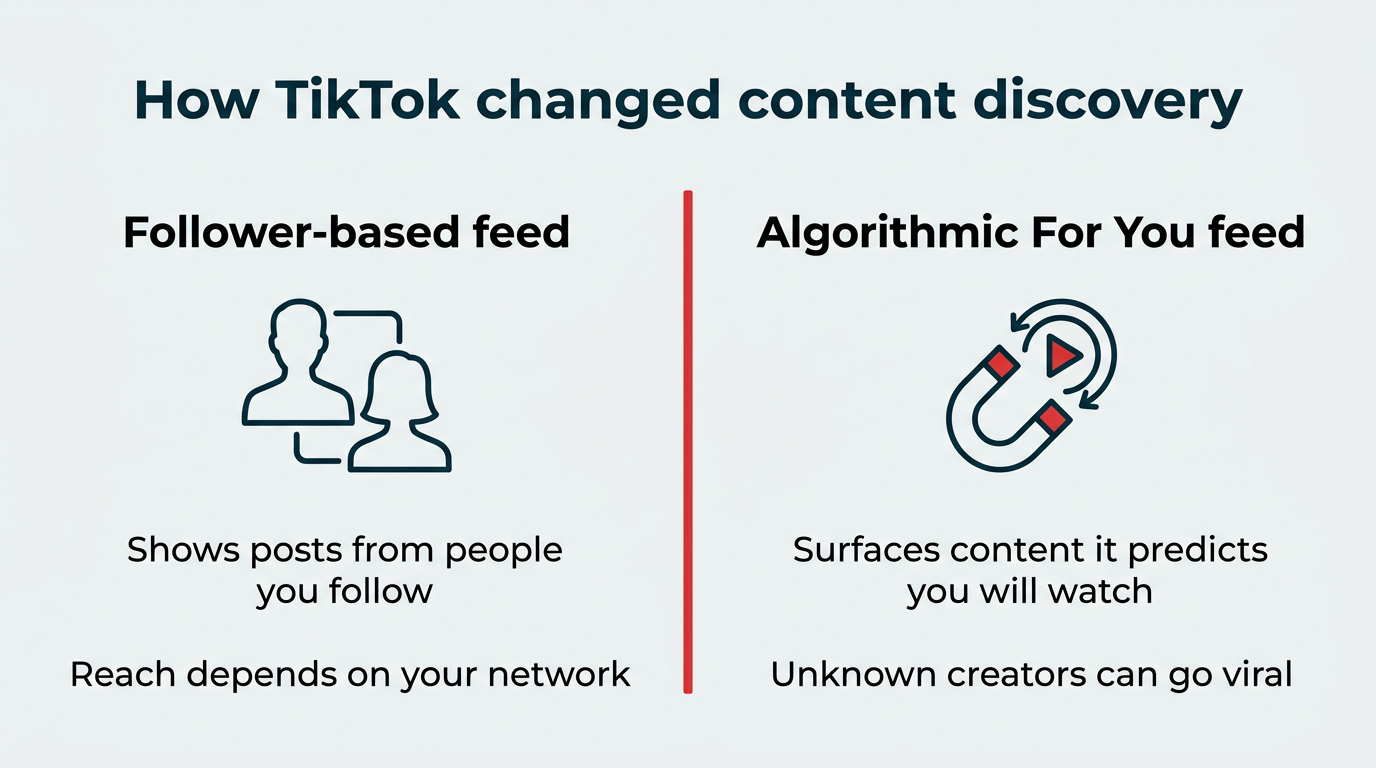
- 2017: TikTok (Global Launch). ByteDance’s TikTok used a powerful recommendation engine to surface content regardless of a user’s follower count, fundamentally changing content discovery.
- 2018: The Cambridge Analytica Scandal. This watershed moment brought data privacy to the forefront of global conversation, leading to increased regulation.
- 2020: Social Commerce. The pandemic accelerated the integration of shopping into platforms like Instagram and TikTok, turning feeds into storefronts.
6. The Era of AI and Fragmentation (2023–2026)
The current era is defined by the integration of Generative AI and a move toward decentralized or "niche" platforms.
- 2023: The Rebrand of X. Following Elon Musk’s acquisition of Twitter, the platform’s rebranding and policy changes led to a fragmented landscape, giving rise to competitors like Threads and Bluesky.
- 2024-2026: AI Integration. Platforms now use AI not just for recommendations, but for content creation, automated customer service, and hyper-personalized advertising.
III. Supporting Data: Social Media by the Numbers (2026)
The scale of social media in 2026 reflects its total integration into human life.

| Platform | Launch Year | Primary Content Format | Monthly Active Users (Est. 2026) |
|---|---|---|---|
| 2004 | Multi-format (Text/Photo/Video) | 3.1 Billion | |
| YouTube | 2005 | Video (Long & Short-form) | 2.7 Billion |
| 2010 | Visual (Photo/Reels/Stories) | 2.4 Billion | |
| TikTok | 2016 | Short-form Video | 1.9 Billion |
| 2003 | Professional/Text-based | 1.1 Billion | |
| X (Twitter) | 2006 | Real-time Text/Video | 600 Million |
| 2010 | Visual Discovery | 600 Million |
Key Economic Indicators:
- The Creator Economy: Valued at over $500 billion in 2026, as influencers and independent creators leverage platforms for direct monetization.
- Social Commerce: Nearly 20% of all e-commerce transactions now originate directly within a social media application.
IV. Official Responses and Regulatory Shifts
As social media’s influence grew, so did the scrutiny from governments and regulatory bodies. The "wild west" era of the early 2000s has been replaced by a rigorous—and often contentious—legal landscape.
Data Privacy and the "Techlash"
Following the 2018 Cambridge Analytica revelations, where data from 87 million users was harvested without consent, the European Union implemented the General Data Protection Regulation (GDPR). This set a global standard for data transparency, forcing platforms to give users more control over their personal information.
Content Moderation and Election Integrity
In 2016 and 2020, social media platforms faced intense criticism for their role in spreading disinformation. In response, platforms like Meta and Google have invested billions in AI-driven moderation and "fact-checking" partnerships. However, these moves have sparked debates over free speech, with critics on both sides of the political spectrum accusing platforms of either doing too little or over-censoring.
The Push for Decentralization
In 2024 and 2025, the Digital Markets Act (DMA) in the EU began forcing "gatekeeper" platforms to allow for more interoperability. This has encouraged the growth of decentralized networks like Bluesky and Mastodon, which operate on open protocols rather than closed, corporate-owned servers.
V. Implications: The Future of Connection
The evolution of social media has profound implications for society, business, and individual psychology.
For Society: The End of the "Shared Reality"
While social media has empowered marginalized voices and facilitated global movements (e.g., #BlackLivesMatter, #MeToo), it has also contributed to "echo chambers." Algorithmic feeds tend to show users content that reinforces their existing beliefs, making cross-cultural and political consensus more difficult to achieve.

For Business: The Two-Way Conversation
For brands, social media is no longer an optional marketing channel; it is the primary interface for customer service, market research, and sales. The shift from "broadcast" to "dialogue" means companies must be more transparent and responsive than ever before. Tools like Hootsuite have become essential for enterprise teams to manage this 24/7 conversation across multiple channels.
For the Individual: The Mental Health Challenge
The rise of the "attention economy"—where platforms are designed to maximize time-on-site—has led to growing concerns regarding mental health. Issues such as "doomscrolling," social comparison, and screen addiction have prompted a "digital wellness" movement, with many Gen Z users opting for "digital detoxes" or moving toward smaller, private group chats (like WhatsApp or Discord) instead of public feeds.

Looking Ahead
The history of social media suggests that the next decade will be defined by Artificial Intelligence and Augmented Reality (AR). As AI makes it easier to generate "synthetic" content, the value of "verified" and "human" interaction will likely increase. The platforms that survive will be those that can successfully navigate the tension between providing hyper-personalized entertainment and maintaining the human trust that made social networking possible in the first place.
 Basiran
  Nana Muazin
  Nila Kartika Wati