
 By Iffa Jayyana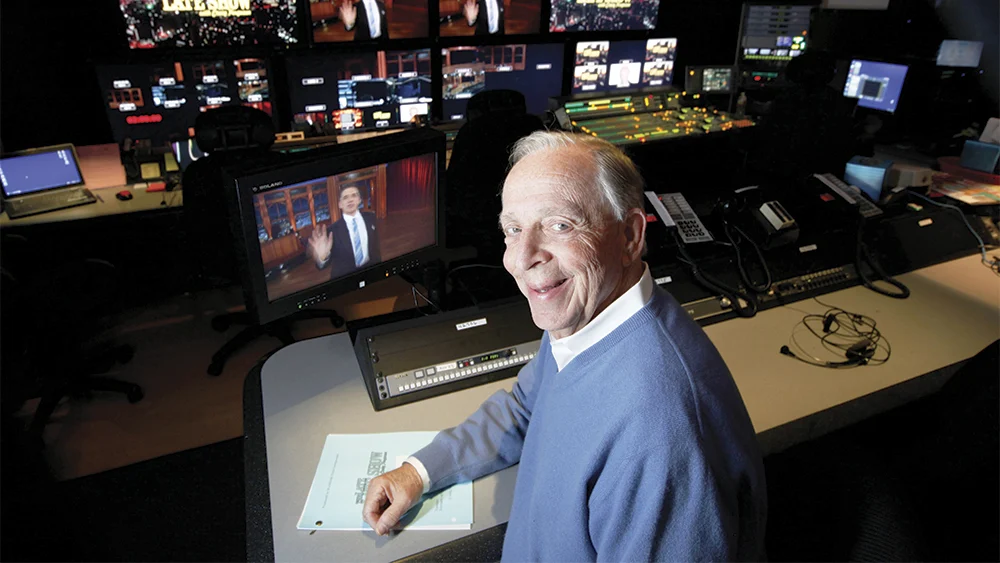
The landscape of American late-night television is a sprawling, high-stakes empire built on the chemistry between a host and their audience. While the names on the marquees—Carson, Letterman, Ferguson—are the ones etched into cultural history, the bedrock upon which these legacies were constructed was laid by a man who famously preferred the shadows to the spotlight. Peter Lassally, the legendary producer whose career spanned the golden age of broadcasting and served as the steady hand behind three of the most influential talk show franchises in history, has died at the age of 93.
A Holocaust survivor who arrived in New York as a teenager with little more than resilience and an eye for talent, Lassally became the industry’s definitive "host whisperer." His death marks the end of an era for a medium he helped define, refine, and sustain for over half a century.
A Life Forged in Resilience: From Hamburg to Radio City
Peter Lassally’s journey to the helm of American culture began in the darkest chapters of the 20th century. Born in Hamburg, Germany, in 1932, his childhood was upended by the rise of the Nazi regime. As a Jewish family, the Lassallys fled to the Netherlands, seeking refuge from the encroaching terror. It was there that his sister attended school with Anne Frank, a chilling connection to history that would define his early years.
The family’s safety was short-lived. Lassally, along with his mother and sister, was imprisoned in the Westerbork transit camp before being moved to the Theresienstadt concentration camp. Having survived the horrors of the Holocaust, the family immigrated to New York in 1947. This formative experience—the ability to navigate impossible circumstances with quiet grace—would later become the hallmark of his professional demeanor.
Lassally entered the television business at the ground floor. At age 19, he joined the NBC page program, working alongside future broadcast titan Regis Philbin. From his early days as an usher at Radio City Music Hall to his initial foray into radio and Arthur Godfrey’s influential programs, Lassally developed an intuitive understanding of the medium. He learned not just how to produce a show, but how to gauge the pulse of an audience, a skill that would later make him indispensable to the giants of the industry.
The "Host Whisperer": A Chronology of Influence
Lassally’s career is not merely a list of credits; it is a roadmap of late-night television’s evolution. His professional life can be categorized into three definitive chapters, each marked by his ability to nurture unique comedic voices.
The Carson Era
In the 1970s, Lassally joined The Tonight Show Starring Johnny Carson. He quickly rose through the ranks to become the executive producer, serving as the trusted confidant to the king of late night. During this period, Lassally was instrumental in maintaining the show’s dominance as the cultural touchstone of America. He remained with Carson until the legendary host’s retirement in 1992, effectively serving as the keeper of the late-night flame during an era when television had the power to unite a divided nation every single night.
The Letterman Transition
When Carson retired, David Letterman was the industry’s natural successor, yet he was famously passed over by NBC in favor of Jay Leno. It was a moment of immense professional betrayal that could have derailed Letterman’s career. Instead, it became the catalyst for one of the greatest shifts in television history. Lassally, joining Letterman’s Worldwide Pants production shingle, played a pivotal role in the decision to abandon NBC and build a new franchise at CBS. He was the architect of the Late Show, helping Letterman translate his subversive, unconventional style into a major network format that would challenge the status quo for decades.
The Ferguson Renaissance
Lassally’s "final act" showcased his uncanny ability to identify raw potential. When he took over the reins of The Late Late Show in 2005 for Craig Ferguson, he wasn’t just producing a show; he was molding a performer. Ferguson, known at the time primarily for his role on The Drew Carey Show, was an unconventional choice for a talk show host. Lassally, however, recognized a unique, improvisational spirit in Ferguson that other executives ignored. Under Lassally’s guidance, The Late Late Show evolved into a critically acclaimed, surreal, and deeply personal outpost of late-night television, proving that Lassally’s "surgical precision" remained as sharp as ever.
The Philosophy of the "Ego-less" Producer
Lassally’s reputation in the industry was unique. In a business defined by outsized egos and public grandstanding, he was, as former CBS Entertainment chairman Nina Tassler described him, the "strong, silent type."
His approach to production was rooted in a quiet, nurturing style. He didn’t demand the spotlight; he sought to illuminate those standing in it. "He’s kind of ego-less," Tassler noted in a 2015 Variety profile. "There’s a comfort he derives from not wanting or needing to be in the spotlight." This lack of ego allowed him to act as a diagnostic tool for troubled productions, fixing structural problems with a steady hand and a calm demeanor that kept talent grounded and crews motivated.
Michael Naidus, who served as showrunner alongside Lassally on the Ferguson years, provided a moving tribute that captured the essence of the man. "Peter had two loves in his life that lasted more than a half-century, the first with his lovely wife, Alice, and the second with the world of talk television," Naidus said. "Each of those love affairs was a two-way street. Quite literally, hundreds of millions of people owe their late-night smiles and laughs to this beautiful soul."
Naidus also famously remarked on Lassally’s simple, humble habits, noting that his "grin was as ubiquitous as his daily sliced apple." For those who worked with him, Lassally was not just a boss but a mentor who taught the nuances of the format with infinite patience.
Supporting Data and Industry Impact
Over the course of his career, Lassally’s contributions were recognized with two Emmy Awards, though his peers often argued that the impact of his work far exceeded the hardware on his shelf.
- Longevity: His career spanned from the infancy of television in the 1950s to the modern era of the 2010s, allowing him to bridge the gap between traditional broadcast models and the shifting landscape of digital-age comedy.
- Talent Discovery: His legacy includes the cultivation of diverse comedic styles—from Carson’s polished, monolithic performance to Letterman’s ironic, postmodern deconstruction, and finally to Ferguson’s chaotic, existential storytelling.
- The Worldwide Pants Legacy: By helping establish the Worldwide Pants model, Lassally ensured that hosts had more control over their content, a precedent that continues to influence how late-night shows are produced and managed today.
Implications: A Void in the Television Landscape
The passing of Peter Lassally serves as a poignant reminder of the "human element" in television. In an era where late-night programming is increasingly influenced by social media virality, data analytics, and corporate synergy, Lassally represented the old-school ethos of the producer as an artist.
He understood that a talk show is fundamentally a conversation, and he curated those conversations with a level of care that is rarely seen in modern broadcast cycles. His ability to act as a buffer between the network and the talent allowed hosts to take risks that defined the cultural zeitgeist. Without his intervention, it is entirely possible that the Late Show would not have become the institution it was, and the specific brand of late-night television that defined the late 20th century might have looked drastically different.
As the industry reflects on his passing, the consensus is clear: Peter Lassally was, as Naidus put it, "irreplaceable." He leaves behind a legacy of laughter, a body of work that shaped American culture, and a family—including his daughter Andrea, son Tom, and four grandchildren—who will remember him not as the titan of television, but as the man who loved his wife, his craft, and the simple joy of a shared laugh.
He retired in 2015, stepping away as the industry began its pivot toward the Corden era, but his imprint remains on the very format of the talk show. While the stage lights eventually dimmed on his career, the warmth he brought to the screen remains a part of the permanent tapestry of television history.
 Nila Kartika Wati
  Siti Muinah
  Ammar Sabilarrohman