
 By Pevita Pearce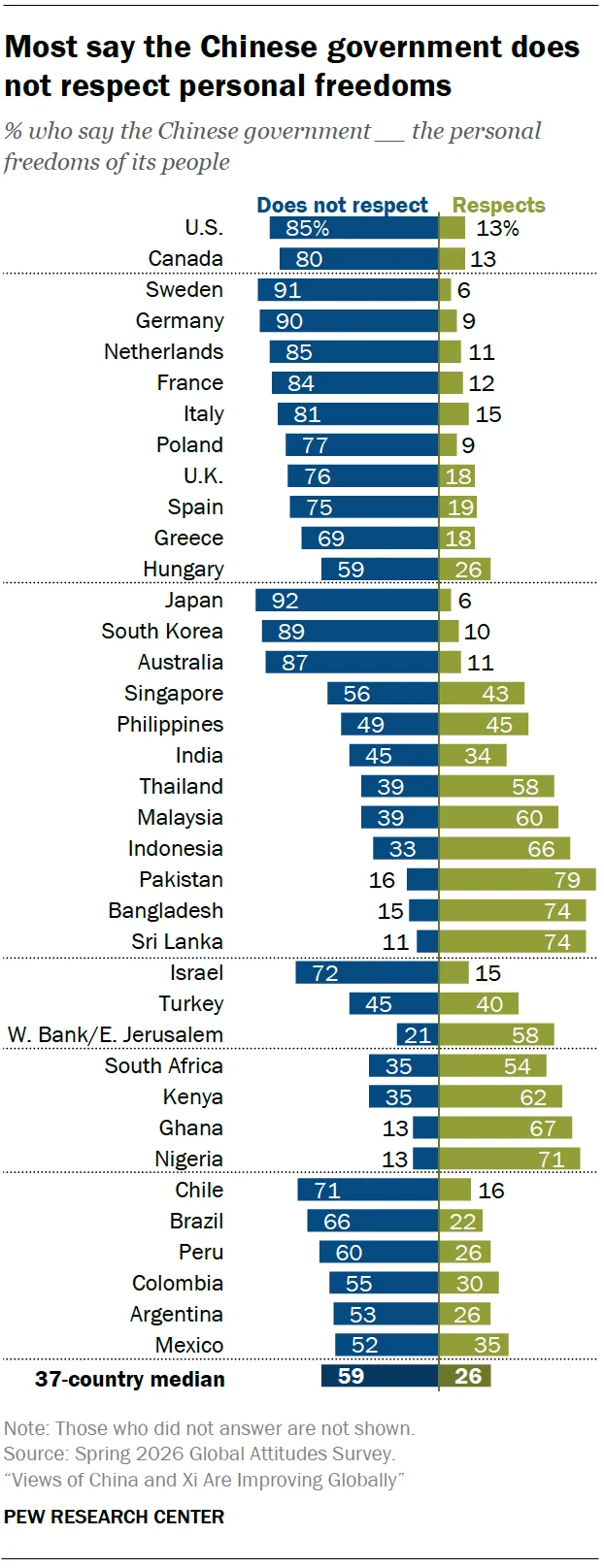
In a significant transformation of the international geopolitical landscape, public opinion toward China has undergone a marked reversal from the historic lows observed during the early years of the COVID-19 pandemic. A comprehensive new study from the Pew Research Center, encompassing over 45,000 respondents across 37 nations, reveals that China’s global image has not only stabilized but, in many regions, reached new heights of favorability.
This trend is set against the backdrop of a declining perception of the United States. As global confidence in the U.S. wanes, China has managed to position itself as a more favorable, or at least a more acceptable, alternative in the eyes of many. The findings suggest that we are witnessing a pivotal moment in international relations, where the "soft power" competition between the two superpowers is leaning increasingly in Beijing’s favor across the Global South and parts of Europe.

Main Facts: The Resilience of China’s Global Image
The 2026 survey, conducted between February 8 and May 13, paints a nuanced picture of a world divided by economic status and geography. Key findings include:
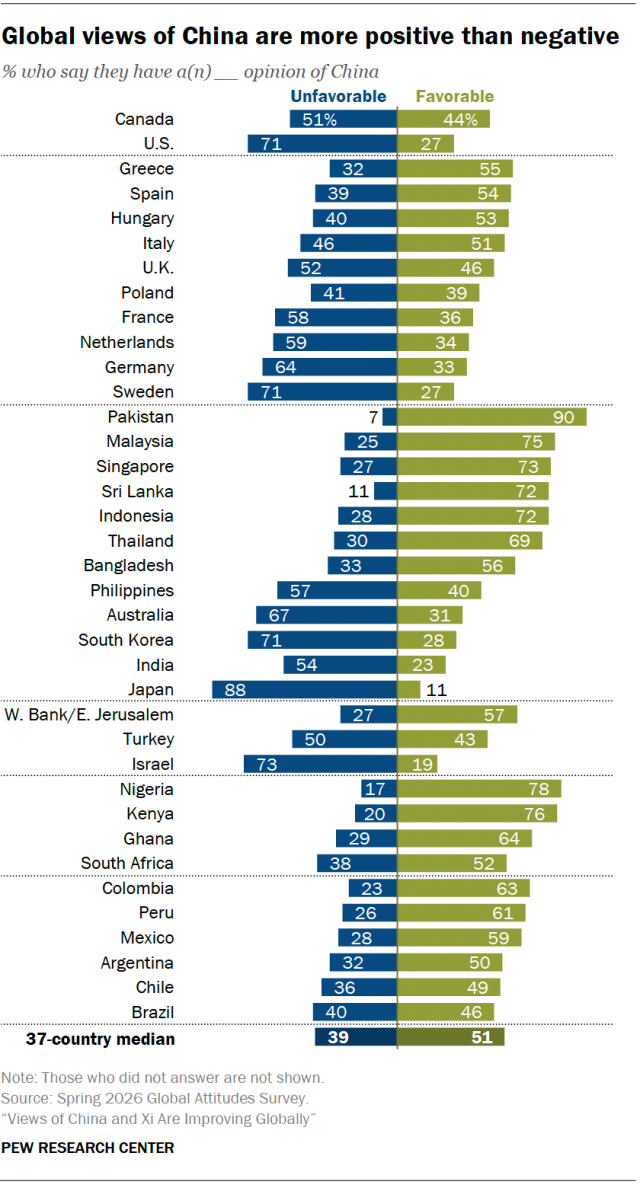
- Broad Favorability: Across the 37 countries surveyed, a median of 51% of adults hold a favorable view of China, compared to 39% who hold an unfavorable view.
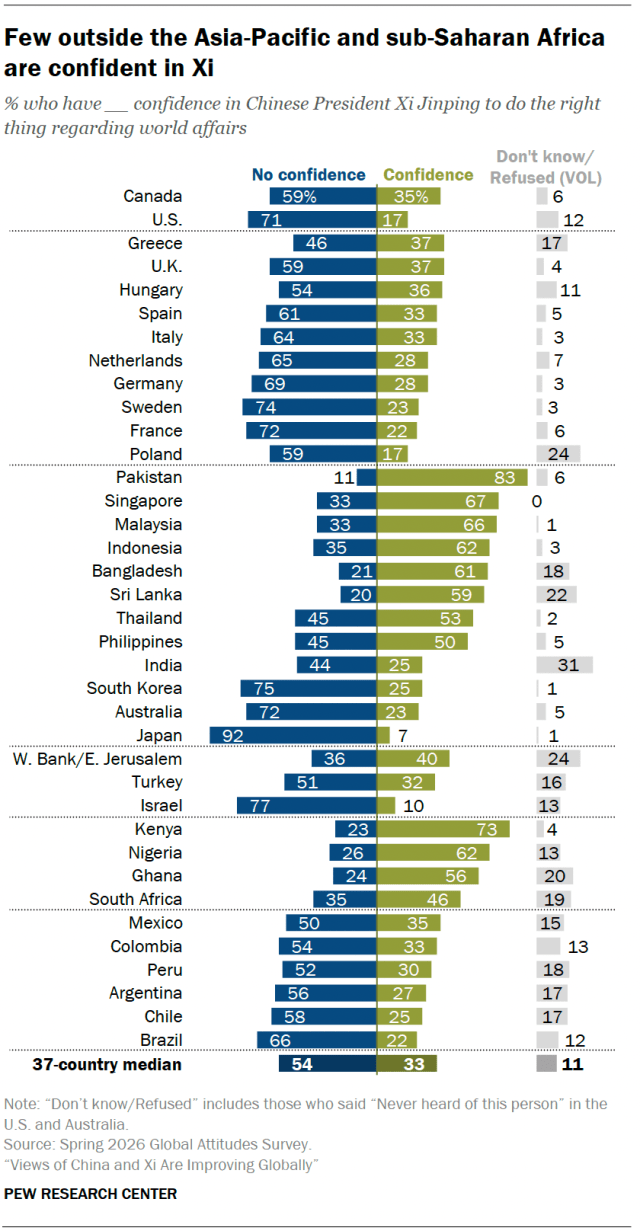
- The Superpower Comparison: The most striking takeaway is the comparative shift in status. In 25 of the 37 countries surveyed, China is now viewed more positively than the United States. Furthermore, more respondents expressed confidence in Chinese President Xi Jinping’s handling of world affairs than in U.S. President Donald Trump in 22 countries.
- Regional Disparities: Positive sentiment is heavily concentrated in sub-Saharan Africa and parts of Latin America. Conversely, the Asia-Pacific region remains a theater of extremes: while 90% of Pakistanis view China favorably, only 11% of Japanese adults share that sentiment.
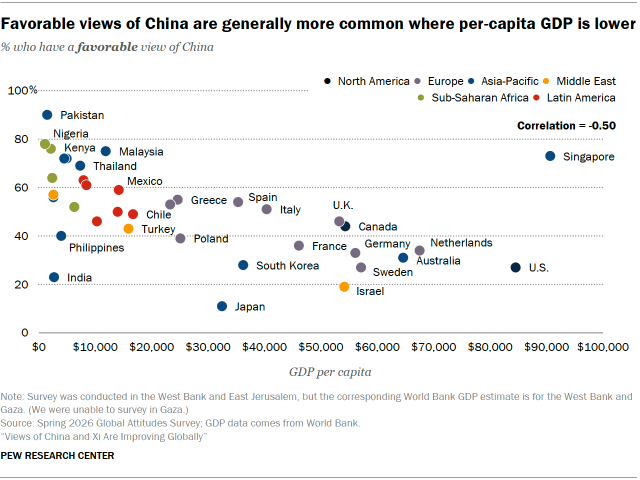
- The Wealth Gap: A persistent pattern identified by researchers is that favorability toward China tends to decline in wealthier nations. Australia, Japan, and South Korea represent the "wealthy skeptic" contingent, while Singapore stands out as a unique exception, maintaining high favorability despite its high per-capita GDP.
A Chronology of Sentiment: From Pandemic Lows to 2026 Highs
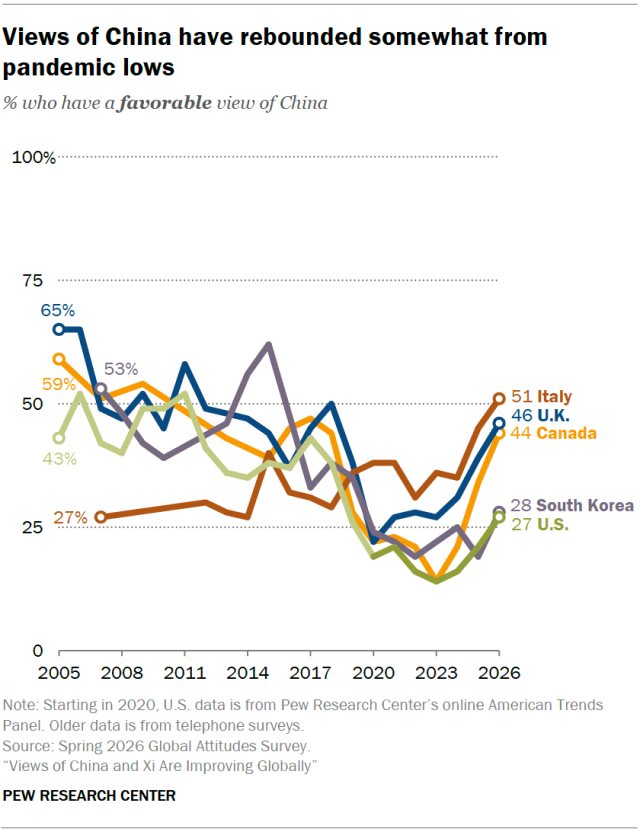
To understand the current state of public opinion, one must look back at the trajectory of the 2020s. At the onset of the decade, the global perception of China was severely damaged by the initial outbreak of COVID-19. Public health concerns, combined with questions regarding transparency and international accountability, sent favorability ratings into a tailspin.
2021–2023: The Period of Stagnation
During the mid-pandemic years, many nations maintained a guarded, if not hostile, stance toward Beijing. Research from this period highlighted a growing trend of "Xi-era" skepticism, where the centralization of power in China began to alienate Western democratic allies.
2024–2025: The Rebound Begins
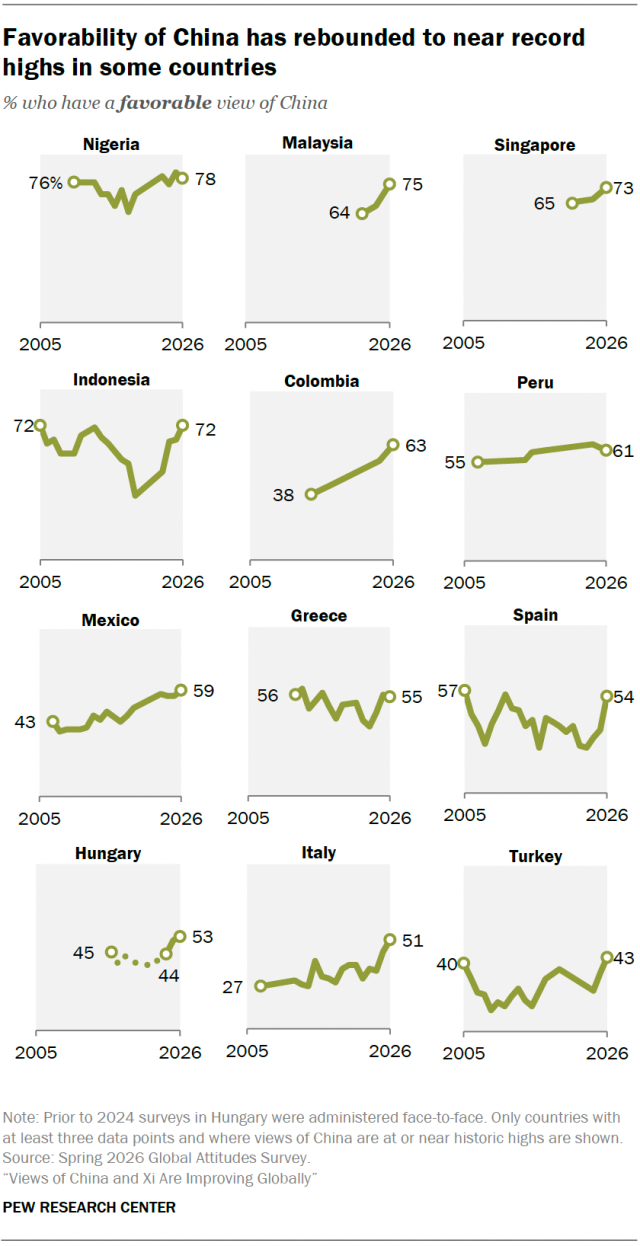
As the global economy grappled with inflation and political polarization in the West, China accelerated its diplomatic and economic outreach. Investments in infrastructure, the promotion of the "Zero-Tariff" policy in Africa, and the cultivation of new trade routes in Latin America began to yield dividends in public perception. By late 2025, countries like Italy and Spain began to see a marked uptick in positive sentiment, signaling that the "pandemic stain" was fading.
2026: The Current Landscape
The latest data shows that for many nations, the current favorability of China is at or near two-decade highs. Italy, for instance, saw a 20-percentage-point jump in favorability compared to 2022, while Spain reached its first net-positive rating since 2011.
Supporting Data: Why Opinions Are Shifting
The Pew Research Center data offers a granular look at the demographic and economic factors driving these shifts.
Age and Ideology
Younger cohorts in nearly every surveyed country are more likely to express positive views of China than their older counterparts. This suggests a generational divide in how the rise of China is perceived—younger generations may be less influenced by the Cold War-era geopolitics that still color the views of older citizens. Additionally, respondents who identify with the ideological left are statistically more likely to view China favorably than those on the right, mirroring domestic political divisions in the West.
The "Personal Freedoms" Paradox
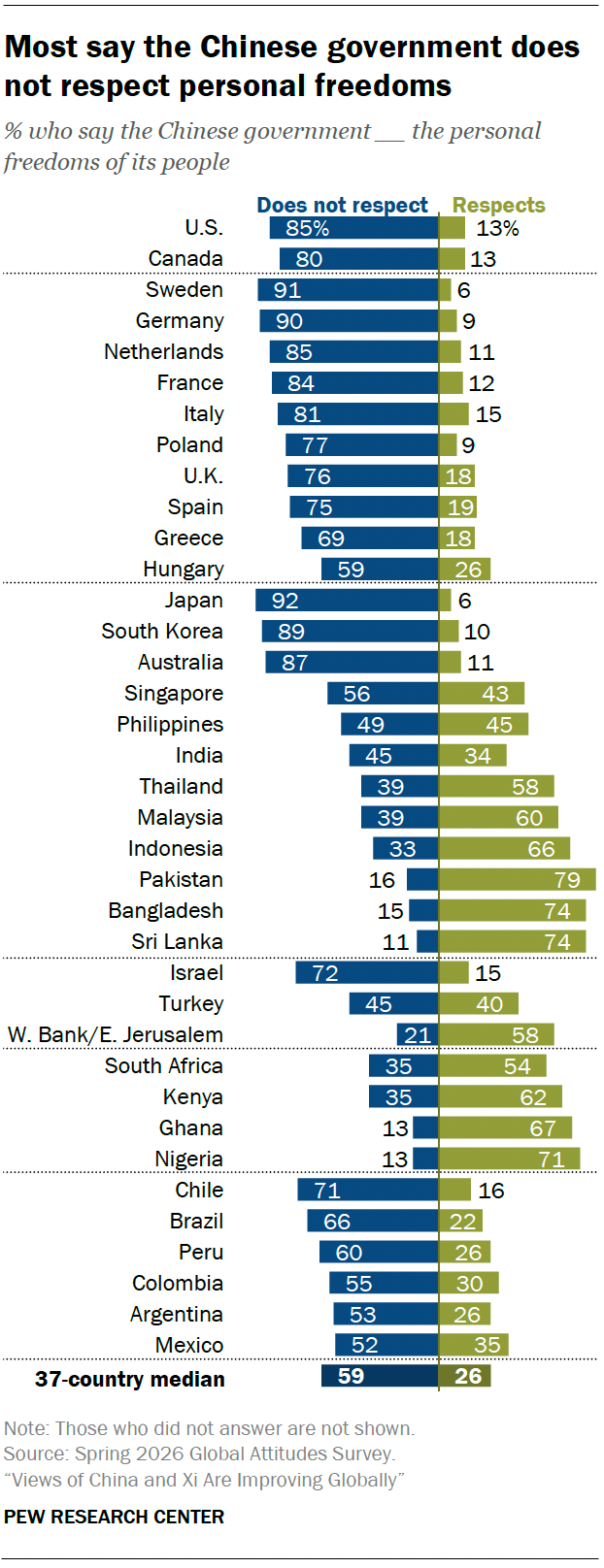
Despite the overall rebound in favorability, China continues to face significant headwinds regarding its domestic human rights record. When asked whether the Chinese government respects the personal freedoms of its citizens, the response is overwhelmingly negative. In 26 of the 37 countries, clear majorities believe China does not respect personal freedoms. This creates a paradox: many citizens view China as an effective global economic partner and a source of stability, even while they harbor deep concerns about its internal governance.
Economic Influence in Middle-Income Countries
In 17 middle-income nations—including Brazil, Nigeria, and Indonesia—the survey highlights a specific, targeted success for Beijing. China’s focus on infrastructure financing and trade has created a perception of it as a "reliable partner." In these regions, the belief that China considers the interests of other countries when making international policy has grown significantly compared to data from five years ago.
Official Responses and Diplomatic Context
While the Pew Research Center is a non-partisan, neutral research organization, the data it provides serves as a critical thermometer for global diplomatic relations. Beijing has historically pointed to such surveys as evidence of the success of its "Belt and Road" initiatives and its commitment to a "multipolar world."
Western policymakers, particularly in Washington, are closely watching these trends. The fact that the U.S. is increasingly viewed as a less reliable partner than China in the developing world is forcing a rethink of U.S. foreign policy. The decline in the perception of the U.S. as a defender of personal freedoms, combined with political volatility, has created a power vacuum that China is actively filling.
Implications: A World in Transition
The implications of this shift are profound. If the trend of the last three years continues, the global diplomatic architecture may see a fundamental transformation:
- A Shift in Multilateralism: If China is viewed as more "accountable" or "interested" in the needs of middle-income countries, international organizations may find their agendas increasingly influenced by Beijing’s priorities rather than the traditional Western-led consensus.
- Economic Realignment: The data shows a strong correlation between economic dependence and positive sentiment. As China continues to offer alternatives to traditional Western lending and trade frameworks, more nations may tilt toward Beijing’s economic orbit.
- The Persistence of Skepticism: It is crucial to note that while China’s image has improved, it has not "won" the hearts and minds of the entire world. In wealthy, advanced democracies, the skepticism remains entrenched. This suggests a future where the world remains divided not just by wealth, but by a fundamental disagreement over the values of governance and civil liberties.
In conclusion, the 2026 data indicates that China has successfully navigated the reputational crises of the early decade. By leveraging economic diplomacy and benefiting from the relative decline in the international standing of the United States, Beijing has solidified its position as a global leader. However, the disconnect between favorable views of China as an international actor and the persistent disapproval of its domestic human rights practices remains a major friction point—one that will likely define the contours of global diplomacy for years to come.
 Neng Nana