
 By Azzam Bilal Chamdy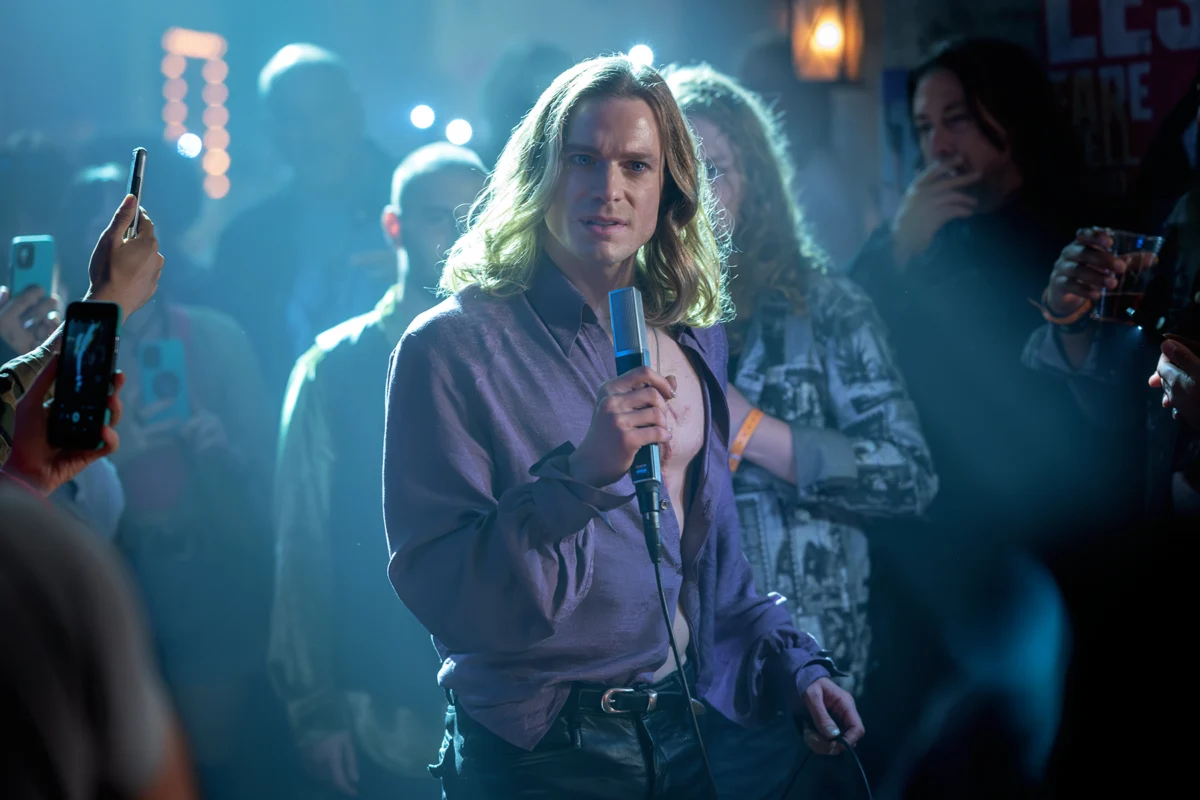
In the high-stakes, gothic landscape of AMC’s Interview with the Vampire, the season finale offers a departure from the grandiosity typically associated with the immortal Lestat de Lioncourt. While fans of Anne Rice’s seminal novels know Lestat as the ultimate, earth-shaking rock god—a figure whose music has the power to stir the undead and terrify the living—the television adaptation by Rolin Jones presents a more nuanced, and perhaps more tragic, reality. In this iteration, the "Brat Prince" finds himself not at the top of the Billboard charts, but struggling to find relevance in a world that is largely indifferent to his sonic offerings.
The Anatomy of a Failed Icon: Navigating the Charts and the Critics
For creator Rolin Jones, music producer Daniel Hart, and lead actor Sam Reid, the challenge was twofold: how to adapt an iconic literary figure for a modern audience while grounding his supernatural ego in the harsh reality of contemporary music consumption. The result is a Lestat whose massive literary fandom is reimagined as a niche, albeit intense, cult following.
In the show’s universe, Lestat’s posthumous LP is not a runaway success. Instead, it is subjected to the brutal, unforgiving gaze of modern digital-era music journalism. With scathing write-ups from outlets like Pitchfork and Stereogum, the show highlights the disconnect between Lestat’s self-perception as a generational talent and his actual market performance. In a moment of meta-commentary, the show even pits Lestat’s chart prospects against the absolute dominance of Drake—a "prophetic" narrative choice that proved eerily accurate when the real-world rapper continued his historic chart-topping streak.
Chronology of a Performance: From Bowie to "Big Cat Energy"
Preparing to embody an immortal rock star required Sam Reid to look beyond the page. Reid, who is currently starring in a production of Doubt in Sydney, explains that his preparation was less about imitation and more about capturing an "alien" essence.
The Research Phase
Reid’s preparation involved a deep dive into the archives of rock history. He examined bootleg recordings of David Bowie’s concerts in Los Angeles, not to mimic the Thin White Duke, but to understand how to maintain a sense of the otherworldly while performing. "I didn’t want it to feel overly choreographed," Reid notes. "Lestat has always been a performer. He has always naturally taken on this role of a larger-than-life character."
The "Big Cat" Methodology
Perhaps the most unorthodox part of Reid’s preparation involved a YouTube rabbit hole centered on feline behavior. Reid identifies a "big cat energy" in Lestat—a predatory, cocky, and feline grace that he channeled during his musical sequences. This physicality served as the foundation for the character’s onstage persona: arrogant, fluid, and inherently performative.
Literary vs. Modern Influences
While Reid leaned into the Jim Morrison references present in Anne Rice’s source material, he found other suggested touchstones, like Jon Bon Jovi, less applicable to the character’s specific brand of torment. Instead, he drew inspiration from the "id-first" musicality of Fiona Apple and the avant-garde artistry of St. Vincent. Furthermore, watching the Kurt Cobain documentary Montage of Heck proved transformative. Viewing the late Nirvana frontman through the lens of a "misunderstood, vulnerable soul" helped Reid bridge the gap between Lestat’s supernatural power and his profound human insecurity.
Supporting Data: The Role of Music in the Narrative Arc
The decision to make music a central pillar of the season was a calculated creative risk. By using the album as a framing device, the show effectively strips away the "unflappable" posturing of the vampire. In the finale, the audience sees a version of Lestat who is being roasted by his own inner demons.
This, according to Reid, is the heart of the story. Lestat’s modus operandi is fundamentally rooted in a desperate need for genuine love and validation—a need he publicly disavows but privately craves. When the music fails, and the reviews turn hostile, the narrative forces Lestat to confront the possibility that his artistic output is not the universal language he believed it to be.
Reid’s performance in these moments is a study in disintegration. As the Brat Prince finds himself rejected by both the arts and the charts, the audience is forced to witness the crumbling of his ego. The armor of the "rock star" slips away, revealing a character who is, in many ways, just as broken as the mortals he hunts.
Official Responses and Insights from the Cast
In an exclusive discussion, Reid addressed several key questions regarding the character’s trajectory, specifically concerning gender, performance, and the nature of criticism.
On Gender and Toxicity
Addressing the show’s nod toward Lestat’s fluid view of gender, Reid clarifies that this is not a "gender crisis" for the character, but rather an acknowledgment of his own internal toxicity. "I feel like it does give a nod to where he might be going in terms of acknowledging that there is a toxicity that exists within him that might be connected to his maleness," Reid explains.
The Philosophy of Criticism
When asked about the role of the negative reviews in the show, Reid offers a poignant perspective on the artistic process. He suggests that the negative reception serves as a metaphor for the artist’s choice: "Do I take that as a full stop? Or do I take that as a semicolon?" Even when his character is at his lowest, facing death and failure, Lestat’s resilience shines through. He remains committed to the act of creation, even when the grammar of his life—and his music—becomes impossible to structure.
The Musical Process
Regarding his own vocal performance, Reid remains modest but appreciative of the grueling process. "I sat down and listened to all of the recordings that we did, and it was sort of an astonishing moment where I thought, ‘My God, look how much work this is,’" he admits. For Reid, the concert segments felt less like a rock performance and more like a theatrical extension of his acting, providing a secure space to explore a facet of the character that had previously remained dormant.
Implications: The New Trajectory
The finale leaves the audience with a complex, bittersweet cliffhanger. Lestat, in his dying mind, conjures a performance—not for a stadium full of screaming fans, but for the ghost of Louis’ brother, Paul. This shift is critical. It moves the character away from the performative, fame-seeking version of himself toward a moment of profound, quiet realization.
The interaction between Louis and Lestat in the finale suggests that the two have reached a new understanding. By acknowledging their mutual, enduring capacity to be "soulmates," the characters have moved beyond the self-absorption that characterized their earlier relationship.
If the series continues, this shift implies a completely different trajectory for the Vampire Lestat. He is no longer defined solely by his fame or his failures in the eyes of the public. Instead, he exists in a new state of being—one where the armor of the rock star is no longer necessary to protect a heart that, for all its immortal, predatory, and arrogant qualities, is finally learning to be honest.
For Sam Reid, the journey of bringing the music of the vampire to life has been a testament to the power of character-driven performance. As he continues his work in the theater, the "rock star" phase of Lestat’s life remains a landmark achievement—a successful exploration of a character who, despite all his efforts to command the stage, found his most compelling performance in the moments when the music finally stopped.
 Nana Wu
  Lina Irawan
  Lina Hope