
 By Reynand Wu
In an era where a single viral post can influence market sentiment and a TikTok video can dictate the investment habits of a generation, the financial services industry is undergoing a radical communication overhaul. Once characterized by conservative brochures and hushed boardroom meetings, banks, wealth management firms, and fintech startups are now aggressively pivoting toward social media. However, unlike the retail or entertainment sectors, the "FinServ" industry must navigate a complex labyrinth of regulatory scrutiny, data privacy concerns, and a widening trust gap.

As we move into 2026, social media marketing for financial services has matured from an experimental outreach tool into a mission-critical business function. Organizations that successfully balance human engagement with rigorous compliance are finding unprecedented opportunities to reach younger demographics and humanize brands that were once seen as cold and distant.
The Current Landscape: Main Facts and Core Objectives
Social media marketing in financial services is defined by the use of digital platforms to educate audiences, build institutional trust, and generate leads within a highly regulated framework. This ecosystem encompasses a broad range of players, including traditional commercial banks, credit unions, insurance conglomerates, and the rapidly expanding fintech sector.

The primary challenge remains the "balancing act." Every post, reply, or "like" by a financial institution carries significant compliance weight. Organizations must remain engaging and relatable while meeting the strict requirements of global regulators, protecting sensitive client data, and maintaining the fiduciary integrity of an advisory relationship.
Industry experts identify four core ways social media is currently deployed in finance:
- Brand Awareness: Building a recognizable presence that stands out in a crowded market.
- Customer Service: Providing real-time support on platforms where customers already spend their time.
- Thought Leadership: Positioning executives and advisors as experts through educational content.
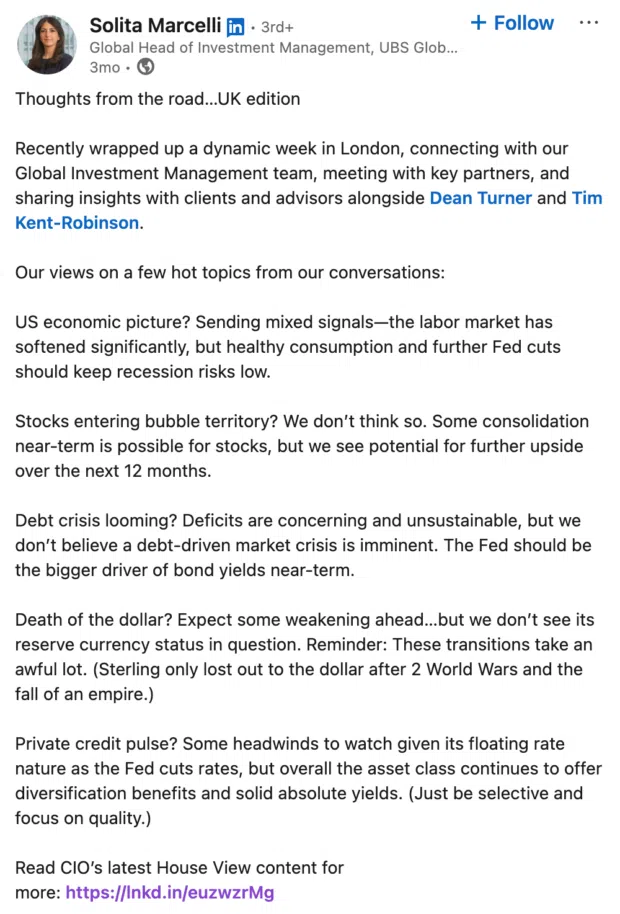
- Social Selling: Empowering individual advisors to build direct relationships with prospects through professional networks like LinkedIn.
The Evolution of Digital Finance: A Chronology
The journey of financial services on social media has moved through distinct phases, reflecting broader shifts in technology and consumer behavior.
The Era of Avoidance (2005–2012):
During the early days of social media, most financial institutions viewed platforms like Facebook and Twitter as "high risk, low reward." Compliance departments largely prohibited social media use, fearing the lack of control over public comments and the difficulty of archiving digital records.
The Defensive Shift (2013–2019):
As mobile banking became the norm, institutions could no longer ignore the digital conversation. This era was marked by the "broadcast" model—firms used social media primarily to push out press releases and corporate news. Engagement was minimal, and the tone remained strictly formal.
The Humanization Movement (2020–2024):
The global pandemic accelerated the need for digital connection. Financial advisors began using LinkedIn to replace face-to-face networking, and banks turned to social media to provide urgent updates on stimulus programs and market volatility. This period saw the rise of the "Finfluencer" (financial influencer) and the realization that consumers wanted to hear from people, not just logos.
The Intelligence & Advocacy Era (2025–Present):
Today, the industry has entered a phase of "Social Intelligence." Organizations now use AI-driven listening tools to detect market sentiment and potential crises before they escalate. Furthermore, there is a shift toward "Employee Advocacy," where a firm’s workforce becomes its primary channel for authentic communication.
The Data Behind the Shift: Supporting Evidence
The pivot toward social media is driven by undeniable demographic and performance data. According to recent market research, Gen Z and Millennials are fundamentally changing how financial advice is consumed.
Reaching the Next Generation of Wealth:
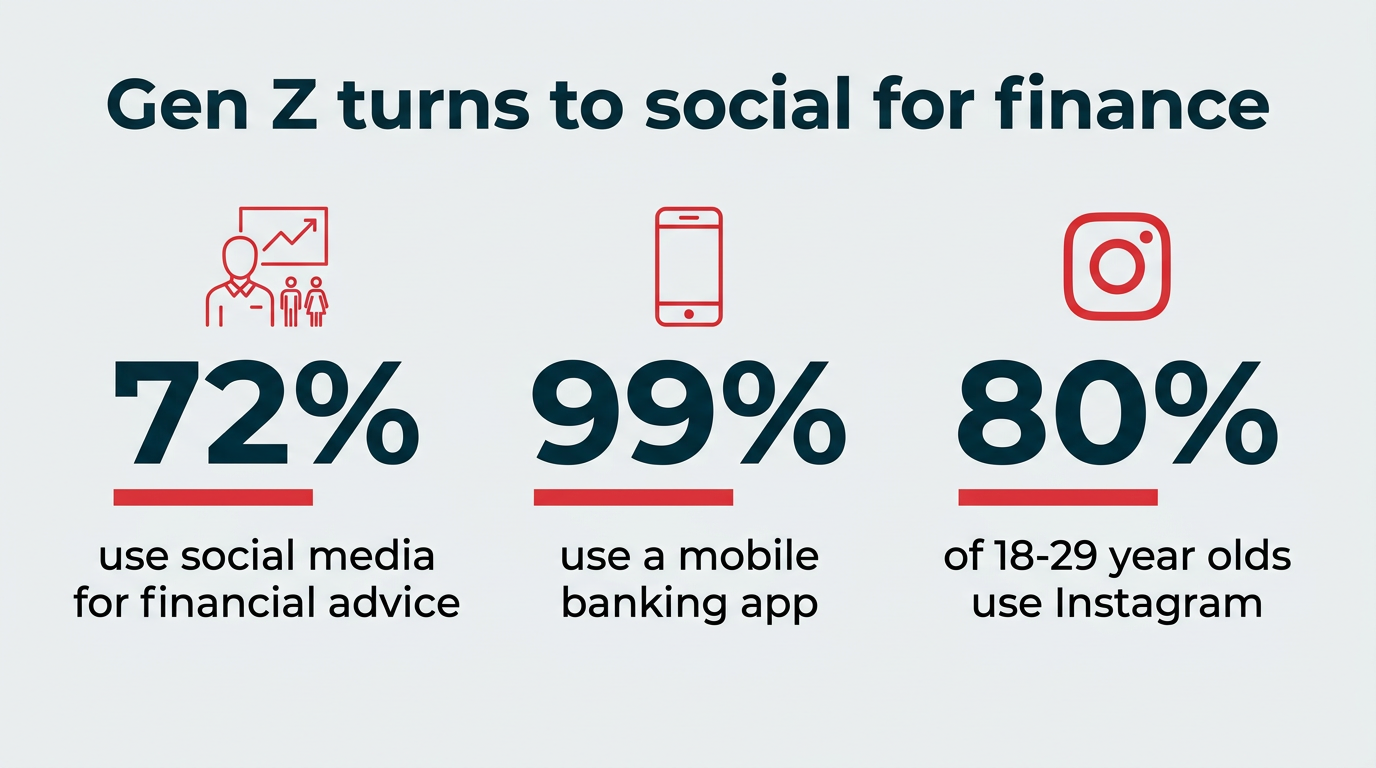
- Adoption Rates: Approximately 80% of 18-to-29-year-olds are active on Instagram, and 99% of Gen Z utilize mobile banking apps.
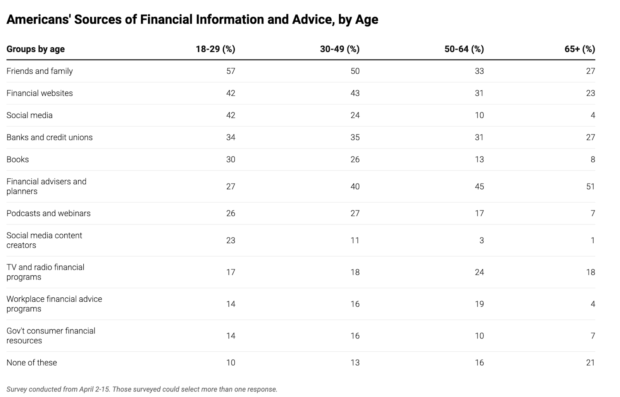
- Advice Channels: A Gallup poll indicates that 42% of Americans under 30 receive financial advice from social media, and 72% of Gen Z specifically turn to these platforms for financial literacy.
- Retirement Trends: Contrary to stereotypes, 47% of Gen Z workers are currently on track for a successful retirement, making them a high-value audience for wealth management firms.
Engagement Benchmarks:
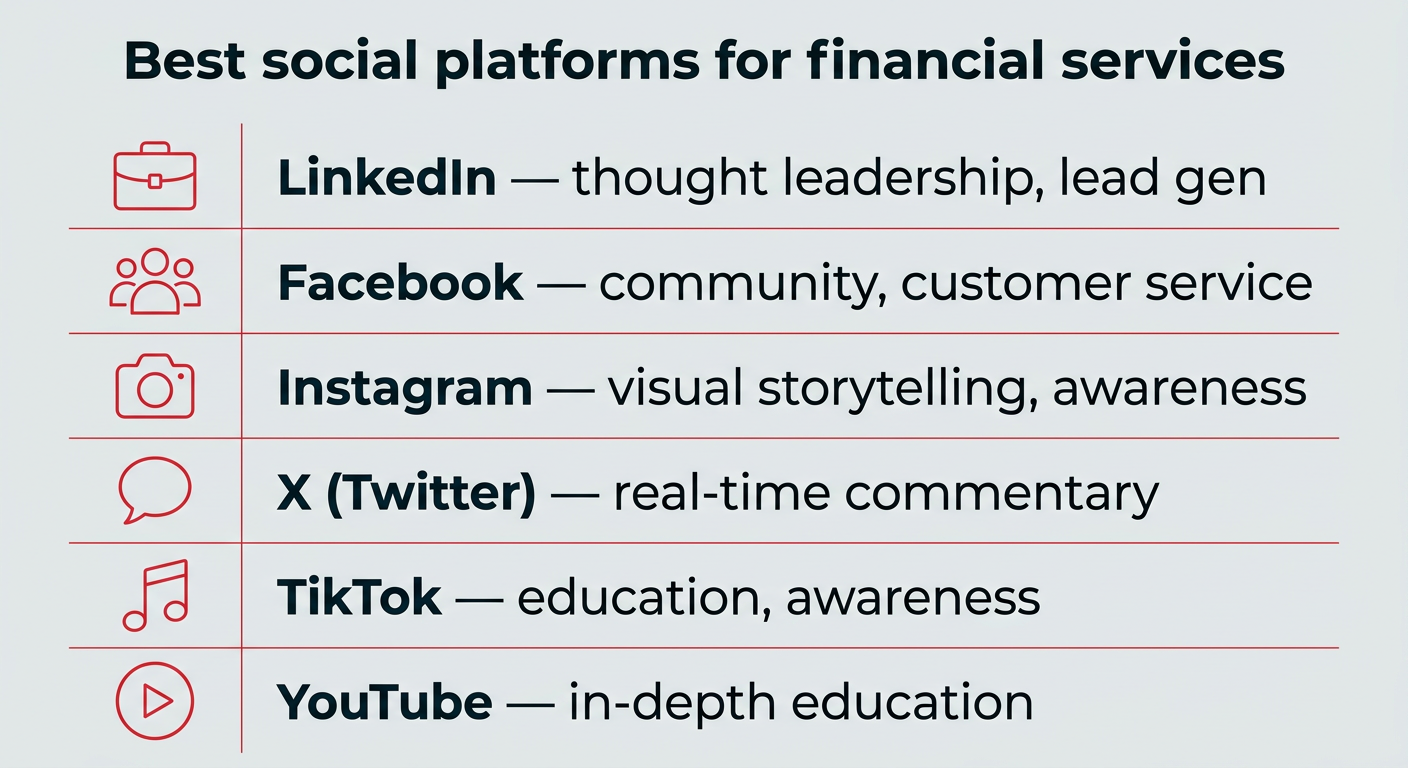
Hootsuite’s 2025 industry benchmarks reveal that financial institutions are finding the highest returns on specific platforms:
- Instagram: Leads the industry with a 3.8% engagement rate and a 2.26% follower growth rate.
- LinkedIn: Remains the gold standard for professional trust, with a 3.2% engagement rate.
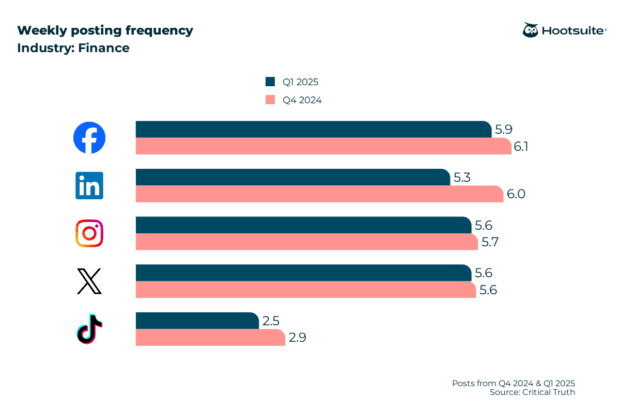
- Facebook: Remains the most frequently used platform for community updates, with an average of 5.9 posts per week.
The Trust Deficit:
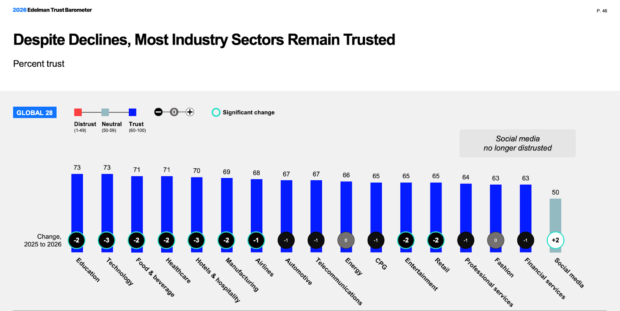
Despite improvements over the last decade, the Edelman Trust Barometer consistently ranks financial services among the least-trusted industries. However, data shows that 82% of consumers are more likely to trust a company when its senior executives are active on social media, highlighting the need for "humanized" leadership.
The Regulatory Minefield: Official Responses and Risk Management
For financial services, social media is not just a marketing challenge; it is a legal one. Regulators such as FINRA (Financial Industry Regulatory Authority) and the SEC in the United States, the FCA (Financial Conduct Authority) in the UK, and GDPR (General Data Protection Regulation) in Europe have established strict guidelines for digital communication.
Key Regulatory Requirements:
- Archiving: FINRA and other bodies require that firms maintain searchable records of all business-related social media communications for at least three years.
- Supervision: A "registered principal" must review and approve social media sites used for business before they go live.
- Prohibition of Testimonials: In many jurisdictions, financial advisors are strictly limited in how they can use client testimonials or "likes" that could be construed as an endorsement of investment performance.
- Clear Disclosures: Any promotional content must include necessary risk disclosures to ensure the consumer is not misled.
Institutional Responses:
To mitigate these risks, leading firms have implemented multi-layered governance strategies. This includes the adoption of "Social OS" platforms that integrate with compliance software like Smarsh or Brolly. These tools provide an automated "approval chain," ensuring that no post goes live without being vetted by legal and compliance teams.
Furthermore, firms are developing robust Social Media Policies. These documents define who can speak on behalf of the company, what topics are off-limits (such as specific investment advice), and how to handle security protocols like two-factor authentication to prevent account takeovers.
Case Studies in Excellence
Several organizations have set the standard for how to execute high-impact, compliant campaigns:
- Current x MrBeast: By partnering with the world’s most prominent YouTuber, the fintech firm Current successfully reached millions of young consumers. This campaign prioritized "relevance" over "formality," resulting in a massive surge in app downloads.
- BNY Mellon’s #DoWellBetter: This campaign shifted the focus from numbers to impact. By sharing stories of how clients used wealth to create positive social change, the firm built an emotional connection that resonated with the values of millennial investors.
- Vanguard’s #GettingSocial: Vanguard utilized a weekly video series to break down complex financial topics into "snackable" content. Their consistent schedule built a habit among followers, positioning the firm as a reliable educational resource rather than just a service provider.
Future Implications: AI, Advocacy, and the New "Human" Standard
As we look toward the future of the financial services sector, several trends are poised to redefine the industry’s digital presence.
The AI Revolution:
Artificial Intelligence is no longer a futuristic concept. Financial brands are now using AI for "social listening"—monitoring millions of conversations to identify emerging trends or customer pain points. AI-powered orchestration layers are also helping teams draft compliant content faster, though human oversight remains a legal necessity.
The Rise of the Advisor-Influencer:
The "corporate voice" is losing its potency. In its place, firms are empowering their local agents and advisors to become digital personalities. By providing these employees with libraries of pre-approved, compliant content, firms can scale their reach through "Employee Advocacy." A post from a local advisor often sees significantly higher engagement than the same post from a global brand account.
The Sustainability Mandate:
Investors are increasingly focused on ESG (Environmental, Social, and Governance) criteria. Morgan Stanley reports that 99% of Gen Z investors are interested in sustainable investing. Social media will become the primary battleground for firms to demonstrate their commitment to these values, moving beyond "greenwashing" to transparent, real-time reporting on institutional impact.
Conclusion
For the financial services industry, the era of social media skepticism is over. The challenge now lies in operationalizing social media as a sophisticated, compliant, and data-driven engine for growth. While the risks of regulatory fines and reputational damage remain high, the risk of digital invisibility is far greater. By embracing a strategy that combines high-tech AI insights with high-touch human storytelling, financial institutions can finally bridge the trust gap and secure their place in the wallets—and hearts—of the next generation of consumers.
 Basiran
  Nana Muazin
  Nila Kartika Wati