
 By Nana Wu
In the rapidly evolving digital landscape of 2026, social media has transcended its origins as a mere visibility tool to become a fundamental pillar of corporate infrastructure. With the global social media advertising market now valued at approximately $276 billion, large-scale organizations are facing unprecedented challenges in managing their digital footprints across diverse regions, languages, and regulatory environments. For the modern enterprise, a "post" is no longer just content; it is a data point, a potential liability, and a critical driver of revenue that requires a sophisticated, unified strategy to manage effectively.

Main Facts: Defining the Enterprise Social Ecosystem
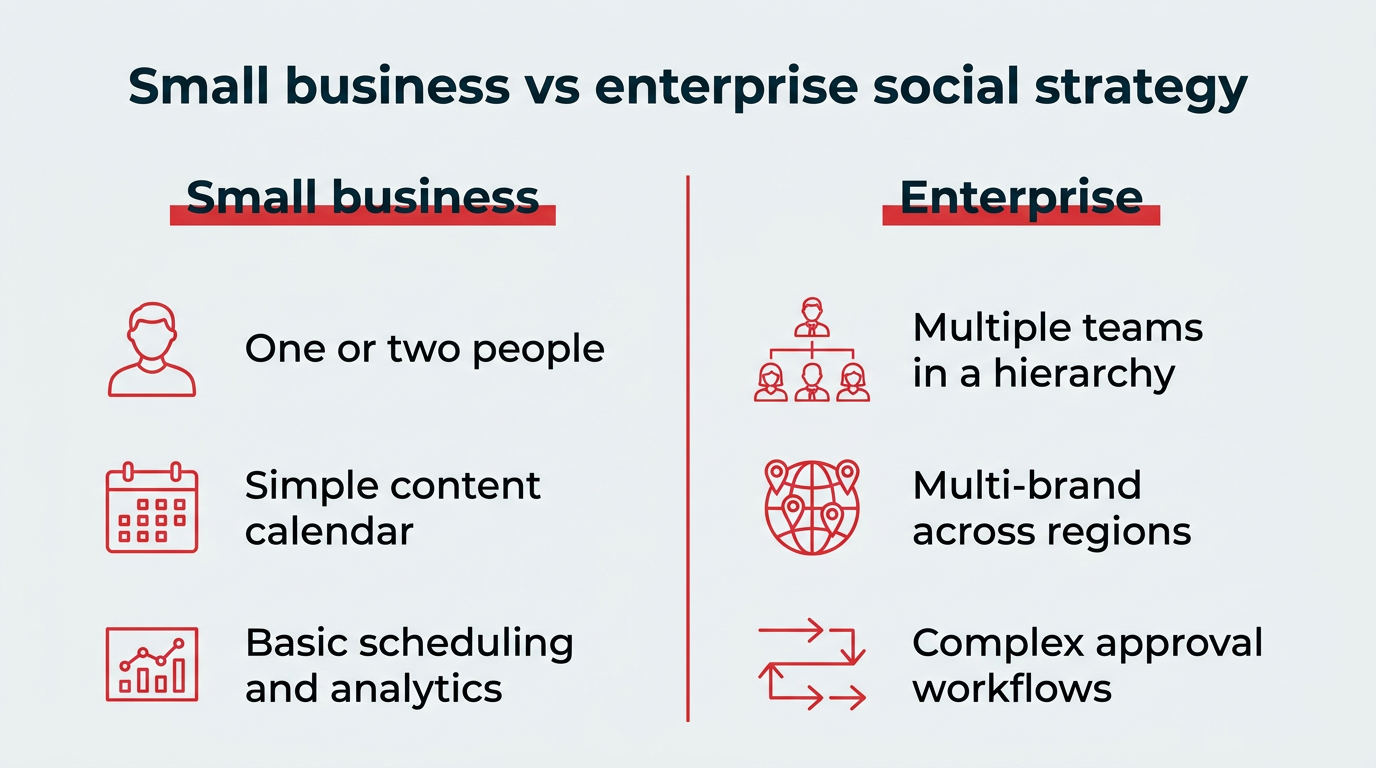
Enterprise social media is defined as the strategic, large-scale use of social platforms by major organizations to manage brand communications, customer engagement, and business intelligence. Unlike small business social media management—which often relies on a single individual or a small marketing team handling a content calendar—enterprise-level strategy involves a complex web of moving parts, including global governance, scalability, and rigorous risk management.
A critical distinction must be made between enterprise social media and enterprise social networks. While they are frequently conflated, they serve entirely different functions. Enterprise social media is external-facing, targeting customers, prospects, and the general public through platforms like LinkedIn, Instagram, and TikTok to drive brand sentiment and reach. Conversely, an enterprise social network (such as Slack or Viva Engage) is an internal tool designed for employee collaboration and knowledge sharing.

For a global corporation, the scale of operation is staggering. A brand like Nike, for instance, maintains hundreds of secondary accounts tailored to specific regions and sub-demographics. Without a unified strategy, these disparate accounts risk fragmenting the brand voice, violating local regulations, or failing to align with the company’s overarching business goals.
Chronology: From Experimental Content to the "Social Operating System"
The evolution of enterprise social media has moved through several distinct phases over the past decade. In the early 2010s, social media was largely experimental, often siloed within PR departments. By 2020, it had become a core marketing channel, yet many organizations still struggled with "scattered approvals" and "tool fragmentation," where regional teams purchased their own software and operated in isolation.
As we move through 2026, the industry has entered the era of the "Social Operating System" (Social OS). This phase is characterized by the integration of social media into the broader business intelligence stack. The timeline of this evolution highlights a shift from manual content creation to AI-driven operational intelligence.
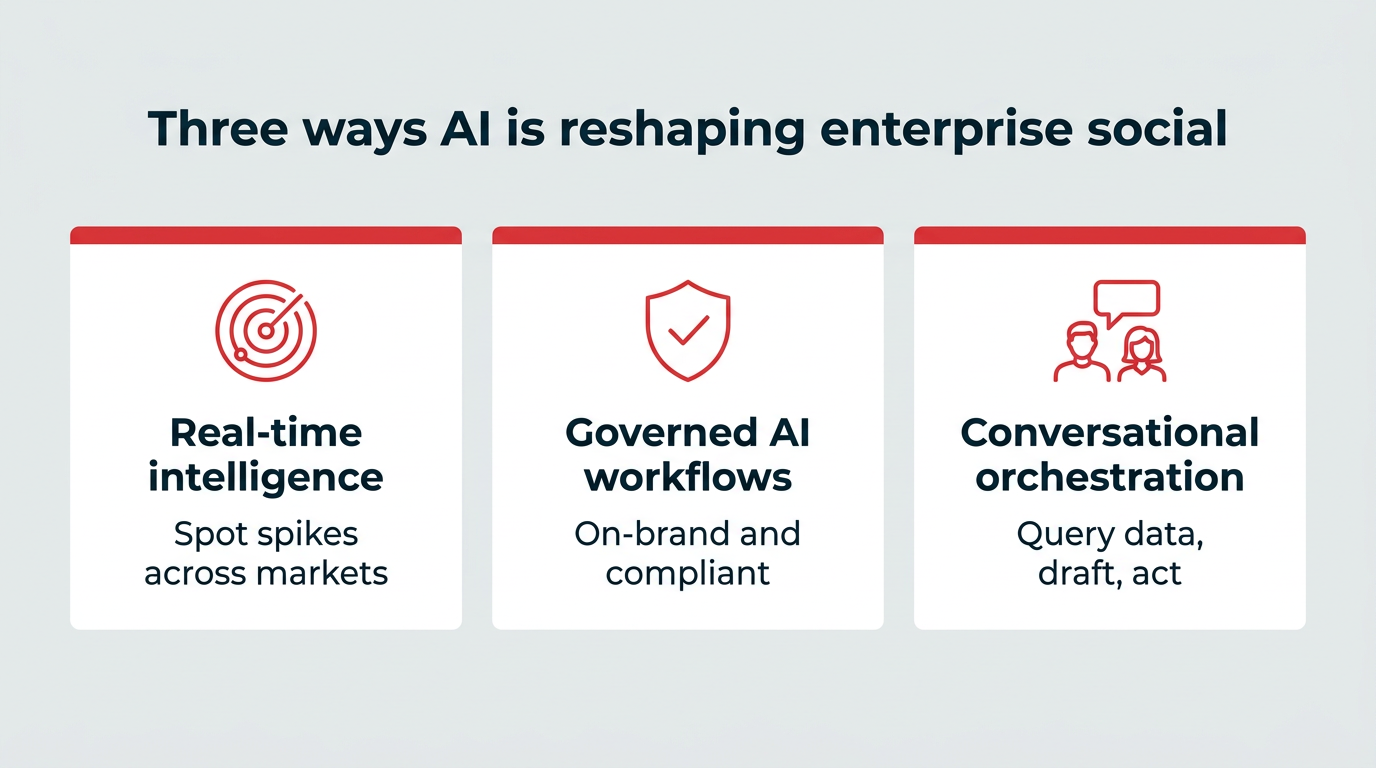
The most significant recent development is the transition of Artificial Intelligence from a novelty content generator to a governance and intelligence layer. In 2024 and 2025, AI was primarily used for drafting captions. By 2026, it has become the "connective tissue" of the enterprise, reading sentiment in real-time, routing customer service inquiries to the correct departments, and ensuring that every piece of content adheres to strict brand and legal guidelines before it ever reaches a human moderator’s desk.
Supporting Data: The Economic and Operational Impact
The necessity for a centralized enterprise strategy is underscored by the sheer volume of commerce flowing through social channels. U.S. social commerce alone is projected to exceed $100 billion in 2026. For large organizations, the financial stakes of social media performance are directly tied to the bottom line.
Key performance indicators (KPIs) at the enterprise level have moved beyond "vanity metrics" like likes and follows. Today’s strategists focus on:
- Share of Voice (SoV): A brand’s percentage of the total conversation within its industry compared to competitors.
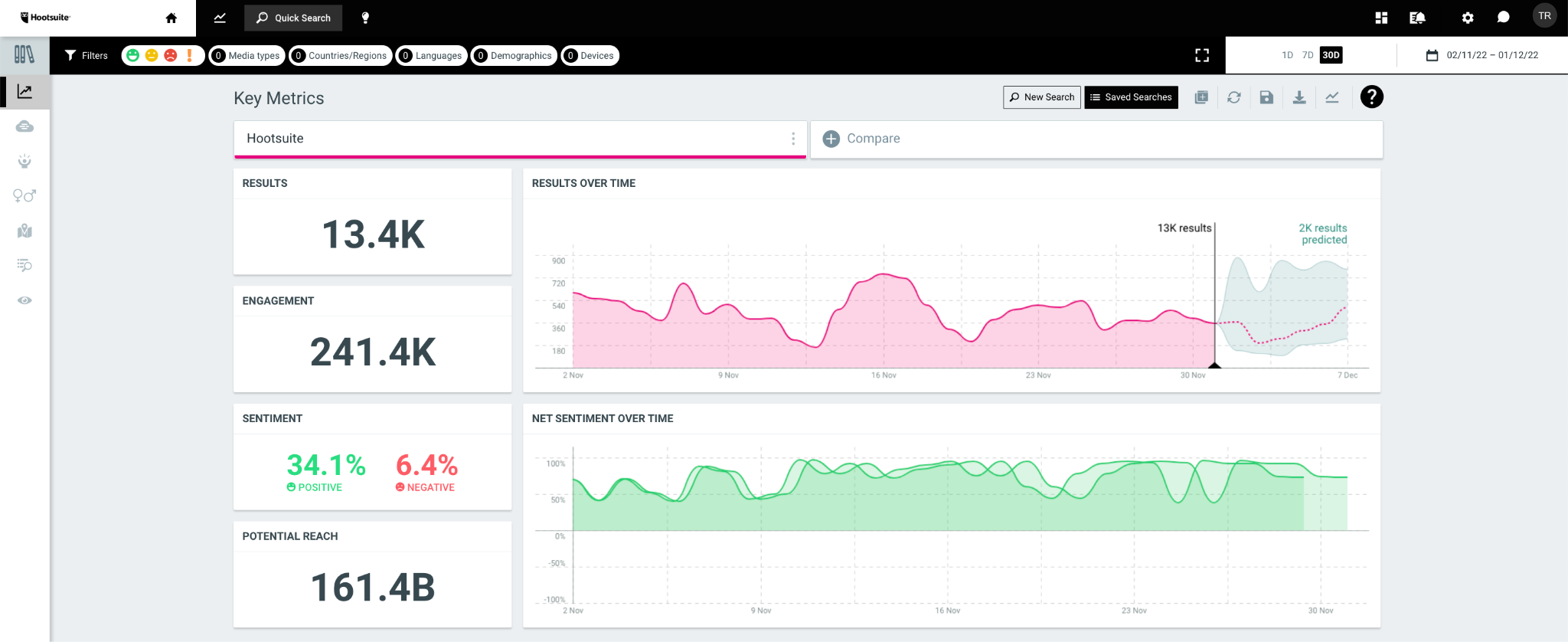
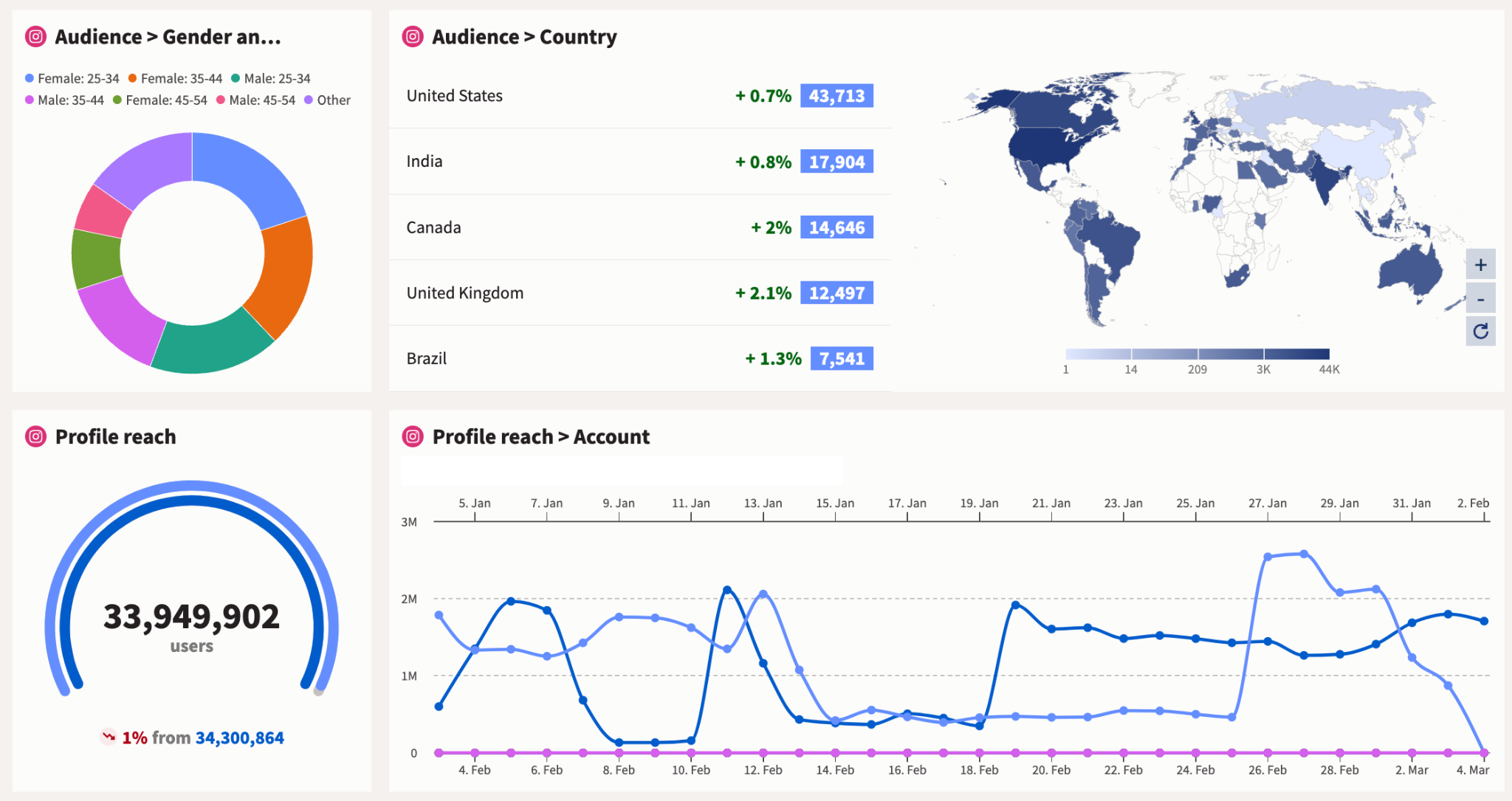
- Sentiment Analysis: Utilizing tools like social listening to track the positive or negative tone of millions of mentions across the globe.
- Social-Attributed Leads: Connecting social engagement directly to the CRM (Customer Relationship Management) to prove ROI.
- Response Time: In an era where social media is the primary customer service portal, the speed and quality of replies are directly correlated with customer retention rates.
Data systems have also become more integrated. Through MCP (Model Context Protocol) connectors, contextual intelligence now flows between social platforms and core business systems. This ensures that AI outputs are grounded in real-time corporate data rather than speculative algorithms, reducing the risk of "hallucinations" in public-facing communications.
Official Responses: Expert Insights and Governance Frameworks
Industry leaders emphasize that the human element remains the most vital component of a scaled strategy, despite the rise of AI. Savannah Wiles, Staff Marketing Manager for Social & Influencer at Intuit Mailchimp, argues that a successful enterprise strategy rests on three pillars: audience, brand, and goals.

"For the audience, remember they’re real people, not just job titles," Wiles notes. She suggests that brands on social media must maintain a "human persona," providing value in every post—whether through new data-driven insights or relatable content that drives engagement.
From a governance perspective, the "Official Response" from major organizations often involves the creation of a "Center of Excellence" (CoE). This central team is responsible for:
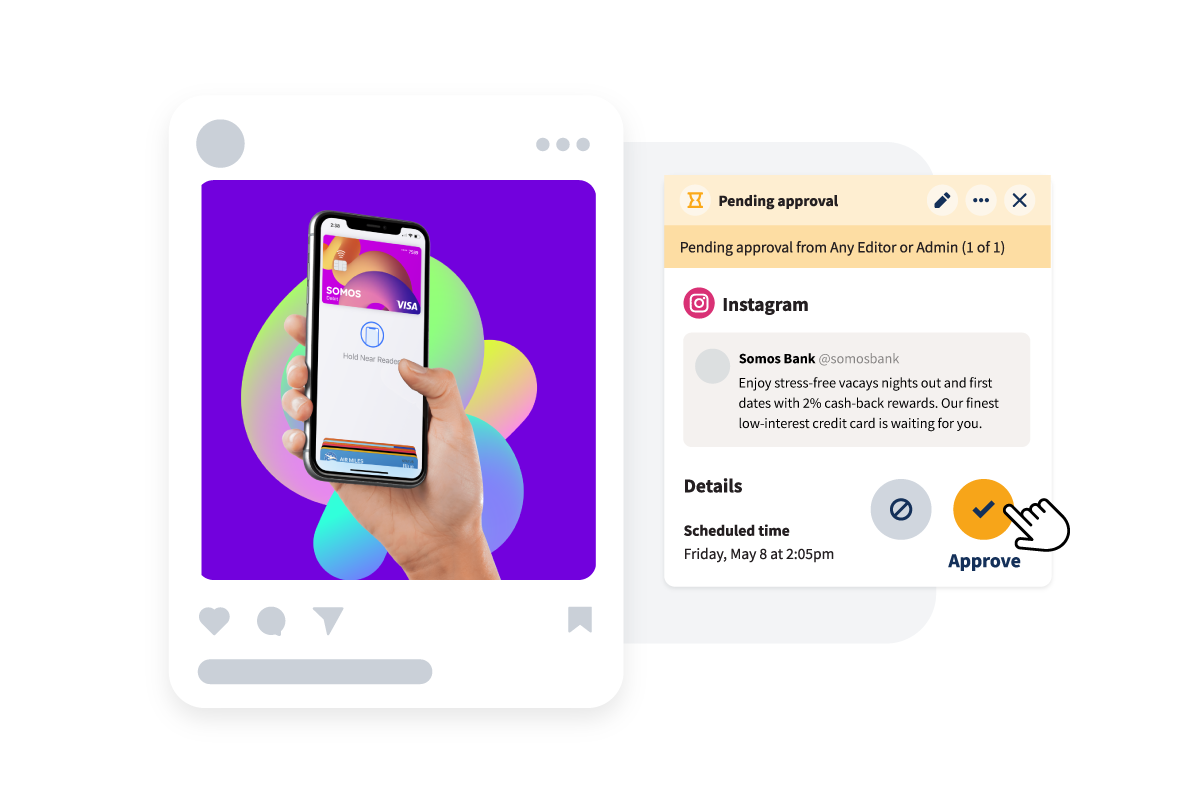
- Setting the Vision: Establishing the global voice and brand guardrails.
- Tool Management: Selecting and maintaining the centralized platform (such as Hootsuite Social OS) to prevent tool fragmentation.
- Compliance: Collaborating with legal teams to ensure that content meets regional regulatory standards, such as GDPR in Europe or specific financial disclosures in the U.S.
Furthermore, the role of employee advocacy has become an official part of the enterprise toolkit. Programs that empower employees to share approved content can amplify a brand’s reach significantly more effectively than traditional corporate accounts alone, provided they are managed through secure, governed platforms.
Implications: The Future of Risk and Growth
The shift toward a unified enterprise social strategy has profound implications for the future of global business. The primary implication is the democratization of brand influence. As organizations move away from a single "corporate megaphone" toward a network of regional accounts and employee advocates, the need for automated governance becomes absolute.
The Governance Imperative:
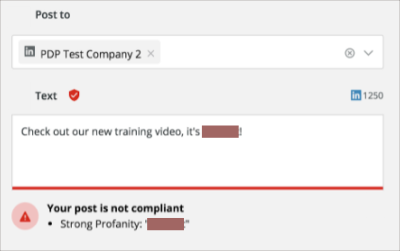
In regulated industries like healthcare and finance, the risk of ungoverned AI or "rogue" regional posting is not merely a PR issue; it is a legal one. The implementation of governance layers like "Vigil" allows organizations to track every approval and ensure every AI-assisted output is traceable. This level of control is what makes the use of advanced technology viable at scale.
Social as a Business Intelligence Hub:
The integration of social data into broader business intelligence means that social media teams are no longer just "content creators"—they are providers of market research. Real-time social listening allows enterprises to pivot their entire product strategy based on emerging consumer pain points detected through sentiment analysis.
The "Scrappy" Enterprise:
Paradoxically, as organizations grow larger, the most successful ones are adopting a "scrappy" internal culture. By looking inward to find "internal influencers" and creators, large corporations are attempting to regain the authenticity that often gets lost in high-level corporate communications.
In conclusion, the enterprise social media strategy of 2026 is a balancing act between massive scale and individual human connection. It requires a robust technological foundation to ensure compliance and efficiency, but it also demands a strategic vision that treats social media as a living, breathing ecosystem rather than a static broadcast channel. For organizations that master this complexity, social media remains the most powerful engine for global growth and brand loyalty in the digital age.
 Basiran
  Nana Muazin
  Nila Kartika Wati