
 By Asep Darmawan
In the increasingly crowded digital attention economy, the difference between a high-converting campaign and a wasted budget often comes down to a matter of pixels. As Meta continues to evolve its ecosystem—integrating AI-driven "Advantage+" placements and prioritizing short-form vertical video—marketers are facing a more complex set of technical requirements than ever before.

This comprehensive report examines the current state of Facebook advertising specifications, the strategic shift toward mobile-first aspect ratios, and the technical imperatives for brands looking to maximize their Return on Ad Spend (ROAS) through 2026.
Main Facts: The Anatomy of Modern Meta Advertising
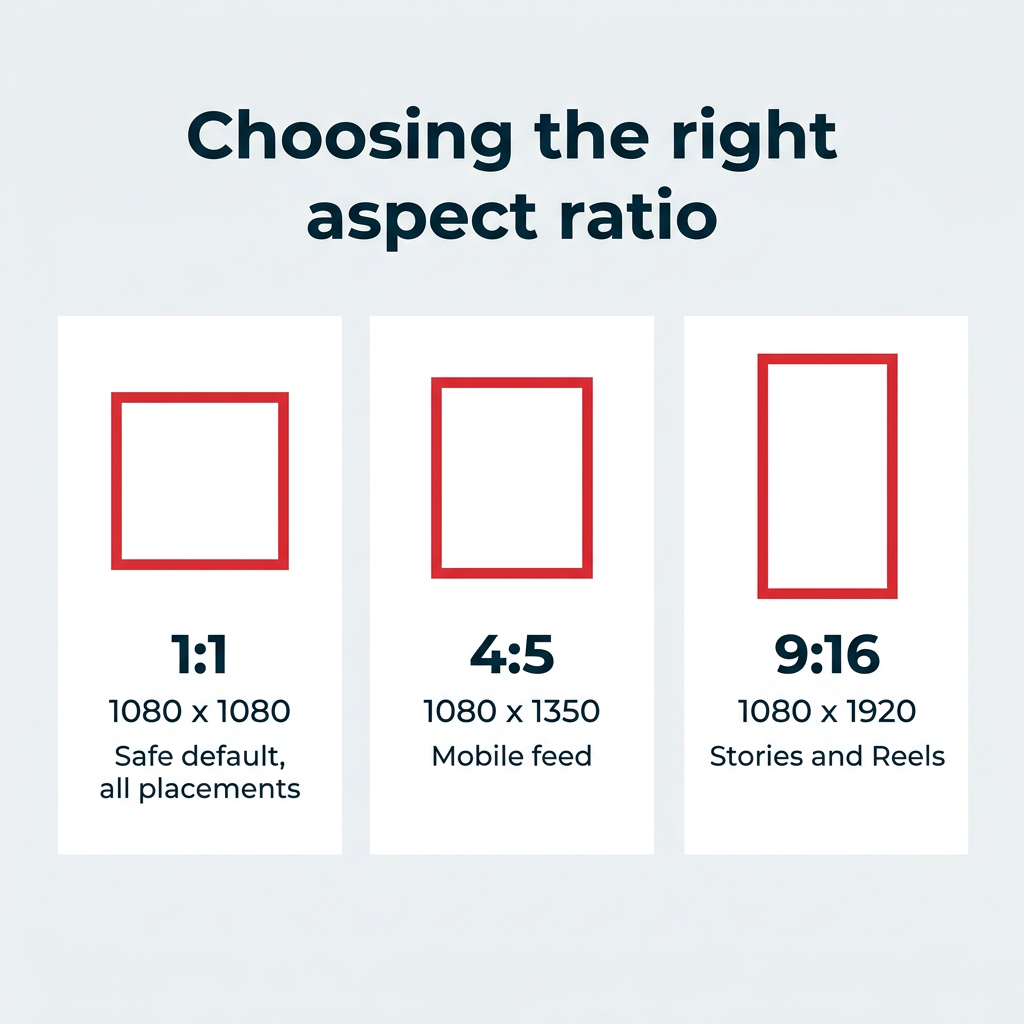
The core of Facebook’s advertising architecture remains centered on three primary aspect ratios: the square (1:1), the vertical (4:5), and the full-screen vertical (9:16). While the platform has historically supported landscape (16:9) formats, the modern user journey is almost exclusively mobile, necessitating a "vertical-first" design philosophy.

Current data indicates that roughly 81.8% of Facebook users access the platform solely via mobile devices. This shift has elevated the 4:5 aspect ratio (1080 x 1350 pixels) as the gold standard for the News Feed. This format occupies significantly more vertical screen real estate than a square image, effectively pushing competitors’ content out of view as a user scrolls.
Beyond dimensions, the technical constraints remain rigid:
- Image File Size: A maximum of 30MB across all placements.
- Video File Size: A maximum of 4GB.
- Primary Formats: PNG and JPG for images; MP4, MOV, or GIF for video.
- Resolution: A minimum of 1080 x 1080 pixels is recommended for most placements to ensure clarity on high-density Retina displays.
Chronology: The Evolution of the Ad Creative
To understand the current specifications, one must look at the trajectory of Facebook’s ad products over the last decade.
- The Desktop Era (2012–2015): Advertising was dominated by the "Right Column" and landscape News Feed images. Text-heavy creative was common, leading to the infamous "20% Text Rule," where Meta would reject or throttle any ad where text covered more than one-fifth of the image.
- The Mobile Pivot (2016–2019): With the rise of Instagram and the mobile-only user base, Facebook introduced Carousel ads and Canvas (now Instant Experience). The focus shifted to 1:1 squares that worked across both platforms.
- The Vertical Revolution (2020–2023): The explosion of TikTok forced Meta to prioritize Stories and Reels. This introduced the 9:16 ratio (1080 x 1920 pixels) as a critical requirement. Meta also officially retired the 20% Text Rule during this period, though they continue to advise that minimal text leads to better performance.
- The AI Integration Phase (2024–2026): We are currently in an era where Meta’s "Advantage+" algorithm automatically crops and adjusts creative to fit various placements. This has created a new challenge: designers must now create "flexible" assets that can be cropped from 4:5 to 1:1 without losing the core message or the Call to Action (CTA).
Supporting Data: A Placement-by-Placement Breakdown
Success in the Meta ecosystem requires tailoring creative to specific "neighborhoods" within the app. Here is the technical breakdown of the most critical placements:
1. The Facebook Feed (Image & Video)
The Feed remains the highest-converting placement for most industries.
- Recommended Size: 1440 x 1800 pixels.
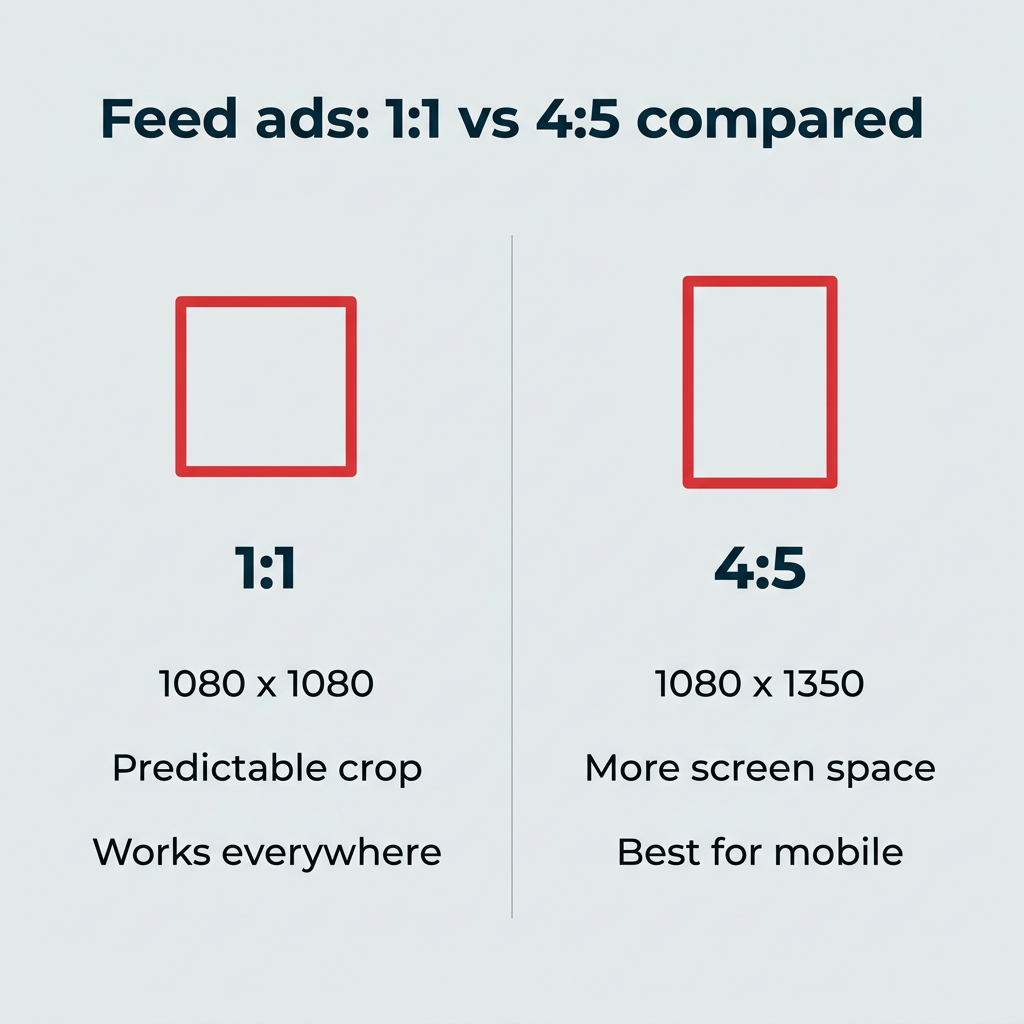
- Aspect Ratio: 4:5 is preferred for mobile; 1:1 is the safe default for cross-platform delivery.
- Strategic Insight: Using the 4:5 ratio provides roughly 20% more "digital billboard" space than a standard square, which correlates with higher engagement rates in competitive niches.
2. Stories and Reels
These are full-screen, immersive environments.

- Recommended Size: 1080 x 1920 pixels.
- Aspect Ratio: 9:16.
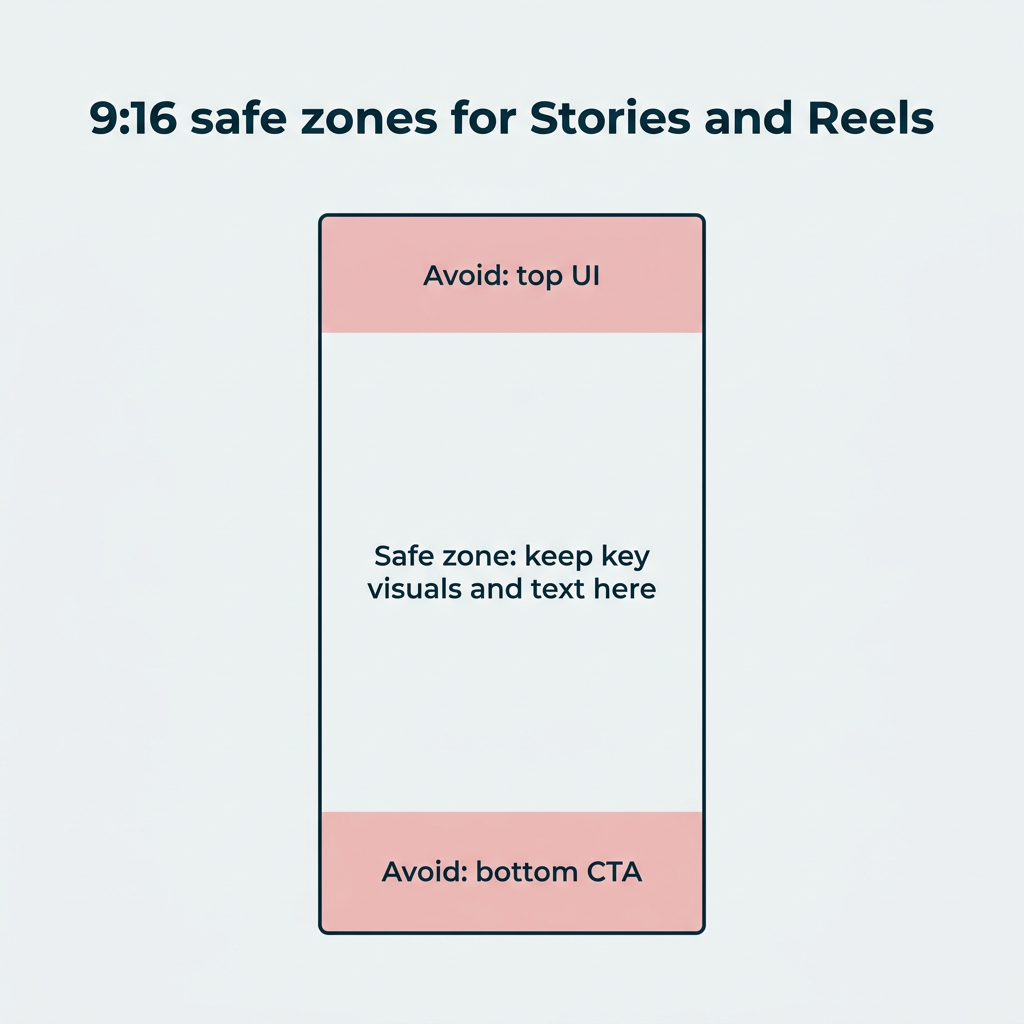
- The "Safe Zone" Imperative: Marketers must avoid placing text or logos in the top and bottom 250 pixels. These areas are covered by UI elements like the profile icon, CTA buttons, and the "Sponsored" label.
3. Carousel Ads
Ideal for e-commerce, Carousels allow for 2 to 10 cards, each with its own link.
- Recommended Size: 1080 x 1080 pixels.
- Aspect Ratio: Strictly 1:1.
- Use Case: This format is increasingly used for "Storytelling" ads, where an image or message spans across multiple cards, encouraging the user to swipe.
4. Collection Ads & Instant Experience
These are the mobile-native storefronts of the Meta world.
- Structure: A "Cover" image or video followed by four product thumbnails.
- Technical Requirement: The cover asset is typically 1:1 or 1.91:1 (landscape), though 1:1 is now preferred for consistency within the Advantage+ catalog system.
Official Standards and Industry Responses
Meta’s official documentation has moved away from rigid "rules" and toward "recommendations." While the platform will technically allow a 16:9 landscape video in a Reels placement, the algorithm will often penalize the ad’s delivery because it provides a poor User Experience (UX).
Meta’s Current Stance on Text:
Although the 20% text penalty is gone, Meta’s internal data suggests that images with high text density are perceived as "spammy" by users. Official guidance now suggests placing the majority of the message in the "Primary Text" and "Headline" fields rather than baking it into the image file.

Industry Standards:
Top-tier agencies have moved toward a "modular" design approach. Instead of designing one ad, they design "asset buckets":
- Vertical (9:16) for Reels/Stories.
- Tall (4:5) for Feed.
- Square (1:1) for Carousel and Right Column.
This ensures that the Meta algorithm has the optimal "fuel" to serve the ad in whatever placement is cheapest and most effective at any given moment.

Implications: The Future of Social Commerce
The refinement of Facebook ad sizes reflects a broader trend in digital consumption: the death of the horizontal screen. As we look toward 2026, the implications for brands are clear:
1. The Rise of "Lo-Fi" Creative:
Because Reels and Stories are vertical and personal, highly polished, "commercial-style" landscape videos often underperform. Brands are finding more success with 9:16 content that looks like it was filmed on an iPhone. The technical spec is high-def (1080p), but the aesthetic is "authentic."

2. Algorithmic Autonomy:
With the expansion of Meta’s Advantage+ Creative, the platform can now automatically brighten images, swap music, and even generate 3D-like motion from static 1:1 images. However, these AI tools work best when the initial asset is high-resolution and follows the recommended aspect ratios. Feeding the AI a low-quality or oddly cropped image results in distorted ads that damage brand equity.
3. The Cost of Technical Negligence:
In a bidding environment where every cent counts, an ad that is poorly cropped—where the CTA is hidden behind a "Like" button or the text is cut off—will see a dramatic spike in Cost Per Click (CPC). Technical precision is no longer just a design preference; it is a financial necessity.

Conclusion
Mastering Facebook ad sizes in 2024 and beyond requires a balance of technical rigor and creative flexibility. By prioritizing the 4:5 and 9:16 ratios, respecting the "safe zones" of vertical video, and adhering to the 30MB/4GB file limits, marketers can ensure their content is delivered exactly as intended. In the world of Meta, the creative is the variable that drives success, but the technical specs are the foundation that allows that creative to shine.
 Basiran
  Nana Muazin
  Nila Kartika Wati