
 By Ammar Sabilarrohman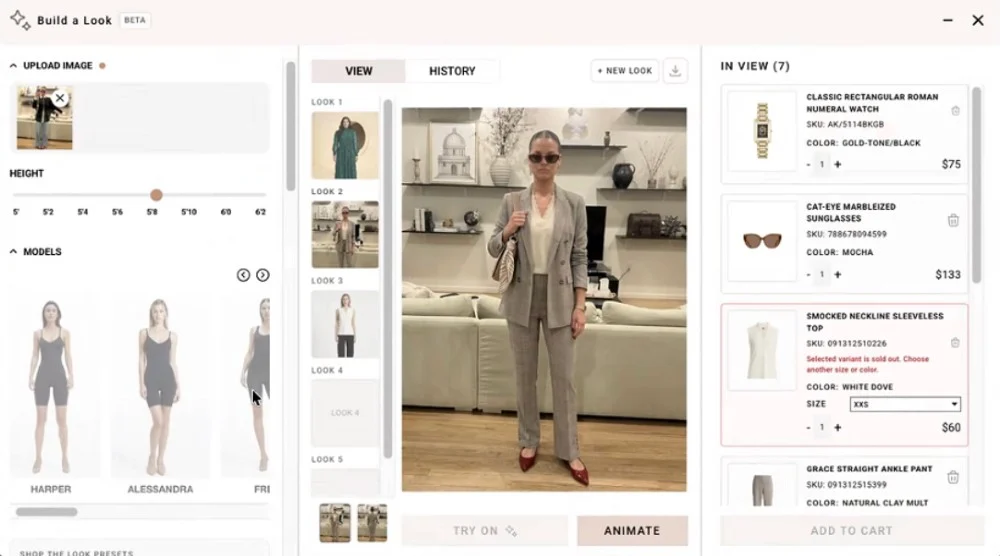
For over two decades, the retail fashion industry has chased the "holy grail" of e-commerce: a virtual fitting room that actually feels real. From the early, clunky days of 2D overlay tools to the recent wave of augmented reality (AR) mirrors, the goal has remained consistent—to bridge the gap between the tactile experience of a physical dressing room and the convenience of online shopping. Yet, despite billions in investment, many solutions have fallen short, offering "paper doll" visualizations that fail to capture the drape, movement, or authentic styling of a garment.
New York-based AI startup Lumesa is looking to change that narrative. Founded by Manvitha Mallela and Malavika Reddy, Lumesa has emerged from its stealth phase with a sophisticated, AI-driven platform that promises to transform the digital shopping experience from a static transaction into a dynamic, personalized journey.
The Evolution of the Virtual Fitting Room
To understand the magnitude of Lumesa’s arrival, one must look at the trajectory of retail technology. In the early 2000s, virtual try-ons were little more than rudimentary image-stacking tools. As mobile hardware improved, AR-powered mirrors allowed users to see digital assets superimposed over their own reflections. However, these solutions often struggled with "occlusion"—the way fabric should realistically fall behind or in front of a body—and the inability to style multiple items simultaneously.
Most existing solutions offer a fragmented experience: a user might be able to try on a jacket, but not the trousers, or the garment might look as though it is floating on top of a flat image rather than interacting with the user’s physique. This creates a psychological disconnect that often leads to cart abandonment. Lumesa aims to solve this by providing a holistic, 360-degree view of a complete outfit, allowing for the layering of tops, bottoms, accessories, and footwear in a single, fluid session.
A New Identity: From Flock to Lumesa
The journey to this point has been marked by strategic pivots and rebranding. Originally known as "Flock," the startup secured a significant $6 million in seed funding earlier this year, led by the enterprise-focused venture firm Work-Bench. However, as the company gained traction, the founders realized that their original name created brand confusion with the controversial surveillance technology firm, Flock Safety.
The rebrand to "Lumesa"—derived from "Lumen," the Latin word for light—was a deliberate choice. "The technology is about bringing a shopper’s vision to light," Mallela noted. The rebrand signals a maturation of the company’s identity, moving away from being just another software tool and toward becoming a central pillar of the digital fashion ecosystem.
How Lumesa’s "Build a Look" Works
The core of Lumesa’s offering is its "Build a Look" feature, currently in beta testing with heritage fashion house Anne Klein. The technology is designed to replicate the intuitive flow of a physical retail environment, where a shopper might walk into a dressing room with an armful of items to mix and match.
The Technical Architecture
Lumesa’s AI does not simply overlay an image; it trains on a brand’s entire inventory to learn its specific "DNA." This includes the subtle styling nuances that define a brand’s aesthetic—such as how a specific blouse is meant to be tucked or how a blazer sits when left open.
When a user interacts with the Anne Klein website, they are presented with a "Build a Look" interface. They can select various items and see them layered naturally on an AI-generated model or a "digital twin"—a personalized avatar created by uploading a photograph of the user. The platform is intentionally designed to be size-inclusive, allowing shoppers to toggle between various body types to see how the garment truly fits their specific frame.
"We wanted it to feel like you’re in the fitting room and you’re trying on one thing after another," Mallela told Sourcing Journal. By simulating the professional standards of a high-end fashion photoshoot, Lumesa ensures that the digital output is not just a representation of the garment, but a representation of the brand’s lifestyle.
Official Perspectives: Capturing Brand DNA
The primary friction point for luxury and legacy brands adopting AI has been the fear of losing brand equity. If a tool displays a garment incorrectly, it can damage the brand’s reputation for quality. Lumesa addresses this by emphasizing "brand integrity" in its machine learning model.
Mallela explained that the AI captures the "small but important styling details" that professional stylists use during photoshoots. "We actually pick up on all of that and enable that to come through in the content we make for the customer," she said. If a brand typically styles a shirt tucked into high-waisted trousers, the AI mimics that standard, ensuring the customer sees the garment in its most flattering, intentional state.
"For a lot of brands, customers go there because they trust what the brand is showing," Mallela added. "They want to buy into their lifestyle." By maintaining these styling "guardrails," Lumesa ensures that while the customer has creative control, the final image remains consistent with the designer’s original vision.
Implications for the Future of Retail
The introduction of Lumesa’s technology carries significant implications for the broader retail sector, which is currently grappling with high return rates—a major financial and environmental burden.
1. Reducing Return Rates
The "try-before-you-buy" culture of online fashion often leads to "bracketing," where customers order multiple sizes of the same item with the intention of returning the ones that don’t fit. By providing a more accurate, high-fidelity virtual representation, Lumesa aims to increase consumer confidence, thereby reducing the volume of returns and the associated logistics costs.
2. The Social Shopping Experience
While Lumesa is currently focusing on the individual’s dressing room, the roadmap includes features that will turn private shopping into a social experience. Future updates are expected to allow users to share their "builds" on social media platforms. This effectively turns the consumer into an advocate for the brand, generating user-generated content that is both high-quality and inherently "on-brand."
3. Democratizing Luxury Styling
By offering the "digital twin" experience, Lumesa democratizes the role of the personal stylist. A customer who might not have access to a boutique stylist can now see how an entire collection comes together on their own body type. This level of personalization is expected to increase average order value (AOV), as shoppers are more likely to complete an outfit when they can see the cohesive result of adding accessories like watches or shoes to their ensemble.
Navigating the Path Ahead
While Lumesa is currently keeping its cards close to its chest regarding future partnerships, the industry is watching closely. The success of the Anne Klein beta will likely serve as the benchmark for how traditional retailers can integrate AI without sacrificing their core identity.
The challenge for Lumesa, as with any emerging technology, will be scalability and the continuous refinement of its AI. As users upload more data and brands update their seasonal collections, the AI must remain agile enough to learn and adapt in real-time. Furthermore, as the company explores social integration and advanced customization, it will have to balance consumer desire for creative control with the brand’s need for aesthetic consistency.
Conclusion
Lumesa represents a pivotal shift in the virtual fitting room paradigm. By moving beyond the flat, static overlays of the past and into the realm of generative, intent-aware AI, the startup is doing more than just showing a garment—it is providing a digital context for the modern shopper.
As retail continues to blur the lines between the physical and the digital, tools like Lumesa will be essential in maintaining the "magic" of the shopping experience. By combining the convenience of e-commerce with the curated, aspirational nature of the high-end boutique, Lumesa is not just helping customers see their clothes; it is helping them envision their own style, one digital layer at a time. The era of the "smart" fitting room has arrived, and it is finally beginning to look like the future.
 Lina Hope
  Asep Darmawan
  Suro Senen