
 By Pevita Pearce
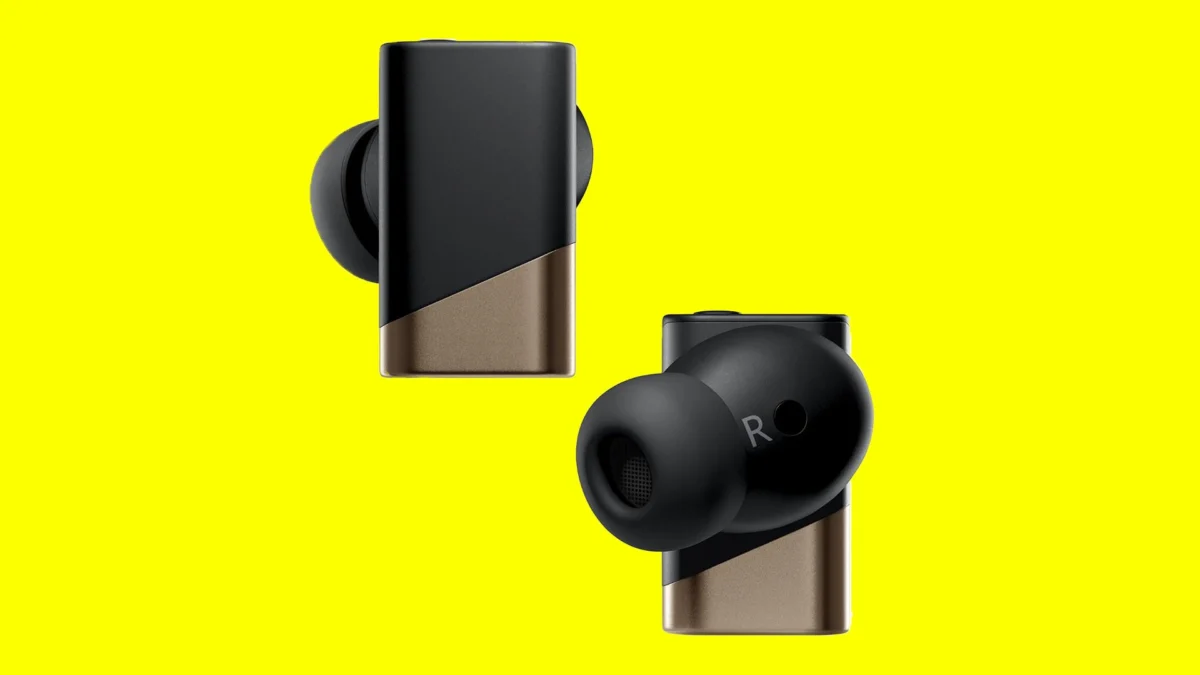
In the crowded landscape of wireless audio, the market has long been dominated by a singular obsession: Active Noise Cancellation (ANC). While technological giants have raced to perfect silence, often burying the nuances of music under aggressive processing algorithms, the purity of sound has frequently become a secondary consideration. Status Audio, a brand that has carved a niche for itself by prioritizing acoustic engineering over marketing fluff, has spent years challenging this trend. With the release of the new GoldenSound Edition of their flagship Pro X earbuds, the company is doubling down on its commitment to high-fidelity, neutral audio reproduction.
By collaborating with renowned audio engineer Cameron “GoldenSound” Oatley, Status Audio is attempting to bridge the gap between the convenience of consumer-grade wireless earbuds and the critical listening standards of studio-grade gear.
The Evolution of the Pro X: Main Facts and Technical Prowess
At the core of the Status Audio Pro X remains a sophisticated hardware foundation that sets it apart from typical mass-market earbuds. Most competitors rely on a single, full-range driver to handle the entire frequency spectrum, which often leads to muddied mid-tones and distortion at higher volumes. The Pro X utilizes a robust triple-driver architecture.
This system combines a 12mm dynamic driver—dedicated specifically to the low-end frequencies—with dual Knowles-balanced armatures. These armatures are tasked with managing the delicate highs and mids. The result is a sound signature that excels in instrument separation and sonic clarity. In the standard configuration, the Pro X delivers a classic "V-shape" sound profile, characterized by a punchy, resonant sub-bass and a vibrant, detailed high-end, all held together by a rich, warm midrange.
The GoldenSound Edition does not replace this architecture; rather, it refines it. Through a software-defined, locked EQ profile, the GoldenSound version transforms the performance of the hardware. This profile was meticulously calibrated using the Brüel & Kjær 5128, an industry-standard head and torso simulator that mimics human hearing with surgical precision. The target for this edition was a natural, balanced timbre, achieving a smoother treble roll-off and significantly improved midrange cohesion. The goal is simple: to make music sound as it was captured in the studio, rather than how a consumer marketing team thinks it should sound.
Chronology: A Path Toward Sonic Purity
The journey of the Status Audio Pro X is a reflection of the company’s iterative approach to hardware development.
- Initial Launch: The original Status Audio Pro X hit the market with a promise to disrupt the status quo of "feature-first" earbuds. It gained immediate traction among audiophiles who valued the triple-driver setup, a rarity in the sub-$200 category.
- App Integration: Recognizing that audio preference is inherently subjective, Status Audio introduced a companion app, allowing users to customize their EQ settings. This effectively allowed the hardware to adapt to individual listener tastes.
- The "GoldenSound" Partnership: Recognizing the need for a "reference" sound, Status Audio initiated a collaboration with Cameron Oatley. Oatley, known for his rigorous technical analysis of audio equipment, provided the expertise necessary to move beyond the standard V-shape profile toward something more analytical.
- Release of the GoldenSound Edition: The collaboration culminated in the special edition release, which features a distinct aesthetic design—matte black and gold finishes—to match the refined acoustic profile contained within.
Supporting Data: The Science of the Brüel & Kjær 5128
The inclusion of the Brüel & Kjær 5128 simulator is not merely a marketing talking point; it is a fundamental shift in how portable audio is tuned. The 5128 is the gold standard for acoustic measurement because it captures how sound waves interact with the human ear canal, pinna, and head structure.
Typical earbuds are tuned to "pleasing" curves, which often boost frequencies in a way that creates a temporary "wow" factor but leads to listener fatigue over time. By utilizing the 5128 simulator, Oatley’s tuning focuses on the "Harman Target" but with a critical, neutral deviation that favors realism over artificial enhancement.
The data indicates that the GoldenSound Edition significantly lowers the Total Harmonic Distortion (THD) at high volumes compared to competitors in the same price bracket. By allowing the triple-driver system to operate within a balanced EQ, the earbuds avoid the "clutter" that occurs when a dynamic driver is forced to compensate for a weak midrange. The result is a soundstage that feels wider, allowing for precise imaging—the ability to identify exactly where an instrument is positioned in a three-dimensional space.
Official Perspectives and Industry Implications
When asked about the philosophy behind the GoldenSound Edition, representatives from Status Audio emphasized the importance of choice. While the GoldenSound profile is a locked, specialized tuning, the app remains fully functional. Users who wish to switch back to the standard, highly adjustable tuning of the original Pro X can do so with a simple toggle. This "best of both worlds" approach recognizes that the user experience is paramount.
Industry Implications: The Death of the "One Size Fits All" Earbud
The market for high-end audio is shifting. For years, the industry operated under the assumption that wireless earbuds were for commuters, not for audiophiles. The Status Audio Pro X and its GoldenSound iteration suggest that this distinction is becoming obsolete.
- Rise of Specialist Tuning: We are seeing a trend where companies are hiring professional audio engineers and reviewers to act as consultants. This adds a layer of credibility that traditional "brand-name" audio companies often lack.
- Hardware Over Software: While many brands attempt to fix poor hardware with AI-driven DSP (Digital Signal Processing), Status Audio proves that high-quality acoustic hardware (the triple-driver system) is still the most effective way to ensure longevity and fidelity.
- The Aesthetic Premium: By differentiating the GoldenSound Edition with a unique gold-and-matte-black aesthetic, Status Audio is tapping into the growing market for "lifestyle tech"—products that perform like professional equipment but look like luxury fashion accessories.
Implications for the Future of Portable Audio
What does the existence of the GoldenSound Edition mean for the consumer? It suggests that the "arms race" of Active Noise Cancellation is reaching a plateau. When every major manufacturer can offer decent silence, the differentiator becomes the quality of the sound itself.
The implications are clear:
- Increased Scrutiny: Consumers are becoming more educated. They are no longer satisfied with "bass-heavy" marketing. They are looking for technical specifications, driver configurations, and the provenance of sound profiles.
- The Hybrid Model: Future earbuds will likely need to offer both a "fun" consumer mode and a "neutral" studio mode. The Status Audio Pro X sets a benchmark for this hybrid functionality.
- Design as Identity: The partnership between engineering and design—exemplified by the GoldenSound branding—will likely become the new standard for special edition hardware releases.
In conclusion, the Status Audio Pro X GoldenSound Edition is more than just a pair of headphones. It is a statement that portable audio has officially entered the era of maturity. By prioritizing acoustic engineering and providing the tools for users to explore their own sonic preferences, Status Audio has reinforced its position as a serious contender in the high-fidelity market. Whether you are a casual listener who wants to hear the detail in a favorite track or a professional looking for a portable reference monitor, the GoldenSound Edition provides a level of depth that is increasingly rare in the wireless earbud sector.
As we look toward the future, the success of this collaboration will likely encourage other manufacturers to move away from the "lowest common denominator" approach to audio and toward the precision-engineered future that consumers deserve. The Pro X hasn’t just broken the mold—it has set a new, significantly higher standard for what we should expect when we put earbuds in our ears.
 Laily UPN
 Nana Muazin
