
 By Dwi Wanna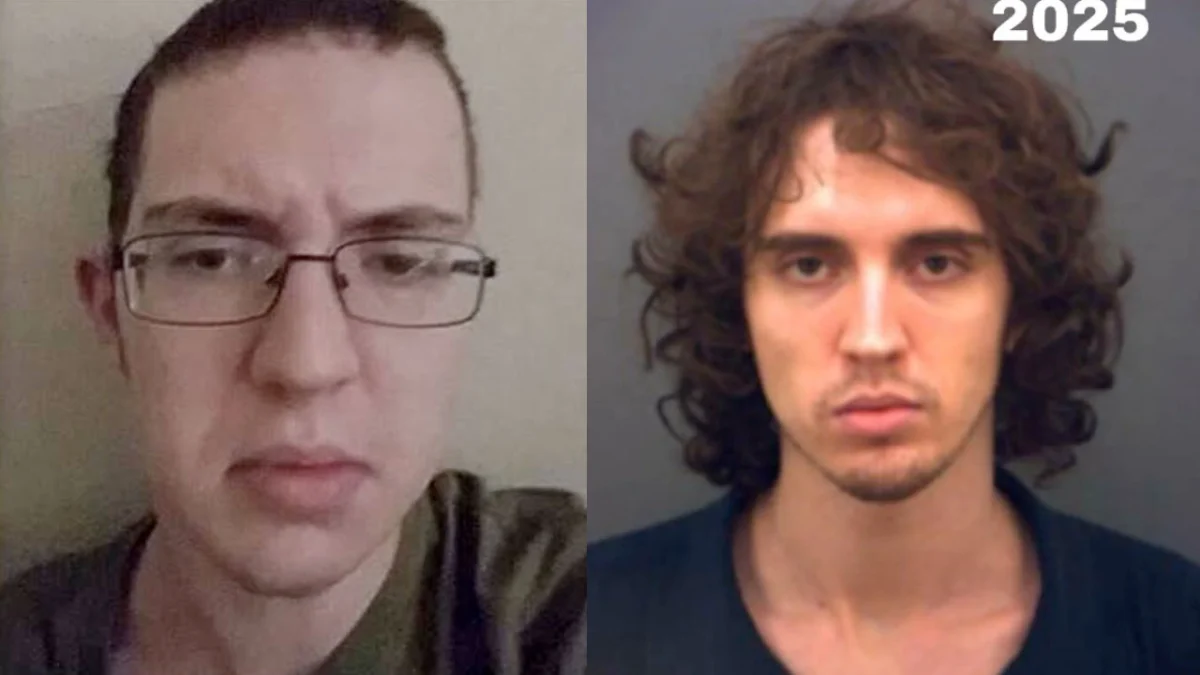
Main Facts
An ostensibly "new" photograph of Patrick Crusius, the perpetrator of the 2019 El Paso Walmart shooting, recently surfaced across various online platforms, triggering a surreal wave of dark humor and viral engagement within niche internet communities. Crusius, who is currently serving multiple consecutive life sentences without the possibility of parole for one of the deadliest hate crimes in recent American history, is paradoxically better known in digital subcultures by a crude line-drawing caricature known as "Chudjak."
The image in question—purportedly a holding facility or federal intake photograph dating back to July 2023, though widely misattributed as a 2025 update—features Crusius without his signature glasses, sporting longer, curly hair and light facial scruff. To millions of internet users who recognize him only through the lens of memetic lore, this altered physical appearance sparked a jarring disconnect. Social media users across Reddit, X (formerly Twitter), and 4chan began generating ironic commentary, facetiously declaring that the real-world inspiration behind the "Billions Must Die" meme had undergone an unexpected "glow-up."
This phenomenon underscores a grim modern reality: the intersection of real-world mass violence and anonymous internet meme culture. For years, digital subcultures have abstracted tragic events into recurring tropes, detaching the perpetrators from their human atrocities and transforming them into abstract icons of digital absurdity. The sudden re-emergence of Crusius’s actual face forced a bizarre collision between these two worlds, highlighting the unsettling ways in which internet culture processes, sanitizes, and trivializes historical trauma.
Chronology
The trajectory from a quiet Freedom of Information Act (FOIA) release to a viral internet phenomenon unfolded across a tightly compressed timeline in late April 2025:
- Late 2019: Following the August 3, 2019, shooting at an El Paso Walmart, users on 4chan’s politically charged
/pol/board conceptualize and popularize the "Chudjak" meme, loosely basing the facial structure and features on early arrest imagery and mugshots of Patrick Crusius. - July 2023: According to digital sleuths and legal documentation trails, a specific photograph of Crusius is taken—reportedly during local holding procedures associated with his federal plea deal negotiations, rather than directly by federal intake officials.
- April 21, 2025: Crusius appears in court for state-level proceedings, captured wearing glasses and a beard, cementing a visual record of his ongoing imprisonment.
- April 25, 2025: A Redditor using the handle
/u/uncanealguinzagliopublishes the July 2023 photograph to the subreddit/r/masskillers, claiming it was acquired via a Freedom of Information Act (FOIA) request. The thread is swiftly deleted by moderators, likely for violating Reddit’s Terms of Service regarding content related to violent extremists, but not before the image is harvested by onlookers. - April 27, 2025: X user
@TruueDisciplinetweets the image with the caption, "This is what chudjak looks like now… feel old yet?", stripping away the context of the mass shooting and framing it purely through the framework of internet shitposting. - Late April 2025 (Viral Peak): The post explodes across X, accumulating over 1.2 million views and 17,000 likes within 48 hours. This sparks a cascading wave of derivative memes, side-by-side comparisons, and satirical commentary across multiple platforms before
@TruueDisciplineand other users clarify the timeline, appending subsequent images of Crusius from his April 2025 court appearances.
Supporting Data
The virality of the Crusius photograph is quantifiable through standard social metrics and digital footprint tracking across platforms:
- Platform Reach: The primary catalyst post on X by
@TruueDisciplinecrossed the 1.2 million impression threshold within two days of publication, indicating widespread algorithmic amplification. - Engagement Metrics: The initial tweet garnered upwards of 17,000 likes and thousands of reposts, outperforming typical niche political shitposting and reaching mainstream meme aggregators.
- Derivative Content Volume: Dozens of unique follow-up memes were generated, including side-by-side comparisons likening the prisoner’s revised appearance to an "indie rock singer," satirical text posts regarding prison fandoms, and classic rage-comic reactions (such as the "Cereal Guy" format).
- Demographic Segmentation: The primary vectors of distribution remained concentrated within ironist meme spaces on X, Reddit subcultures dedicated to true crime and mass casualty events, and legacy imageboards like 4chan.
The data illustrates a disturbing velocity with which administrative or legal records (such as FOIA-obtained mugshots) can be weaponized for comedic or satirical decontextualization within hyper-online subcultures.

Official Responses
While formal institutional statements regarding the memetic spread of the photograph are practically non-existent—as government agencies and judicial bodies rarely comment on internet subcultures—the legal framework surrounding Crusius provides vital context:
- Judicial Outcomes: Patrick Crusius was sentenced to multiple consecutive life terms in federal prison following a landmark prosecution that detailed his white supremacist motivations and manifesto targeting Hispanic immigrants. Subsequent state-level proceedings have continued to address the capital murder charges levied against him.
- Platform Moderation: Reddit’s swift removal of the original
/r/masskillerspost containing the FOIA-obtained image demonstrates adherence to corporate Trust & Safety guidelines. Most major tech platforms prohibit content that glorifies mass shooters, incites violence, or serves to amplify the notoriety of violent extremists. However, the decentralized nature of X and imageboards allowed the image to bypass initial containment walls, highlighting the ongoing whack-a-mole dynamic of modern content moderation.
Implications
The digital reaction to Crusius’s updated likeness carries profound implications for how society processes collective trauma, the psychology of internet irony, and the ethics of digital documentation:
1. The Banality of Evil and Memetic Sanitization
The "Chudjak" meme is a textbook example of how internet subcultures defang terrifying real-world phenomena through hyper-caricature. By reducing a mass murderer to a crude line drawing associated with absurd catchphrases like "The West has fallen. Billions must die," internet users abstract the violence into a cartoonish fictional universe. When a real photograph penetrates this constructed bubble—especially one where the perpetrator looks remarkably ordinary or, as internet users joked, "improved"—it creates a cognitive dissonance. Users respond not with solemn remembrance of the victims in El Paso, but with ironic detachment, further insulating themselves from the gravity of the crime.
2. The Ethics of FOIA and Public Records in the Digital Age
The leak highlights a growing vulnerability in public transparency laws. The Freedom of Information Act and state-level public records laws are foundational to democratic oversight, ensuring that the public and journalists can access records regarding prisoners and legal proceedings. However, when administrative documents—such as holding facility photographs—are funneled directly into sensationalist true-crime communities or shitposting forums, they are instantly stripped of journalistic context. They become raw fuel for digital spectacle, raising ethical questions about whether the unrestricted digital circulation of a mass shooter’s updated image serves public accountability or merely feeds a morbid digital celebrity culture.
3. The Acceleration of Post-Irony
In contemporary internet culture, post-irony reigns supreme. Users deploy humor regarding horrific events not necessarily out of genuine sympathy for the ideology, but as a defense mechanism against an overwhelming, media-saturated world. Treating a mass shooter like an indie musician or a participant in a "glow-up" challenge pushes the boundaries of acceptable dark humor, testing the limits of algorithmic tolerance and cultural taste. Ultimately, this cycle leaves the true victims of the El Paso Walmart shooting invisible, overshadowed by a relentless, self-referential machine of internet absurdity.
 rifanmuazin
  Nana
Nana  Iffa Jayyana