
 By Asro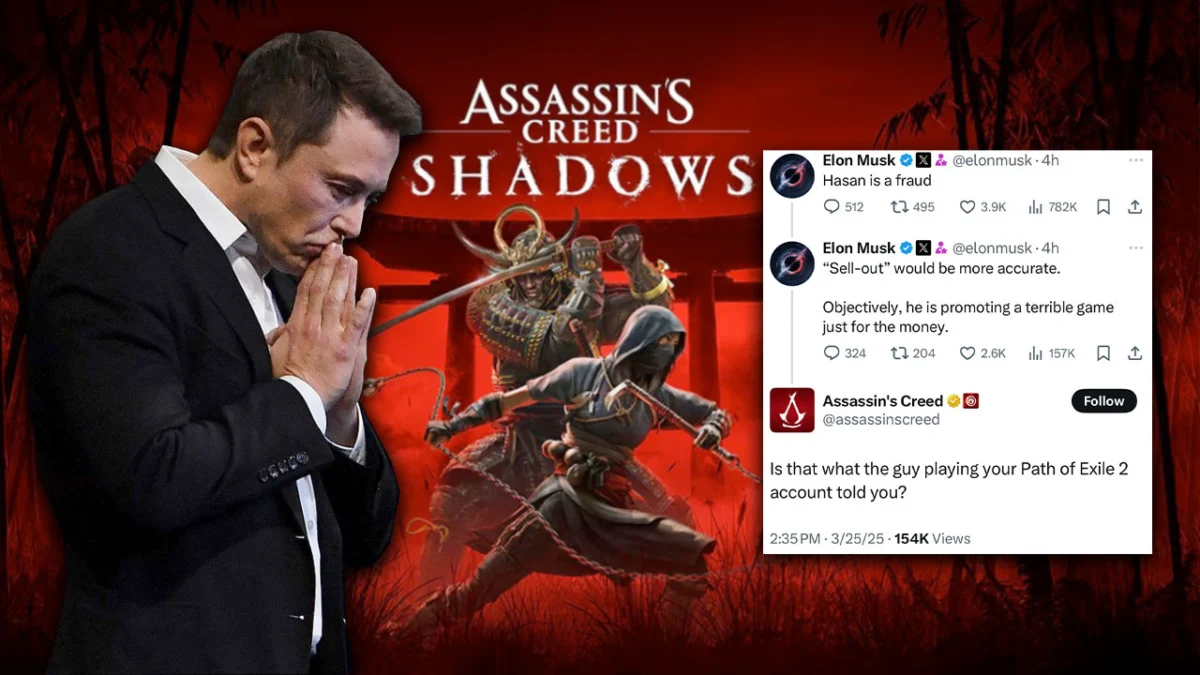
In the hyper-connected ecosystem of modern social media, few figures command as much polarizing attention as Elon Musk. Whether he is launching rockets, reshaping global telecommunications, or dictating discourse on the platform formerly known as Twitter—which he purchased for a staggering $44 billion—Musk remains an omnipresent force. However, his frequent forays into the world of video games have increasingly become a source of public ridicule rather than corporate triumph.
The latest chapter in this ongoing saga unfolded on Musk’s own digital turf, where the official Assassin’s Creed X account delivered a scathing, viral takedown that left the tech billionaire profoundly "cooked." The interaction not only highlighted the volatile intersections of corporate social media, influencer culture, and gaming communities, but it also resurrected a deeply embarrassing controversy regarding Musk’s digital authenticity.
Main Facts: The Catalyst for the Viral Ratio
The digital confrontation began when prominent video game critic and commentator "Grummz" took aim at Ubisoft, the studio behind the upcoming and highly anticipated Assassin’s Creed: Shadows. Grummz criticized the development team for partnering with left-wing Twitch streamer Hasan "HasanAbi" Piker, sponsoring him to showcase the new title.
The criticism drew the attention of Musk, who chimed in to castigate Piker. In a post that quickly drew intense scrutiny, Musk labeled the political streamer a "fraud" and a "sell out," accusing him of promoting a "terrible game just for the money."
Almost immediately, the official @AssassinsCreed account stepped into the fray. Rather than engaging with Musk’s geopolitical or cultural grievances, the social media manager opted for a surgical strike directly at Musk’s personal credibility as a gamer. Quoting Musk’s post, the account fired back:
"Is that what the guy playing your Path of Exile 2 account told you?"
The response was a masterclass in modern digital warfare. Within hours, the tweet was heavily "ratioed"—surpassing 400,000 likes overnight and completely overshadowing Musk’s original critique. The punchline resonated across the platform because it directly targeted Musk’s earlier, well-documented humiliation in the hardcore action-RPG Path of Exile 2.
Chronology: From "Fraud Gamer" to Platform Public Enemy
To fully understand the gravity of the Assassin’s Creed burn, one must look back at the sequence of events that cemented Musk’s reputation as a questionable gaming authority.
January 2025: The Path of Exile 2 Exposure
Earlier in the year, Musk attempted to showcase his gaming prowess by livestreaming sessions of Path of Exile 2. Operating an endgame, high-rank character, Musk broadcasted his gameplay to his millions of followers, presenting himself as a dedicated and skilled veteran of Grinding Gear Games’ notoriously complex title.
However, the strategy backfired spectacularly. Eagle-eyed Path of Exile 2 veterans immediately began dissecting the stream. Rather than displaying the nuanced mechanics expected of a top-tier player, Musk was seen blundering clumsily across the map, making fundamental errors, and demonstrating an elementary misunderstanding of character builds and combat encounters.
The VPN Discovery and the Confession
As community skepticism mounted, players dug deeper, analyzing publicly available game data. The findings revealed an undeniable inconsistency: Musk’s account was actively logging in from Asia—or utilizing a VPN to route traffic through Asian servers—during odd hours relative to his known physical location.

The gaming community quickly deduced the truth: Musk had allegedly hired an external player or "booster" to grind his character to high ranks, allowing him to bypass the grueling learning curve and jump straight into endgame content for clout.
Faced with mounting proof, Musk eventually broke his silence and admitted to account boosting. In a post that shocked no one outside his inner circle, he defended the practice by writing, "It’s impossible to beat the players in Asia if you don’t, as they do!"
The Clash with Hasan Piker
The fallout from the Path of Exile 2 scandal set the stage for subsequent interactions. Hasan Piker, who found himself in Musk’s crosshairs over the Assassin’s Creed: Shadows sponsorship, was acutely aware of the billionaire’s gaming credentials.
As Grummz mediated a flurry of digital screenshots between the two public figures, the war of words escalated. Piker challenged Musk to a high-stakes "duel" in FromSoftware’s notoriously difficult Elden Ring. In retaliation, Musk labeled Piker "chicken-s***" for allegedly blocking him on X. Yet, amidst the back-and-forth between the billionaire and the streamer, it was Ubisoft’s corporate social media team that ultimately hijacked the narrative.
Supporting Data and Community Reaction
The public response to the @AssassinsCreed ratio was overwhelmingly unified, transcending typical political divides to mock a billionaire caught red-handed in a harmless yet deeply ego-driven deception.
Internet culture swiftly rallied behind Ubisoft’s social media handlers. Memes flooded the platform, reviving classic internet adages. Many users playfully adapted the popular meme, "I was unfamiliar with your game," directing it not at Ubisoft’s software, but at the unprecedented savagery of their community management team.
Other users turned their attention toward commerce. X user @soundaholism publicly declared that the sheer brilliance of the ratio had convinced them to pre-order Assassin’s Creed: Shadows immediately, vowing to bypass waiting for a standard price drop solely as a gesture of solidarity with the roast.
Simultaneously, a recurring theme emerged across thousands of replies: the relentless mockery of Musk’s heavy financial investment in the platform itself. Countless memes pointed out the poetic irony that the world’s richest man had spent $44 billion to acquire a global town square, only to be routinely humiliated, ratioed, and "cooked" on his own servers by corporate marketing departments.
Implications: Corporate Comms and the Authenticity Crisis
The viral incident offers a fascinating case study in contemporary corporate communications and the shifting dynamics of online influence.
- The Humanization (and Weaponization) of Corporate Accounts: Historically, corporate X accounts strove for sterile, brand-safe neutrality. In recent years, however, brands have leaned into edgy, colloquial, and confrontational engagement strategies. By directly calling out a platform owner using community lore, the Assassin’s Creed account generated millions of dollars in organic media exposure, eclipsing the reach of traditional advertising campaigns.
- The Fragility of Online Credibility: For public figures, authenticity remains currency. Musk’s desire to project competence across diverse domains—from engineering and artificial intelligence to hardcore gaming—often clashes with reality. When high-skill gaming communities realize a prominent personality is faking their achievements, the backlash is swift and unforgiving because video games operate on a meritocratic social hierarchy where time and skill cannot simply be bypassed without community detection.
- The Weaponization of the Ratio: The "ratio"—where replies outpace or drastically outperform an original post in engagement—has evolved into the ultimate democratic equalizer on X. It strips power from algorithmic boosts and follower counts, placing the final verdict directly in the hands of aggregate user sentiment. When a major corporate account successfully ratios a platform’s owner, it signals a profound shift in cultural authority.
As the dust settles on the latest digital skirmish, Elon Musk remains a towering, if increasingly embattled, figure in the digital landscape. Whether he learns to navigate the unforgiving waters of gaming culture or continues to serve as the internet’s most high-profile cautionary tale, one thing is certain: the gaming community will be watching—and they will check his stats.
 rifanmuazin
  Nana
Nana  Iffa Jayyana