
 By Reynand Wu
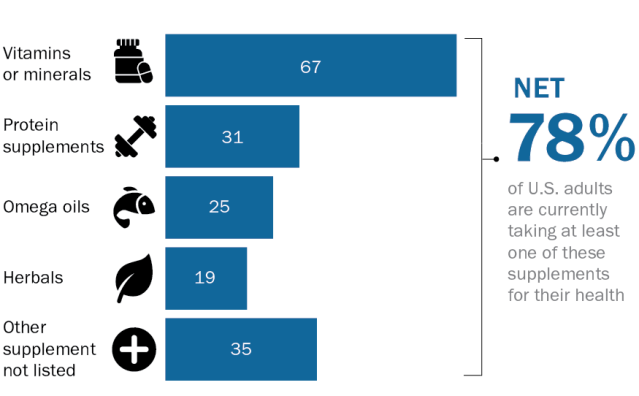
WASHINGTON — In an era defined by wellness culture, social media health influencers, and an ever-expanding global market, taking daily health supplements has become a cornerstone of the American routine. According to a comprehensive new survey released by the Pew Research Center, roughly eight in ten U.S. adults (78%) are currently taking at least one dietary supplement for their health.
The nationwide poll, conducted from July 6 to 12, 2026, among 3,554 U.S. adults via the Center’s American Trends Panel, underscores a deeply ingrained cultural reliance on products ranging from traditional multivitamins and minerals to trendy protein powders, omega oils, and herbal remedies. For most consumers, these daily pills and shakes are not casual habits; they are viewed as vital tools for maintaining long-term health and well-being.
Yet, as the global supplement industry balloons into a multibillion-dollar powerhouse—valued at an estimated $209.5 billion in 2025—the widespread enthusiasm among the public contrasts sharply with the cautious, measured guidance often espoused by medical professionals.
Main Facts: Who Is Taking What?
The Pew Research Center survey provides a granular look at the specific types of supplements Americans are consuming. When researchers defined "supplements" to survey participants as products like vitamins, minerals, herbal formulations, protein powders, melatonin, or probiotics—explicitly excluding prescription and over-the-counter drugs like Tylenol—clear consumption hierarchies emerged.

- Vitamins and Minerals: By an overwhelming margin, vitamins and minerals (such as calcium, iron, and daily multivitamins) dominate the market. Two-thirds of all U.S. adults (67%) report taking them regularly.
- Protein Supplements: Accounting for the fitness-conscious demographic and the heavy influx of physical wellness marketing, nearly a third of Americans (31%) take protein powders or related supplements.
- Omega Oils: Fish oils and other essential fatty acid supplements are used by one-quarter (25%) of the population.
- Herbal Supplements: Trailing behind at 19%, herbal remedies are utilized by fewer than one in five adults.
- Other Additions: An expansive category of "other supplements not listed"—frequently including sleep aids like melatonin or gut health products like probiotics—is consumed by 35% of respondents.
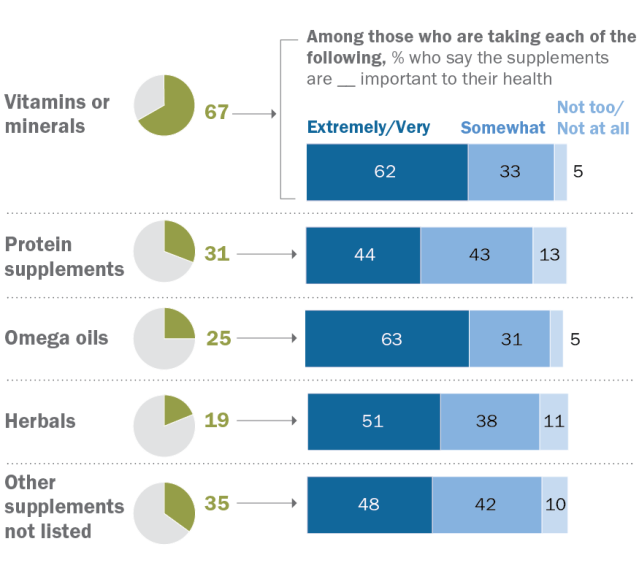
When combined, these figures reveal a massive consumer base: 78% of the American adult population takes at least one of these categorized products. Furthermore, among those who take them, a substantial majority view them as essential. For instance, of the 67% of Americans who take vitamins or minerals, 62% classify them as "extremely" or "very" important to their health, with another 33% calling them "somewhat" important. Similarly, 63% of omega oil consumers deem those products vital to their daily wellness regimens.
Chronology of a Trend: From Niche Aisles to Mainstream Dominance
The explosive growth of the dietary supplement market did not happen overnight. Its trajectory has been shaped by decades of shifting public health guidelines, the evolution of retail pharmacology, and, most recently, the digital transformation of health information.
Late 20th Century: The Foundation of Daily Habits
For decades, vitamins and minerals were largely viewed through the lens of deficiency prevention. Recommendations from medical bodies regarding calcium and vitamin D for bone health, or folic acid for pregnant individuals, cemented multivitamins into the medicine cabinets of post-war generations, particularly among aging populations who required targeted nutritional support.
The 2010s: Fitness Culture and Specialty Niche Expansion
As gym culture transformed from specialized bodybuilding to mainstream fitness lifestyle branding, protein supplements broke out of specialty sports nutrition stores and into mainstream supermarkets. Concurrently, the rise of specialized diets—ranging from keto to plant-based eating—paved the way for omega oils, herbal extracts, and targeted gut-health probiotics to enter urban and suburban households alike.
2020–2026: The Social Media Wellness Era
In recent years, the landscape has been fundamentally altered by the digital ecosystem. The proliferation of health and wellness influencers on platforms like TikTok and Instagram has democratized—and commercialized—nutritional advice. Terms like "protein maxxing" have entered the cultural lexicon, heavily influencing younger demographics to prioritize high-protein diets and supplementation. This digital marketing blitz directly aligns with the findings of the 2026 Pew survey, illustrating how modern consumers curate their health regimens based heavily on peer-to-peer digital recommendations rather than strictly traditional clinical advice.
Supporting Data: Demographic Divides in Supplement Usage
While the overarching adoption rate of 78% points to widespread acceptance across the board, a closer inspection of the Pew Research Center data reveals stark demographic variations based on age, gender, race, education, and income.
The Age Divide: Seniors and Vitamins vs. Youth and Protein
Age is one of the most significant determinants of supplement usage. Overall, older adults are more likely to take supplements: 85% of adults ages 65 and older report taking at least one supplement, compared with 67% of adults under 30.
This gap is driven primarily by vitamins and minerals. While 81% of seniors take vitamin or mineral supplements—aligning with National Institutes of Health guidance that older adults may require higher intakes of calcium and vitamin D—only 48% of young adults under 30 do the same.
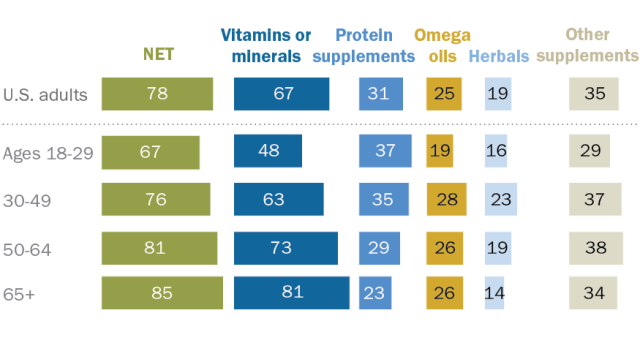
Conversely, the trend flips when examining sports and fitness nutrition. Protein supplements are far more popular among younger generations:
- Ages 18–29: 37% take protein supplements.
- Ages 30–49: 35% take protein supplements.
- Ages 50–64: 29% take protein supplements.
- Ages 65+: 23% take protein supplements.
Gender Disparities
Women are notably more likely than men to incorporate supplements into their daily routines (82% vs. 74%). This 8-point gap is largely fueled by higher consumption rates among women for vitamins and minerals, herbal products, and unlisted alternative supplements. This mirrors broader healthcare trends, as women historically allocate more financial resources toward personal health maintenance and preventative care.
Racial and Ethnic Variations
Usage rates remain relatively consistent across major racial and ethnic groups for most categories, hovering between 73% and 82% for overall supplement intake. However, a notable outlier exists regarding omega oils: 40% of Asian adults report taking omega oil supplements, nearly double the proportion found among White, Black, and Hispanic adults (each resting around 23% to 27%).
Socioeconomic Factors: Education and Income
Financial capacity and educational attainment also play a role in supplement consumption.
- Income Tiers: Upper-income households report an 85% overall usage rate, compared with 78% for middle-income and 74% for lower-income adults. Upper-income earners are particularly prone to purchasing protein supplements (40% vs. 28% of lower-income earners).
- Education Levels: Postgraduates and college graduates exhibit higher overall consumption rates (82% and 81%, respectively) than those with a high school education or less (74%).
Official Responses and Medical Perspectives
Despite the soaring popularity of these products among the American public, the medical and scientific communities maintain a stance characterized by caution and skepticism.
Mainstream medical organizations, including the American Medical Association (AMA), frequently issue warnings reminding patients that dietary supplements are not held to the same rigorous pre-market safety and efficacy evaluations as pharmaceutical drugs under federal regulations. Physicians often stress that a balanced diet rich in whole foods should be the primary source of essential nutrients, warning that unnecessary high-dose supplementation can sometimes lead to adverse health outcomes or interact negatively with prescription medications.
Nutritionists and geriatricians acknowledge the therapeutic necessity of targeted supplementation—such as vitamin B12 for older adults or prenatal vitamins during pregnancy—but express concern over the unregulated nature of "wellness trends" propagated online. The unchecked consumption of high-dose protein powders, unvetted herbal extracts, and trendy supplements driven by internet influencers can bypass clinical oversight, leaving consumers vulnerable to misleading health claims.
Implications: The Future of Health, Regulation, and Consumer Choice
The findings from the Pew Research Center survey carry profound implications for public health policy, the economy, and the future of consumer education.

1. The Power Shift in Health Information
As traditional medical authority shares space—and frequently competes—with digital health and wellness influencers, consumers are increasingly empowered to self-diagnose and self-treat. This shift demands that public health officials modernize their communication strategies, meeting younger demographics on digital platforms to provide evidence-based guidance against the backdrop of viral health trends.
2. Regulatory Scrutiny
With nearly eight in ten adults regularly consuming products that fall into a regulatory gray area, calls for stricter oversight of the dietary supplement industry are likely to grow. Policymakers face mounting pressure to bridge the gap between consumer demand for accessible wellness products and the clinical imperative for safety, quality control, and truth in advertising.
3. Economic Resilience of the Wellness Sector
The data confirms that spending on health and wellness is treated as a priority across nearly all demographic and socioeconomic tiers. Even as economic pressures fluctuate, Americans view vitamins, minerals, and fitness supplements as essential line items in their household budgets. As the market continues to scale past the $209 billion mark, companies that successfully build trust through scientific validation and transparent labeling will likely dominate the next era of consumer health.
Ultimately, the American relationship with supplements is here to stay. Whether driven by the preventative healthcare needs of aging seniors or the fitness aspirations of a social media-driven youth, these daily tablets, powders, and oils have cemented themselves at the very center of modern wellness culture.
 Pevita Pearce
  Basiran