
 By Muslim
In an era where digital communication moves at algorithmic speed, corporate reputation is a high-stakes, fragile asset. Brand safety—the intentional practice of keeping a brand’s paid media, organic content, and digital conversations far away from harmful, offensive, or misleading environments—has evolved from a secondary checklist item into an existential board-level priority.
As digital footprints expand across decentralized channels, enterprise organizations face an unprecedented convergence of threats: programmatic ad misplacements, coordinated bot attacks, unvetted influencer controversies, and the proliferation of AI-generated deepfakes. To navigate this volatile landscape, modern enterprises are abandoning ad-hoc fixes in favor of robust, structured internal brand safety policies.

Main Facts: The Anatomy of Modern Brand Safety
At its core, brand safety protects an organization from reputational damage across two distinct vectors: paid media (where digital ads run adjacent to problematic content) and organic social media (where unmoderated comment threads, poor reviews, or mismanaged messaging can invite public backlash).
Historically, the industry anchored its definitions in standards like the Brand Safety Floor established by the Global Alliance for Responsible Media (GARM). Though GARM was discontinued by the World Federation of Advertisers in August 2024, its foundational frameworks—such as the Brand Safety Floor and Adjacency Standards—remain legacy reference points. Today, these frameworks are enforced through accredited verification vendors, programmatic inclusion lists, and internal compliance protocols.

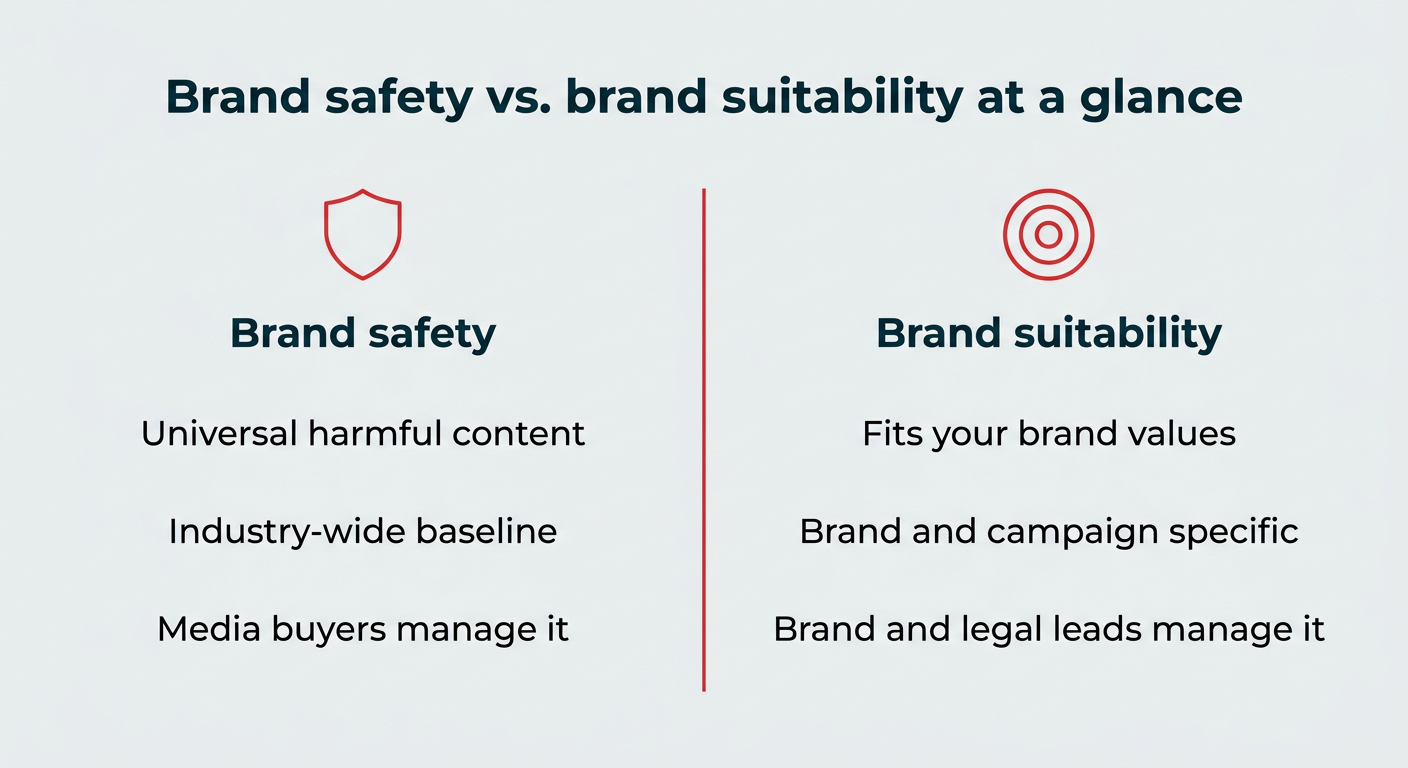
However, safety is only half the battle. Industry experts draw a sharp line between brand safety and brand suitability:
- Brand Safety: The universal floor. It involves avoiding universally harmful, illegal, or toxic content (such as hate speech, explicit material, and extremist media) that no enterprise should ever be associated with.
- Brand Suitability: The tailored ceiling. It asks whether a specific piece of content aligns with a brand’s unique values, target audience, and risk tolerance. For instance, a hard news story about a natural disaster easily clears the universal brand safety floor, but it might be entirely unsuitable for a luxury travel brand running a sun-soaked beach campaign.
Chronology: The Evolution of Digital Risk Management
The urgency surrounding internal brand safety policies is rooted in a fast-paced timeline of technological shifts and regulatory demands:
- 2019: The launch of GARM provides the digital advertising ecosystem with a unified baseline, formalizing industry-wide definitions for content categories that must be avoided.
- August 2024: The World Federation of Advertisers discontinues GARM, shifting the responsibility of defining and enforcing brand safety standards directly back to enterprise brand leadership, media buyers, and independent verification platforms.
- 2025–2026: Generative AI scales exponentially. Gartner reports that 62% of organizations experienced a deepfake incident over a 12-month period, while programmatic ad spending surpasses 90% of all US digital display transactions. Misinformation and synthetic media transform from niche technical issues into daily corporate risk vectors.
- Present Day: Enterprises transition toward holistic internal frameworks, integrating automated monitoring, role-based publishing permissions, and continuous employee training into unified operational suites like Hootsuite Social OS.
Supporting Data: The 2026 Threat Matrix
Recent studies and industry data underscore the sheer scale of the threats facing corporate communications and marketing teams:
- Programmatic Velocity: Over 90% of US digital display ad spending is now programmatic. Because automated ad placement happens faster than human review, misconfigured campaigns frequently land corporate logos next to inappropriate content.
- The Rise of Synthetic Threats: According to Gartner research, enterprise spending on combating misinformation and disinformation is projected to surpass $30 billion by 2028. This reflects an environment where synthetic executive statements, cloned accounts, and fabricated endorsements have become routine hazards.
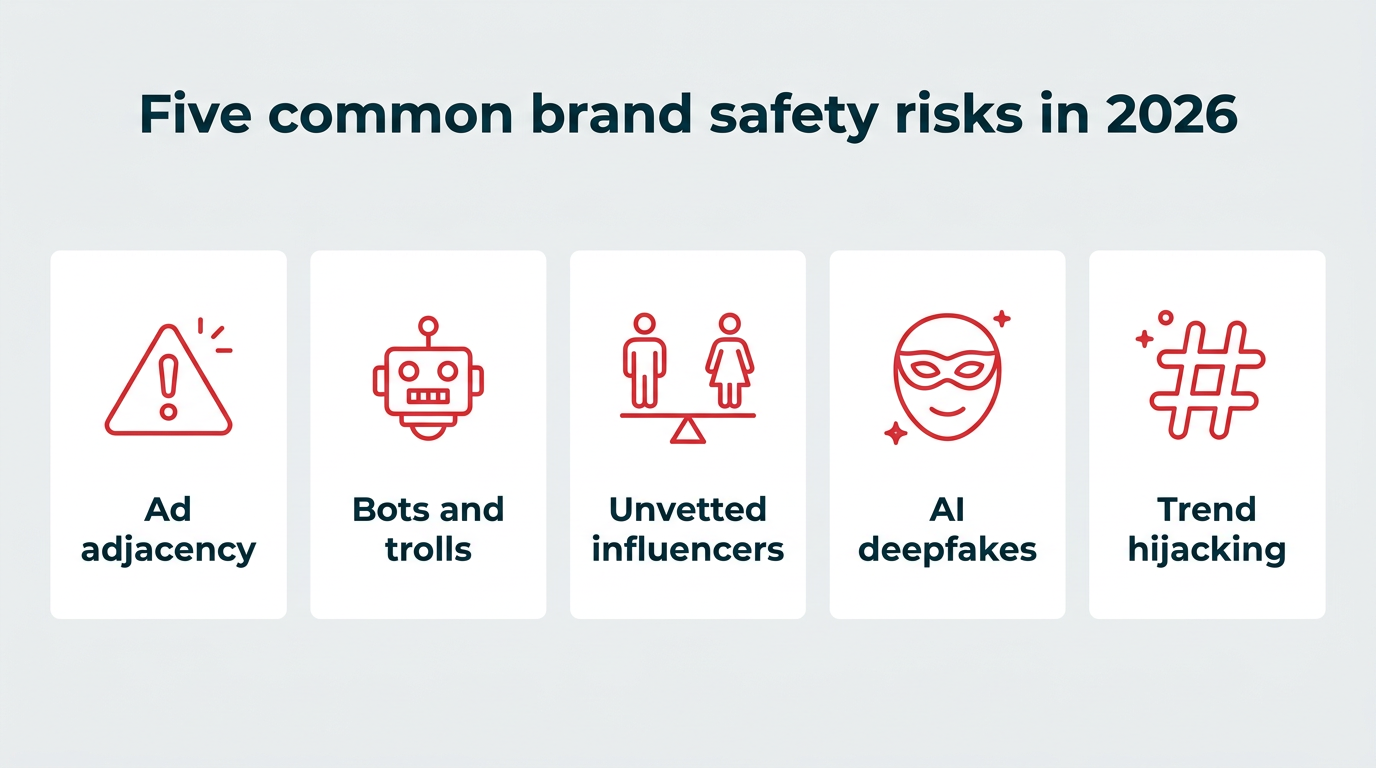
- The Five Primary Risk Categories in 2026:
- Ad Adjacency: Ads appearing next to toxic or inappropriate digital content.
- Bots and Trolls: Coordinated inauthentic behavior designed to manufacture fake public outrage or distort sentiment analytics.
- Unvetted Influencers: Creator partnerships where historical behavior or ongoing controversies suddenly reflect poorly on the sponsoring brand.
- AI-Powered Deepfakes: Cheap, scalable synthetic video and audio impersonating executives or brand assets.
- Trend Hijacking: Jumping on viral hashtags or internet trends without verifying their underlying origins, occasionally tying a brand to a tragedy or protest.
Official Responses and Expert Insights: Building a Resilient Culture
To understand how organizations can enforce safety without stifling creativity, industry leaders advocate for structured, positive reinforcement rather than fear-based mandates.
Nick Martin, Social Media Lead at Tilpati, emphasizes that effective policies must remove ambiguity for employees. When workers are unsure of what is allowed, they either freeze entirely or take dangerous shortcuts. Martin recommends utilizing centralized employee advocacy tools (such as Parliament) to provide teams with pre-approved, brand-safe posts. This allows staff to participate in social advocacy without the risks associated with writing from scratch.
Furthermore, Martin stresses that brand safety cannot be treated as a one-time onboarding document. "I recommend creating a presentation for new hires… and then be sure to have follow-up sessions throughout the year to help keep your tips fresh," he notes.
Crucially, experts advise against punitive, threat-laden language in employee guidelines. Policies that threaten termination for minor missteps tend to shut down communication entirely. Instead, straightforward and constructive expectations—such as clear rules around protecting proprietary customer data—foster a culture of shared accountability. When employees see positive examples of peer engagement, recognizing and highlighting those successes reinforces the desired behaviors organically.
Implications: The Core Components of an Enterprise Policy Framework
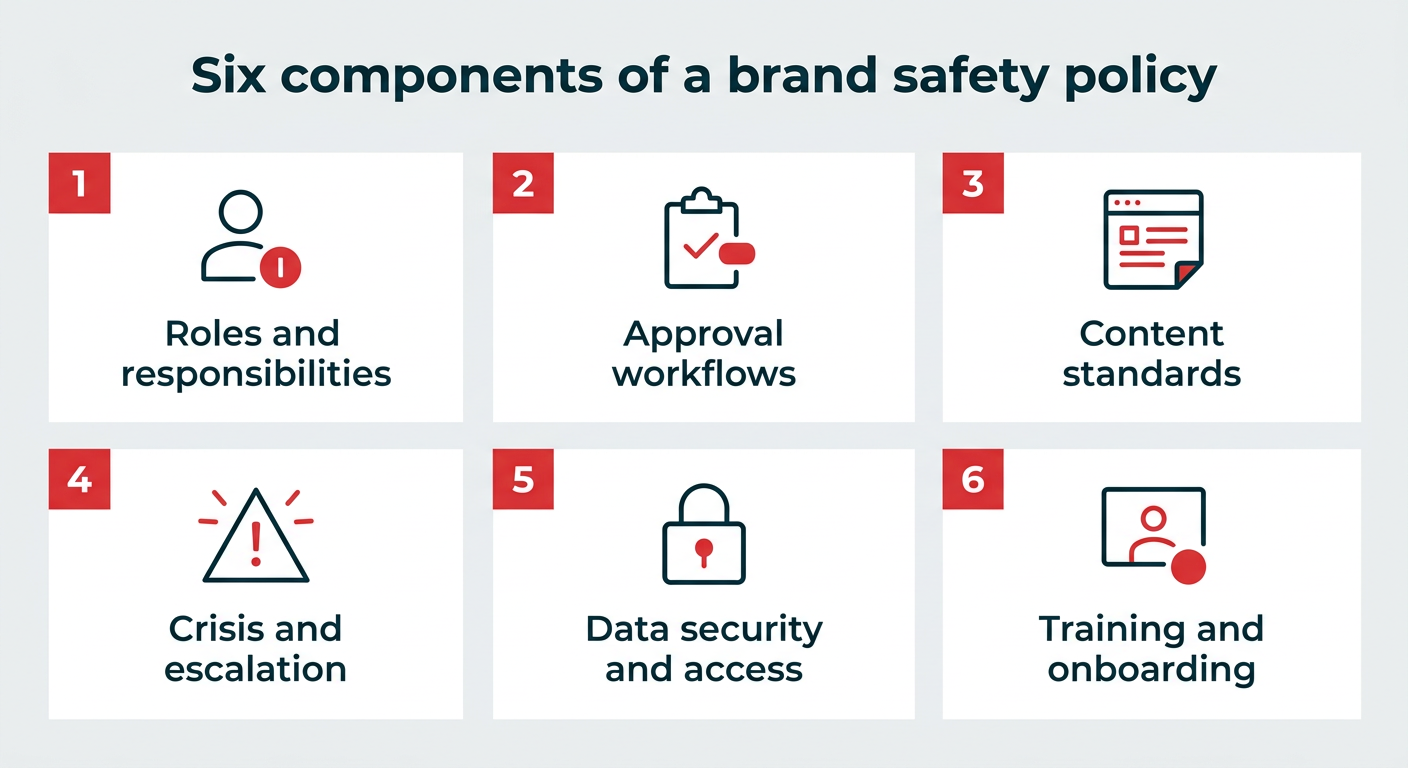
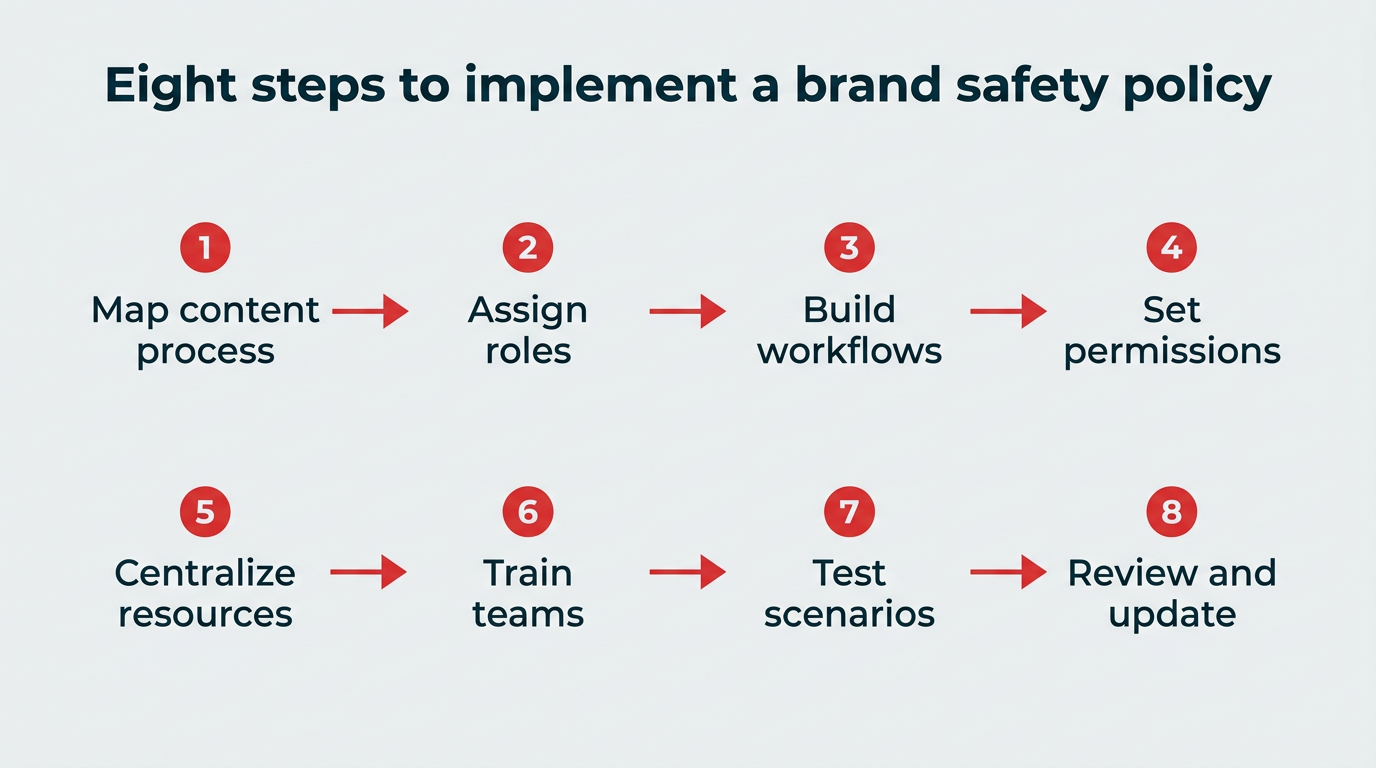
To operationalize these best practices, enterprise organizations must implement a comprehensive internal brand safety policy built on six foundational pillars:
1. Defined Roles and Responsibilities
Every team member must know what they own. From social media managers and copywriters to legal counsels and regional brand leads, clear lines of accountability ensure that content categories are respected and nothing slips through the cracks.
2. Approval Workflows and Publishing Guardrails
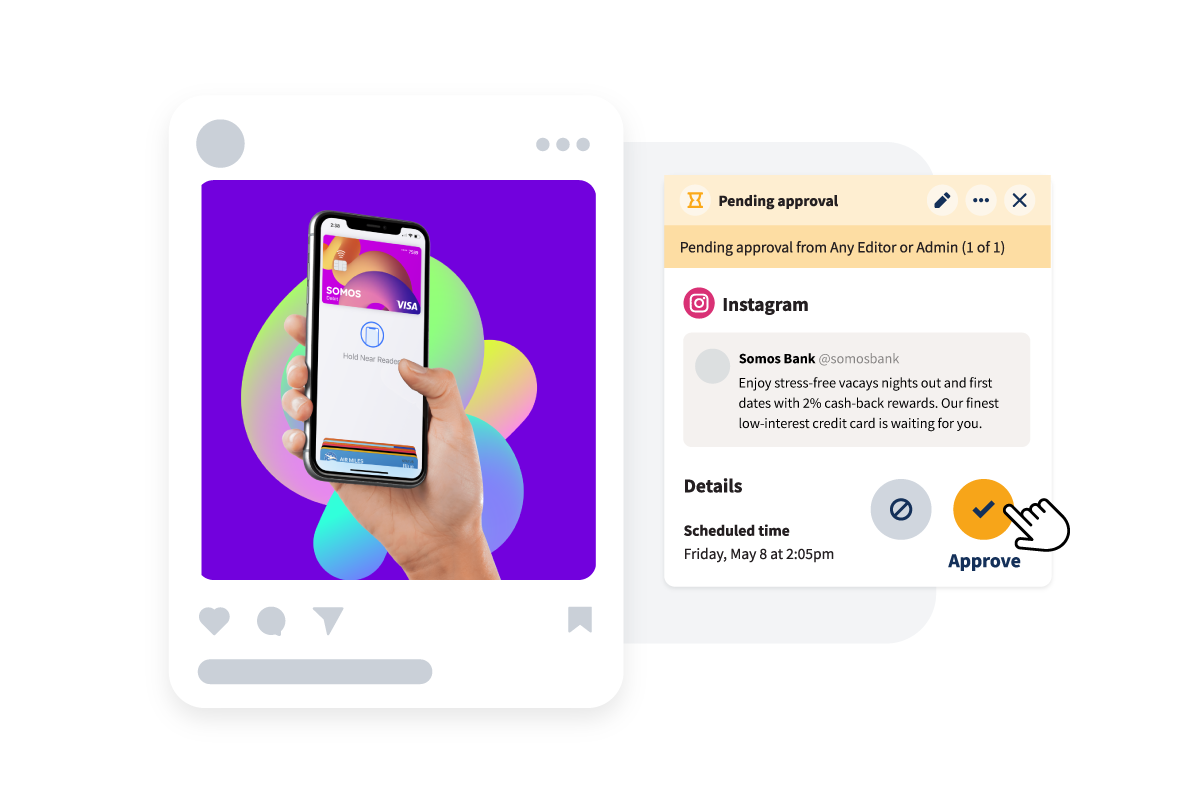
Automated approval routing ensures that no post goes live without rigorous review. Utilizing platforms equipped with robust governance layers (such as Vigil and Perch within Hootsuite Social OS) allows organizations to enforce multi-step approvals, eliminating unauthorized posts and rogue publishing.

3. Clear Content Standards
Policies must explicitly define what is and isn’t acceptable. This includes tone of voice, visual style boundaries, claims substantiation, and strict protocols for handling sensitive cultural or political topics.
4. Crisis Detection and Escalation Plans
Even the best policies cannot prevent every emergency. Enterprises need real-time listening tools (such as Lumen) to catch issues early. A solid escalation plan dictates who must be notified immediately, preventing minor customer complaints from snowballing into full-scale public relations crises.
A prime real-world example of this is how Hong Kong Airlines utilized real-time listening alerts to catch a mispriced fare going viral. By acting swiftly to honor the mistake rather than hiding from it, the airline transformed a potential PR disaster into a goodwill success story that boosted engagement by 4,900%.
5. Data Security and Access Controls
Brand safety extends to account protection. Multi-factor authentication, role-based permission controls, and unified login dashboards prevent malicious actors, bots, and simple human errors from compromising corporate social channels.
6. Continuous Training and Onboarding
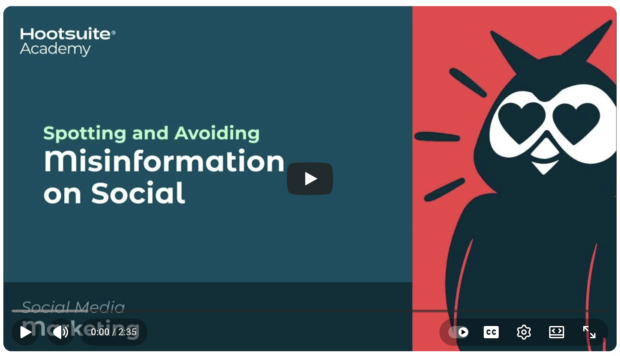
Policies are only as effective as the people executing them. Regular training sessions, quarterly refreshers, and scenario-based drills ensure that teams remain confident, sharp, and well-versed in handling emerging threats like AI-generated misinformation.
Conclusion
As digital ecosystems grow increasingly complex, internal policies for brand safety serve as the bedrock of corporate defense. By clearly delineating between safety and suitability, harnessing advanced AI governance tools, and fostering a culture of continuous, positive education, enterprise organizations can protect their reputations while continuing to innovate and engage authentically in the digital sphere.
 rifanmuazin
  Nila Kartika Wati
  Basiran