
 By Neng Nana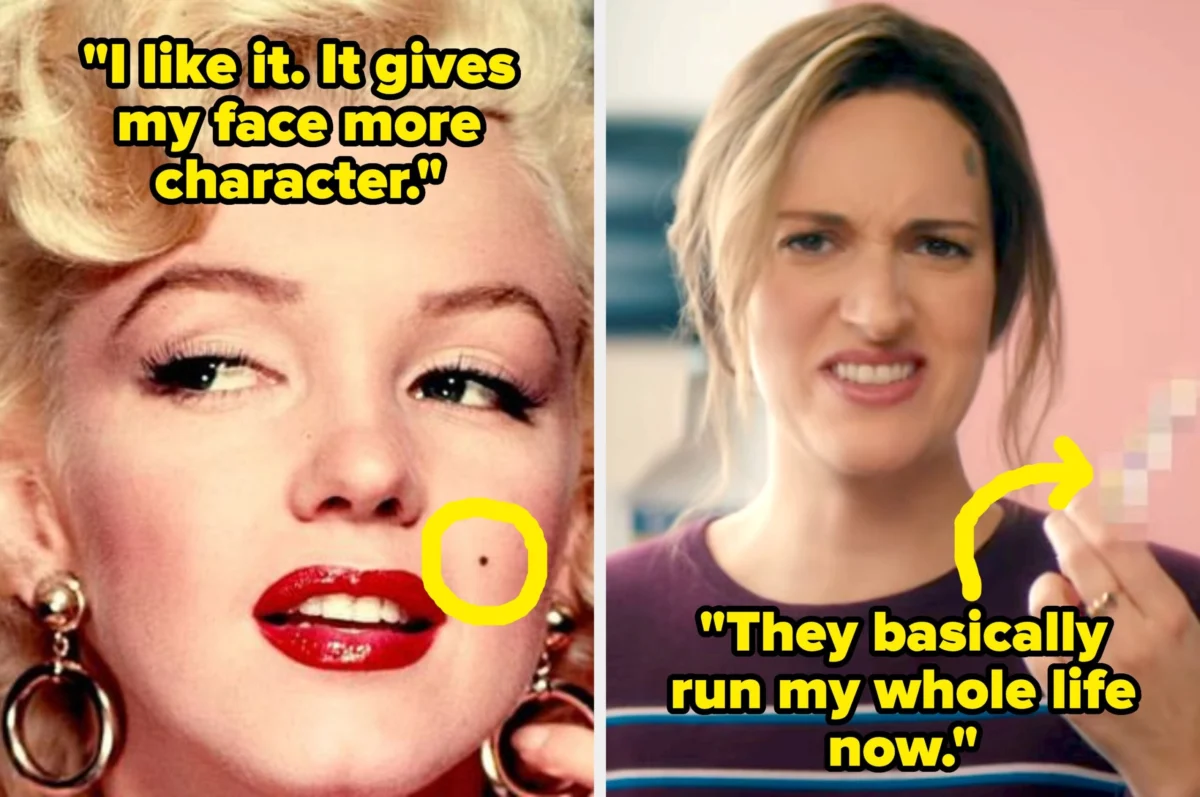
Main Facts: The Hidden Realities of Aging Revealed by Women
As the cultural conversation surrounding women’s health slowly expands, the unspoken and often bizarre physical changes that accompany aging are finally being brought to light. For generations, society has presented a sanitized, generalized view of what happens to a woman’s body as she transitions from her 20s and 30s into her 40s and beyond. But behind closed doors—and increasingly, within digital communities—women are sharing a vastly different, more complex reality.
Recent viral threads on popular online forums such as r/AskWomen and r/AskWomenOver30 invited thousands of women to answer candid questions: "What’s one thing your 40s taught you about your body that your 30s didn’t?" and "What are ways your body changed that you didn’t see coming?"
The responses revealed a profound disconnect between what women are taught to expect and what actually occurs. From shifting metabolic rates and rebellious sleep patterns to sudden adult-onset food intolerances, structural bone and cartilage realignments, and unexpected transformations in hair texture and skin elasticity, the female body undergoes a staggering evolution. Far from being a gentle, linear decline, aging is characterized by distinct biological plot twists that often catch women entirely unawares.
Chronology: The Decades of Transformation
Understanding how the female body ages requires examining the distinct milestones and phases that mark the transition from early adulthood through the fourth and fifth decades of life.
The Late 20s to Mid-30s: The Subtle Shifts
While women in their 20s often feel invincible, the late 20s and early 30s frequently serve as a subtle prologue to aging. During this window, foundational shifts begin to occur beneath the surface. Hormonal fluctuations, even prior to the onset of perimenopause, can trigger structural changes.
Many women report unexpected alterations during or after pregnancy, such as widened ribcages, shifting hip structures, and even dental changes like teeth gradually shifting alignment. Skin elasticity begins its imperceptible decline, meaning that daily moisturizers and rigorous SPF routines transition from optional preventive measures to non-negotiable daily staples. Furthermore, metabolic baselines begin to adjust, making the carefree dietary habits of early youth harder to maintain without physical consequences.
The 40s: The Great Realignment
If the 30s are a prologue, the 40s are an abrupt awakening. This decade is frequently dominated by the onset of perimenopause—a transitional phase that can last anywhere from a few years to a decade. During the 40s, women consistently report that they can no longer "power through" physical exhaustion.
The concept of resilience takes on a new definition. While the body remains remarkably capable, it demands intention, recovery time, and respect for its new boundaries. Chronic conditions, autoimmune flare-ups, and sudden sensitivities frequently emerge during this timeframe, forcing women to fundamentally rewrite their relationships with exercise, nutrition, and daily stress management.
Supporting Data and Common Experiences: What the Community Reveals
The vast digital ledger compiled from thousands of women’s firsthand accounts highlights several recurring, highly specific physical phenomena that rarely make it into traditional medical textbooks or women’s lifestyle magazines.
1. Metabolic Friction and Inflammation
A slowed metabolism is a well-documented scientific reality, but the lived experience far exceeds theoretical expectations. Women routinely express frustration over how minor dietary indiscretions or routine lifestyle habits suddenly result in stubborn weight gain. However, respondents note a crucial nuance: not all weight gain is fat. Hormonal shifts frequently lead to systemic inflammation, which manifests as puffiness and retained fluid.
Moreover, the exercise regimens that yielded results in younger years—such as hours of long hikes, cardio, or high-endurance sports—can backfire in the 40s, triggering joint pain. Many women find success by pivoting to a balanced routine of short, high-intensity intervals, targeted strength training, and gentle daily movement.
2. The Sleep Lottery
Sleep in the 40s is frequently described by participants as a "free-for-all" or an exercise in unpredictability. Hormonal fluctuations wreak havoc on circadian rhythms. As one contributor aptly put it: "Some nights I’ll sleep all through the night. Other nights I’ll wake up briefly and go back to sleep. On some nights I’m wide awake at 2 a.m… There’s no rhyme or reason; it’s just my body pranking me." This erratic sleep quality inevitably impacts daytime energy levels, making rest the primary determinant of daily functioning.
3. Bizarre Sensory and Structural Surprises
Perhaps the most eye-opening aspect of the community discussions is the sheer strangeness of aging side effects. Women documented an array of unexpected biological shifts:
- Hair Textural Mutiny: Straight hair suddenly turning wavy—often one rebellious strand at a time, creating a halo of unruly "satellite wires"—alongside darkening tones, stubborn grays near the temples, and thinning at the roots.
- Sudden Adult Allergies: The onset of hay fever, seasonal allergies, or chronic sinus inflammation in women who had never experienced them before, often linked directly to perimenopausal immune system shifts.
- Gastrointestinal Betrayals: Lifelong dairy lovers suddenly developing lactose intolerance in their late 30s, or individuals experiencing violent physiological rejections of red wine and alcohol due to changing digestive enzyme production and histamine tolerances.
- Dermatological and Podiatric Realities: The appearance of familial moles in mid-life, persistent adult acne coexisting with drying skin, and the necessity of intensive foot care (such as debriding thickened skin on the soles).
Official Responses and Medical Perspectives
Medical professionals and endocrinologists increasingly validate these anecdotal reports, pointing to the profound cascade of hormonal changes that define a woman’s mid-life transition.
According to gynecological and dermatological specialists, the root cause behind many of these surprising symptoms is the fluctuation and eventual decline of estrogen, progesterone, and testosterone. Estrogen receptors are distributed widely throughout the body—not just in reproductive organs, but in the brain, skin, joints, blood vessels, and digestive tract. When estrogen levels begin to fluctuate wildly during perimenopause, it triggers a systemic reaction.
- Immune and Inflammatory Responses: Medical researchers note that estrogen has immunomodulatory properties. Its fluctuation can influence mast cells, which explains why many women suddenly develop adult-onset allergies, hay fever, or heightened sensitivities to specific foods and alcohols in their late 30s and 40s.
- Musculoskeletal Changes: The loss of estrogen impacts collagen production and bone mineral density, directly correlating with joint stiffness, reduced skin elasticity, and the necessity for dedicated stretching and resistance training to preserve mobility.
- Neurological and Sleep Impacts: Fluctuating hormones directly affect the hypothalamus, the body’s internal thermostat and sleep-regulation center, accounting for the erratic sleep patterns and mid-day fatigue reported by countless women.
Healthcare providers emphasize that while these changes can feel alarming or isolating, they are largely normal physiological responses. The medical community increasingly advocates for proactive, open dialogue between patients and physicians to manage symptoms ranging from perimenopausal sleep disturbances to chronic inflammation.
Implications: The Psychological Shift and Acceptance
Beyond the physical laundry list of changing metabolisms, recalcitrant sleep schedules, and shifting hairlines, the most profound takeaway from the collective wisdom of women over 40 is a psychological transformation.
For decades, society conditions women to view aging as a loss—a slow erosion of youth, beauty, and vitality. Yet, a powerful counter-narrative emerges from those navigating these exact changes. Many women report a liberating psychological shift upon entering their fourth decade: the cessation of harsh self-criticism.
As one contributor noted, "I’ve learned that aging is beautiful. I don’t know what happened, but when I turned 40, I started to see my body differently. I stopped tearing it apart as I had for 30+ years. I think I stopped comparing myself to younger women and started to think, ‘Yeah, I’m in my 40s… I look and feel pretty good.’ It’s just a different mindset."
This evolution marks a transition from fighting the body to accepting and working in partnership with it. Whether it is abandoning grueling multi-hour workouts for restorative strength training, trading high-volume alcohol consumption for herbal tea, or embracing the "Bride of Frankenstein" gray streaks with humor and confidence, mid-life brings a unique form of empowerment.
Ultimately, understanding the unvarnished realities of female aging strips away the stigma and mystery. By sharing these experiences openly, women are rewriting the narrative of getting older—transforming it from a series of "shitty surprises" into an anticipated, shared journey of bodily reclamation and self-acceptance.
 Nana
Nana  Suro Senen