
 By Iffa Jayyana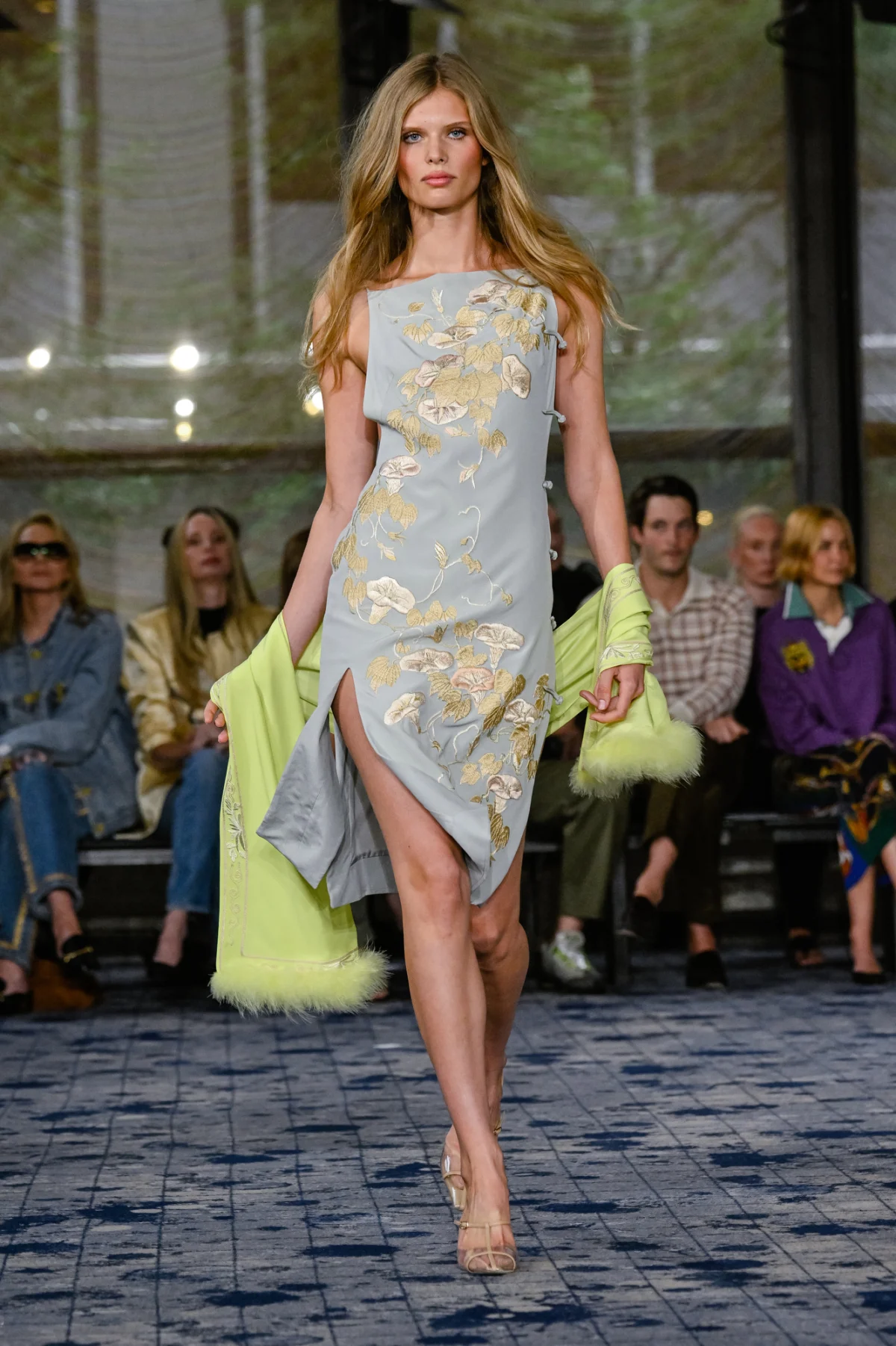
As the global fashion calendar shifts into its next gear, London Fashion Week faces a notable void. While the industry is abuzz with the high-profile returns of legendary houses like Alexander McQueen and the anticipated showcases from Christopher Kane, one of the U.K.’s most electric creative forces—Conner Ives—has opted for a change of scenery. In a move that signals a significant shift in his brand’s trajectory, the New York-born designer has officially brought his vision “Across the Pond,” staging a homecoming that serves as both a homecoming and a bold redefinition of what it means to be an American designer today.
The Transatlantic Pivot: A New Chapter for a Rising Star
For the Central Saint Martins alumnus, the transition from the London scene to the American runway is more than a logistical change; it is an interrogation of his own identity. For years, the industry has operated under the assumption that Ives was a product of the British fashion establishment. His education at the hallowed halls of CSM and his meteoric rise in London cemented this perception.
However, this season’s presentation, aptly titled Across the Pond, was a direct confrontation with these assumptions. By choosing to present his latest collection in New York, Ives has effectively reclaimed his narrative, positioning himself as a designer who navigates the friction between his adopted British sensibilities and his inherent American spirit.
A Chronology of the Collection: From Savile Row to Statue of Liberty
The presentation was a masterclass in juxtaposition. The show began with a nod to his time in the U.K., specifically through a landmark collaboration with the historic Savile Row tailor Gieves & Hawkes. This partnership, which yielded two sharp, banker-style suits, marked a departure into the world of traditional tailoring—a category previously unexplored by Ives.
These suits, however, were not the stiff, conformist uniforms one might expect from a legendary tailor. Instead, they were styled with a deliberate, chaotic charm—collars popped, trousers tucked irreverently into socks, and ties left intentionally askew. The visual language suggested a high-powered professional who had stepped straight out of a Midtown power lunch at The Grill and into an afternoon tryst. It was the first manifestation of the season’s mantra, splashed across what is already poised to be a must-have graphic T-shirt: "Bring back no shame."
As the show progressed, the focus shifted from the austerity of British tailoring to the expansive, eclectic spirit of the United States. Ives utilized a vibrant, if not chaotic, palette of references to map out his American identity. There were embellished denim pieces and pleated skirt sets adorned with equestrian prints, offering a satirical yet affectionate wink to the American West.
The collection reached its emotional crescendo with the final look: an ethereal drop-waist chiffon gown rendered in the specific, oxidized copper hue of the Statue of Liberty. It was a poetic, almost cinematic tribute to his hometown, capturing the grandeur of American history through a lens of contemporary subversion.
Supporting Data: The Anatomy of "Flamboyance"
When asked to characterize his design philosophy, Ives consistently lands on one word: "flamboyance." It is a term he wears as a badge of honor, claiming it as his most "American" trait. This flamboyance was not merely aesthetic; it was structural. The collection functioned as a true melting pot, blending disparate cultural threads with a fearlessness that borders on the radical.
Flamenco-inspired fringe sat comfortably alongside intricate chinoiserie florals, and the styling leaned heavily into the idea of "more is more." This stylistic "no shame" approach is the heartbeat of the Conner Ives brand. As Ives noted in a post-show interview, "My whole feeling is that everyone is invited to the party, and I think it’s a very American thing as well."
The lineup was brought to life by an ensemble cast that underscored the brand’s cultural cachet. Iris Law walked in a daring red matador catsuit, while Lila Moss modeled a reimagined version of the fur-trimmed Art Deco robe famously worn by Troye Sivan in his "She’s the Best" music video. By aligning his clothes with the current icons of pop culture, Ives has solidified the "Conner Ives girl" as a definitive archetype: vivacious, worldly, and entirely unapologetic.
Official Responses and Creative Dialogue
The decision to move away from London—a city that arguably birthed his professional career—was not taken lightly. Industry analysts have pointed out that while London remains a hub for avant-garde experimentation, New York provides a different kind of platform: one rooted in the commercial realities of the American market, yet currently desperate for the kind of narrative-driven design that Ives provides.
In the wake of the show, industry leaders and critics alike have praised the designer’s ability to pivot without losing his identity. While the loss to London Fashion Week is palpable, the gain for the American fashion circuit is significant. Ives’s ability to merge the technical discipline of Savile Row with the high-octane energy of American pop culture makes him a unique bridge between two worlds.
When queried about his future in New York and whether this move marks a permanent "planting of the flag," Ives maintained a philosophical stance. "I always say to people, ‘tomorrow is never promised,’ so you never really know what it’s going to bring. But I love being here," he remarked. This ambiguity is perhaps the most honest reflection of the fashion industry today—a landscape that rewards those who are agile, fluid, and willing to embrace the unknown.
Implications: The Future of the "Conner Ives Girl"
The implications of this collection go beyond the runway. By reclaiming his American roots, Ives is signaling that the future of fashion lies in the dissolution of borders. He is proving that an American designer can be trained in the rigorous traditions of London and still bring a distinctly localized, yet universally appealing, perspective back home.
Furthermore, the "Bring back no shame" ethos serves as a commentary on the current state of consumerism. In a world where trends move at breakneck speed, Ives is advocating for a more personal, idiosyncratic approach to style. He encourages his audience to wear their history, their inspirations, and their flaws on their sleeves.
As for the clothes themselves, the commercial potential is high. The graphic tees and the "no-shame" accessories are set to resonate with a younger generation that values authenticity over perfection. The tailored suits, despite their disheveled styling, prove that Ives has the technical chops to scale his business into more traditional luxury markets.
Conclusion: A Homecoming with Momentum
As the dust settles on the presentation, the fashion world is left to wonder what the next season will bring. Will Ives continue to lean into the American identity, or will he pivot again to surprise us? One thing is certain: the Conner Ives girl has arrived in New York, and she is firmly in the spotlight.
By bridging the gap between the historic tailoring of Savile Row and the sprawling, flamboyant culture of America, Ives has created a blueprint for the modern, global designer. He has proven that you can be both a product of your environment and an architect of your own destiny. As we look toward the next chapter of his career, one sentiment remains clear: the industry is watching, and for the first time in a long time, the spotlight feels exactly where it belongs.
Whether in London or New York, Conner Ives has successfully turned "no shame" into a business model, and if his latest collection is any indication, he is just getting started. The industry may have lost one of its buzziest designers to the U.S., but in doing so, it has gained a visionary who is actively rewriting the rules of the American runway. For those who believe that fashion should be a party where everyone is invited, the future—as Conner Ives puts it—is looking decidedly bright.
 Suro Senen
  Lina Hope
  Nana Muazin