
 By Nila Kartika Wati
By Erin Rodrigue
Content Strategist and Author
In the modern digital landscape, the old adage "if you build it, they will come" is a dangerous fallacy. Organizations invest countless hours, substantial budgets, and immense creative energy into producing pristine whitepapers, deeply researched blog posts, and high-production-value video assets. Yet, all too often, these masterpieces launch to the sound of crickets.
The culprit is rarely the quality of the work itself; rather, it is a fundamental failure of distribution.

Great content deserves more than a single roll of the dice. Developing a sophisticated content distribution strategy is no longer a luxury for enterprise marketing teams—it is an existential requirement for any brand attempting to cut through the digital noise. By strategically balancing owned, earned, and paid channels, and by leveraging modern workflow tools and artificial intelligence, marketers can dramatically extend the lifespan and impact of their high-value assets.
The Anatomy of a Content Distribution Strategy
At its core, a content distribution strategy is a systematic blueprint designed to place your brand’s content in front of the precise audience that needs to see it, utilizing a calculated mix of distribution channels.
A modern, social-first approach takes this concept a step further by implementing a rigorous repurposing framework. Instead of treating a piece of content as a monolith, a social-first strategy breaks assets down into native formats tailored for specific platforms—transforming a 45-minute industry webinar into a 30-second TikTok clip, a punchy X (formerly Twitter) thread, or a multi-slide LinkedIn carousel. The core message remains unchanged, but the packaging shifts to feel entirely organic to the platform where it lands.

Owned vs. Earned vs. Paid Channels
Content distribution generally relies on three distinct pillars. The primary differentiator among them is brand control and whether financial investment is required to secure placement:
- Owned Media: Content distributed through channels fully controlled by your organization. Examples include your corporate website, company blog, email newsletters, and organic social media channels. Best for: Maintaining brand visibility and nurturing long-term audience relationships.
- Earned Media: Content amplified by individuals or organizations entirely outside your brand’s direct control. Examples include organic social shares, press coverage, guest contributions, backlinks, and user-generated content (UGC). Best for: Building authentic brand credibility and trust.
- Paid Media: Content distributed via financially backed placements. Examples include social media advertisements, search engine marketing, display ads, sponsored content, and creator partnerships. Best for: Reaching hyper-targeted audience segments, scaling campaigns rapidly, and injecting momentum into underperforming assets.
While elite brands typically utilize a harmonious blend of all three, investment levels should be dictated by strategic goals. Owned channels establish a foundational home base, earned channels provide invaluable social proof, and paid channels ensure your premier content scales effectively.
Why Organic Reach Alone is Failing in the Modern Era
The digital ecosystem has evolved dramatically. With algorithms shifting to prioritize personal connections over brand pages, organic reach has steadily plummeted.
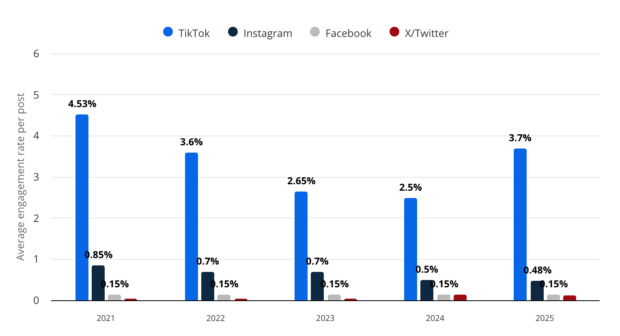
Consider the current realities of organic social performance: according to recent platform benchmarks, the average engagement rate per post on Facebook hovers at a meager 0.15%, while Instagram fares only slightly better at 0.48%. When a brand-new post underperforms, it is rarely a stroke of bad luck; it is simply the mathematical reality of modern organic algorithms.
+-------------------+-----------------------------------+
| Social Platform   | Average Engagement Rate Per Post  |
+-------------------+-----------------------------------+
| Facebook          | 0.15%                             |
| Instagram         | 0.48%                             |
+-------------------+-----------------------------------+
*(Source: Statista / Hootsuite Industry Benchmarks)*
A robust distribution strategy alters these odds entirely. By establishing a methodical process for resharing, recycling, and repackaging core assets, organizations give their best ideas multiple chances to capture an audience.
Furthermore, this approach mitigates burnout on creative teams. Instead of relentlessly manufacturing novel content for every individual platform from scratch, marketers can mine fresh angles and insights from assets they have already produced. This extends the lifespan of high-value investments—turning a single research report into weeks of executive-led LinkedIn commentary or converting a sprawling customer case study into a sequence of targeted email drips.
Step-by-Step: Building a Repeatable Distribution Engine
Constructing a high-performing distribution machine requires a methodical, step-by-step approach that aligns business goals with tactical execution.
1. Establish Clear Objectives and KPIs
Every distribution strategy must originate from a tangible business goal. Are you attempting to build brand authority, drive organic website traffic, generate qualified leads, or boost customer retention?
Once your objectives are locked in, select a lean suite of Key Performance Indicators (KPIs) to measure success. For authority-building campaigns, monitor backlinks and brand mentions; for traffic-focused initiatives, track click-through rates and referral traffic. Crucially, resist the temptation to measure every channel against the same benchmark. A top-of-funnel TikTok video serves a vastly different purpose than a bottom-of-funnel email newsletter.
2. Map Your Audience’s Digital Footprint
Before selecting your channels, audit where your target demographic actually spends their time.
"Ultimately, your content distribution channels need to make sense for your audience," explains Beth Owens, Head of Content at Superfiliate. "If you’ve tried distributing content on X and it isn’t getting traction, it could be because it’s not a channel your audience actually spends much time on."
Combine social media analytics with website referral data and social listening insights to map out accurate audience behavior profiles.
3. Assign a Distinct Purpose to Every Channel
Avoid the trap of cross-posting identical content across every platform. Instead, define a precise job description for each channel:
- LinkedIn: Position executive leadership as industry thought leaders and capture B2B interest.
- Instagram/TikTok: Drive top-of-funnel brand awareness through visually engaging short-form video.
- Email: Nurture existing leads and deliver high-value educational content directly to opted-in subscribers.
4. Conduct a Comprehensive Content Audit
Before producing new material, inventory your existing library. Identify evergreen assets that continue to drive value or historically outperformed their peers. Score each asset based on its repurposing potential (low, medium, or high) to identify hidden gems ready for redistribution.
5. Build a Systematic Repurposing Workflow
Consistency is the ultimate bottleneck in content marketing. To scale output without expanding headcount, organizations must build repeatable workflows.
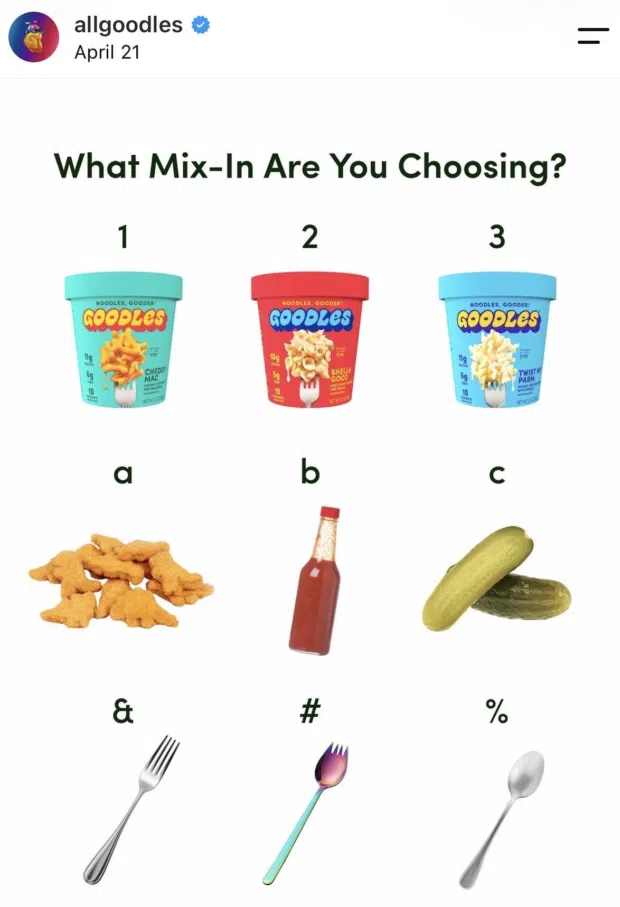
"Different content formats will lend themselves naturally to different channels," notes Owens, pointing out how a single webinar can be chopped into YouTube Shorts, transcribed into a detailed blog post, and distilled into bullet points for an email blast.
To maintain momentum without human fatigue, integrate modern artificial intelligence tools into the pipeline. A standard AI-assisted workflow might involve uploading a video transcript, prompting the model to extract five primary takeaways, drafting platform-native variations, and routing the final copy through internal editorial review gates.
6. Execute Distribution in Strategic Waves
Treating content distribution as a single-day event is a critical miscalculation. Instead, map out your rollout in strategic waves. Launch the anchor asset on Monday, follow up with an executive commentary post on Tuesday, roll out vertical video clips the following week, and reinforce the campaign with a dedicated email newsletter toward the end of the month.
For teams establishing these systems for the first time, tactile visualization remains powerful. Sketching out the content flow with pen and paper helps teams understand how assets transition from primary hubs to secondary distribution spokes.
Evaluating the Top Content Distribution Channels
Choosing the right mix of channels depends heavily on your product, industry, and target demographic.
Social Media
As a primary discovery engine—with over 61% of consumers reporting that they discovered a new brand or product via social media last year—social platforms offer unmatched reach and flexibility. Whether leveraging organic engagement or deploying paid social ads to hit hyper-specific target audiences, social media remains a cornerstone of modern distribution.

Search and Owned Websites
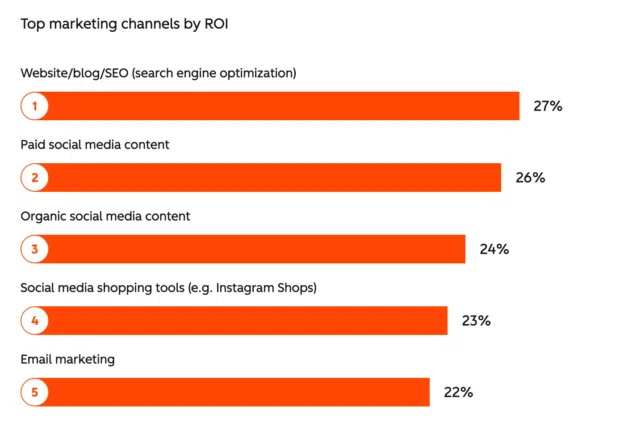
Search engine optimization (SEO) commands a massive strategic advantage: high user intent. Search engine users are actively hunting for solutions to immediate problems. Unlike social posts, which experience a rapid decay in visibility within 48 hours, a well-optimized, authoritative landing page can pull in high-intent organic traffic for months or years. Unsurprisingly, industry surveys consistently rank SEO and owned web content as top channels for overall marketing ROI.
Influencer and Creator Partnerships
Consumer trust in traditional brand advertising has steadily eroded, but creator trust is surging. Approximately 83% of consumers view the creators they follow as genuinely trustworthy sources of information. Partnering with influencers grants brands instant access to highly engaged, captive audiences through a trusted voice.
Email Marketing
Email remains one of the most powerful conversion vehicles available. Because subscribers have explicitly opted in to receive communications, email provides a direct line of sight to an audience that has already signaled genuine interest in your brand.
Streamlining Operations with Hootsuite
As content operations scale, managing multi-channel distribution manually quickly becomes untenable. Enterprise solutions like Hootsuite are designed to alleviate this operational friction.
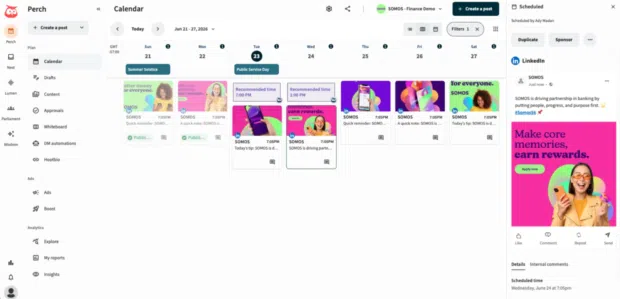
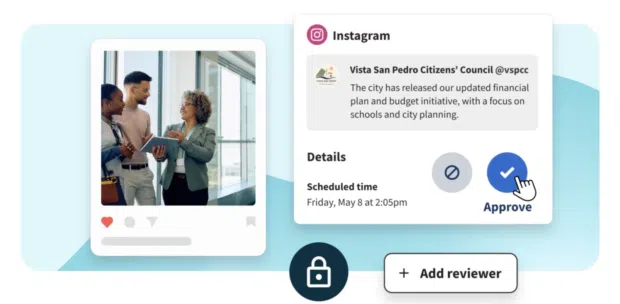
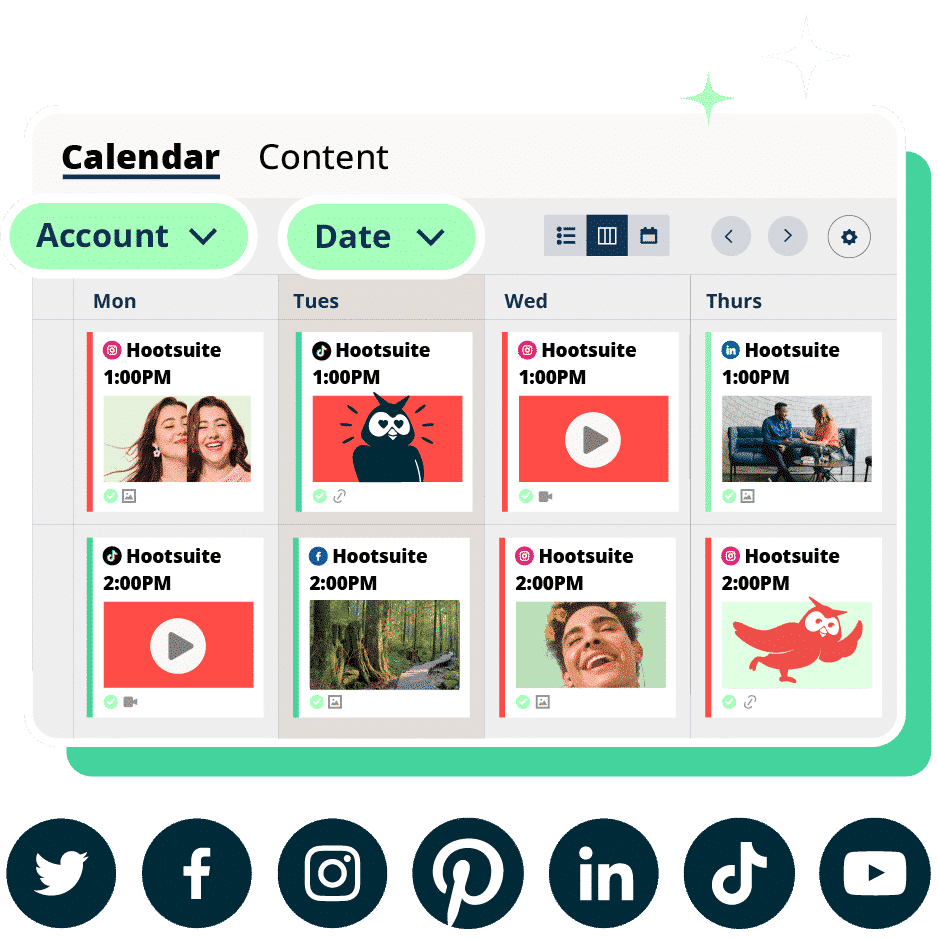
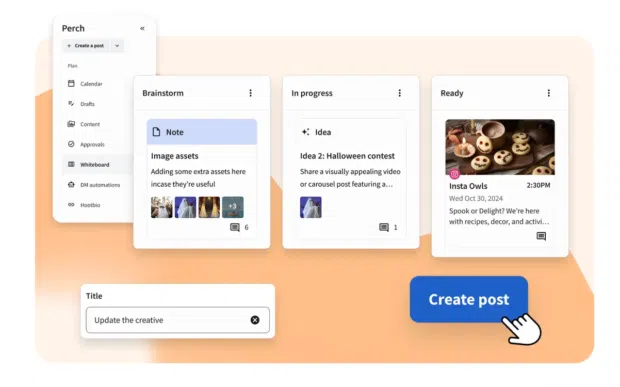
Through tools like Perch, marketing teams can leverage a centralized drag-and-drop calendar to plan, customize, collaborate on, and schedule content across disparate networks. Whiteboarding features facilitate early-stage brainstorming, while built-in approval workflows ensure brand safety as teams scale.
Furthermore, AI-powered integration like Hootsuite’s Wisdom enables content creators to instantly transform a single asset into a dozen channel-optimized variations. By analyzing optimal posting times and audience behavior patterns, Wisdom ensures that repurposed content is automatically scheduled to publish precisely when target audiences are most active online.

Frequently Asked Questions
What is the difference between owned media, earned media, and paid media?
Owned media covers assets controlled directly by your brand (websites, email lists, organic social profiles). Paid media represents channels where you pay for guaranteed placement (social and search ads). Earned media consists of organic amplification driven by third parties (social shares, press mentions, backlinks, and user reviews).
When is the appropriate time to utilize paid content distribution?
Paid distribution should be deployed when you need to accelerate reach for a major product launch, target hyper-specific audience segments, or inject promotional fuel into organic content that has already proven its ability to engage audiences.
How do you calculate return on investment (ROI) for content distribution?
ROI is calculated by mapping performance metrics directly back to your primary goals. For brand awareness, track impressions and reach; for consideration, monitor referral traffic and click-through rates; for conversion goals, measure lead generation volume, customer acquisition cost (CAC), and final revenue attribution.
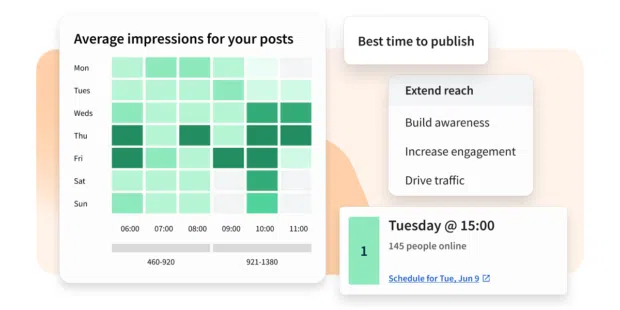
For organizations ready to transform their content operations, platforms like Hootsuite offer integrated solutions to plan, approve, schedule, and optimize distribution across every major network from a single, unified dashboard.
 Ammar Sabilarrohman
  Asep Darmawan
  Muslim