
 By Pevita Pearce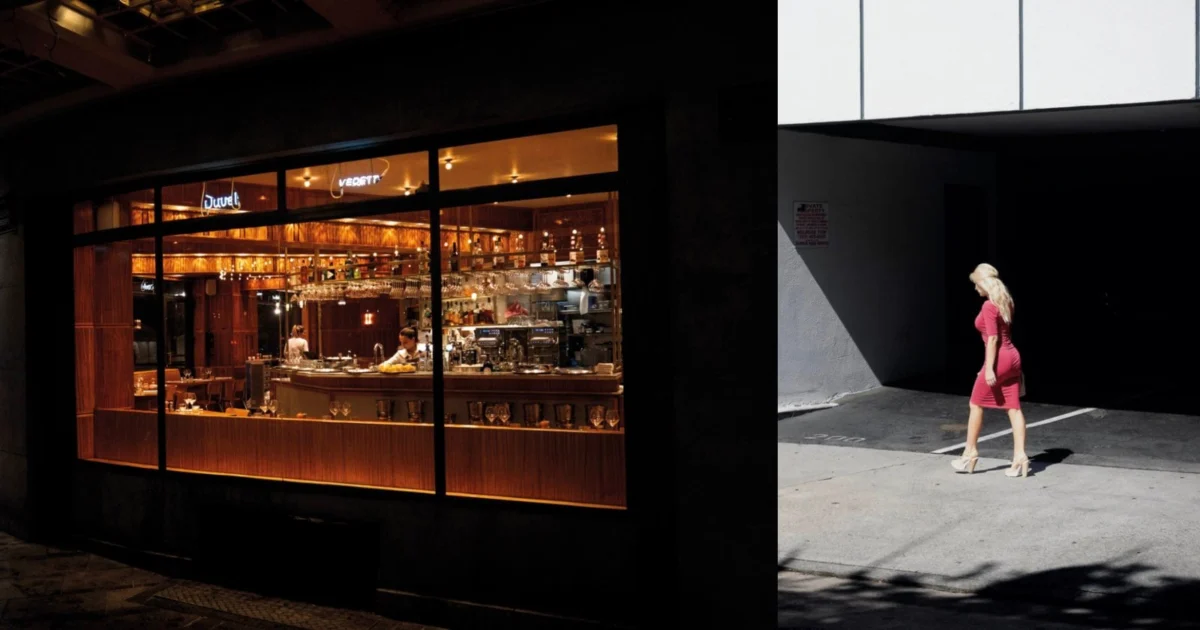
NEW YORK — In an era dominated by the relentless noise of digital imagery, hyper-saturated feeds, and instantaneous communication, photographer Nicolas Rachline is turning his lens toward the exact opposite: the profound, lingering silence of the world’s quiet hours.
Later this month, Rizzoli New York will publish Elsebound: Photographs from the Quiet Hours, the highly anticipated debut monograph from the French-born, Belgium-based artist. Featuring a foreword by prominent cultural figures Graydon Carter and Nathan King, the book compiles over a decade of Rachline’s photographic explorations across major global metropolises, including Paris, Los Angeles, New York, Brussels, and St. Tropez.
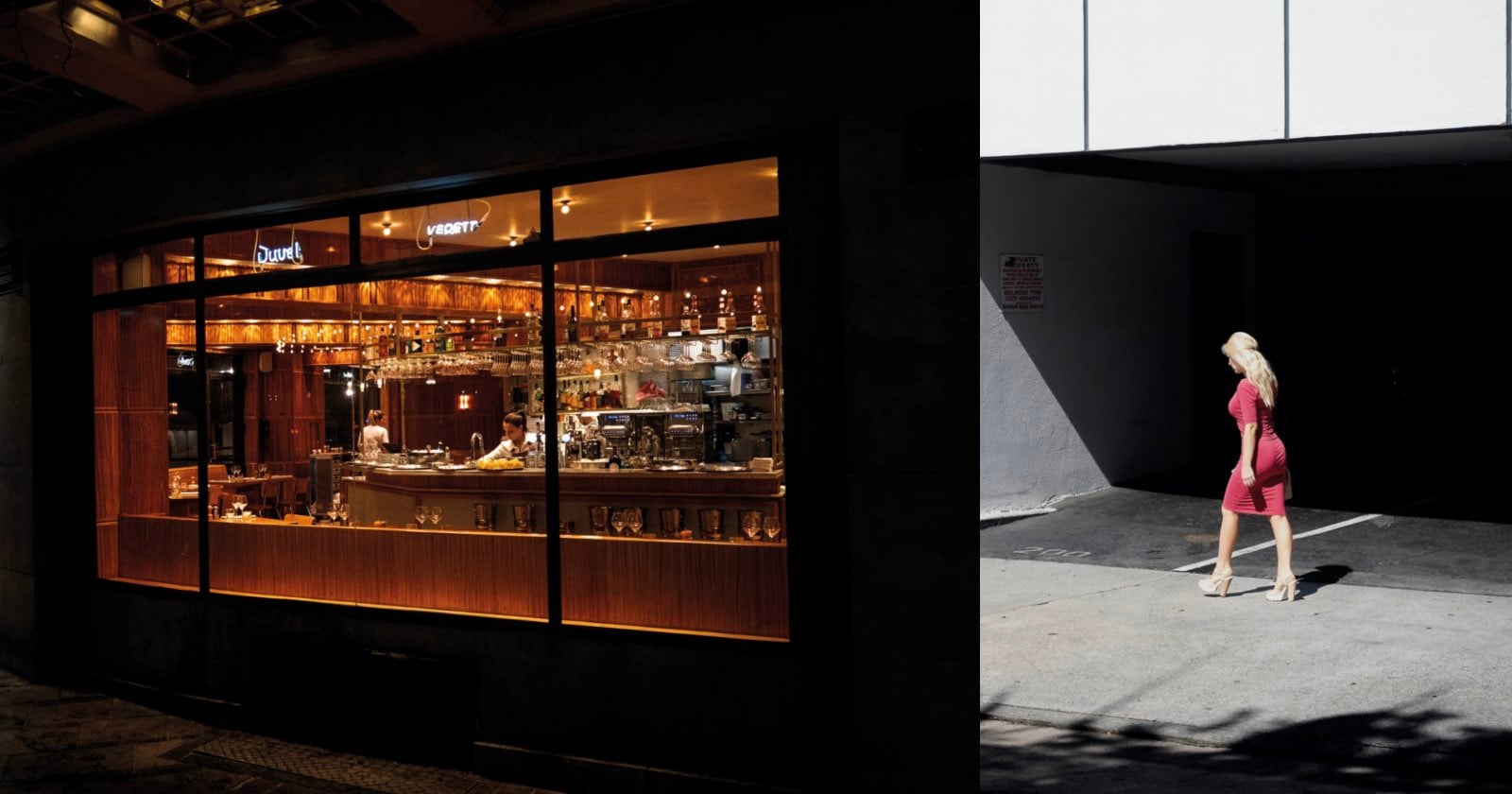
Drawing heavy comparisons to the melancholic realism of painter Edward Hopper and the gritty, cinematic intensity of film noir, Rachline’s work captures the delicate intersection between the solitude of contemporary life and its fragile, fleeting beauty.
Main Facts: Inside Elsebound
- Publication Date: September 29, 2026.
- Publisher: Rizzoli New York.
- Elsebound: Photographs from the Quiet Hours.
- Key Contributors: Foreword by Graydon Carter and Nathan King; Photography by Nicolas Rachline.
- Core Aesthetic: Cinematic framing, nocturnal cityscapes, isolation, voyeuristic compositions, and an acute sense of suspended narrative time.
- Geographical Scope: Images captured in global cultural hubs including Paris, New York, Los Angeles, Brussels, and St. Tropez.
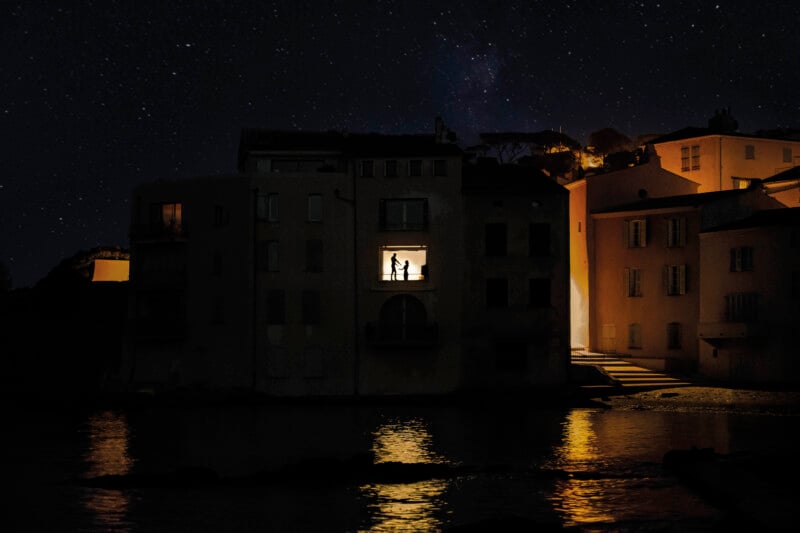
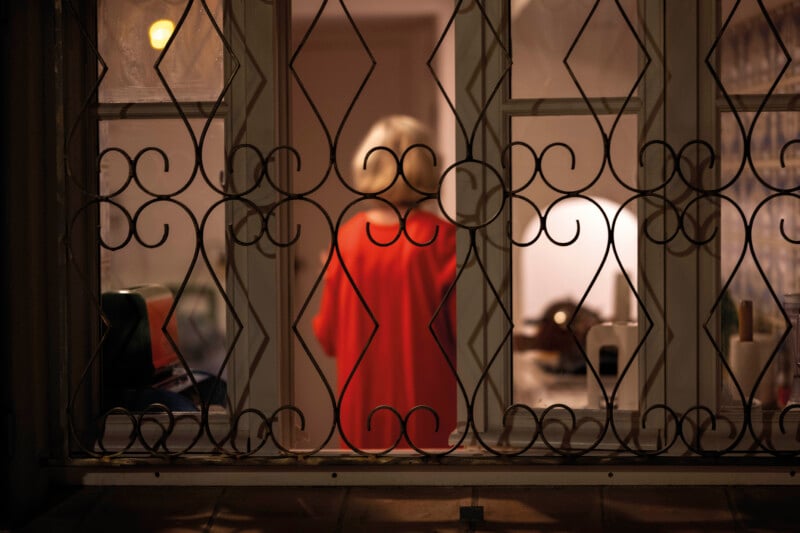
The monograph serves as a visual anthology of liminal moments. Rachline’s street photography and architectural compositions do not merely document a place; they transform familiar urban landscapes into stages for unspoken human dramas. Deserted streets glow with unnatural, pale light; anonymous, solitary figures linger at crossroads; and anonymous interiors viewed through lit windows feel simultaneously deeply intimate and unsettlingly detached.
Chronology: From Advertising to Art
To understand the distinct cinematic language of Elsebound, one must trace Nicolas Rachline’s unconventional trajectory through the creative industries.
- Pre-2010s (The Formative Years): Rachline spent years working in commercial advertising and media editing. This background deeply informed his understanding of narrative pacing, frame composition, and how visual cues manipulate viewer psychology—tools he would later repurpose for fine art.
- Early 2010s (The Pivot): Roughly a decade ago, Rachline made a definitive career shift, stepping away from commercial constraints to dedicate himself entirely to independent street and conceptual photography.
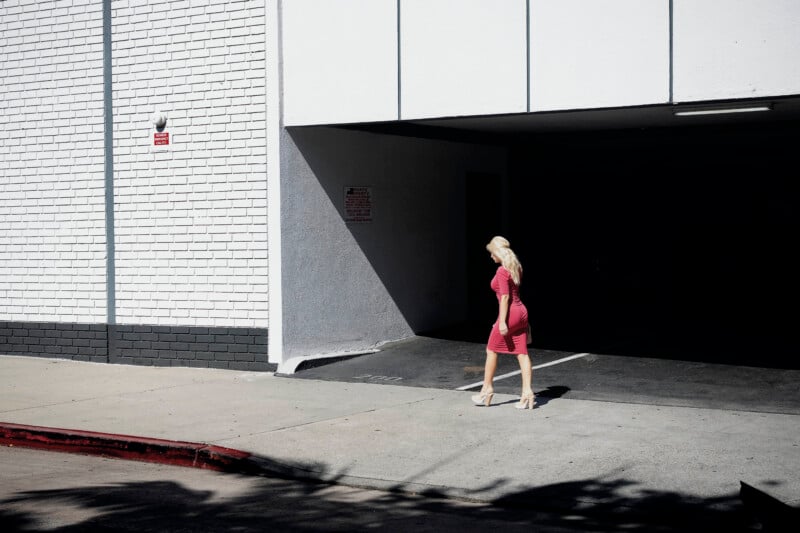
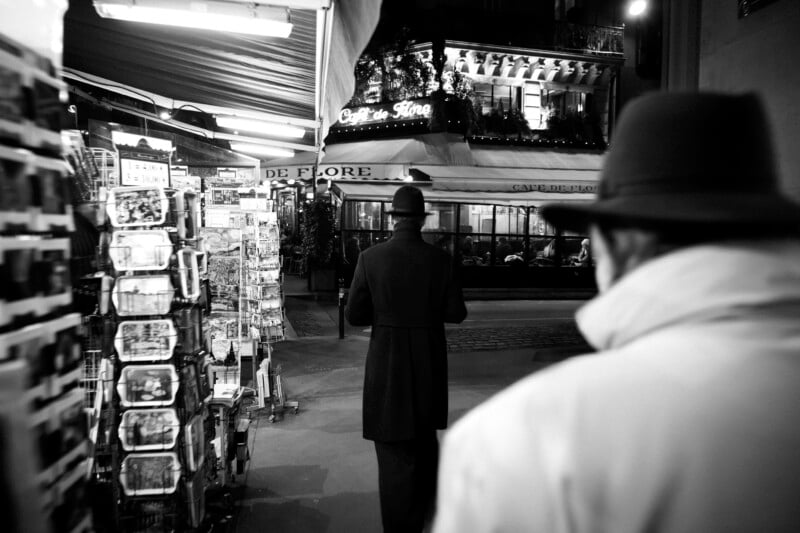
- Mid-2010s to Early 2020s (The Global Journey): Rachline began traveling extensively, capturing nocturnal and twilight scenes across various continents. Iconic images featured in the book—such as a vibrant pink-dressed woman walking near a Los Angeles parking garage in 2015, or a shadowy figure approaching the legendary Café de Flore in Paris in 2019—were forged during this period of intense observation.
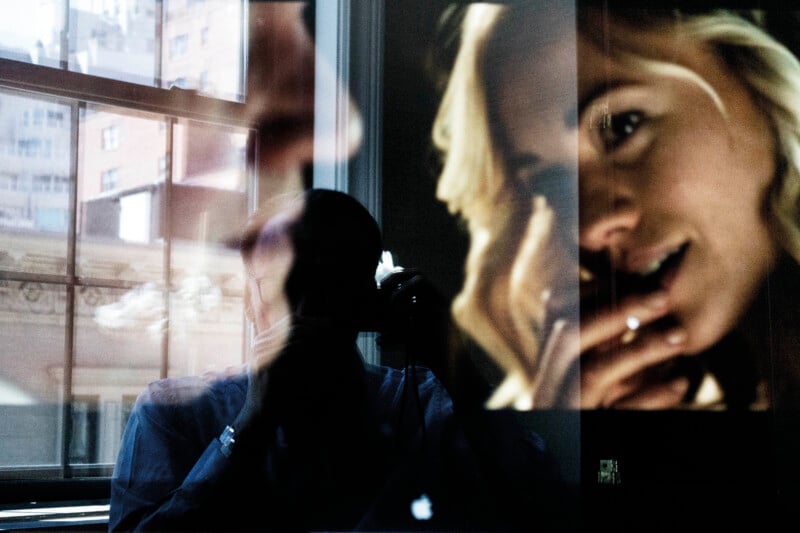
- 2021–2024 (Refining the Vision): The artist expanded his visual vocabulary, experimenting with reflections, double exposures, and stark architectural framing in places like Brussels and St. Tropez.
- September 2026 (The Milestone): The culmination of this decade-long journey materializes with the release of Elsebound, marking Rachline’s first-ever comprehensive monograph.
Supporting Data and Artistic Influences
Rachline’s work does not exist in a vacuum; it sits at the crossroads of mid-century painting and twentieth-century street photography. Critics and art historians have noted clear dialogues between Rachline’s aesthetic choices and those of several legendary creators:
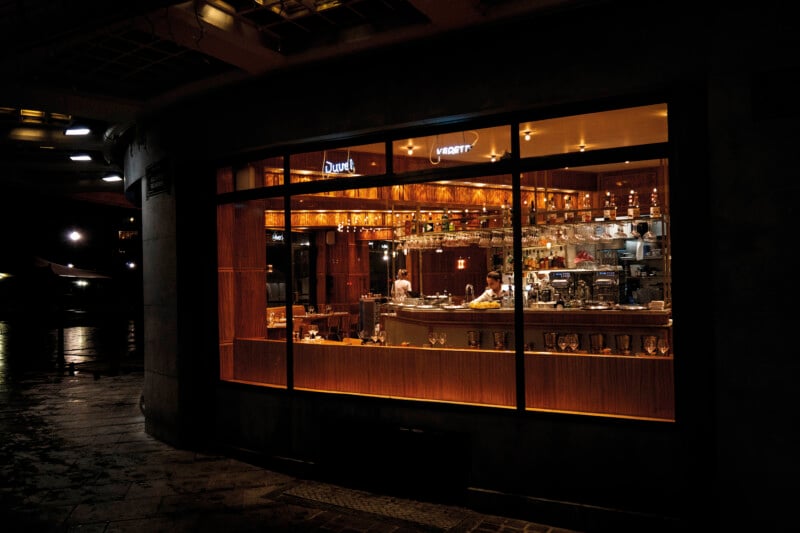
- Edward Hopper: The undisputed master of American isolation. Much like Hopper’s paintings of late-night diners and lit apartment windows, Rachline’s photographs invite the viewer to peer into isolated worlds, evoking a powerful sense of urban loneliness.
- Brassaï: Known for his nocturnal documentation of Paris in the 1930s (Paris de nuit), Brassaï’s influence is visible in Rachline’s romantic, shadowy handling of European city streets after dark.
- Saul Leiter and Philip-Lorca diCorcia: From Leiter, Rachline borrows a mastery of color, reflection, and framing through rain-streaked glass or obstructed windows; from diCorcia, he inherits a cinematic, almost staged realism that makes candid street scenes look like Hollywood film stills.
The book’s physical production reflects its high artistic ambitions. Published in a premium hardcover format by Rizzoli—a house renowned for its rigorous art and fashion titles—Elsebound relies on high-fidelity printing to preserve the deep blacks, subtle gradients, and stark neon highlights characteristic of Rachline’s nocturnal oeuvre.
Official Perspectives and Critical Reception
While full-scale critical reviews are rolling out alongside the book’s late-September launch, early commentary from cultural tastemakers highlights the emotional resonance of Rachline’s imagery.
Contributors Graydon Carter and Nathan King emphasize in their foreword that Rachline’s photography acts as an emotional mirror for modern urbanites. In a world hyper-connected by technology, the fundamental human experience of feeling profoundly alone within a crowd remains unchanged—a paradox that Rachline captures with surgical precision.
"Rachline doesn’t just take pictures of places; he takes pictures of pauses," notes an early curatorial review. "Every frame feels suspended in time, charged with a heavy silence, deep suspense, and the lingering sensation that something monumental has just occurred—or is about to unfold just out of frame."
The photographer himself has described his work as an exploration of the spaces "between different states of life." In interviews and artist statements accompanying his exhibitions, Rachline notes that his camera acts as an instrument for finding poetry in the mundane. A glowing storefront, a solitary bartender behind a wooden counter in Brussels, or a couple silhouetted against a starry window in St. Tropez all become vessels for collective nostalgia and existential questioning.
Implications for Contemporary Photography
The arrival of Elsebound arrives at a fascinating cultural juncture. As generative AI threatens to flood the market with hyper-polished, synthetic imagery, authentic street photography rooted in genuine human patience and physical presence is experiencing a renewed appreciation.
Rachline’s commitment to analog-feeling patience—waiting hours for the exact fall of light, stalking the quiet hours of midnight to dawn—reinforces the value of the photographer as an acute observer rather than a digital creator.
Furthermore, the book broadens the conversation around contemporary urban alienation. By showcasing how cities across Europe and America share the same nocturnal vulnerabilities, Rachline bridges cultural divides through a universal language of shadows, light, and quietude.
Availability
Elsebound: Photographs from the Quiet Hours is officially published by Rizzoli New York on September 29, 2026. The 200+ page monograph is available for pre-order and purchase through major booksellers, independent art bookstores, and the official Rizzoli website.
 Azzam Bilal Chamdy
  Evan Lee Salim
  Basiran