
 By Azzam Bilal Chamdy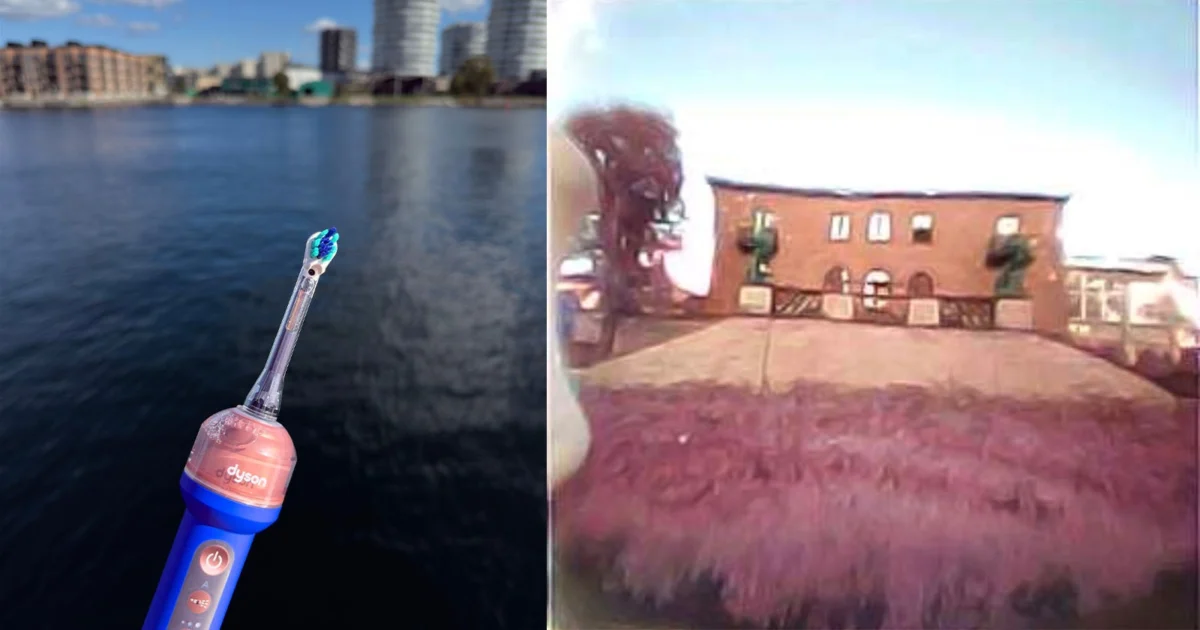
In an era where tech companies seem determined to install lenses into everything from wristwatches to home appliances, Dyson has managed to push the envelope of absurdity and innovation once again. The $499 Dyson CameraJet—an electric toothbrush equipped with an integrated endoscopic camera originally engineered to inspect hard-to-reach molar crevices—has officially transitioned from bathroom accessory to unconventional artistic medium.
While the device was ostensibly designed to help users upgrade their dental hygiene regimens by offering a live digital tour of their gumlines, creative minds in the photography community saw something entirely different: a challenge.
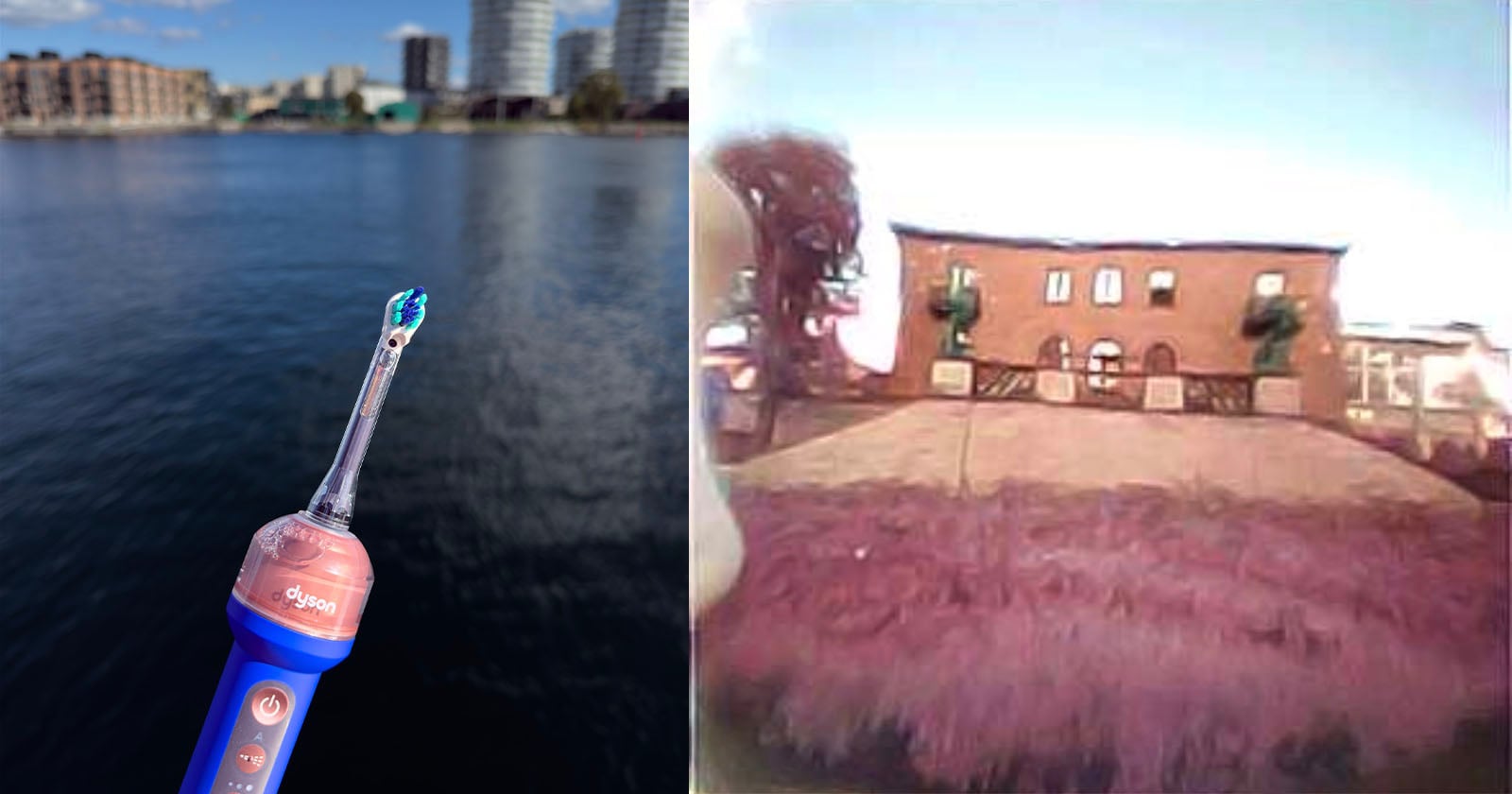
Enter the Instagram creator known as “All Gear No Skill,” who recently took the plunge—and the toothbrush—onto the public pavement. Embarking on a guerrilla photo walk through city streets, she put the high-end oral hygiene tool through a rigorous, tongue-in-cheek field test. The resulting images offer a fascinating, albeit bizarre, commentary on modern gadgetry, artistic limitations, and the ever-shifting boundaries of contemporary street photography.
Main Facts: The Anatomy of an Accidental Camera
The Dyson CameraJet hit shelves earlier this month, instantly sparking conversations regarding the relentless march of ubiquitous surveillance and camera integration into everyday items. Retailing at a hefty $499, the device features a built-in endoscopic lens designed for macro dental monitoring.
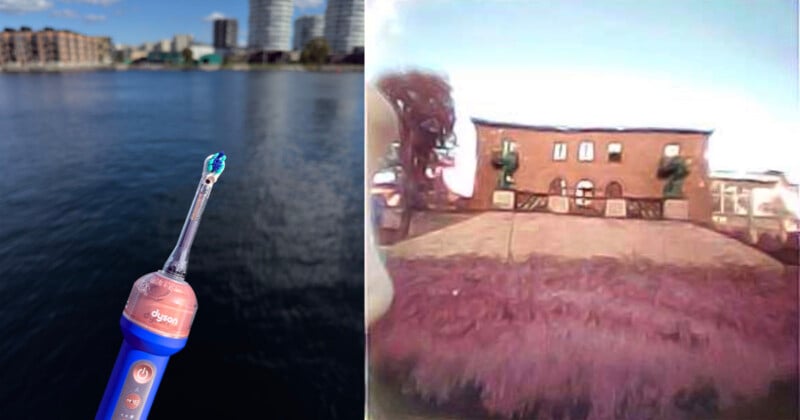
However, when removed from the sterile confines of the bathroom and exposed to the unpredictable lighting of the urban outdoors, the toothbrush’s camera produces results that can only be described as delightfully chaotic. According to the photographer behind All Gear No Skill, capturing the images required a workaround. Because Dyson designed the device to prioritize live monitoring over permanent storage—meaning the toothbrush does not save images locally or upload them to the cloud—she had to capture her street scenes via live smartphone app feeds.
"There’s the running joke of ‘dentists owning Leicas’ in the photo community, so when I saw Dyson dropping the toothbrush with a camera, I knew it just had to be used for street photos," she explained in an interview. "It just makes sense."
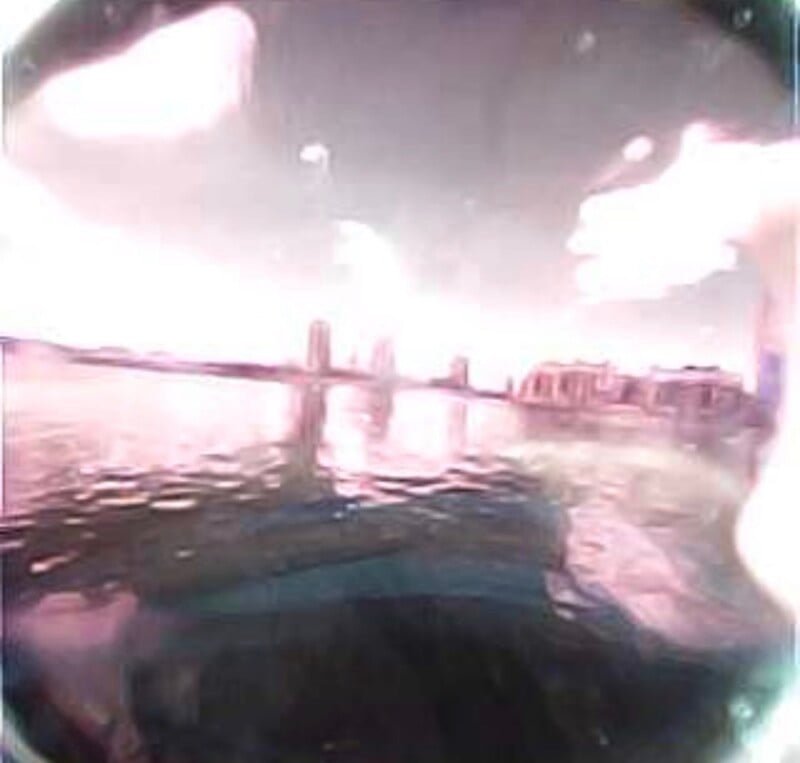
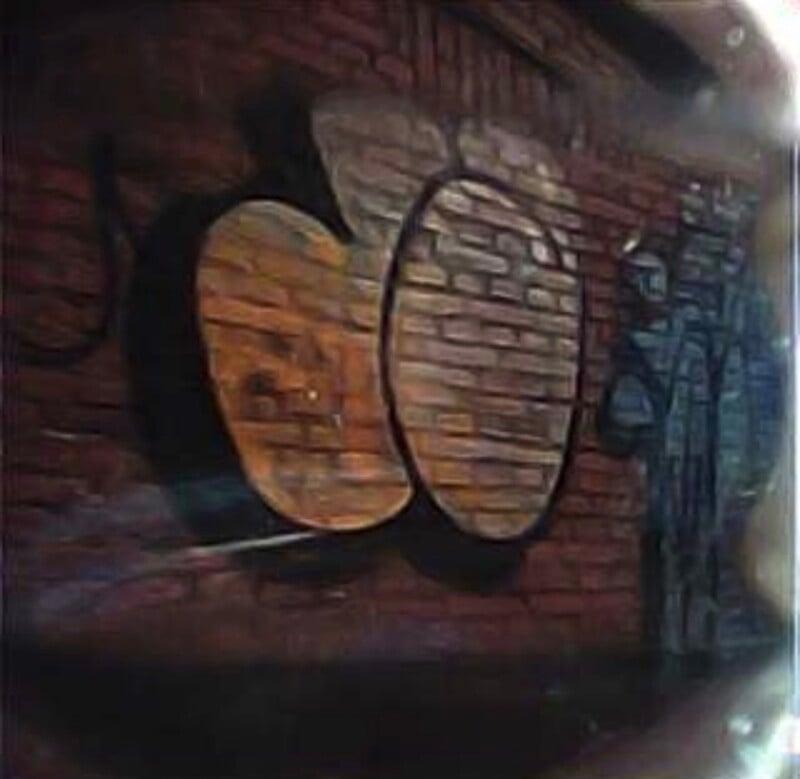
The technical specs of the CameraJet’s lens were never intended for landscapes or urban portraits. Consequently, shooting cityscapes with a dental tool yields distinct optical anomalies:
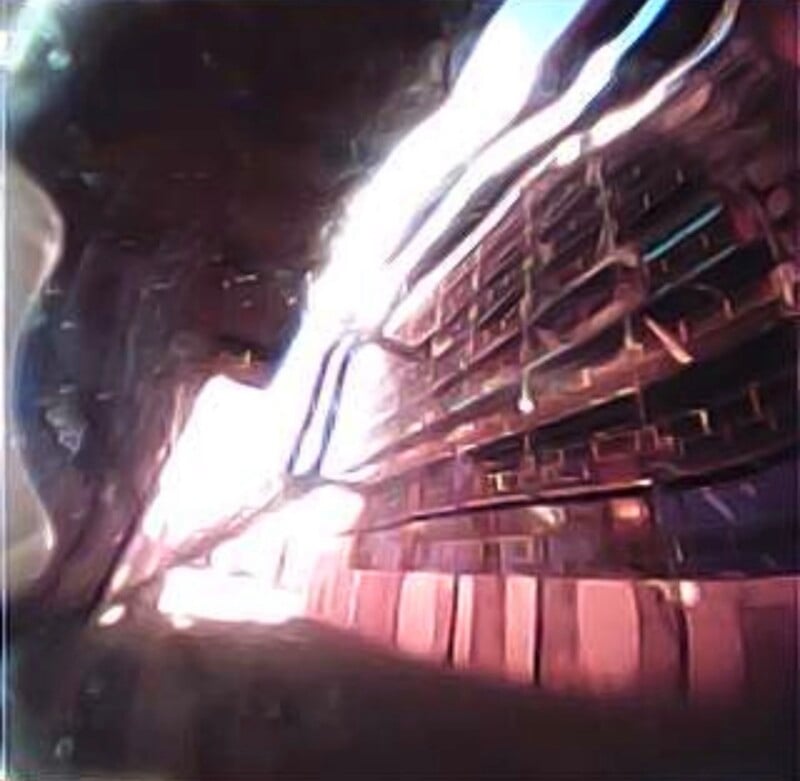
- Extreme Fisheye Distortion: Urban straight lines bend into surreal, warping curves.
- Volatile Exposure and White Balance: The sensor demands precise lighting; it struggles heavily with overexposure while simultaneously requiring high ambient light.
- Infrared Aesthetic: Outdoor shots bear a striking resemblance to images captured on dedicated IR (infrared) cameras.
- Low Resolution: Detail is sparse, colors fluctuate wildly, and the resulting aesthetic mirrors early-2020s generative AI artifacts or low-fidelity experimental art.
Chronology of an Urban Experiment: From Bathroom Sink to City Sidewalks
The journey of the Dyson CameraJet from dental hygiene to fine art street photography unfolded in distinct phases over the course of a few weeks.
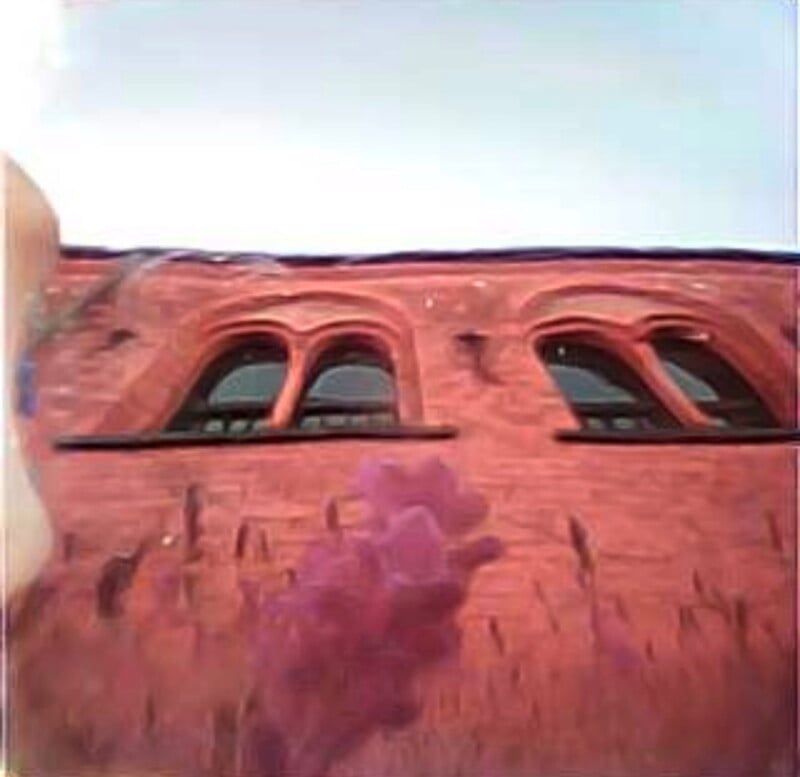
Phase 1: The Launch and the Inspiration
Following the product’s debut earlier this month, tech and photography circles alike scrutinized its utility. While reviewers focused on its cleaning modes and battery life, creators known for pushing gear conventions recognized a prime opportunity for satire. All Gear No Skill, whose portfolio already boasts playful subversions of high-end equipment—such as colorizing monochromatic files from a Leica M10 Monochrom and scanning thermal prints with a 150-megapixel Phase One medium format camera—set her sights on the Dyson.
Phase 2: The Street Photo Walk
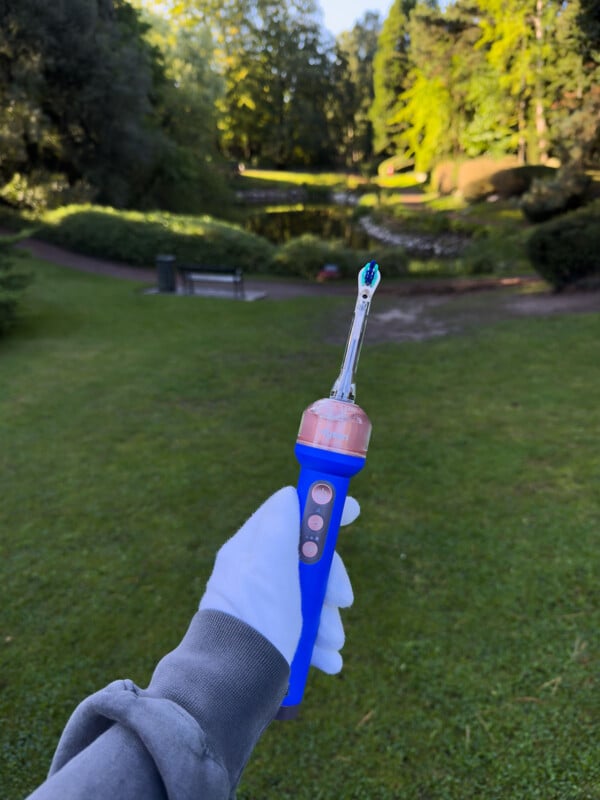
Armed with the $499 device, a white glove, and a smartphone displaying the live companion app feed, the creator ventured into public spaces. Passersby treated the spectacle with a mixture of confusion and amusement.
"I got quite a few weird looks while out taking photos with a toothbrush," she noted.
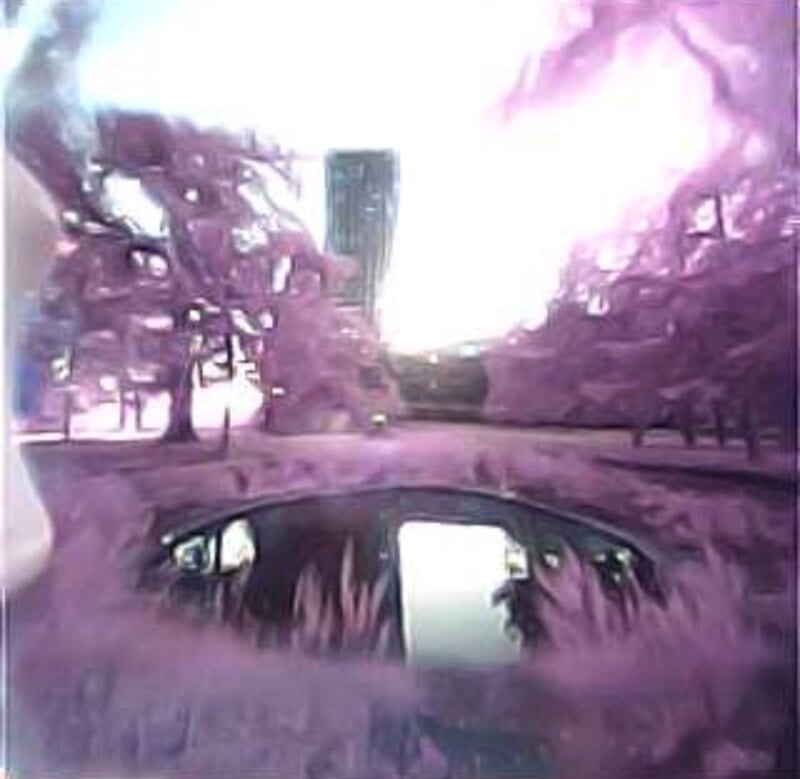
Operating the device involved pairing the toothbrush via Bluetooth, launching the companion app into "Cleaning mode," and framing shots on the smartphone screen while pointing the vibrating handle at architectural facades, bodies of water, and street art. Because the app lacks a native recording or shutter-save feature for external use, every single frame had to be preserved via manual smartphone screenshots.
Phase 3: Online Reaction and Moderation Backlash
Upon sharing her surreal street captures online, the project received an overwhelmingly positive response from audiences who appreciated the humor and the hauntingly nostalgic, glitchy aesthetic of the images. However, digital gatekeeping soon reared its head.
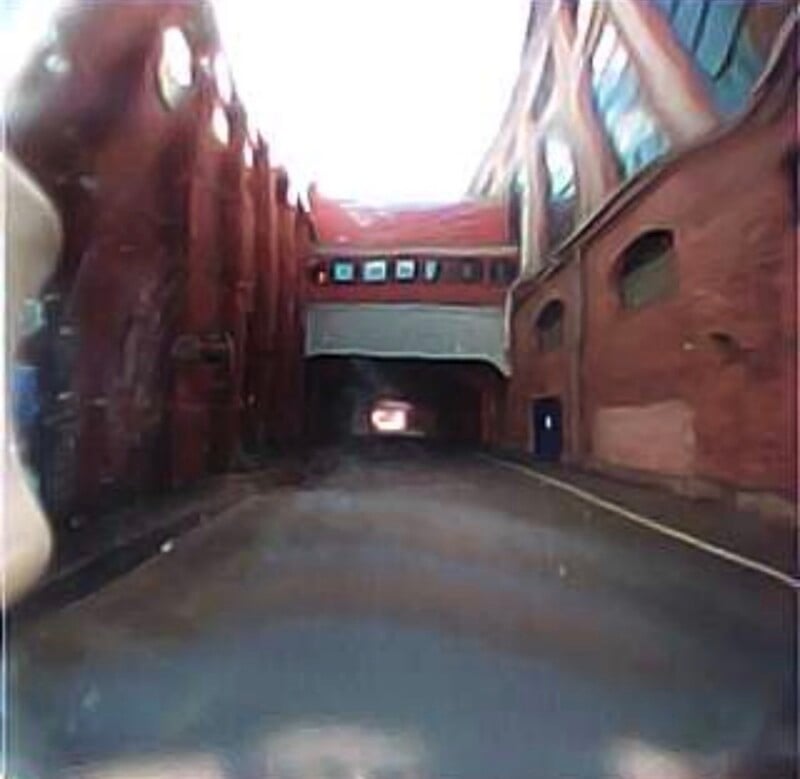
A post submitted to the popular Reddit community r/streetphoto was swiftly removed by moderators for allegedly violating the subreddit’s strict “street photography only” guidelines. Despite an appeal explaining that the unconventional imagery was indeed captured live on public streets using a functioning consumer electronic device, the moderators upheld their decision, ruling that the toothbrush-derived frames did not qualify.
Supporting Data and Technical Performance
While the Dyson CameraJet was never marketed as a photographic tool, the performance of its internal sensor under real-world conditions provides an intriguing case study in repurposing industrial design.
| Feature | Dyson CameraJet Specs | Real-World Street Performance |
|---|---|---|
| Primary Purpose | Dental health monitoring / Endoscopic inspection | Guerrilla urban documentation |
| Optics | Macro micro-lens with tight focal range | Extreme fisheye distortion with heavy edge warping |
| Color & White Balance | Calibrated for oral cavity lighting | Volatile; yields unpredictable shifts and IR-like tones |
| Data Storage | None (live stream only for privacy) | Requires manual smartphone screenshots |
| App Usability | Designed for daily brushing feedback | Highly responsive with remarkably low latency |
Ironically, despite the hardware’s photographic shortcomings, the software ecosystem surprised the creator. "The app works really well, connects easily, and there’s very little lag in the feed," she noted. "It’s rather funny that a toothbrush app delivers a better experience than some camera manufacturer’s own apps…"
Official Responses and Industry Context
Dyson has maintained its focus on the primary healthcare aspects of the CameraJet, emphasizing that user privacy is safeguarded by design—hence the deliberate absence of cloud storage or internal recording capabilities for the endoscopic footage. The company did not anticipate its precision dental tool being repurposed as a radical street photography instrument.
Meanwhile, the response from online communities has highlighted a broader philosophical divide in modern visual arts. On platforms like Instagram and TikTok, audiences celebrated the project as a breath of fresh air. It reminded viewers that photography is fundamentally about perspective, storytelling, and play rather than hyper-expensive glass and megapixels.
Conversely, institutional gatekeepers on curated forums like Reddit demonstrated the rigid definitions traditionalists attempt to maintain. By disqualifying images simply because the capture device happened to dispense toothpaste rather than record raw files, the incident underscored the ongoing friction between avant-garde experimentation and orthodox genre classifications.
Implications: The Future of Ubiquitous Lenses and Creative Subversion
The phenomenon of the Dyson CameraJet street walk resonates far beyond a viral internet joke. It touches on several critical developments in contemporary technology and culture:
- The "Camera-Fication" of Everything: As manufacturers embed microscopic lenses into smart rings, refrigerators, headphones, and dental care devices, our physical environments are increasingly monitored by non-traditional optics. Turning these lenses back outward—using surveillance or diagnostic tools to document the public sphere—acts as a form of artistic reclamation.
- Redefining Photographic Quality: For decades, the photographic industry has chased sharpness, dynamic range, and color accuracy. Projects that champion flawed, low-resolution, and heavily distorted imagery challenge viewers to find beauty in imperfection, echoing the lo-fi ethos of early mobile photography and toy cameras like the Holga.
- The Democratization of Humor in Art: Photography can often take itself far too seriously, bogged down by pixel-peeping and gear snobbery. Creators who subvert $500 dental appliances to mock the "dentist with a Leica" stereotype inject much-needed levity back into the medium.
As long as tech companies continue to place lenses in unexpected places, creative outsiders will continue to find ingenious, hilarious ways to point them at the world around us. Whether Reddit moderators approve or not, the Dyson CameraJet has officially earned its footnote in the weird history of street photography.
 Evan Lee Salim
  Basiran
  Pevita Pearce