
 By Basiran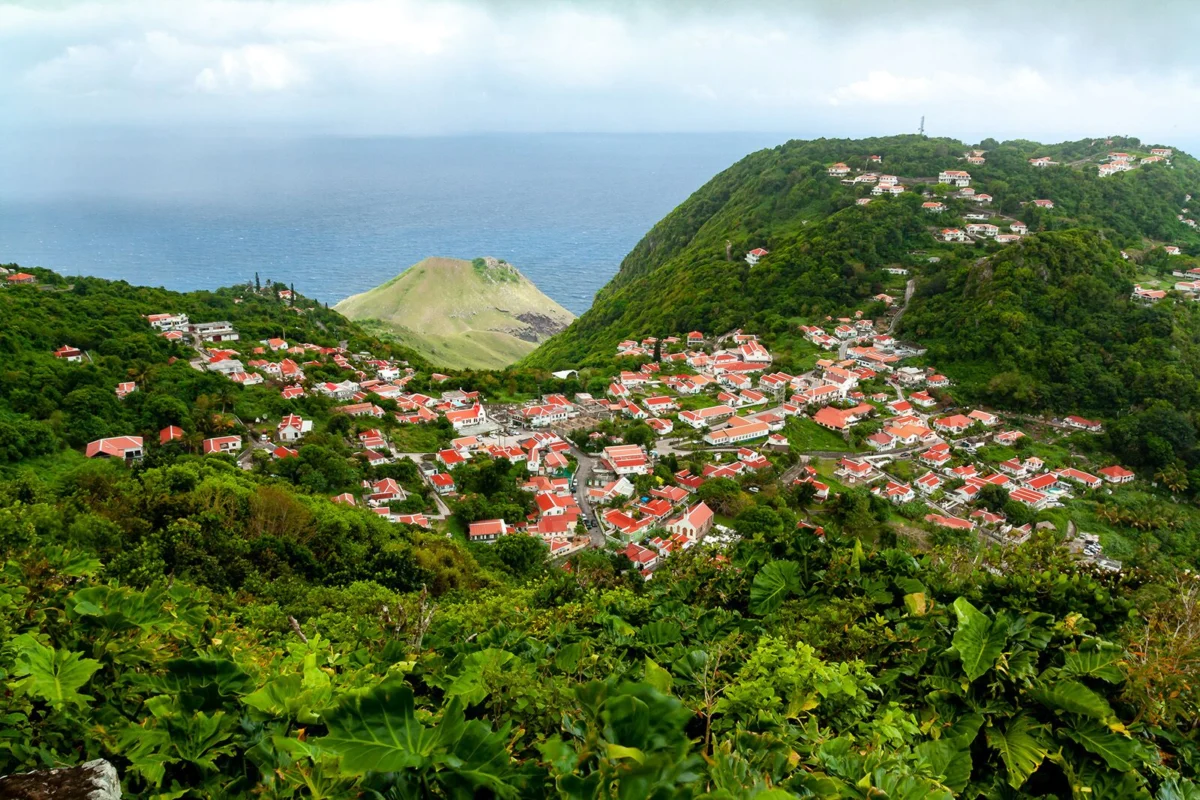
In an era defined by over-tourism, where pristine coastlines are frequently surrendered to sprawling, high-density mega-resorts, the island of Saba stands as a defiant anomaly. Rising sharply from the turquoise depths of the Caribbean Sea, this five-square-mile volcanic peak has eschewed the conventional trappings of the tourism industry. With one-third of its landmass strictly protected as national parkland, Saba has earned its moniker: "The Unspoiled Queen of the Caribbean."
Here, the architecture adheres to a strict colonial-era aesthetic, the roads are carved into near-vertical cliffs by hand, and the primary attractions are not manicured beaches, but ancient cloud forests and some of the most vibrant marine ecosystems on the planet.
The Geography of Preservation: A Deliberate Design
Saba’s isolation is its greatest asset. Lacking a traditional sandy beach, the island has remained shielded from the commercial pressures that have reshaped its neighbors. This lack of sprawling infrastructure is not a byproduct of neglect, but a calculated, deliberate strategy of preservation.
The Saba Conservation Foundation (SCF) oversees a vast network of protected areas, including the Mount Scenery National Park, the Saba National Marine Park, and the expansive Saba Bank National Park. Tom Brokke, a Senior National Park Officer with the SCF, emphasizes that the island’s development is purposely kept small-scale to ensure it remains in character with the landscape.
"What makes Saba special is its natural beauty, the dramatic landscapes, and the fact that development has remained relatively small-scale and in character with the island," Brokke explains. "The small boutique hotels and locally owned businesses actually add to that identity rather than taking away from it. We are not interested in mass tourism; we are interested in stewardship."
A Chronology of Resilience: From "Impossible" Roads to Modern Heritage
The history of Saba is a testament to the stubborn ingenuity of its people. Perhaps the most famous example is "The Road." In the early 20th century, Dutch engineers surveyed the island’s treacherous, vertical terrain and concluded that building a road was technically impossible.
The Saban people, unwilling to accept that limitation, took matters into their own hands. Following the guidance of Josephus Lambert Hassell—who taught himself civil engineering via correspondence courses—the locals began construction by hand. Despite the absence of heavy machinery, the road was completed in 1963. Today, the winding route, which features hair-raising turns and steep inclines, serves as the island’s lifeline, connecting the Juancho E. Yrausquin Airport—home to one of the world’s shortest commercial runways—to the elevated village of Windwardside.
The cultural backbone of the island is equally resilient. During the 19th century, when the island’s men were largely away at sea, the women of Saba developed a sophisticated lace-making industry. This "drawn threadwork" became a vital economic engine, with Saban lace being exported as far as England and Canada. Known as "The Island of Lace," Saba still maintains this tradition through dedicated workshops, where local artisans ensure that the skill is passed down to younger generations, free of charge.
Supporting Data: The Ecology of the Unspoiled
The environmental health of Saba is backed by rigorous management. Since 1987, the Saba National Marine Park has protected the waters surrounding the island, resulting in a marine environment of exceptional health and biodiversity.
- Marine Biodiversity: Divers and snorkelers report world-class visibility, with the reefs serving as home to a dense population of sea turtles, nurse sharks, and schools of vibrant reef fish.
- Altitude-Driven Biodiversity: Because of the extreme elevation shifts—from sea level to the 2,900-foot summit of Mount Scenery—Saba contains multiple climate zones. Hikers traverse dry coastal shrubland before ascending into the lush, mist-covered elfin cloud forest at the summit, which houses flora found nowhere else in the Caribbean.
- Sustainable Infrastructure: The island hosts only five hotels, all of which operate under strict zoning laws that mandate traditional Saban architecture: white walls, red-shingled roofs, and green-and-white shutters.
Official Perspectives: The Human Element
While the landscapes draw the eye, the true soul of Saba, according to those who manage its future, is found in its community. Tom Brokke notes that while the scenery is breathtaking, it is the social fabric that maintains the island’s integrity. "I don’t think a camera can really capture what it feels like to actually live here," Brokke says. "It is the people who make the island special."
This ethos of community preservation extends to the arts. Peggy Barnes, a leader among the "Lace Ladies," continues to offer free instruction to local children, viewing the preservation of the craft as a moral imperative rather than a commercial one. "No barriers to entry," she says of her workshops. "We always make room for whoever wants to come."
This sentiment is echoed by Marie Petit, a local artisan who is reviving the near-lost art of palm plaiting. By traveling internationally to retrieve traditional knowledge and applying it to local materials, she is bridging the gap between Saba’s storied past and its future, proving that cultural tourism can be both authentic and restorative.
The Implications of a "Hidden Gem" Model
Saba’s decision to limit tourism and focus on conservation has profound implications for the wider Caribbean tourism sector. By prioritizing low-volume, high-value tourism, Saba has avoided the environmental degradation associated with cruise ship dependency and massive resort developments.
However, this model requires a delicate balance. Accessibility remains a challenge; the island is reachable only via short flights from St. Maarten or a 90-minute ferry crossing that can prove difficult for those prone to seasickness. Yet, for the traveler willing to embrace the "leg day" reality of the island’s steep terrain and the lack of traditional beach resorts, the rewards are immense.
The economic implications are also noteworthy. By supporting locally owned businesses—from the farm-to-table practices at Juliana’s Hotel to the culinary excellence of restaurants like Brigadoon—visitors contribute directly to the local economy. Dining in Saba is an experience in local sourcing; the lobster, caught within the protected waters of the Saba Bank, is a hallmark of the island’s sustainable food culture.
Conclusion: A Blueprint for the Future
Saba represents a compelling case study in sustainable development. It is an island that has prioritized its natural resources and cultural identity over the fleeting profits of mass-market tourism. For the modern traveler, a trip to Saba is more than a vacation; it is an immersion into a community that values its history, protects its environment with religious fervor, and welcomes guests who are willing to slow down and appreciate the complexity of a hidden gem.
As the global travel industry grapples with the environmental impact of its growth, Saba serves as a quiet reminder that sometimes, the best way to develop a destination is to deliberately choose to leave it exactly as it is. Whether one is hiking the rugged slopes of Mount Scenery or learning the delicate art of lace-making in a workshop in Windwardside, the experience is defined by the profound realization that in an age of everything, there is still something—and somewhere—truly unspoiled.
 Laily UPN
  Muslim
  Reynand Wu