
 By rifanmuazin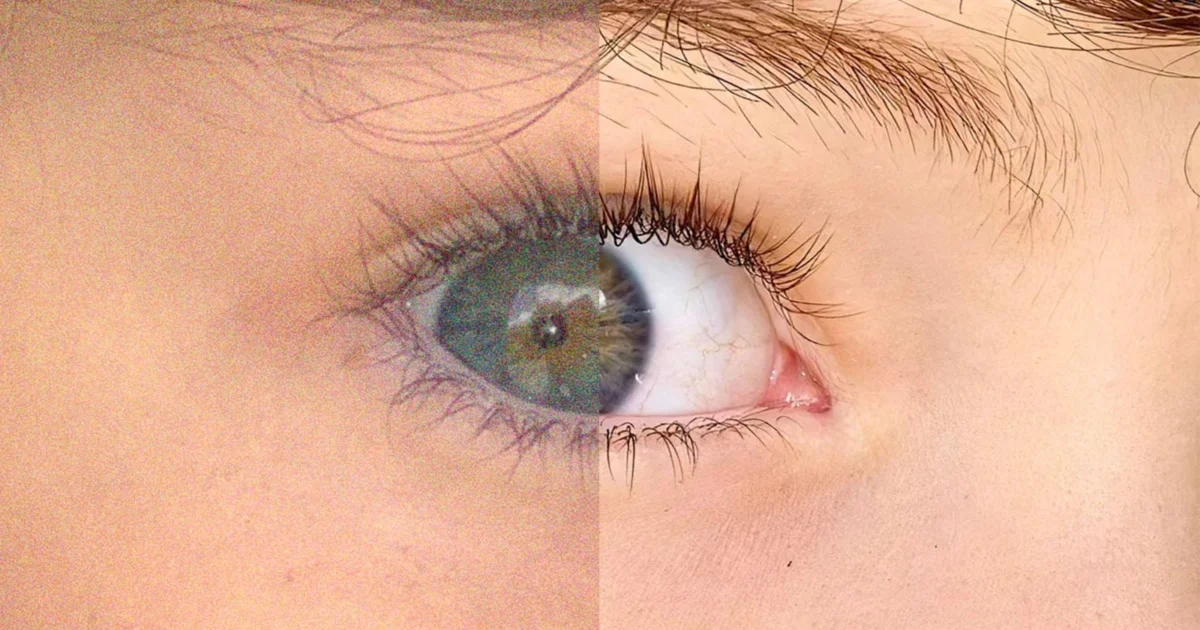
SAN FRANCISCO — In a move that signals a profound convergence between artificial intelligence and optical hardware, artificial intelligence pioneer OpenAI has reportedly acquired Glass Imaging, a trailblazing startup renowned for its revolutionary smartphone camera enhancement technology. According to exclusive reports by The Wall Street Journal citing sources familiar with the matter, the transaction values Glass Imaging at $300 million—a steep and rapid tripling of the $100 million valuation the startup commanded during its funding round just a year prior.
Neither OpenAI nor Glass Imaging has officially acknowledged or commented on the acquisition. However, the reported buyout represents a seismic shift for the mobile imaging landscape, raising immediate questions about the future of standalone computational photography software, proprietary hardware ecosystems, and OpenAI’s expanding ambitions in consumer devices.
Main Facts: The Intersection of AI and Optics
At its core, Glass Imaging has spent years rewriting the rules of what is optically possible within the strict physical constraints of mobile devices. Unlike conventional software-based filters or standard computational photography techniques that apply generic sharpening and noise reduction after an image is compressed, Glass Imaging approaches the problem at the foundational hardware-software interface.
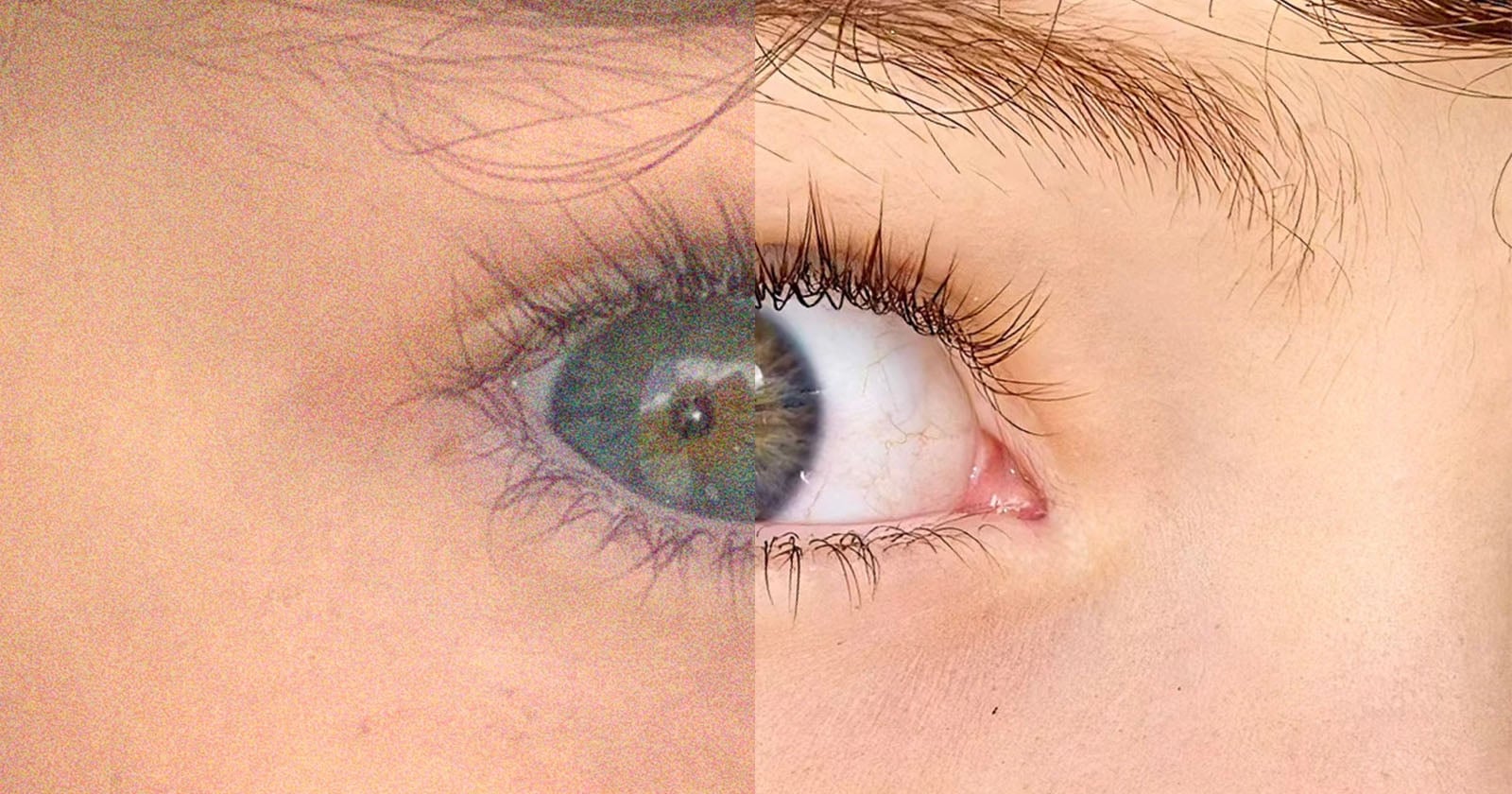
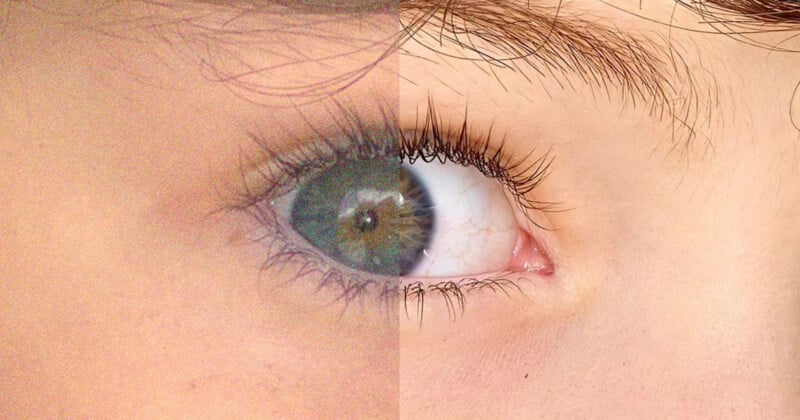
The company’s flagship innovation is the GlassAI Neural image signal processing (ISP) technology. This proprietary neural network processes RAW image data directly at the sensor level, taking into account the precise physical characteristics of the device’s actual lenses. By intelligently reversing optical aberrations, reconstructing missing high-frequency details, and optimizing dynamic range before standard processing pipelines take over, Glass Imaging’s software allows pocket-sized mobile sensors to capture photos that rival the clarity, resolution, and natural depth-of-field rendering of dedicated digital cameras featuring significantly larger physical sensors and bulky glass lenses.
The transition from theoretical promise to commercial reality arrived recently when Glass Imaging’s Neural ISP was successfully integrated into the Honor 600 smartphone, dramatically elevating the device’s high-zoom photography performance.
Now, with OpenAI stepping in to acquire the startup for $300 million, the entire trajectory of the company is poised for a dramatic pivot. While OpenAI’s core competencies lie in large language models, multimodal reasoning engines, and foundational AI infrastructure rather than consumer photography, the acquisition highlights a strategic hunger for advanced sensory processing and computer vision technology.
Chronology: A Rapid Ascent from Concept to Acquisition
The journey of Glass Imaging from an ambitious optical startup to an acquisition target for one of the world’s most valuable tech enterprises spans several key milestones:
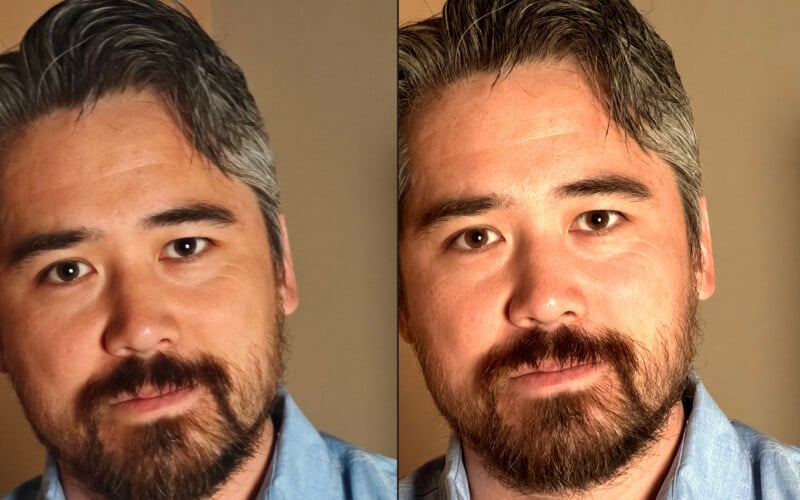
- October 2024: Industry watchers and photography publications first take serious notice as Glass Imaging demonstrates groundbreaking AI demos built on the Qualcomm Snapdragon 8 Elite mobile platform. Side-by-side comparisons reveal that standard smartphone captures can be radically transformed into crisp, DSLR-quality portraits using nothing more than intelligent neural post-processing.
- Mid-2025: Investor confidence surges. Backed by strong venture capital support, Glass Imaging achieves a $100 million valuation during a successful funding round, validating its commercial model and technological differentiation.
- May 2025: In an unrelated but strategically telling move, OpenAI purchases Jony Ive’s secretive AI hardware startup for $6.5 billion, laying the groundwork for a future ecosystem of proprietary physical devices.
- June 2026: Glass Imaging transitions from a demo-stage innovator to a commercial reality, officially debuting its GlassAI Neural ISP within the Honor 600 smartphone to widespread acclaim for its unprecedented long-zoom enhancement capabilities.
- September 2026: The Wall Street Journal breaks the news that OpenAI has finalized a $300 million acquisition of Glass Imaging, effectively absorbing the startup’s elite engineering talent and proprietary intellectual property.
Supporting Data and Technical Differentiation
To understand why OpenAI would place a $300 million bet on a specialized imaging company, one must examine the fundamental limitations of modern smartphone hardware and the technical genius of Glass Imaging’s approach.
| Feature / Metric | Conventional Smartphone Processing | Glass Imaging (GlassAI Neural ISP) |
|---|---|---|
| Data Source | Post-demosaiced, compressed JPEGs or HEIF files | Raw sensor-level data (RAW capture) |
| Optical Awareness | Generic algorithms applied uniformly | Tailored to specific physical lens characteristics and physics |
| Zoom Performance | Often suffers from artifacting, watercolor smoothing, and "muddy" details | Neural reconstruction restores realistic high-frequency textures and edges |
| Hardware Dependency | Tied to manufacturer-specific, closed-source chip ISPs | Flexible architecture adaptable to any capable RAW-capturing sensor |
The mobile photography market represents the largest digital camera ecosystem on earth, boasting billions of active devices. Yet, smartphone designers face an unyielding law of physics: slim handset profiles cannot physically accommodate the large sensors and long focal-length glass lenses required for pristine optical imagery.
Glass Imaging bypassed this physical bottleneck by leveraging machine learning to model how light interacts with optical systems, predicting and recovering missing data with astonishing fidelity. This technological edge is precisely what attracted major smartphone manufacturers—and, ultimately, Silicon Valley’s dominant AI heavyweight.
Official Responses and Industry Reactions
As of press time, executive leadership at both OpenAI and Glass Imaging have maintained a strict silence regarding the reported $300 million transaction. Representatives for OpenAI declined to comment on the Wall Street Journal report, and Glass Imaging’s official communication channels have offered no public statements.
Independent industry analysts, however, have been vocal. Within the computational photography community, the reaction is a mixture of awe and apprehension. While developers and engineers acknowledge the sheer brilliance of Glass Imaging’s talent pool—making them an enviable asset for any high-tech enterprise—photographers and mobile enthusiasts are raising concerns over the immediate commercial availability of the technology.
Historically, when deep-pocketed tech giants acquire specialized hardware and software startups, consumer-facing third-party integrations often come to a grinding halt. Analysts suggest that licensing agreements with brands like Honor may either be honored until contract expiration or quietly phased out as OpenAI redirects the startup’s engineering focus toward internal corporate goals.
Implications: Why Does OpenAI Want a Camera Company?
At first glance, OpenAI’s acquisition of a smartphone camera optimization firm appears paradoxical. OpenAI is an artificial intelligence research and deployment company focused on generative text, advanced reasoning models, and multimodal AI systems like GPT-4 and its successors. It does not manufacture cameras, nor is it traditionally known for consumer hardware.
However, a closer look at OpenAI’s recent corporate maneuvers reveals a clear trajectory.
1. The Hardware Synergy with Jony Ive
In May 2025, OpenAI made headlines by purchasing the AI hardware startup founded by legendary former Apple chief designer Jony Ive for a staggering $6.5 billion. The goal of that venture is widely understood to be the creation of a revolutionary, post-smartphone AI consumer device—a dedicated hardware form factor designed from the ground up for ambient artificial intelligence.
An AI-first device optimized for daily wear or pocket carriage would inevitably rely heavily on visual input. Whether for computer vision tasks, real-time environment scanning, spatial data analysis, or visual intelligence features (similar to Google Lens or multimodal camera prompts), such a device would require exceptional image-capture capabilities. By acquiring Glass Imaging, OpenAI instantly equips its hardware division with best-in-class neural imaging technology, ensuring that any future proprietary device captures visual data of uncompromising quality.
2. The Evolution of Multimodal AI
OpenAI’s models are increasingly multimodal, capable of processing not just text and code, but audio, video, and high-resolution images. Feeding higher-quality, cleaner, and more optically accurate data into a vision model dramatically enhances its performance. By controlling the entire pipeline—from the raw sensor processing enabled by GlassAI to the downstream neural network analysis—OpenAI can eliminate compression artifacts and optical distortions that typically degrade machine perception.
3. The Dampening of Third-Party Innovation
For the broader mobile photography market, the acquisition casts a long shadow. Glass Imaging’s promise was democratization: bringing DSLR-grade performance to affordable, everyday smartphones through advanced software. With the startup’s resources now absorbed into OpenAI’s monolithic ecosystem, independent development of consumer-facing smartphone image processing tools is effectively paused or redirected.
Conclusion
The $300 million acquisition of Glass Imaging marks a pivotal moment where generative AI and optical engineering officially merge into a single frontier. While the immediate future of Glass Imaging’s standalone smartphone applications remains uncertain, the strategic intent is clear. OpenAI is building the foundational layers—both hardware and software—for the next generation of intelligent computing devices, and it has recognized that superior vision is the essential lens through which the future of AI will see the world.
 Basiran
  Nana Muazin
  Pevita Pearce