
 By Suro Senen
By Sharon Atefi
Published in partnership with Omnisend
Main Facts: The Paradigm Shift in Email Marketing
In the hyper-competitive landscape of modern ecommerce, the standard playbook for email marketing has long been anchored in a single, transactional question: How do we convert this subscriber into a paying customer? While optimizing welcome sequences, browse abandonments, cart recoveries, and win-back campaigns remains a foundational necessity for any digital storefront, industry leaders are increasingly realizing that this approach tells only half the story.
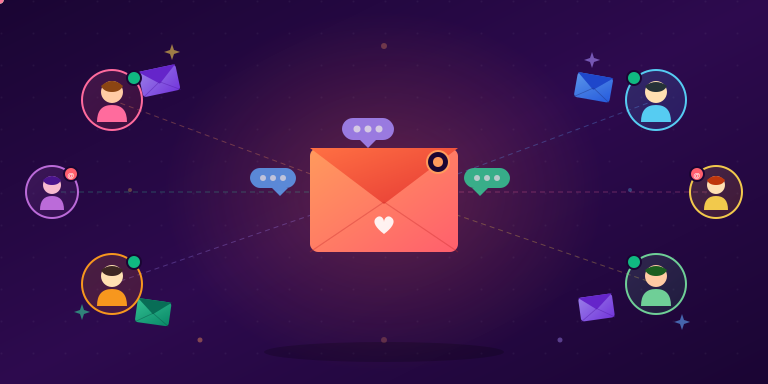
The most resilient, enduring brands of today are pivoting from a strict "list-building" mentality to an ecosystem focused on community. Instead of treating the digital inbox as a one-way megaphone for promotions, forward-thinking founders are using email to cultivate real emotional connections. They are turning passive buyers into vocal brand advocates—consumers who recommend products without being asked, defend the brand against cheaper alternatives, and actively engage in a two-way dialogue with the businesses they support.
Unlike social media channels bogged down by unpredictable algorithms, pay-to-play walls, and crowded sidebars, email remains a direct, unfiltered conduit to an individual’s undivided attention. When utilized thoughtfully, this medium offers an unprecedented advantage: the power to build a loyal, self-sustaining community from the ground up.
Chronology: The Evolution of the Digital Inbox
To understand where email marketing stands today, it is helpful to trace its operational evolution over the past two decades:
- Era 1: The Wild West of Mass Blasts (Late 1990s–2000s)
Email marketing began primarily as a digital flyer distribution method. Brands deployed untargeted, high-frequency blasts to massive lists, optimizing almost exclusively for click-through rates and immediate direct-response sales. - Era 2: The Rise of Automation and Funnels (2010s)
As software tools matured, ecommerce companies shifted toward sophisticated funnel architecture. Welcome series, triggered behavioral emails, and segmentation became the gold standard. While this exponentially increased revenue efficiency, it also systematized the relationship, often stripping away the human element. - Era 3: The Community-First Movement (Present Day)
Facing ad-spend inflation, privacy updates (such as iOS tracking limitations), and consumer fatigue with traditional advertising, modern brands are returning to grassroots fundamentals. They are utilizing email not just as a point-of-sale terminal, but as a virtual clubhouse where subscribers are treated as insiders, participants, and co-creators.
Supporting Data: Lists vs. Communities
The operational friction between a traditional email list and a true digital community is defined by how value is perceived and distributed.
| Metric / Dimension | Traditional Email List | Community-Driven Email Program |
|---|---|---|
| Primary Objective | Immediate transaction conversion | Relationship cultivation and retention |
| Communication Flow | One-directional (Brand $rightarrow$ Consumer) | Bi-directional (Brand $leftrightarrow$ Consumer) |
| Content Focus | Sales, discounts, and product announcements | Behind-the-scenes insights, values, and dialogue |
| Core Success Metric | Open rate, Click-Through Rate (CTR), ROAS | Reply rate, forward rate, organic referrals |
| Consumer Loyalty | Price-sensitive; easily swayed by competitors | Brand-aligned; highly resistant to churn |
Industry benchmarks show that while promotional emails drive short-term spikes in revenue, community-oriented touchpoints drastically lower customer acquisition costs (CAC) over time through organic word-of-mouth distribution and higher lifetime value (LTV).
Official Insights: Strategies from the Front Lines of Ecommerce
Building a thriving community via email does not require a massive marketing budget, complex loyalty software, or gated membership tiers. According to leading DTC strategists, it requires intentional adjustments to messaging architecture.
1. Make Your Subscribers Feel Like Insiders
Transparency is the ultimate currency of trust. Instead of simply announcing that a new product is live, forward-thinking brands use email to pull back the curtain on their operations.
- Share the Journey: Explain why a product was made, the specific problems it aimed to solve, and what went wrong during prototyping.
- Early Access: Give subscribers a first look at sales or product drops before they hit public channels.
- Founder-Led Copy: Experiment with plain-text, image-free emails written in a genuine, conversational tone. A heartfelt note from a founder often outperforms high-production design templates in generating engagement.
2. Ask Questions and Actively Listen
Most corporate inboxes feel like corporate bulletin boards. Shifting to a community model requires opening a feedback loop.
- Include Real Questions: End emails with open-ended inquiries, such as, "What is the one thing you are still trying to figure out regarding this topic?" or "What should we build next?"
- Engage in Real Conversations: When subscribers reply, answer them personally. While manual replies do not scale infinitely to hundreds of thousands of users, even a handful of direct conversations per month deepens brand loyalty in ways automated triggers never can.
3. Cultivate a Recognizable Brand Voice
Identity binds a community together. If an email could have been generated by any competitor in the same market, it fails to build long-term affinity.
- Clarify your brand’s core beliefs, its industry stances, and its operational non-negotiables.
- Ensure that this distinct tone remains consistent whether you are delivering educational content or pushing a promotional discount.
Implications: The Metrics of Community and the Path Forward
Evaluating the health of a community-driven email program requires looking beyond conventional revenue dashboards and tracking qualitative engagement signals:
- Reply Rates: A rising reply rate indicates that subscribers feel psychologically safe and invited to converse.
- Forward Rates: When an individual forwards an email to a peer, they are staking their own social capital on your brand. It remains one of the highest-fidelity endorsements in digital marketing.
- Organic Referrals: Tracking how many new subscribers enter your ecosystem via word-of-mouth proves that your community is acting as an organic growth engine.
Ultimately, the most successful ecommerce brands are those that realize subscribers are participants, not just targets. Achieving this balance requires robust technological infrastructure that handles automated workflows while giving founders the breathing room to build human connections.
Unlock Your Brand’s Potential with Omnisend
Platforms like Omnisend bridge the gap between transactional efficiency and community engagement. By combining advanced segmentation tools, reliable automation pipelines, and deep behavioral analytics, Omnisend empowers entrepreneurs to manage the operational side of email marketing while freeing up time to focus on relationship-building.
Special Offer: Readers of Foundr can receive 50% off their first three months by using the code FOUNDR50 upon signing up. Transform your email list into a vibrant community that genuinely looks forward to hearing from you.
 Basiran
  Dwi Wanna
  Nana Wu