
 By Evan Lee Salim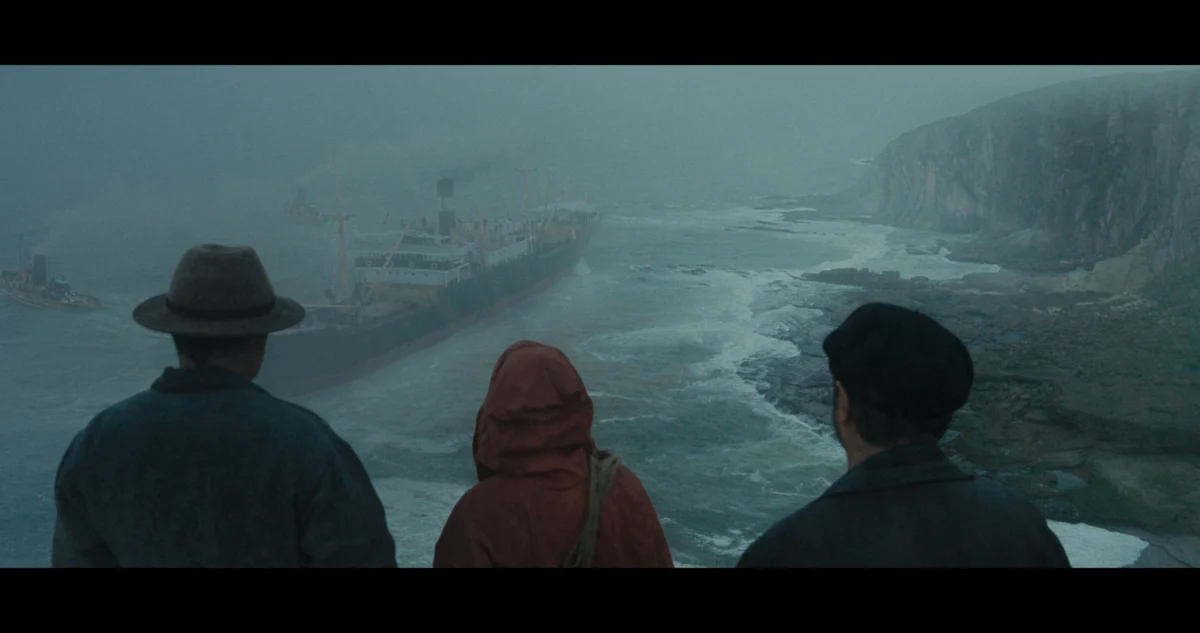
The 74th San Sebastián International Film Festival served as the prestigious backdrop for the world premiere of The Blind Ants (Inurri Itsuak), the highly anticipated third feature film from Basque director Igor Legarreta. Unveiled on September 18 as part of the festival’s Zinemira section—a showcase dedicated exclusively to the vibrant landscape of Basque cinema—the film immediately positioned itself as a major contender for the coveted Irizar Award. As the credits rolled, the consensus among critics was clear: Legarreta has crafted a visceral, atmospheric period piece that elevates regional storytelling to a universal, epic scale.
Following its festival circuit debut, the film is scheduled for a wide theatrical release in Spain on October 9, with Buena Vista International handling distribution. For a project that blends deep-rooted cultural heritage with the technical demands of a high-stakes period drama, the theatrical rollout represents a pivotal moment for Basque filmmaking.
The Narrative Foundation: Survival on the Edge of the World
Set against the rugged, unforgiving backdrop of the Basque Country in 1930, The Blind Ants is a haunting exploration of human desperation. The narrative begins with a catastrophic maritime event: an English vessel, laden with tons of high-value coal, is driven onto the shores of Biscay by a violent, unrelenting storm.
For the local community in the coastal town of Algorta, the wreckage is not merely a tragedy; it is a lifeline. In an era defined by economic hardship and the looming specter of a brutal winter, the "black gold" strewn across the beaches represents survival. The film centers on the Jauregui family, whose decision to brave the lethal storm to scavenge the coal triggers a cascade of tragic consequences. Their struggle is one of moral ambiguity, testing the limits of human endurance, greed, and the primal need to protect one’s own.
Legarreta, who has previously garnered acclaim for All the Moons and When You Stop Loving Me, describes his latest work as a "coastal Western." This classification is apt; the film channels the existential tension of the American frontier genre, transposed onto the jagged cliffs and tempestuous Atlantic waters of northern Spain.
A Chronology of Creation: From Literary Gem to Screen
The journey from the printed page to the screen was a multi-year labor of love. The film is based on the novel of the same name by the late, revered Basque author Ramiro Pinilla. Adapting such a dense, emotionally charged work presented a unique set of hurdles for the production team.
"Adapting a novel is a double-edged sword," Legarreta explained in an interview with Variety prior to the premiere. "On the one hand, you have all the necessary materials: plot, characters, theme… But on the other hand, you have to transfer a literary universe to a very different world such as cinema. It is a long and complex process where you must try to separate yourself from the initial material, but without ever betraying it."

The development phase saw a slow but deliberate assembly of partners. The project gained significant momentum with the arrival of international collaborators, including Belgium’s Caviar Antwerp, whose involvement helped scale the production to meet the director’s ambitious visual requirements. By integrating European co-production models, the team was able to elevate the film’s production value, ensuring that the historical setting of 1930s Bizkaia felt authentic yet cinematic.
The Cast: Assembling the Jauregui Family
A central pillar of the film’s success lies in its ensemble cast. The challenge was to depict the Jaureguis not merely as a collection of actors, but as a cohesive, long-standing family unit. To achieve this, Legarreta assembled a powerhouse lineup of talent familiar to both local and international audiences.
The cast is headlined by Urko Olazábal, whose performance in Maixabel earned him a Goya Award for Best Supporting Actor, and who recently garnered critical attention for his lead role in Soy Nevenka. He is joined by Itziar Ituño, the globally recognized star of Money Heist, who has become a frequent collaborator of Legarreta’s. The cast also features Josean Bengoetxea (Balenciaga, Loreak), Miren Gaztañaga (The Platform), and Carlos Santos (1992).
Legarreta notes that the off-screen chemistry among the cast was essential to the final product. "I had never worked with most of them," he noted. "But we had to find a group of actors that could give us a real sense of family. It has been a wonderful team that managed to take that bond beyond the filming."
Production Values and Technical Ambition
The technical demands of The Blind Ants were unprecedented for the production team. Because a significant portion of the narrative occurs during a fierce, multi-day storm on a cliffside, the production could not rely solely on location shooting.
"Half of the novel takes place during a stormy night on a cliff," Legarreta explained. "When it came to filming, we decided to build a huge set to be able to shoot in the best conditions. We had to guarantee full safety in the scene, while we needed to have absolute control over all the elements."
This set, designed under the supervision of production designer Mikel Serrano, serves as a character in its own right. It provides the visual weight and claustrophobic intensity necessary to convey the Jauregui family’s plight. The collaboration between the Basque production houses—Lamia Producciones, Lazona Zinema, and Buendía Estudios Bizkaia, among others—was essential in financing and executing these complex sequences.

Official Perspectives: A Vision for Basque Cinema
For producer Luis Ferrón of Lazona Zinema, The Blind Ants is the manifestation of a clear strategic vision: the pursuit of high-concept, artistically ambitious cinema that remains deeply tethered to its regional identity.
"We launched a production company in the Basque Country with a clear vision: to combine our strengths with local talent to create films that are artistically ambitious and uncompromising in their production values," Ferrón stated. "We achieved this with Inurri Itsuak: a Basque-language film with international appeal and high production value that tells a story as deeply rooted in the local context as that of Ramiro Pinilla."
The strategy includes aggressive international sales efforts, spearheaded by Playtime, to ensure that the film transcends the linguistic and geographic borders of the Basque Country. By positioning the film as a prestige international production, the producers hope to secure its place in the global arthouse market.
Thematic Implications: Dignity in the Face of Desolation
Beyond the spectacle of the storm and the historical setting, The Blind Ants is fundamentally a story about human dignity. The "blind ants" of the title serve as a metaphor for the villagers—small, industrious, and driven by a desperate, collective instinct to survive against forces far greater than themselves.
Legarreta believes that the story remains relevant today. "In the end, it is the story of a Basque family and its unwavering struggle not to lose its dignity," he said. By focusing on the caserío (the traditional Basque farmhouse) and the emotional bond between family members, the film explores how willpower functions as a weapon in the face of inevitable tragedy.
Future Outlook
As the film moves from its premiere at the San Sebastián International Film Festival to its general release on October 9, the industry is watching closely. The Blind Ants is viewed by many as a blueprint for the future of Basque cinema—a medium that balances the specificity of local language and history with the aesthetic and narrative language of international prestige film.
Whether or not the film secures the Irizar Award, its legacy is likely to be defined by its technical craft and the uncompromising vision of its director. In a crowded cinematic landscape, Legarreta has succeeded in carving out a space for a story that is as brutal, beautiful, and enduring as the Basque coastline itself. With distribution secured and international sales underway, The Blind Ants is poised to ensure that the voice of the Jauregui family—and the spirit of 1930s Bizkaia—reaches audiences far beyond the borders of Spain.
 Nana Wu
  Siti Muinah
  Pevita Pearce