
 By Azzam Bilal Chamdy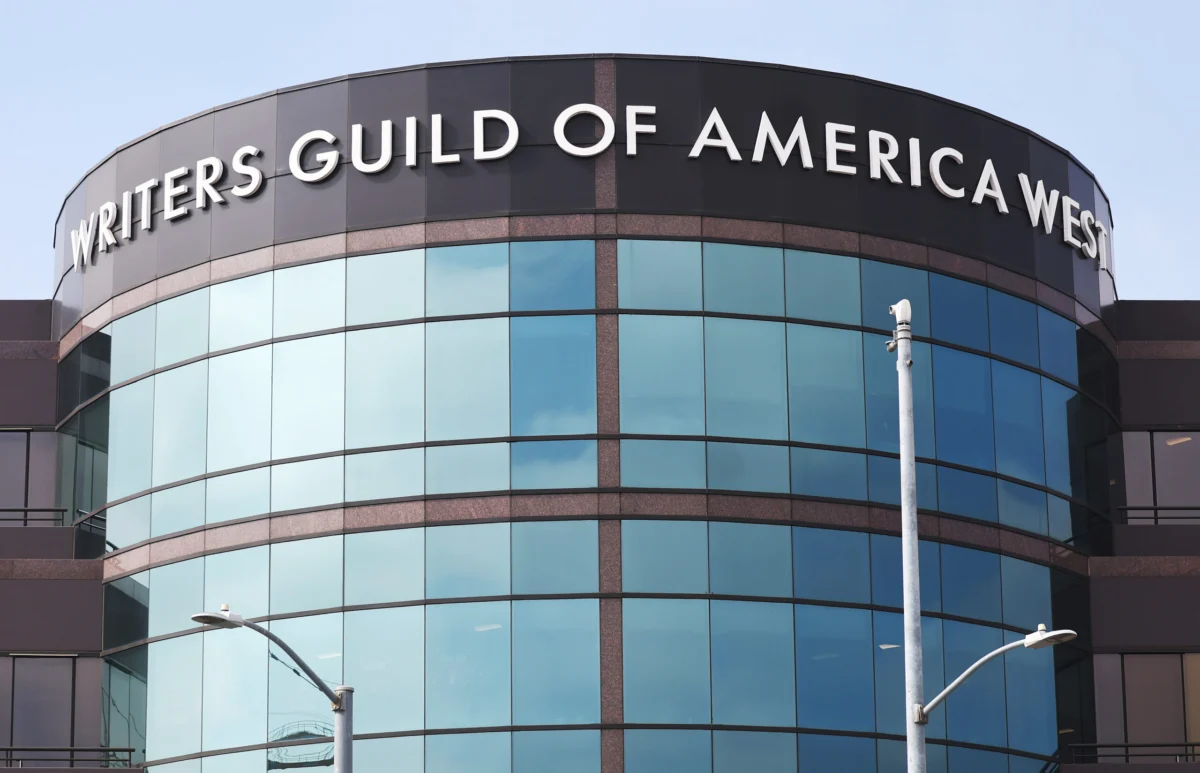
In a watershed moment for the entertainment industry, the Writers Guild of America East and West (WGA) have officially dropped their antitrust lawsuit aimed at blocking the gargantuan merger between Paramount and Warner Bros. Discovery. The decision, announced by the Guild on Monday, marks a tactical retreat in what was arguably the most high-profile labor-led challenge to media consolidation in the modern era.
While the Guild remains staunchly opposed to the corporate marriage, the settlement—compelled by the recent decision of 12 state attorneys general to resolve their own disputes with Paramount—signals a shift in strategy. Facing the daunting reality of an expensive, prolonged legal battle without government support, the WGA has opted to secure tangible protections for its members rather than tilt at the windmills of a multi-billion-dollar corporate realignment.
Chronology of a Corporate Collision
The saga of the Paramount-Warner Bros. Discovery merger has been characterized by intense scrutiny from both regulators and labor unions. For the WGA, the merger represented the apex of a trend that has systematically narrowed the market for creative labor.
- Initial Announcement: The proposed acquisition sent shockwaves through Hollywood, signaling a massive consolidation of legacy media assets.
- The WGA Complaint: The Guild filed an antitrust lawsuit, arguing that the merger would create a monolithic entity with excessive market power, effectively reducing the number of buyers for writers’ services and stifling creative diversity.
- Regulatory Resistance: A coalition of 12 state attorneys general joined the fray, launching an investigation into the anti-competitive implications of the deal.
- The Turning Point: Paramount recently reached a settlement with the state attorneys general, effectively clearing the path for the acquisition to close.
- The WGA Settlement: Faced with the withdrawal of government enforcers, the WGA concluded that pursuing the lawsuit as a solo plaintiff was financially and strategically untenable, leading to the Monday announcement.
A Pragmatic Settlement: The Terms of the Deal
While the WGA failed to stop the merger, the settlement negotiated by the Guild leadership provides significant, albeit localized, victories for its membership. The terms of the agreement offer a glimpse into the Guild’s priority of shielding writers from the immediate fallout of corporate restructuring.
The core components of the settlement include:
- Job Security Guarantees: Paramount has committed to a five-year moratorium on writer layoffs specifically within the CBS News Broadcast division. This provides a temporary, but crucial, safety net for journalists and writers navigating the uncertainty of the post-merger landscape.
- Financial Restitution: The agreement mandates a $17.5 million contribution to the WGA’s health fund. This infusion of capital is vital for a union that has faced increasing pressure on its benefit programs due to the volatile nature of the gig-based entertainment economy.
- Legal Cost Coverage: As part of the settlement, Paramount will cover the attorneys’ fees incurred by the WGA during the litigation, effectively ensuring that the Guild’s pursuit of the case does not drain its general operating budget.
The Financial and Structural Implications of Consolidation
To understand why the WGA fought so hard—and why they ultimately settled—one must examine the broader economic data surrounding media consolidation. Over the past decade, the number of independent "buyers" for content has plummeted as major studios have been swallowed by tech-adjacent conglomerates and private equity interests.
The "buyer power" of a merged Paramount and Warner Bros. Discovery would represent an unprecedented concentration of influence. Industry analysts suggest that when three or four entities control the vast majority of film and television output, writers lose the ability to leverage competing offers. This leads to stagnant wages, reduced residual payments, and, perhaps most damaging, a homogenization of content as risk-averse executives prioritize franchise intellectual property over original storytelling.
The WGA’s internal data points to a growing "churn" in the industry, where writers are finding it increasingly difficult to sustain a middle-class career. By consolidating, studios can streamline operations—a euphemism for firing redundant staff and slashing development budgets. The $17.5 million injection into the health fund, while helpful, serves as a grim admission that the Guild expects these structural changes to have a lasting impact on the financial health of its members.
Official Responses: The WGA’s Statement
In a candid statement released on Monday, the WGA leadership framed the settlement not as a defeat, but as a pivot toward a more sustainable form of advocacy.
"We continue to believe the merger will cause damage to writers and the industry at large," the Guild stated. "Now that the Attorneys General have settled with Paramount, however, as a nonprofit, the WGA must contend with the reality of forging ahead alone, with no backing from government enforcers, with a complex antitrust lawsuit that would cost millions of dollars to pursue through trial."
The statement went on to emphasize that the Guild’s primary goal remains the systemic reform of the industry. The WGA argued that the current regulatory framework is insufficient to handle the complexities of the streaming age.
"Though we were not successful in blocking the merger, our advocacy brought more attention to the harms that this merger—and others like it—will cause. We will continue to fight the harms of industry consolidation," the Guild wrote.
Looking Forward: The Call for Structural Separation
The most significant takeaway from the WGA’s post-settlement messaging is its clear roadmap for future policy advocacy. The Guild has signaled that it will pivot its energy toward legislative solutions that go beyond blocking specific mergers.
Central to this new agenda is the demand for a return to something akin to the "Financial Interest and Syndication Rules" (Fin-Syn). Historically, these rules prohibited networks from owning the studios that produced their programs, fostering a competitive ecosystem where independent producers could thrive.
The WGA is now advocating for:
- Structural Separation: Implementing regulations that decouple streamers from the studios that own them.
- Competition Enforcement: Strengthening the Federal Trade Commission’s (FTC) oversight of media mergers to account for labor-market impacts, not just consumer price impacts.
- Diversity of Programming: Creating incentives for studios to maintain a diverse slate of independent projects, thereby preventing the "franchise-only" model that currently dominates the box office.
Implications for the Future of Hollywood
The settlement leaves the industry in a precarious state. On one hand, the deal ensures that the immediate livelihoods of CBS News writers are protected for the next half-decade. On the other, the merger itself proceeds, confirming the fears of labor activists that the "Big Five" of Hollywood are shrinking toward a "Big Three."
For the WGA, the lesson of this litigation is clear: the courts are a difficult venue for fighting the tide of corporate consolidation. Future battles will likely shift toward Washington, D.C., where the Guild will seek to influence federal policy to prevent the next wave of mergers.
The writers have successfully drawn a line in the sand. While they could not stop the Paramount-Warner Bros. Discovery juggernaut, they have forced the industry to acknowledge the human cost of consolidation. As the media landscape continues to undergo rapid, often violent, economic shifts, the WGA’s struggle serves as a bellwether for the future of labor in the 21st-century creative economy.
The merger will move forward, but the conflict over the soul and structure of Hollywood is far from over. As the Guild stated, "More to come." The industry will be watching closely to see if the WGA’s legislative pivot can achieve what its courtroom challenge could not: a level playing field for those who create the stories that define our culture.
 Raul Delapena Setiawan
  Asro
Asro  Nila Kartika Wati