
 By Pevita Pearce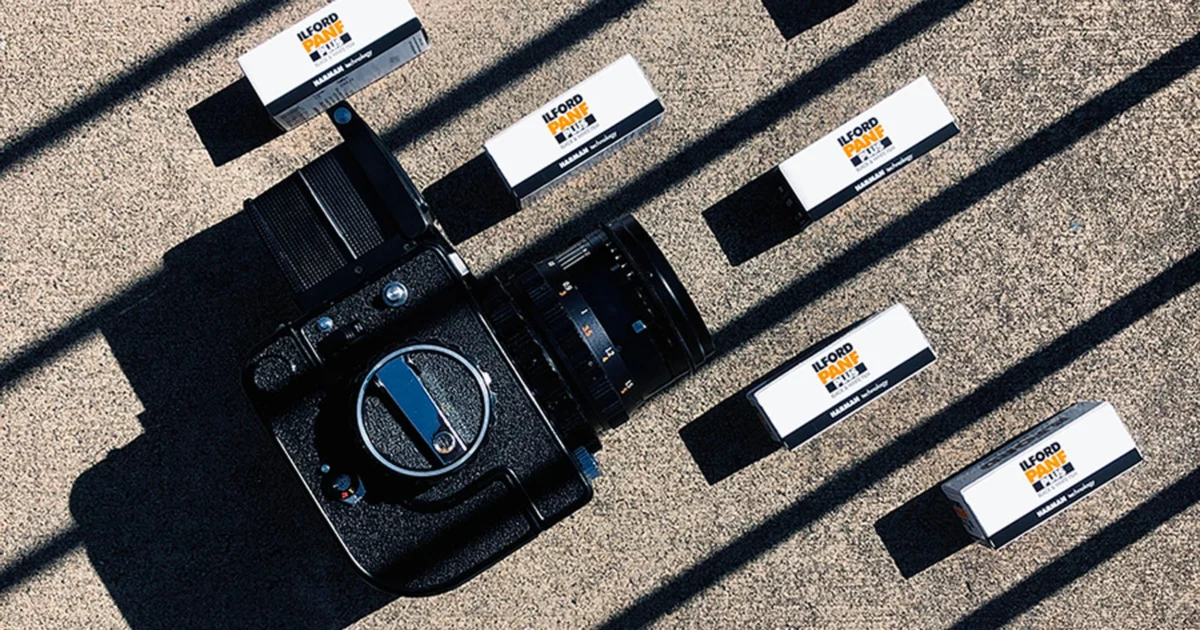
In the vast and varied ecosystem of analog photography, a distinct and exclusive clique operates on the fringes of mainstream popularity. Photographers often refer to this unofficial fraternity as the "Sub-100 Club"—a gathering of elite, specialized monochrome and color stocks that flaunt ultra-low ISO ratings well below the standard threshold of 100.
While high-speed emulsions like Ilford Delta 3200 or Kodak T-Max P3200 routinely hold court in low-light environments, commanding attention with their gritty textures and aggressive grain structures, the members of the Sub-100 Club remain somewhat aloof. They inhabit the quiet corners of camera bags and cold-storage units. They demand patience, brilliant sunlight, steady tripods, or razor-thin depths of field. Yet, they reward practitioners with an unmatched aesthetic purity.
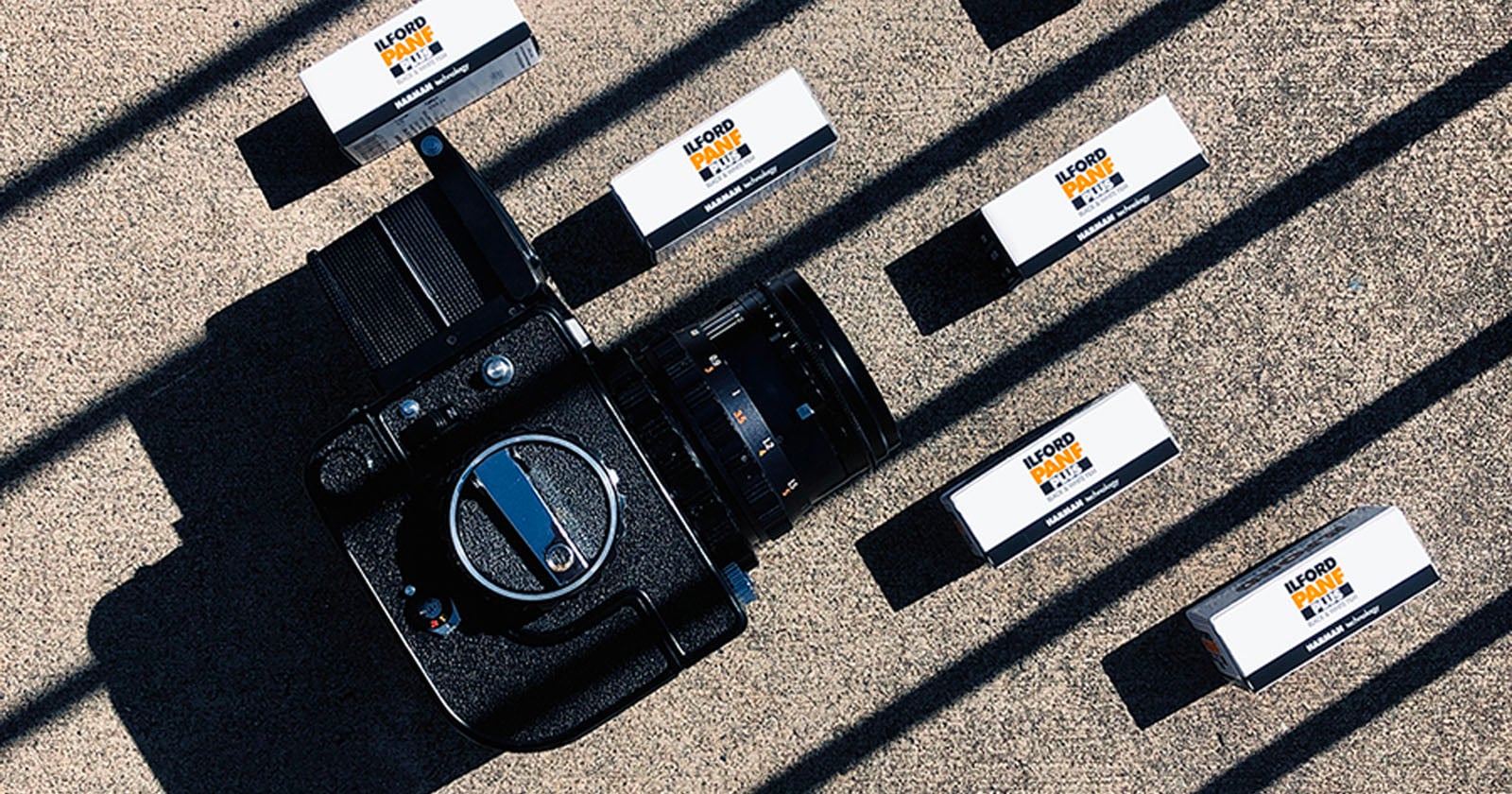
Among these slow-speed stocks, one particular emulsion stands out as the venerable grandparent of the group: Ilford Pan F+.
Boasting a remarkable history that spans nearly eight decades, Pan F+ remains a cornerstone for photographers who prioritize microscopic grain, exceptional edge sharpness, and a deeply atmospheric, brooding contrast profile. Recently, the film’s legacy expanded even further with long-awaited large-format sheet releases, cementing its place in both traditional and contemporary darkrooms.
Main Facts: What Defines Ilford Pan F+?
To understand Ilford Pan F+, one must examine its core technical specifications and visual identity. Summarizing the film in a single sentence is a study in contrasts: it is extraordinarily fine-grained, razor-sharp, and visually dramatic, bearing a distinctly brooding and cinematic character.
1. The Grain Structure
As an ultra-low ISO panchromatic black-and-white film, Pan F+ yields some of the finest grain available on the commercial market. For 35mm shooters looking to achieve the pristine, unblemished clarity typically reserved for medium format cameras, Pan F+ is the ultimate equalizer. Furthermore, when photographers plan to produce massive, mural-sized enlargements from smaller negatives, Pan F+ delivers the resolving power necessary to hold crisp, intricate details without breaking down into distracting digital-like noise or heavy silver clumping.

2. Exceptional Acutance and Sharpness
Beyond its fine grain, Pan F+ is engineered to produce a high degree of acutance—commonly known as edge sharpness. Acutance is the visible enhancement of local contrast at the distinct boundaries separating dark and light areas within an image. By amplifying this edge contrast, the film creates the optical illusion of superior clarity and crispness.
While acutance is frequently modulated during development (often enhanced by specialized developers like Rodinal or FX-2), Pan F+ possesses an innate high edge-contrast profile straight out of the box. This makes it a historic favorite among architectural photographers who demand flawless reproduction of fine lines, textures, and geometric forms. Conversely, portrait photographers have historically held mixed feelings about the emulsion; because it mercilessly exposes every pore, fine wrinkle, and blemish, it demands a deliberate creative choice. However, for portraits that seek to draw out the raw, unvarnished drama of human features, Pan F+ is unmatched.

3. Moody Drama and High Contrast
Pan F+ is celebrated for its rich, dynamic contrast scale. Negatives naturally produce deep, inky shadows alongside bright, sparkling whites, frequently drifting into a classic, high-contrast film noir aesthetic. While the film retains a rich tonal scale full of subtle midtone nuances, its overall visual signature leans heavily toward the dramatic.
Chronology: A History Spanning Nearly Eight Decades
The story of Pan F is deeply intertwined with the evolution of mid-20th-century photography. Its journey from a mid-century innovation to a modern specialty product highlights a remarkable commitment to traditional manufacturing by Ilford Photo.

- 1948: The original Pan F panchromatic black-and-white emulsion is introduced to the market. Post-war photography is rapidly modernizing, and the film quickly finds a dedicated following among studio and landscape photographers who prioritize resolution over shutter speed.
- 1992: After decades of minor chemical tweaks and manufacturing refinements, Ilford officially bestows the iconic “+” (plus) suffix upon the film, updating the emulsion formula to improve overall stability, acutance, and shelf life.
- The 2000s: Ilford introduces further subtle emulsion updates to the Pan F+ formula, enhancing its response profile and modernizing its production to align with contemporary chemical standards.
- 2004–2015: Photographers navigate the quirks of the film, particularly its strict reciprocity characteristics and latent image stability, establishing community best practices for handling the emulsion.
- 2026: In a monumental victory for large-format practitioners who had spent decades petitioning the manufacturer, Ilford officially releases Pan F+ in 4×5 and 8×10 sheet film formats, expanding its availability far beyond traditional 35mm and 120 roll film.
Supporting Data & Technical Handling
Operating within the Sub-100 Club requires an understanding of physics and chemistry. Because Pan F+ is a slow-speed film, it introduces distinct mechanical challenges that photographers must navigate to secure a successful exposure.
Managing Slow Speeds
The primary trade-off for Pan F+’s microscopic grain is its inherently slow speed. It is fundamentally designed for bright, sunlit conditions. However, treating its limitations as creative opportunities unlocks unique artistic styles. Photographers can utilize slower handheld shutter speeds during daylight hours to incorporate intentional motion blur or panning effects, or mount ultra-fast prime lenses (such as f/1.4 or f/1.2 apertures) to achieve razor-thin depths of field even under harsh midday sun. Alternatively, mounting a camera to a sturdy tripod transforms the film into a landscape powerhouse.

Reciprocity Failure Characteristics
Because of its low speed, long shutter speeds are frequently required—especially when shooting in shaded environments, during twilight, or when using dense neutral density (ND) filters. Understanding reciprocity failure (the mathematical breakdown of a film’s proportional sensitivity during extended exposures) is critical for Pan F+ users:
- 1 to 10-second exposures: Require an additional ½ to 1 stop of extra exposure (e.g., a metered 10-second exposure should be extended to roughly 20 seconds).
- Up to 60-second exposures: The film’s response curve slows down progressively, requiring a full +2 stops of exposure compensation by the time a metered reading hits 60 seconds (translating to a true exposure time of roughly 240 seconds).
Interestingly, historical data from the mid-2000s indicates that older iterations of Pan F+ required much more aggressive compensation (hitting the +2 stop threshold as early as 30 seconds). This suggests that Ilford’s twentieth-century and modern emulsion tweaks have successfully improved the film’s low-light response over time.

Latent Image Retention
One of the most critical technical warnings regarding Pan F+ involves its sensitivity to post-exposure storage, known as latent image retention. While many black-and-white films can sit inside a camera or a drawer for months after being exposed without major degradation, Pan F+ is notoriously unforgiving.
If left undeveloped for extended periods—even a few months or several weeks—exposed rolls can suffer from poor latent image stability, yielding thin, under-exposed-looking negatives that mimic severe under-development. Ilford’s official technical data sheets explicitly recommend processing Pan F+ within three months of exposure, though local darkroom practitioners universally agree: the sooner the film hits the chemistry, the better the results.

Official Responses and Industry Perspectives
Industry response to Pan F+ over the decades has been defined by a deep sense of mutual respect between manufacturer and consumer. While mainstream consumer labs and high-volume commercial photographers gravitate toward forgiving, mid-speed emulsions like Ilford HP5+ or Kodak Tri-X 400, specialty retailers and niche darkroom communities champion Pan F+ as an irreplaceable artistic tool.
Specialty film distributors, such as Portland, Oregon’s renowned Blue Moon Camera and Machine, note that while Pan F+ appeals to a more select demographic, its user base is remarkably passionate.

"Pan F+ is a lovely film that is smooth, sharp, and has a touch of dark flair to it. Pan F images have a quality all their own," notes technical staff at Blue Moon.
The recent 2026 expansion of Pan F+ into large-format 4×5 and 8×10 sheet configurations serves as a definitive official nod from Ilford to the large-format community. Despite the digital revolution and shifting commercial landscapes, the manufacturer continues to invest in ultra-specialized analog formats, proving that traditional black-and-white photography retains a vibrant, forward-looking commercial viability.

Implications for the Modern Analog Community
The sustained survival, evolution, and format expansion of Ilford Pan F+ carry significant implications for the contemporary analog photography revival.
- Preservation of Craft: Pan F+ forces the photographer to slow down. In an era dominated by instant digital gratification and high-ISO autofocus sensors that see in the dark, shooting a Sub-100 ISO film requires deliberate planning, precise light-metering, and strict adherence to darkroom chemistry timelines. It acts as an educational anchor for a new generation of photographers learning the foundational disciplines of exposure and development.
- Viability of Niche Manufacturing: The introduction of 4×5 and 8×10 sheet options demonstrates that legacy manufacturers are listening closely to niche analog communities. It signals confidence in the long-term health of traditional darkroom printing, proving that tactile, process-driven photography is not merely a nostalgic fad, but a thriving, evolving art form.
- Artistic Differentiation: As digital sensors achieve near-infinite ISO capabilities and frictionless noise-reduction software, the tactile, uncompromised fidelity of physical silver halides becomes an intentional aesthetic choice. Pan F+ offers an irreplaceable look—deep, inky blacks, laser-sharp acutance, and an atmospheric moodiness that algorithms struggle to replicate authentically.
For photographers willing to master its quirks, respect its reciprocity limits, and process their frames without delay, Ilford Pan F+ remains one of the most rewarding black-and-white emulsions ever created. Whether loaded into a vintage 35mm rangefinder, a medium-format SLR, or a newly minted large-format field camera, Pan F+ proves that slowing down is often the fastest way to achieve photographic greatness.
 Raul Delapena Setiawan
  Asep Darmawan
  Iffa Jayyana