
 By Iffa Jayyana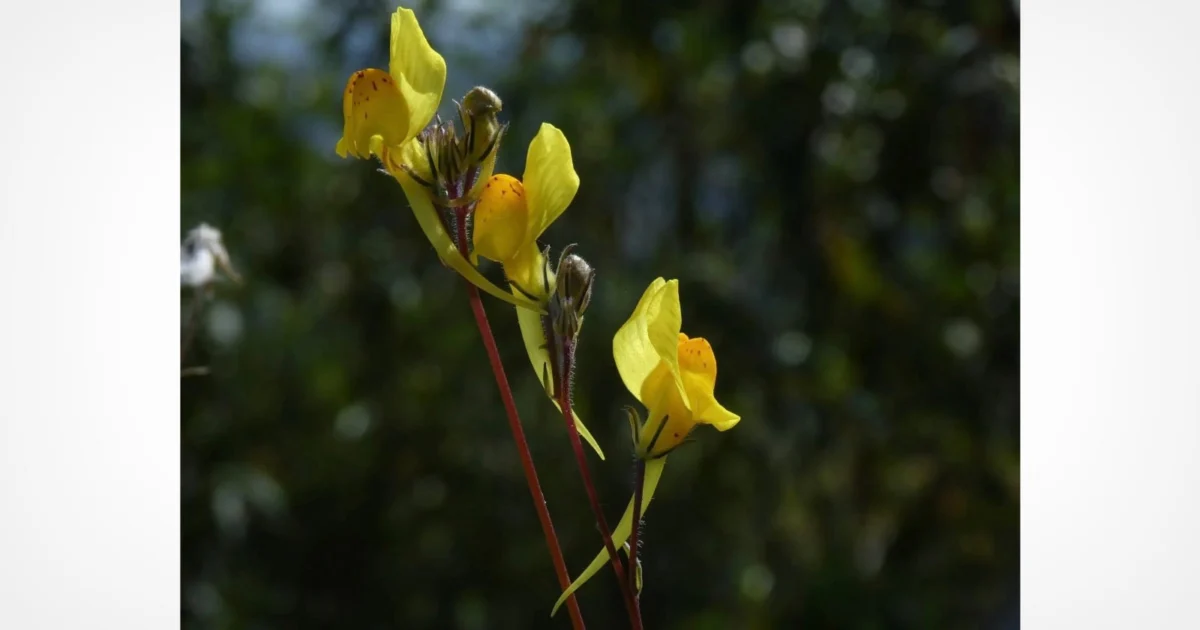
By Global Science & Environment Desk
Published September 2026
Main Facts
In an extraordinary convergence of citizen science, digital connectivity, and traditional botanical research, a brand-new species of flowering plant has been discovered entirely by accident. The breakthrough began when an unnamed German tourist captured a casual photograph of an unusual wildflower while vacationing in the picturesque region of Monchique, nestled within Portugal’s sun-drenched Algarve. Unbeknownst to the traveler, her digital snapshot would serve as the foundational evidence for the identification of Linaria alfercensis—commonly known as the Alferce toadflax—a plant previously unknown to science and undocumented in any botanical literature.
The discovery highlights the immense, yet largely untapped, potential of citizen science platforms. After uploading her photograph to iNaturalist, a widely used global repository for crowdsourced biodiversity observations, the image caught the discerning eye of Dr. João Farminhão, a prominent Portuguese botanist and researcher at the University of Coimbra’s Centre for Functional Ecology (CFE).
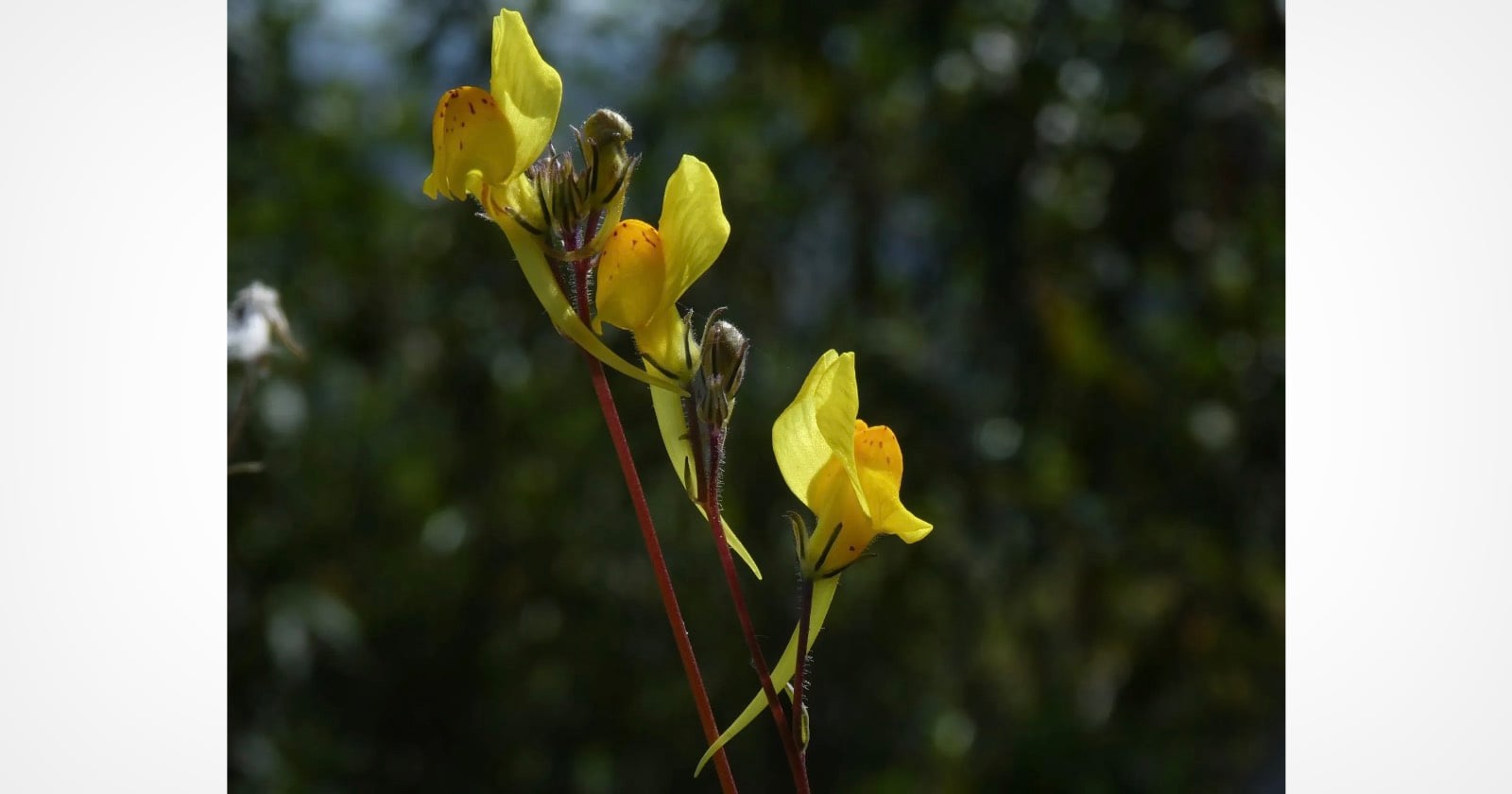
Farminhão’s subsequent fieldwork confirmed that the plant was not a known variant, but an entirely distinct species characterized by striking vertical stalks bearing yellow, spurred flowers adorned with reddish-brown spots and distinct dark stripes on their petals. Following comprehensive morphological and genetic studies conducted in collaboration with academic institutions across the Iberian Peninsula, the discovery was officially published, expanding our understanding of European flora. However, this scientific triumph is tempered by urgency: researchers have formally proposed classifying Linaria alfercensis as "Endangered," as wild populations are currently restricted to a tiny pocket of land facing acute environmental threats, including aggressive invasive species and the looming peril of wildfires.
Chronology of a Discovery
The journey from an anonymous holiday snapshot to a peer-reviewed botanical classification unfolded over a meticulous, multi-year timeline:
- March 2023: During a spring vacation exploring the diverse landscapes of Portugal, a German tourist visits the mountainous town of Monchique in the Algarve. While trekking through the scenic terrain of Cerro do Castelo de Alferce, she notices an intriguing, upright yellow flower. Pausing to capture the moment, she snaps a photograph with her camera phone, initially misidentifying the blossom as a common or previously recorded regional wildflower.
- Late 2023: Eager to log her travel experiences and identify the local flora, the tourist uploads the photograph to iNaturalist. The platform’s open-access database allows amateur naturalists and professional scientists alike to review, tag, and discuss global wildlife observations.
- Early 2024: The image crosses the digital desk of Dr. João Farminhão. Reviewing crowdsourced data from the region, Farminhão notices anomalous physical traits in the flower that do not match any documented species of the Linaria (toadflax) genus native to Portugal. Suspending disbelief, he recognizes the potential significance of the digital record.
- Spring 2024: Driven by scientific curiosity, Farminhão travels to Cerro do Castelo de Alferce in Monchique to retrace the tourist’s steps. After scouring the rugged landscape, he locates a small, localized population of the exact plant seen in the photograph. Subsequent microscopic and taxonomic analysis confirms that the specimens do not match any descriptions found in historical botanical keys or scientific literature.
- Late 2025 – Early 2026: Farminhão spearheads a multidisciplinary research initiative, partnering with botanical experts from the University of Lisbon, the University of Barcelona, and Madrid’s prestigious Royal Botanical Garden. Together, they execute genetic sequencing and comprehensive morphological evaluations to cement the species’ taxonomic status.
- August 2026: The formal scientific description of Linaria alfercensis is published in international botanical literature, officially introducing the plant to the global scientific community and initiating formal conservation assessments.
Supporting Data & Botanical Characteristics
The scientific classification of Linaria alfercensis has provided botanists with valuable insights into the evolutionary adaptability of the Linaria genus, which is widely distributed across the Mediterranean basin.
Morphologically, the newly discovered toadflax possesses several unique physiological traits that immediately set it apart from its closest phylogenetic relatives. Unlike many prostrate or sprawling toadflax species that hug the ground or cascade down rocky slopes, Linaria alfercensis exhibits a distinctly erect growth habit, standing tall and rigid. Its inflorescences feature vertical stalks laden with vibrant yellow, spurred flowers. A closer inspection reveals intricate reddish-brown spots stippling the petals, complemented by two distinct dark stripes running along the underside of the blossom.
Despite these striking features, the plant had successfully evaded formal scientific detection for centuries due to its highly restricted geographic distribution. Field surveys conducted by Farminhão and his collaborators indicate that the total known population is alarmingly small, restricted to a few dozen mature flowering individuals concentrated within a micro-habitat at Cerro do Castelo de Alferce.
To quantify the vulnerability of Linarity alfercensis, the research team cross-referenced the population size and habitat pressures against International Union for Conservation of Nature (IUCN) red-list criteria. The resulting data paint a precarious picture:
- Total Population Estimate: Fewer than 100 mature individuals identified across all known patches.
- Geographic Range: Confined to a single localized ridge in the Monchique municipality.
- Primary Environmental Pressures: Encroachment by aggressive commercial eucalyptus plantations, competition from invasive non-native plant species such as mimosa acacia (Acacia dealbata), and extreme vulnerability to seasonal Mediterranean wildfires.
Official Responses and Conservation Efforts
The sudden revelation of a micro-endemic species in a heavily monitored European region has spurred swift reactions from academic institutions, local authorities, and conservationists.
Dr. João Farminhão, reflecting on the serendipitous nature of the discovery, emphasized the vital role that everyday observers play in modern bioscience. In statements released by the University of Coimbra’s Centre for Functional Ecology (CFE), Farminhão noted that professional botanists cannot be everywhere at once, making citizen science networks indispensable force multipliers for ecological monitoring. He praised the anonymous tourist’s eye for detail, which bridged the gap between an uncatalogued natural wonder and the scientific apparatus necessary to protect it.
In response to the publication of the study, municipal officials in Monchique, alongside regional environmental agencies in Portugal, have mobilized to secure the habitat. Because the plants are clustered within a vulnerable zone susceptible to human disturbance and invasive botanical takeovers, immediate protective measures have been implemented.
Local conservation authorities have established a perimeter around the core population site at Cerro do Castelo de Alferce. Management protocols now include:
- Invasive Species Eradication: Manual and targeted removal of fast-spreading mimosa acacia and surrounding eucalyptus overgrowth that threaten to choke out sunlight and deplete soil nutrients required by the toadflax.
- Habitat Monitoring: Increased surveillance by environmental rangers to prevent accidental trampling by hikers, off-road vehicle operators, or unauthorized plant collectors.
- Ex-Situ Conservation Planning: Collaborative efforts between regional botanical gardens and university laboratories to collect and safely store seeds (ex-situ conservation), ensuring that genetic lines are preserved in cryogenic or controlled greenhouse environments should a catastrophic wildfire strike the native range.
Broader Implications: The Rise of Accidental Discoveries in Digital Photography
The unearthing of Linaria alfercensis is part of a growing, paradigm-shifting trend in natural history: the democratization of discovery through high-resolution consumer cameras and ubiquitous internet connectivity. For centuries, major biological discoveries were the exclusive domain of grueling, multi-year expeditions led by institutional explorers. Today, the ubiquity of smartphones, digital cameras, and citizen-science platforms has transformed millions of tourists, hikers, and nature photographers into frontline field researchers.
This phenomenon is increasingly rewriting the boundaries of what science knows about global biodiversity. Just months prior to the formal naming of the Alferce toadflax, nature photography made headlines when two wildlife photographers independently captured the first-ever definitive images of the Rusty Lark (Mirafra rufa) in Africa’s Sahel region. The bird—a small, unassuming avian species native to harsh arid landscapes—had not been scientifically documented or reliably observed for 94 years, leading many ornithologists to fear it had quietly slipped into extinction. The crisp photographic evidence provided by modern telephoto lenses instantly revived conservation efforts for the species, proving that absence of evidence in scientific surveys does not always equate to evidence of absence.
Similarly, marine biology was upended when underwater photographers documented an unprecedented biological event: the first-ever recorded instance of humpback whales engaging in sexual intercourse. More astonishing than the behavior itself was the discovery—verified frame-by-frame through photographic analysis—that the mating encounter took place between two adult male whales. This stunning behavioral record forced marine mammal behaviorists to re-evaluate established paradigms regarding cetacean social interactions.
These milestones underscore a profound shift in how humanity interacts with the natural world. Whether capturing the subtle, spotted petals of an unknown wildflower on a smartphone in Portugal, snapping a fleeting glimpse of a long-lost bird in the African brush, or freezing an unprecedented moment in the deep ocean, modern photographers are routinely pushing the frontiers of science.
As databases like iNaturalist continue to aggregate millions of geo-tagged images from every corner of the globe, algorithms and taxonomists working in tandem are poised to uncover more hidden secrets of the natural world. The story of Linaria alfercensis serves as a powerful reminder that monumental discoveries can be hidden in plain sight, waiting only for a curious eye, a raised camera, and a digital connection to bring them into the light.
 Raul Delapena Setiawan
  Asep Darmawan
  Pevita Pearce