
 By Pevita Pearce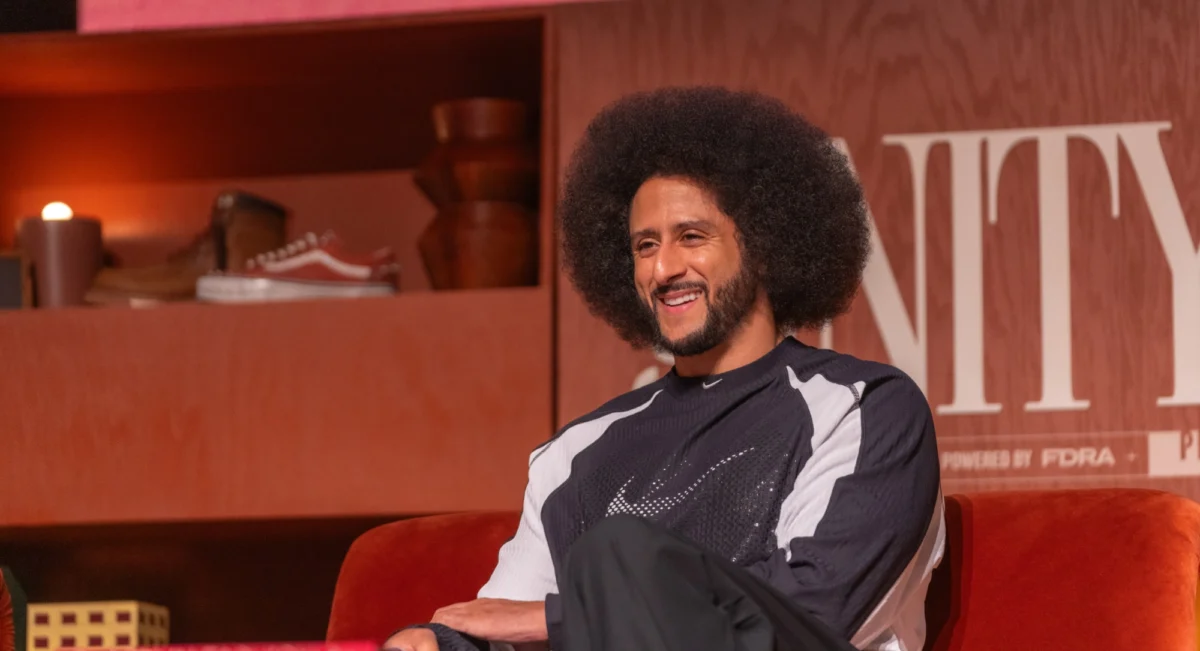
Ten years after the world watched Colin Kaepernick take a knee for the first time—an act that transformed the landscape of American sports and sparked a national firestorm regarding racial injustice and police brutality—the former San Francisco 49ers quarterback remains a polarizing, persistent, and central figure in the cultural zeitgeist.
Speaking at the 2026 Black Footwear Forum in Detroit, Kaepernick appeared alongside veteran sports journalist Jemele Hill to discuss his latest venture, the book The Perilous Fight, released September 15. The event, which centered on Black leadership and systemic opportunity, served as the launchpad for a broader conversation about his legacy, his ongoing commitment to coalition-building, and his enduring, often misunderstood, desire to return to the professional football field.
The Genesis of the Protest: A Decade in Review
The chronology of Kaepernick’s activism is often reduced to the imagery of a single gesture, but he emphasizes that his path to protest was a deliberate, intellectual journey. In 2016, during the NFL preseason, Kaepernick sat—and later knelt—during the national anthem.
He notes that the decision was not a sudden impulse, but rather the culmination of a "lifetime of experiences" accelerated by his partner, Nessa Diab, who introduced him to The Autobiography of Malcolm X. This led to a deep dive into the foundational literature of Black liberation, including works by Frantz Fanon, James Baldwin, Steve Biko, and Marcus Garvey.

"Now I have a better understanding of structures, of systems and institutions that have been built intentionally to oppress us and keep us in our place," Kaepernick told the audience in Detroit. He traced his breaking point to the deaths of Mario Woods in San Francisco, Alton Sterling in Baton Rouge, and Philando Castile in Minnesota. Faced with these realities, he questioned how he could stand for a national anthem that, in his view, ignored the systemic denigration of Black Americans.
The evolution of the protest from sitting to kneeling was a collaborative effort. Kaepernick clarified a persistent misconception regarding the origin of the kneel, noting that it was teammate Eric Reid who suggested the gesture as a way to maintain unity with the team while signaling respect for the message, rather than the military veteran Nate Boyer, as popular media narratives have often claimed.
The NFL’s "Culture of Obedience"
Kaepernick’s career effectively ended following the 2016 season. After opting out of his contract, he remained unsigned, leading to a collusion grievance filed against the NFL in 2017. The case, which eventually resulted in a confidential financial settlement, remains a defining moment in the history of athlete-owner relations.
Throughout the forum, Kaepernick was blunt about why he still seeks a return to the league. When Jemele Hill asked why he would want to return to an organization he has so consistently and rightfully critiqued, Kaepernick’s response was rooted in both personal principle and the desire to mentor the next generation.

"I don’t think anyone should ever have their career taken from them for fighting for us," he asserted. He shared a poignant anecdote about a young athlete at one of his Know Your Rights camps in Las Vegas who asked if he had to choose between pursuing a professional football career and advocating for his community.
"Making a choice like that shouldn’t be the reality," Kaepernick said. "They [the NFL] were trying to send a message explicitly: ‘Hey, if you try to fight for Black folks, we’ll take your career from you.’"
Kaepernick views his quest for a roster spot as a challenge to the NFL’s claim of being a "meritocracy." He argues that the league’s refusal to sign him—despite his statistical history—reveals that the organization does not prioritize the "best" players, but rather "obedient" players who can maintain the spectacle without challenging the status quo.
Examining the Conflict: The Players Coalition and Roc Nation
A significant portion of the conversation focused on the internal politics of the NFL’s reaction to the protests. Kaepernick revealed that during the peak of his collusion grievance, the league approached him and Eric Reid with a multimillion-dollar offer to become the faces of a social justice campaign.

Kaepernick rejected the offer, framing it as an attempt to "give cover" to the league rather than enact genuine change. He recalled a 2017 meeting with team owners, including Robert Kraft and Terry Pegula, where he claimed the priority was not addressing the underlying issues of police brutality, but rather "finding a Black face to help us end the protest."
This tension extended to the 2019 partnership between the NFL and Jay-Z’s Roc Nation. Kaepernick drew a sharp distinction between his own grievance process—which he described as a legal action against being "blackballed"—and the partnership with Roc Nation, which he characterized as a commercial endeavor that prioritized entertainment over radical structural change.
"It’s a position that he has been comfortable stepping into to the detriment of our communities," Kaepernick said of the rapper. "Are we individually trying to come up, or are we trying to collectively come up?"
The Economic and Cultural Implications
The impact of Kaepernick’s stand extends far beyond the stadium. His long-standing partnership with Nike remains a case study in corporate social responsibility. The 2018 "Dream Crazy" campaign, which featured the tagline, "Believe in something. Even if it means sacrificing everything," resulted in a massive surge in Nike’s stock value, proving that taking a moral stand could align with commercial success.

Yet, for Kaepernick, the financial success of his brand collaborations, including his sold-out Air Force 1 releases, is secondary to the goal of structural reform. He remains frustrated by two primary narratives: that he was a subpar quarterback, and that his activism was a calculated cash grab. He vehemently denies both, insisting that his intentions have always been centered on the liberation of marginalized communities.
The Path Forward
Despite not having played a professional snap in over nine years, Kaepernick maintains a rigorous training regimen. Every morning, he prepares as if he is expecting a call from a general manager. This commitment is not born of a delusion, but of a refusal to accept the terms of his exile.
The implications of his continued advocacy are significant. As the Black Footwear Forum highlighted, the struggle for representation is not just about having "a seat at the table," but about changing the structure of the room itself. Kaepernick’s presence at the forum served as a reminder that the "perilous fight" he describes in his book is not an isolated battle against the NFL, but a wider effort to combat institutional systems that demand conformity in exchange for opportunity.
As he travels for his book tour, Kaepernick continues to challenge his audience to consider the cost of silence. He acknowledges the fear inherent in speaking up, particularly for players who have fought their entire lives for the "generational wealth" that an NFL career provides. However, he challenges that fear with a call for solidarity.

"At the same time, we’re seeing our brothers and sisters being killed," he concluded. "And at a certain point, you have to make that decision. Are you just looking out for yourself, or are you going to look out for each other collectively?"
For Colin Kaepernick, the past decade has been a testament to the fact that while a career can be silenced, a movement—if built on the right foundation—is far more difficult to stop. Whether he ever returns to the field or not, his role as a disruptor of systems appears to be his permanent vocation.
 Lina Hope
  Raul Delapena Setiawan