In the fast-paced modern digital ecosystem, marketing and public relations teams often feel like they are chasing a moving target. By the time a trending topic hits standard analytics dashboards, or a negative review sparks a viral storm, the window of opportunity to capitalize—or mitigate damage—has slammed shut.
For years, brands relied on traditional media monitoring to understand what happened yesterday. However, the rise of artificial intelligence and machine learning has birthed a revolutionary evolution in how organizations view the media landscape: predictive media intelligence.
Moving far beyond historical reports, predictive media intelligence uses real-time signals, historical patterns, and sophisticated AI models to forecast where audience attention, trending stories, and potential crises are heading next. Far from requiring a crystal ball, this emerging discipline is rapidly becoming the ultimate competitive advantage for forward-thinking organizations.
The Main Facts: What Is Predictive Media Intelligence?
At its core, predictive media intelligence uses AI, real-time signals, and historical patterns to forecast where conversations or audience attention may be headed next.
Rather than acting as a dramatic, sci-fi prophecy tool, predictive intelligence evaluates probabilities and trajectories. It analyzes how quickly a conversation is spreading, whether its velocity is accelerating, and how closely its current pattern mirrors similar narratives that have played out in the past.
By scanning social media networks, global news outlets, and the broader web for early, faint signals of momentum—such as an uptick in specific keywords or shifting consumer sentiment—the technology gives brands a strategic head start.
Predictive Media Intelligence vs. Traditional Media Monitoring
To understand the value of this technology, one must distinguish it from conventional approaches. Traditional media monitoring is inherently reactive; it tracks what is already happening. Predictive media intelligence, by contrast, is proactive, anticipating what will happen next.
Feature
Traditional Media Monitoring
Predictive Media Intelligence
Primary Question
What is happening now?
What is likely to happen next?
Core Focus
Current mentions, coverage, and sentiment.
Emerging momentum, hidden risks, and untapped opportunities.
Methodology
Tracks, aggregates, and analyzes past data.
Uses current signals and historical algorithms to forecast future trajectories.
Ideal Application
Assessing baseline brand health and historical reporting.
Outpacing fast-moving cultural conversations and preempting crises.
Crucially, experts emphasize that predictive intelligence does not replace monitoring. A system cannot forecast a conversation it is not observing. Instead, predictive analytics acts as an advanced intelligence layer built directly on top of foundational monitoring data.
Chronology and Evolution: Why the Shift Is Happening Now
The urgency surrounding predictive media intelligence is driven by structural shifts in the modern digital landscape. The way media is created, consumed, and discarded has evolved dramatically over the past decade, forcing communication teams to abandon legacy workflows.
1. The Fragmentation of the Media Ecosystem
A decade ago, a brand story typically followed a linear path through traditional press outlets or localized television channels. Today, narratives are hyper-fragmented. A story might ignite on TikTok, migrate to niche Reddit threads, spill over into professional networks like LinkedIn, and finally explode into mainstream news days later.
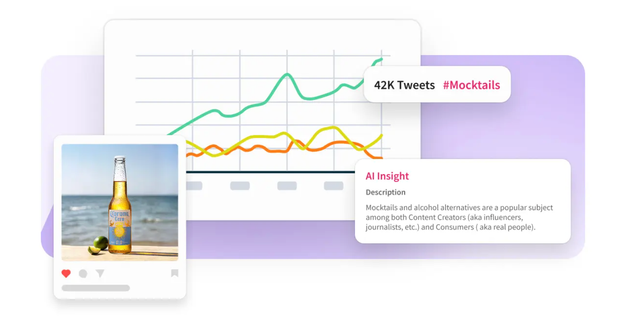
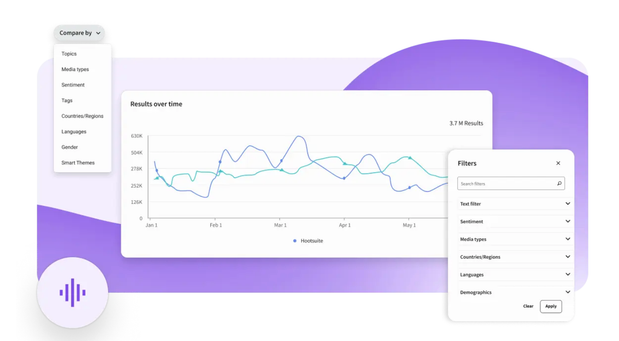
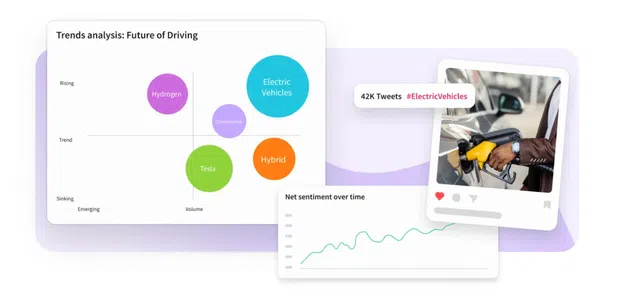
Watching these channels in isolated silos makes it nearly impossible to recognize that disparate posts are actually feeding the same viral fire. Modern predictive tools, such as Hootsuite’s Lumen, bridge this gap by simultaneously monitoring over 150 million sources across 30-plus social platforms, stitching fragmented signals into a coherent narrative.
2. Compression of the Action Window
Stories that once took weeks to build, peak, and fade now complete their life cycles in a matter of hours or days. Waiting for weekly or monthly analytics reports means marketers are frequently analyzing post-mortems rather than active opportunities. Predictive intelligence expands this shrinking runway, allowing brands to publish trendy content while audiences still care, or neutralize a PR crisis before it hits the evening news.
3. The Integration of Advanced AI
While media data has historically held signals about future trends, the sheer volume of unstructured information made manual extraction practically impossible. Artificial intelligence changed the equation. Today’s machine learning models can ingest and classify billions of data points across languages, formats, and platforms at unprecedented scales.
Supporting Data and Technical Mechanics: How It Works
Understanding how predictive intelligence delivers actionable insights requires looking under the hood of machine learning algorithms. The process typically unfolds in five distinct phases:
Signal Gathering: The system continuously pulls in unstructured data from news outlets, social platforms, search behavior, and open web forums, utilizing natural language processing (NLP) to parse context.
Baseline Establishment: Before anomalies can be detected, the system establishes a baseline of "normal" behavior—such as standard daily brand mentions or baseline engagement rates.
Velocity Tracking: The algorithm monitors subtle changes in velocity, identifying when a topic or sentiment metric is accelerating faster than historical norms.
Pattern Matching: Current trajectories are cross-referenced against historical archives to determine whether a sudden spike is a short-lived anomaly (noise) or the beginning of a snowball effect (trend).
Insight Surfacing: Instead of overwhelming marketers with raw data dumps, the platform flags high-probability opportunities and risks requiring immediate attention.
Official Perspectives and Industry Insights
As organizations race to adopt these tools, industry leaders stress that technology must be paired with rigorous human oversight.
Ellen Tseng, Director of Social Analytics and Intelligence at Block Inc., highlights the sheer scale enabled by modern AI:
"Now we can classify across languages, formats, and platforms at a volume and scale far beyond the usual manual workload, and surface small anomalies we might not have noticed before."
However, Tseng issues a vital caution regarding the limits of automation, noting that human judgment remains irreplaceable:
"Human interpretation gives you context, nuance, the ‘why’ behind those upticks and anomalies, and also the ability to discern whether the data is synthetic or authentic."
Tseng also warns against viewing predictive software as an infallible oracle:
"Most marketers treat predictive intelligence like a forecast of what will happen, kind of like a Magic 8-Ball. In reality, it just narrows down what’s plausible and gives teams a little more cushion to decide what to do next." Furthermore, she notes: "I’ve seen plenty of prediction work die because no one defined who would act on it or what they would do. Predictive intelligence cannot work without an actual, proper workflow process and ownership."
Practical Implementation: How Brands Can Start Using Predictive Intelligence
For organizations looking to integrate predictive media intelligence into their daily operations, experts recommend a structured, step-by-step framework:
Start with the Decision: Do not collect data for data’s sake. Define the strategic questions your team needs answered—such as whether an emerging consumer complaint is likely to escalate into a full-scale boycott.
Audit Your Current Monitoring Stack: Inventory what your PR, social media, and customer service teams are currently tracking. Unifying these silos gives predictive algorithms the rich historical context they need.
Choose Forecasting Tools: Invest in platforms built for prediction and trend estimation, rather than basic historical reporting.
Define Meaningful Thresholds: Establish clear metrics for what constitutes a actionable signal. For instance, if product complaints jump from a baseline of 1% to 15% of total mentions, automated alerts should immediately trigger an investigation.
Establish a Continuous Learning Loop: Compare past predictions against actual outcomes. Feeding these results back into the system trains the model to filter out false positives over time.
Implications for the Future of Marketing and PR
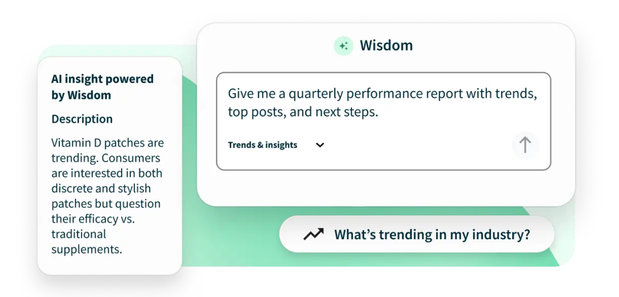
The widespread adoption of predictive media intelligence marks a permanent maturation in how brands interact with the public. As tools like Hootsuite’s Lumen and AI agents like Wisdom allow marketers to monitor over 150 million sources and query complex narratives in plain language, the margin for error in digital communication is shrinking.
Ultimately, predictive intelligence does not remove uncertainty from business strategy; rather, it buys time. In an era where public perception can shift in a matter of minutes, having a few extra hours—or days—to craft a proactive response, launch a timely campaign, or avert a crisis is the defining factor between industry leaders and those left playing catch-up.
 By Nana



 Nana Wu
  Lina Irawan
  Azzam Bilal Chamdy