
 By Basiran
In today’s hyper-accelerated digital economy, scattered signals can easily drown out strategic decision-making. Whether it is a sudden spike in a rival’s social media engagement, an unannounced shift in a competitor’s pricing structure, or a recurring customer complaint buried deep within a Reddit forum, modern enterprises are inundated with raw data.
However, raw data is not strategy. Transforming these fragmented signals into actionable, high-impact business decisions requires a robust competitive intelligence (CI) program. By systematically collecting, analyzing, and distributing market data, organizations can shorten the gap between a shifting market and their own corporate response.

Main Facts: What is Competitive Intelligence?
Competitive intelligence is the disciplined process of gathering, analyzing, and operationalizing data regarding competitors, industries, markets, and consumers to guide overarching business strategies. Distinct from isolated data points, CI contextualizes external signals to highlight emerging risks, market opportunities, and industry trends.
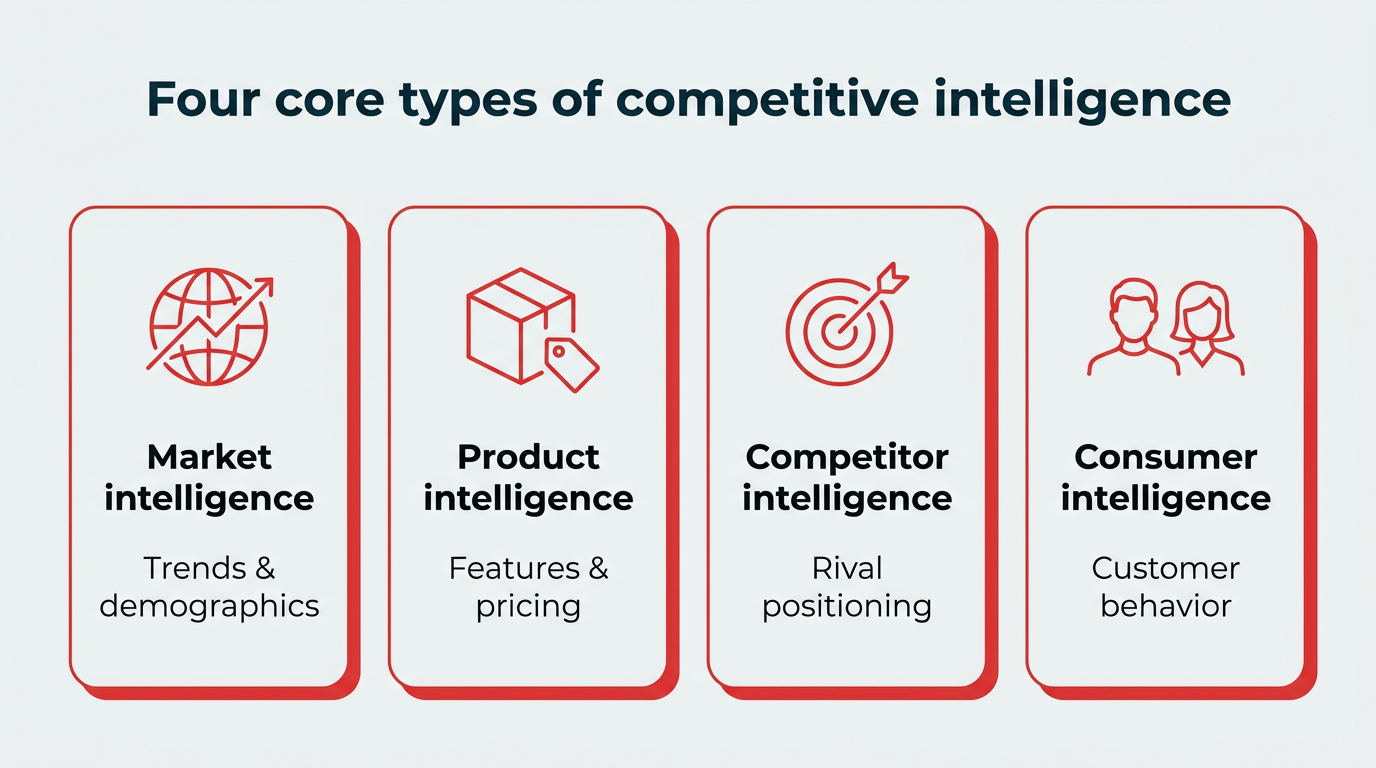
CI programs typically rely on four core pillars:

- Market Intelligence: Broader macroeconomic and external industry trends.
- Product Intelligence: Direct, feature-by-feature comparisons of products, pricing, and capabilities against direct rivals.
- Competitor Intelligence: Analysis of how rival organizations position, market, and operate within the ecosystem.
- Consumer Intelligence: Granular insights into target audience behavior, shifting preferences, and unmet demands.
Furthermore, intelligence is generally bifurcated by its time horizon and utility: Strategic CI supports long-term, high-stakes maneuvers like corporate acquisitions or new market entries over a six-month to multi-year timeline. Conversely, Tactical CI informs rapid, day-to-day choices—such as refining a social media campaign, optimizing sales objection handling, or bridging a content gap within days or weeks.
Chronology: The Evolution of CI from Ad-Hoc Analysis to AI-Driven Loops
The practice of tracking competitors is as old as commerce itself, but the methodologies governing it have undergone a dramatic evolution over the past several decades.
- The Pre-Digital Era (Late 20th Century): Competitive intelligence was largely manual, dependent on trade shows, physical print media, quarterly financial filings, and anecdotal feedback from sales reps. Intelligence loops were slow, often taking quarters to compile into static reports.
- The Rise of the Web (Early 2000s): The proliferation of corporate websites, early search engine optimization (SEO), and digital media databases allowed analysts to track competitor updates digitally. However, data remained siloed, requiring heavy manual scraping and analysis.
- The Social Media & Big Data Boom (2010s): Social listening emerged as a primary discipline. Brands began tracking unstructured conversations on platforms like Twitter (now X), Facebook, and LinkedIn. Competitor tracking expanded from financial metrics to public sentiment analysis.
- The AI-Powered Continuous Loop (Present Day): Modern CI operates as a continuous, automated loop. Advanced natural language processing (NLP) and generative AI platforms allow organizations to query vast repositories of unstructured social and web data in plain language. Tools integrated into modern social operating systems now synthesize real-time sentiment shifts, predictive risk indicators, and automated benchmarking into daily workflows.
Supporting Data: Why CI Drives Measurable Business Outcomes
The financial and operational impact of a well-maintained competitive intelligence program is well-documented across enterprise research.
- Market Projections: The social media listening market alone—a foundational data source for modern CI—is projected to reach an impressive $22.61 billion by 2030, according to industry research reports.
- Efficiency Gains: Enterprises leveraging advanced artificial intelligence and automated CI platforms report a greater than 60% reduction in manual effort when gathering, parsing, and distributing market insights, freeing up analysts for higher-level strategic planning.
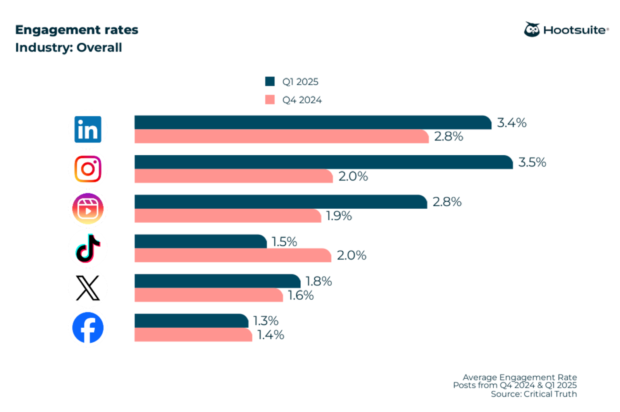
- Engagement Discrepancies: Understanding platform-specific benchmarks is vital for accurate CI analysis. Research highlights wide variances in baseline engagement rates across social ecosystems—for instance, Instagram maintains an overall average engagement rate of approximately 3.5%, whereas platforms like X hover closer to 1.8%.
- ROI Confidence: Brands that actively incorporate social listening and sentiment tracking into their CI framework report significantly higher confidence in proving social media marketing ROI to key executive stakeholders, smoothing the path for budget defense and resource allocation.
Official Perspectives and Frameworks
Industry leaders and analysts emphasize that competitive intelligence must be integrated across multiple business units rather than sequestered within a marketing silo.
Cross-Functional Utility
- Executive Leadership: Relies on strategic CI for risk forecasting, macroeconomic trend analysis, and evaluating partnership opportunities.
- Sales Teams: Utilize tactical insights—often packaged as dynamic "battlecards"—to counter competitor feature gaps and handle customer pricing objections in real time.
- Product & Engineering Teams: Mine consumer intelligence and online review forums to prioritize feature roadmaps based on genuine, validated market demand rather than guesswork.
- Marketing & Social Teams: Leverage real-time sentiment tracking and trendspotting to pivot campaign messaging and capitalize on emerging cultural or platform conversations.
The 5-Step CI Process
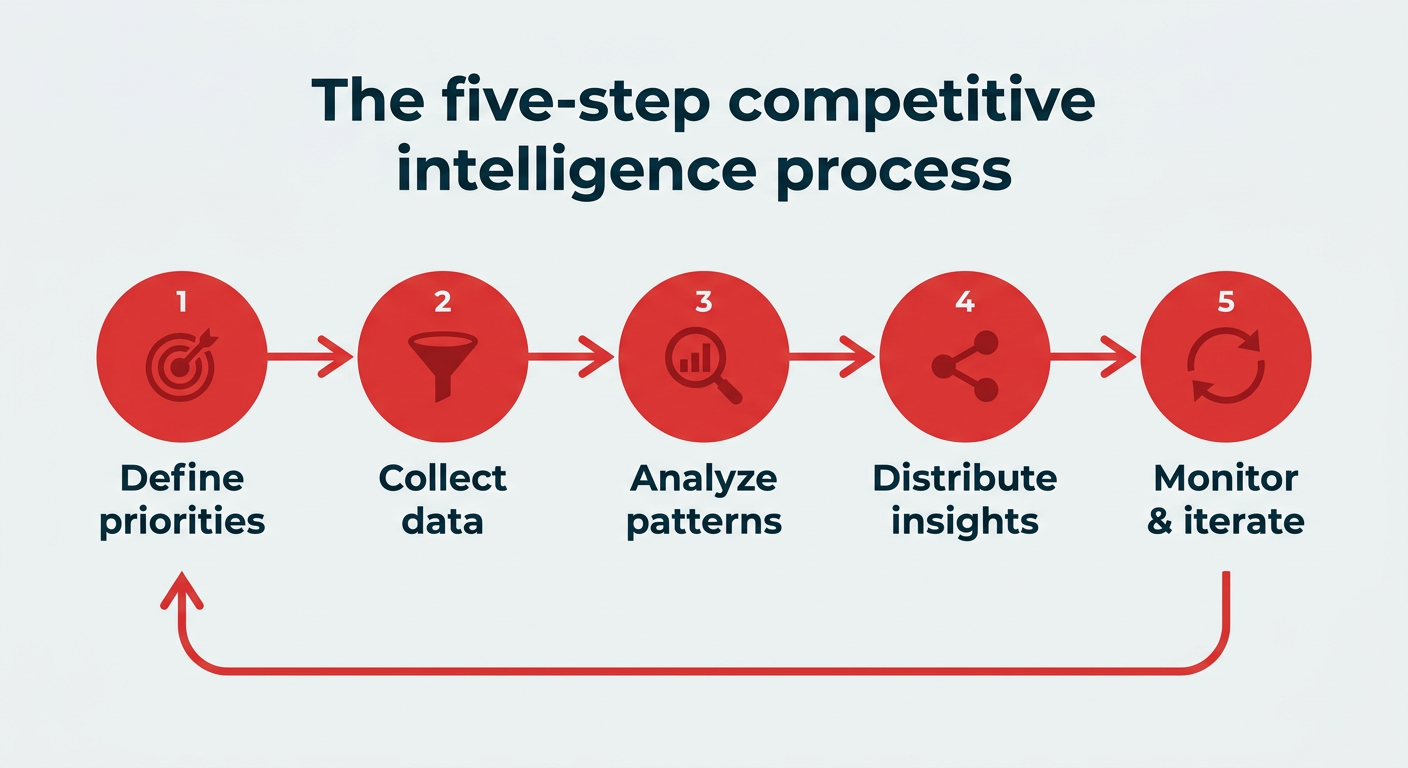
Industry practitioners maintain that an effective CI program follows a five-step continuous loop:
- Define Priorities: Establish key intelligence topics tied directly to concrete business decisions.
- Collect Data: Aggregate information from public filings, search trends, social conversations, and internal customer success metrics.
- Analyze Patterns: Look beyond surface metrics to evaluate weekly mention volumes, engagement spikes, demographic shifts, and pricing movements.
- Distribute Insights: Tailor the delivery format to the audience (e.g., executive summaries, Slack alerts, sales battlecards).
- Monitor and Iterate: Review tactical signals weekly, conduct strategic assessments quarterly, and update collection parameters to match evolving business goals.
Implications: Legal Boundaries, Risks, and Future-Proofing Strategy
While the benefits of competitive intelligence are profound, organizations must navigate significant legal, ethical, and operational challenges to ensure their programs remain sustainable.
Legal vs. Illegal Practices
A critical distinction in CI is the boundary between aggressive, legal research and illicit industrial espionage.
- Legal & Ethical: Analyzing public financial reports, monitoring competitor social media channels, conducting mystery shopping of public-facing services, analyzing public job postings, and reviewing customer feedback on third-party forums.
- Illegal & Unethical: Misrepresenting one’s identity to gain confidential information, hacking into private networks, stealing trade secrets, or inducing individuals (such as a competitor’s current employees) to breach active confidentiality agreements. Most enterprise programs adhere strictly to the professional code of ethics established by organizations like the Strategic and Competitive Intelligence Professionals (SCIP).
Common Risks and Failure Modes
Organizations launching CI initiatives frequently encounter specific operational hurdles:

- Data Overload: Collecting vast amounts of noise without tying insights to actionable decisions.
- Confirmation Bias: Filtering incoming intelligence strictly to validate pre-existing executive assumptions rather than challenging them.
- Siloed Intelligence: Gathering data within a single department (such as marketing) without distributing it to sales, product, or executive teams.
Strategic Implications for 2026 and Beyond
As generative AI and natural language analytics become deeply embedded in enterprise infrastructure, the speed at5 which organizations can ingest and act on external signals will define market leaders. Tools embedded within unified social operating systems—such as Hootsuite Social OS with its integrated Lumen insights and Wisdom plain-language querying capabilities—are setting a new standard.
By marrying real-time social listening, advanced sentiment analysis, and seamless cross-functional distribution, businesses can transform scattered market noise into a definitive competitive advantage.
 Azzam Bilal Chamdy
  Jia Lissa
  Nana Muazin