
 By Asep Darmawan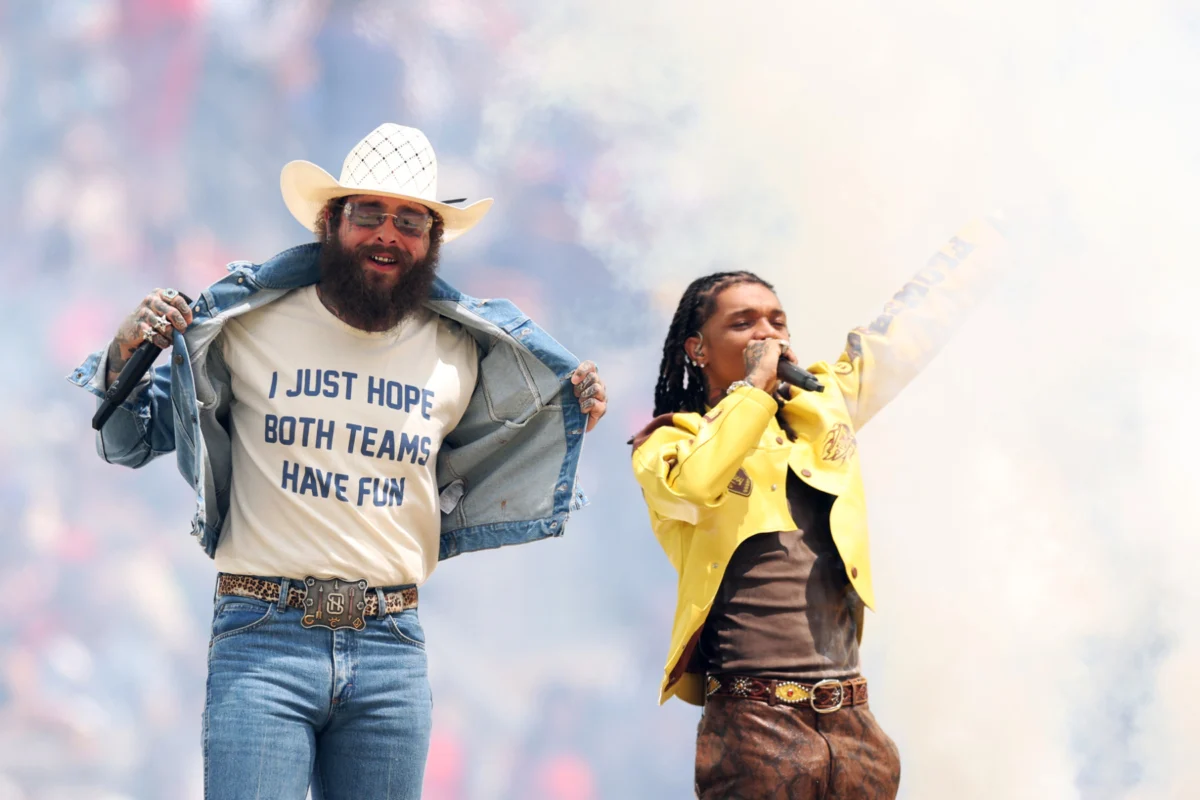
The world’s eyes were fixed on the hallowed turf of MetLife Stadium in East Rutherford, New Jersey, on Sunday, July 19, 2026. As the tension mounted ahead of the climactic showdown between footballing titans Argentina and Spain, the FIFA World Cup final served not only as a battle for sporting supremacy but as a monumental convergence of global culture and entertainment. At the center of this spectacle was Post Malone, who delivered a high-octane, hit-filled closing ceremony that effectively set the tone for a historic conclusion to the 2026 tournament.
The Performance: A Three-Song Medley of Hits and New Beginnings
Donning his signature rugged aesthetic—a blend of modern streetwear and Western influence—Post Malone took the stage at 1:30 p.m. ET. Clad in a crisp white shirt emblazoned with the tongue-in-cheek message, “I Just Hope Both Teams Have Fun,” the 31-year-old artist commanded the massive, custom-built yellow stage as fireworks illuminated the New Jersey skyline.
The setlist was a calculated mix of anticipation and nostalgia. Malone began the proceedings with the live debut of an unreleased, high-energy track titled "Chrome Heartbreaker." The song, which had been the subject of intense social media speculation in the weeks leading up to the final, marked a bold artistic statement for the artist, blending his melodic trap roots with a newfound anthemic quality suitable for a stadium-sized audience.
Following the debut, Malone transitioned seamlessly into his Billboard Hot 100 hit, "Wow.," sending the capacity crowd into a frenzy. The atmosphere reached its zenith when Malone welcomed long-time collaborator Swae Lee to the stage. Together, the duo performed their diamond-certified, chart-topping anthem "Sunflower." Originally penned for the 2018 animated masterpiece Spider-Man: Into the Spider-Verse, the track served as the emotional anchor of the performance, bridging the gap between pop culture, cinema, and the beautiful game.
A Chronology of the Pre-Match Spectacle
The road to the 2026 World Cup final was paved with months of speculation regarding the entertainment lineup. FIFA’s strategy for the 2026 tournament, which spanned 48 teams and 16 host cities across North America, was to elevate the closing ceremony to the same level of prestige as the Super Bowl halftime show.
The Timeline of the Afternoon:
- 1:00 p.m. ET: The festivities commenced with streamer IShowSpeed taking the field. His performance of "Champions," backed by a troupe of dancers in vibrant tracksuits and a percussion ensemble, served as the opening salvo, successfully warming up the stadium for the main event.
- 1:30 p.m. ET: Post Malone and Swae Lee emerged, marking the official start of the primary closing ceremony entertainment. The three-song set lasted approximately 15 minutes, utilizing pyrotechnics and complex stage lighting to underscore the magnitude of the final.
- 1:45 p.m. ET: The ceremony transitioned into a series of cultural showcases, including appearances by international stars such as Nicole Scherzinger, Laura Pausini, and Robbie Williams, each representing the global reach of the sport.
- 2:00 p.m. ET: Jennifer Hudson commanded the center of the pitch for a stirring rendition of the national anthem, a moment that transitioned the mood from celebratory pop to the solemn intensity required for the championship kickoff.
- 2:30 p.m. ET: The focus shifted to the halftime extravaganza, an 11-minute, star-studded production curated by Coldplay’s Chris Martin. The show featured a massive collaborative set by BTS, Justin Bieber, Madonna, and Shakira, designed to be the largest musical performance in World Cup history.
Supporting Data: The Scale of the 2026 Final
The choice of Post Malone for such a high-profile slot was not accidental. Data analysts point to his unique ability to bridge generational gaps, appealing to both the Gen Z demographic that dominates social media engagement and the older demographic of legacy football fans.
According to preliminary viewership reports, the 2026 final reached an estimated 1.5 billion people worldwide. The "Post Malone Effect"—a term coined by industry analysts—was evident in the digital footprint of the performance. Within an hour of the set, "Chrome Heartbreaker" had become the top trending topic on X (formerly Twitter) and TikTok, with clips of the performance generating over 200 million impressions globally.
The logistics behind the performance were equally staggering. The stage, which featured a modular, multi-tiered design, was constructed in under 48 hours, requiring over 500 stagehands working in rotating shifts. The use of sustainable pyrotechnics, a mandate from FIFA’s sustainability committee, ensured that the visual splendor did not come at an environmental cost, aligning with the tournament’s broader "Green Goal" initiative.

Official Responses: FIFA’s Vision for Modern Sport
The decision to integrate high-profile musical acts into the World Cup is part of a broader strategy spearheaded by FIFA President Gianni Infantino. In a press release issued prior to the match, Infantino described the closing ceremony as a "landmark performance" designed to reflect the convergence of sport, culture, and global attention.
"At a time when sport, culture, and global attention converge, Post Malone will deliver a performance designed to celebrate the tournament’s journey and ignite the atmosphere," Infantino stated. "We are thrilled to have so many stars taking to the pitch, from both the football and entertainment worlds. The closing ceremony will set the tone for a historic FIFA World Cup final, uniting the passion of 48 teams, 16 host cities, and millions of fans on one unforgettable stage."
FIFA’s communications team emphasized that the inclusion of artists like Post Malone and the star-studded halftime collective is essential for maintaining the relevancy of the tournament in an era where digital engagement is as vital as the game itself. By positioning the World Cup as an entertainment product rather than just a sporting tournament, FIFA aims to secure its financial dominance for decades to come.
The Implications: Where Sport Meets Show Business
The 2026 FIFA World Cup final represents a watershed moment in the commercialization of global sports. By dedicating significant resources to a pre-match show that features a mix of pop superstars and debut material, FIFA is signaling a shift toward a "mega-event" model.
Economic Impact and Brand Synergy
The partnership between artists like Post Malone and global organizations like FIFA creates a feedback loop of brand equity. For Post Malone, the performance provided a platform to debut new music to the largest possible terrestrial audience, effectively bypassing traditional radio and marketing channels. For FIFA, the association with a superstar of Malone’s caliber reinforces the brand’s image as a youth-oriented, trend-conscious entity.
The Evolution of the Halftime Show
With the success of the 2026 ceremony, the bar has been raised for all future international sporting events. The coordination of a halftime show involving artists as diverse as BTS, Justin Bieber, and Madonna proves that the "super-collaboration" format is the future of stadium entertainment. Curators like Chris Martin are now essentially functioning as the "showrunners" of global sports, balancing the needs of the athletes with the demands of a global television audience.
Cultural Legacy
Finally, the 2026 World Cup in North America will be remembered for its integration of entertainment into the fabric of the match-day experience. As the sport continues to grow in the United States and Canada, the ability to replicate the spectacle of American sports culture—while respecting the traditions of the global game—will remain a critical factor in FIFA’s long-term success.
As the final whistle blew later that afternoon, the memories of the match itself—the goals, the saves, and the tactical masterclasses—would undoubtedly stand as the primary legacy of the day. However, the energy generated by Post Malone’s opening set ensured that the 2026 World Cup final would be remembered as more than just a game; it was a cultural phenomenon that defined the summer of 2026.
 Lina Irawan
  Lina Hope
  Siti Muinah