
 By Ali Ikhwan
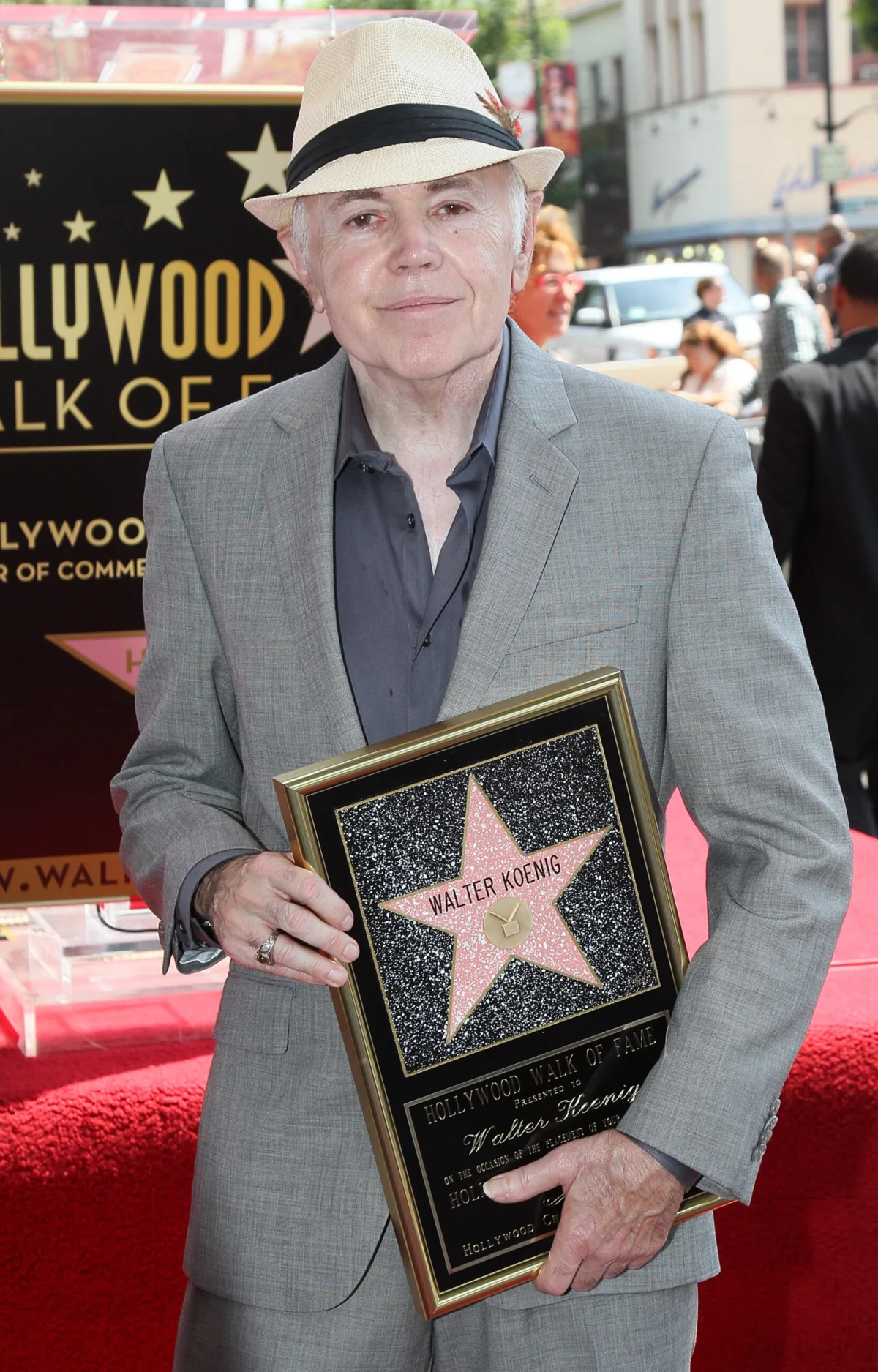
Walter Koenig, the versatile actor, writer, and director whose career spanned over six decades of science fiction history and stage performance, has passed away in Los Angeles at the age of 90. While he is immortalized in the cultural consciousness as the navigation officer Pavel Chekov in the original Star Trek series and its subsequent film franchise, Koenig’s legacy is far broader than the bridge of the U.S.S. Enterprise. He was a man of letters, a dedicated theater practitioner, and a teacher who left an indelible mark on the landscape of American entertainment.
The Iconic Navigator: A Legacy in Orbit
Koenig’s entry into the Star Trek universe in the series’ second season was a strategic move by creator Gene Roddenberry. Introduced in 1967 to appeal to the burgeoning teenage demographic, his character, Pavel Chekov, was crafted with a deliberate youthful arrogance. With a hairstyle famously modeled after Davy Jones of The Monkees, Chekov was designed to inject a sense of vitality and international flair into the crew.
Beyond his youthful charm, the character served a unique narrative purpose. As a Russian-born officer, Chekov was often used as a vehicle for lighthearted social commentary, frequently poking fun at the Cold War-era Soviet tendency to claim that every major human invention originated in Russia. Despite the character’s popularity, budgetary constraints famously excluded Chekov from Star Trek: The Animated Series in the 1970s. However, demonstrating his commitment to the franchise, Koenig pivoted from in front of the camera to behind the typewriter, penning the episode "The Infinite Vulcan," showcasing his creative versatility.
Perhaps his most significant contribution to the film series came in 1982’s Star Trek II: The Wrath of Khan. Widely regarded by critics and fans alike as the pinnacle of the franchise, the film placed Koenig’s Chekov at the center of the narrative’s emotional stakes, granting the actor some of his most profound and enduring screen time.
Chronology: From Chicago to the Final Frontier
Born Walter Marvin Koenig in Chicago, Illinois, to a family of Russian Jewish heritage (originally named Koenigsberg), his journey to Hollywood was unconventional. After attending the prestigious Fieldston High School in New York—where his passion for the stage was first ignited—Koenig enrolled at Grinnell College in Iowa with intentions of pursuing a career in medicine.
His path shifted dramatically when he transferred to UCLA, graduating with a degree in psychology. It was a pivotal conversation with a professor that redirected his focus toward the performing arts. He enrolled at the Neighborhood Playhouse in New York, joining a class of future titans including Christopher Lloyd, James Caan, and Dabney Coleman. This period was foundational; decades later, he would find himself reunited on screen with Lloyd, who played the villainous Klingon Commander Kruge in Star Trek III: The Search for Spock.
His screen debut came in 1962 with an uncredited role in the series Combat!, followed by a steady stream of appearances in iconic television programs such as The Untouchables, General Hospital, and The Alfred Hitchcock Hour. Following the cancellation of the original Star Trek in 1969, Koenig maintained a working actor’s life, appearing in Columbo—in an episode featuring William Shatner—and the low-budget film Nightmare Honeymoon.
A Career Beyond the Enterprise
Koenig’s artistic footprint extended far beyond the science fiction genre. In the 1990s, he became a central figure in the Babylon 5 universe, portraying the menacing Psi Cop Alfred Bester. The role allowed Koenig to lean into his dramatic range, portraying a villain that fans loved to hate. His association with the show lasted from 1994 to 1998, spanning 12 episodes and cementing his status as a sci-fi icon.
Throughout the 1980s and 90s, Koenig’s career remained eclectic. He starred in the 1983 TV adaptation of Antony & Cleopatra alongside Nichelle Nichols and James Avery. He also ventured into independent filmmaking, starring in the sci-fi cult classics Moontrap (1989) and Deadly Weapon (1989), as well as the martial arts film Sworn to Justice (1996).
His intellectual curiosity drove him to write and perform his own one-character film, You’re Never Alone When You’re a Schizophrenic, which was honored with a screening at the 1996 New York Film Festival. His literary output was equally prolific; he penned memoirs such as Chekov’s Enterprise (1980) and Warped Factors: A Neurotic’s Guide to the Universe (1998). He also authored the sci-fi legal thriller InAlienable (2008), proving his ability to bridge the gap between actor and auteur.
Theater, Pedagogy, and Personal Growth
For three decades, the stage was Koenig’s sanctuary. He directed a wide array of productions, from the intensity of Twelve Angry Men to the surrealism of America Hurrah!. His commitment to the craft of acting went beyond his own performances; he became a dedicated educator, teaching acting classes at UCLA and Actors Alley, passing down the techniques he had refined since his days at the Neighborhood Playhouse.
His personal life was marked by deep professional and private connections. While early years on the set of Star Trek saw friction between Koenig and George Takei, the two eventually developed a profound and lasting friendship. Their bond became a symbol of the enduring nature of the Star Trek family; in 2008, Koenig served as the best man at Takei’s wedding to Brad Altman.
Koenig’s life also contained profound tragedy. He was a devoted father to his daughter, the actress-writer Danielle Koenig, and his son, the actor and editor Andrew Koenig, who passed away in 2010.
The Industry Remembers
The reaction to Koenig’s passing has been one of immense sorrow across the entertainment industry. Colleagues have noted not only his talent but his sharp intellect and wit. As a man who saw the rise of modern science fiction from its humble television origins to a multi-billion-dollar global phenomenon, Koenig remained a constant, grounding presence.
His influence was perhaps most poignantly noted in the modern Star Trek reboots, where the character of Chekov was revived by the late Anton Yelchin. Koenig’s approval and support of the new generation of actors demonstrated his grace and his understanding that the stories he helped pioneer were larger than any one individual.
Implications for the Science Fiction Genre
Walter Koenig’s passing marks the end of an era for the original Star Trek cast. As these pioneers of the final frontier depart, the genre they helped build continues to evolve, yet it rests on the foundation they established in the 1960s. Koenig’s career trajectory—moving from a high-concept TV role to writing, directing, and teaching—provides a blueprint for the modern "multi-hyphenate" actor.
He proved that being "typecast" in a major role was not a limitation but a platform. By engaging with fan culture, writing memoirs that demystified the industry, and consistently reinventing himself through theater and independent film, Koenig avoided the trap of nostalgia. He lived a life of constant creative inquiry.
Whether through his role as the earnest, accented navigator, the chillingly calculated Psi Cop, or the dedicated teacher in an LA studio, Walter Koenig leaves behind a body of work that is as diverse as it is influential. His contributions have been etched into the history of American television, and for generations of fans, he will always be remembered as a pioneer who helped us look toward the stars.
"I have been and always shall be your friend," the sentiment often associated with the Star Trek community, rings true for the man who brought Pavel Chekov to life. Walter Koenig was, above all, a storyteller, and while his final chapter has closed, his contributions to the human imagination remain as infinite as the space he once navigated.
 Lina Hope
 Muslim
 Iffa Jayyana
