
 By Reynand Wu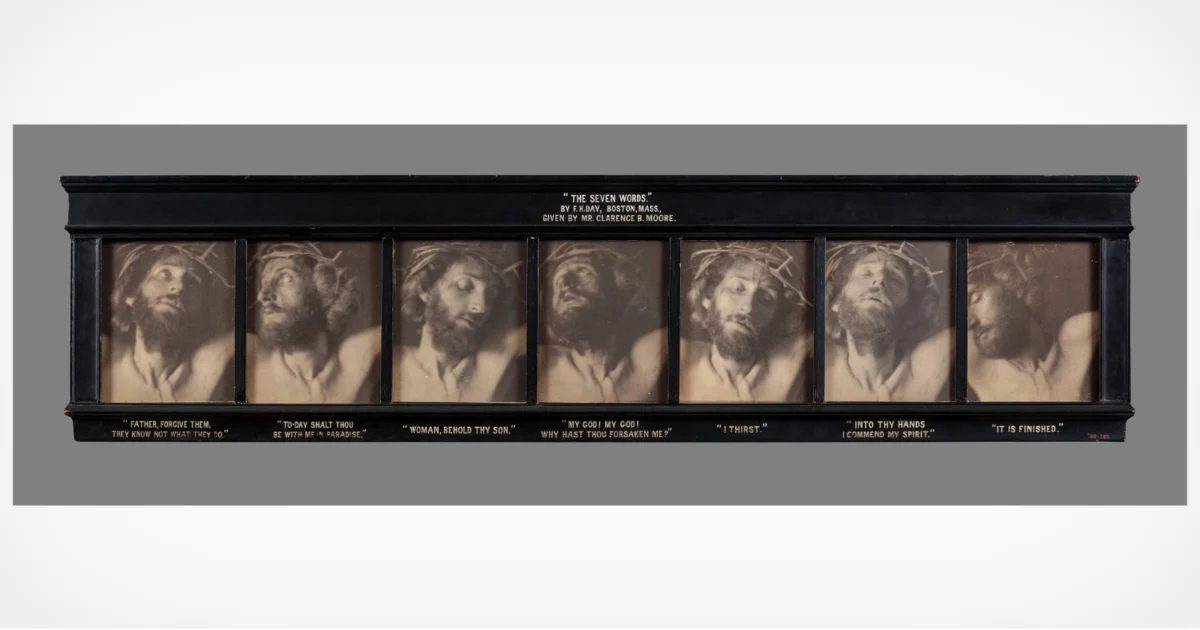
In a major acquisition that has sent ripples through the art historical community, the Toledo Museum of Art (TMA) in Ohio has announced the purchase of The Seven Words (1898), a landmark multi-part photographic series by pioneering American artist F. Holland Day. Hailed by museum leadership as one of the most important yet widely underrecognized photographic works in history, the piece bridges the gap between 19th-century pictorialism, modern performance art, and early cinematic storytelling.
Representing the single most expensive photographic acquisition in the museum’s history and the first work by Day to enter its permanent collection, the piece underscores a renewed institutional focus on celebrating radical, early experiments in the medium. The acquisition was first detailed in a report by The Art Newspaper.
Main Facts
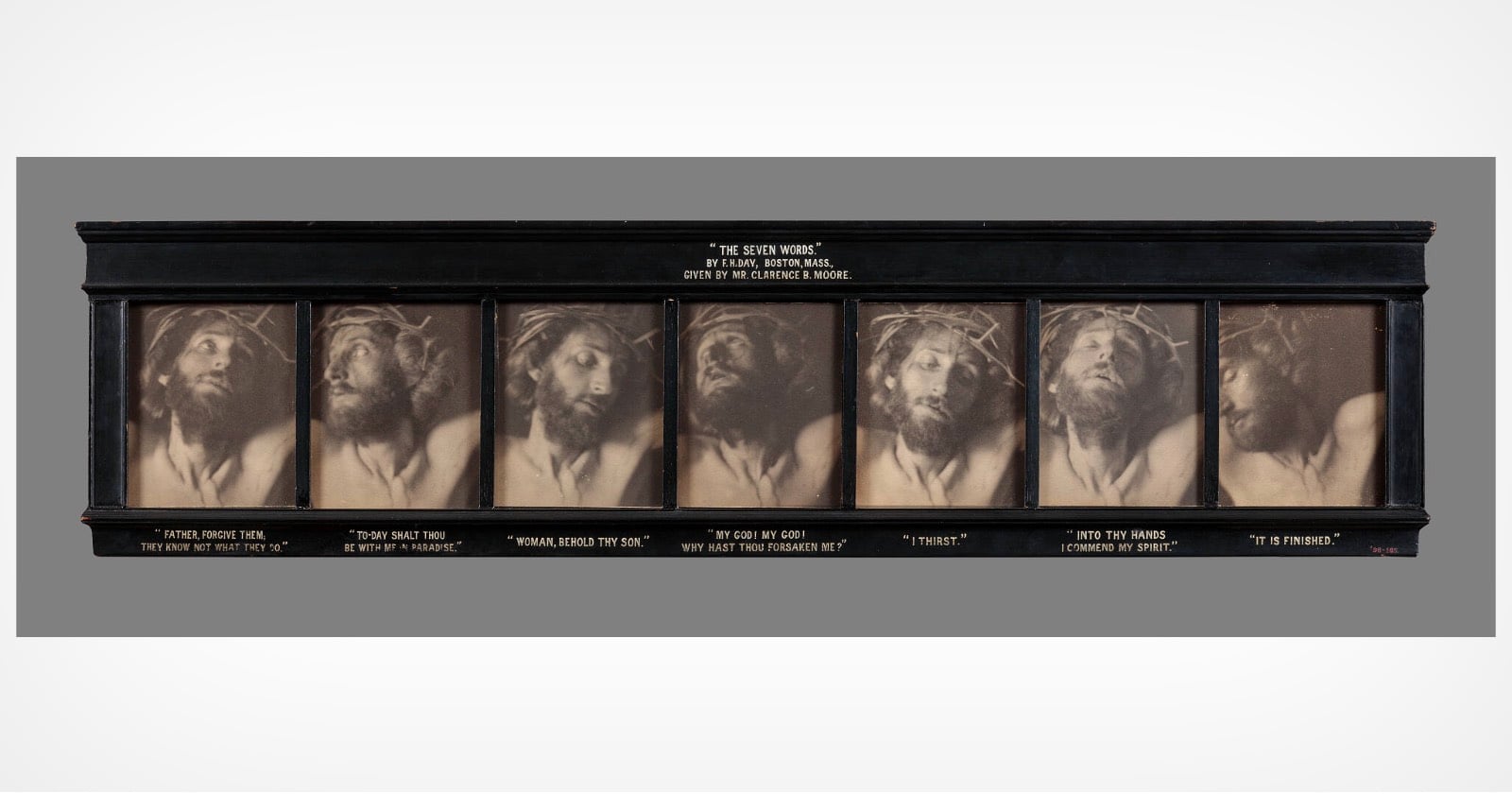
- The Artwork: The Seven Words (1898) by F. Holland Day (1864–1933) is a series of seven meticulously composed, close-up platinum prints depicting Jesus Christ in his final moments on the cross.
- The Creator: Fred Holland Day was a passionate champion of photography as an independent fine art—equal in merit to painting and sculpture—though his legacy was largely overshadowed by his contemporary and rival, Alfred Stieglitz.
- Rarity: Only three known original sets of The Seven Words exist in the world. The other two reside in prestigious institutions: the Metropolitan Museum of Art in New York and the Museum of Fine Arts, Boston.
- The Buyer: The Toledo Museum of Art, which has secured the piece for an undisclosed record-setting sum for its photography collection.
- Public Debut: The artwork is scheduled to go on public display next year as part of the museum’s grand reopening following a comprehensive reinstallation of its permanent collection galleries.
Chronology: The Making of a Controversial Masterpiece
To understand the weight of The Seven Words, one must look back to the turn of the 20th century, a time when photography was still fighting for cultural legitimacy as a creative medium rather than a purely mechanical tool for documentation.
1896–1898: The Transformation
Between 1896 and 1898, F. Holland Day became fixated on religious iconography, specifically the Passion of Christ. Seeking unprecedented levels of authenticity, Day underwent a profound physical transformation. He grew his hair and beard out and subjected himself to strict fasting to emulate the physical toll of crucifixion.
With the assistance of local townspeople in rural Massachusetts, Day orchestrated elaborate, outdoor reenactments of the Crucifixion. He meticulously sourced authentic props, designed historical costumes, and engineered a custom mirror attachment for his large-format camera. This apparatus allowed him to frame, focus, and adjust his own posture while simultaneously acting as the central subject.
According to TMA curator of American art Erin Corrales-Diaz, Day’s ambition knew no bounds. He produced roughly 250 glass-plate studies for the project, of which only a dozen achieved the aesthetic and technical perfection he demanded.
1898: Public Debut and Backlash
The completed series debuted at the inaugural Philadelphia Photographic Salon in 1898, hosted at the Pennsylvania Academy of the Fine Arts. The reaction was immediate and polarized. While avant-garde critics recognized the technical brilliance of the prints, conservative audiences and traditionalists were deeply unsettled by the blending of sacred religious themes with the emerging, untested medium of photography.
20nd-Century Obscurity
Despite his early prominence, Day’s reputation faded from the public consciousness over the decades. His intense, theatrical, and deeply personal style clashed with the prevailing modernist aesthetics championed by Alfred Stieglitz, who successfully steered the narrative of American photography toward straight, unmanipulated imagery and urban abstraction. Consequently, Day slipped into relative obscurity, making the Toledo Museum of Art’s recent acquisition a vital act of historical reclamation.
Supporting Data and Technical Brilliance
The artistic mastery of The Seven Words lies in its execution through the platinum printing process, a technique prized by pictorialist photographers for its rich tonal range, luminosity, and archival permanence.
- The Platinum Aesthetic: Platinum prints do not sit on top of the paper like modern silver gelatin prints; instead, the sensitive metals sink directly into the fibers of the paper. This creates velvety, deep blacks and delicate, luminous highlights that mimic the texture of charcoal drawings or fine etchings.
- Scale and Scope: The framed series consists of seven distinct photographs, each accompanied by a corresponding biblical quote referencing the final phrases spoken by Jesus on the cross.
- Institutional Rarity: With only three complete original sets known to survive globally—shared between TMA, the Met, and the MFA Boston—the acquisition places the Toledo Museum of Art in an elite tier of American institutions preserving the foundations of photographic art history.
Official Responses and Museum Perspectives
The acquisition has generated immense excitement among curators and administrators at the Toledo Museum of Art, who view the piece as a cornerstone for future educational and cultural programming.
Adam M. Levine, the director of the Toledo Museum of Art, did not mince words when discussing the cultural significance of the acquisition with The Art Newspaper.
“This is the most important photograph that people don’t know about,” Levine stated. “We can situate it with performance art, and it’s a work that anticipates what will happen with cinema.”
Levine also emphasized the sheer visual trickery of the platinum prints upon first glance:
“When you see it for the first time, you can’t believe it’s a photograph. You think it’s charcoal with those deep blacks. It’s exquisite as a work of both photography and performance.”
Erin Corrales-Diaz, TMA’s curator of American art, reflected on how the piece challenges modern assumptions about the medium:
“Today, we’re so inundated with photography that we forget its original exploratory nature. If sculpture and painting could depict religious subjects, why not photography? Day made 250 plate studies for The Seven Words, only a dozen of which were successful. It’s one of the most ambitious, radical, and beautiful projects.”
Implications for Art History and the Toledo Museum of Art
The integration of The Seven Words into the Toledo Museum of Art’s collection carries several profound implications:
1. Rewriting the Narrative of Early Photography
For decades, mainstream histories of American photography have leaned heavily on the lineage of Alfred Stieglitz, Edward Steichen, and the Photo-Secession movement. By centering F. Holland Day through such a high-profile acquisition, TMA is actively helping to rewrite and expand the historical canon. It reminds scholars and the public alike that the path toward fine art photography was paved by multiple, competing visions—some of which embraced theatricality, performance, and spiritual risk far ahead of their time.
2. Redefining Performance Art and Cinema Roots
By casting himself as Jesus and using the camera to document a self-directed, live-action historical reenactment, Day bypassed the traditional boundaries of studio portraiture. Art historians are increasingly recognizing works like The Seven Words as distant ancestors of 20th-century body art, performance art (such as the works of Cindy Sherman or Marina Abramović), and early narrative filmmaking.
3. Elevating TMA’s Profile in Photography
While the museum already boasts an impressive collection of European and American paintings and sculptures, its holdings in early photography required strategic enhancement. By investing heavily in one of the most sought-after and historically significant photographic series of the 19th century, the Toledo Museum of Art has signaled its ambition to become a premier destination for photography enthusiasts worldwide.
When the museum flings open its doors next year following its sweeping gallery reinstallation, visitors will have a rare opportunity to stand before The Seven Words. In doing so, they will bear witness not just to the suffering of a crucified figure, but to the tireless, radical crusade of an artist who dared to ask what a camera could truly achieve.
 Iffa Jayyana
  Asep Darmawan
  Ali Ikhwan