
 By Ammar Sabilarrohman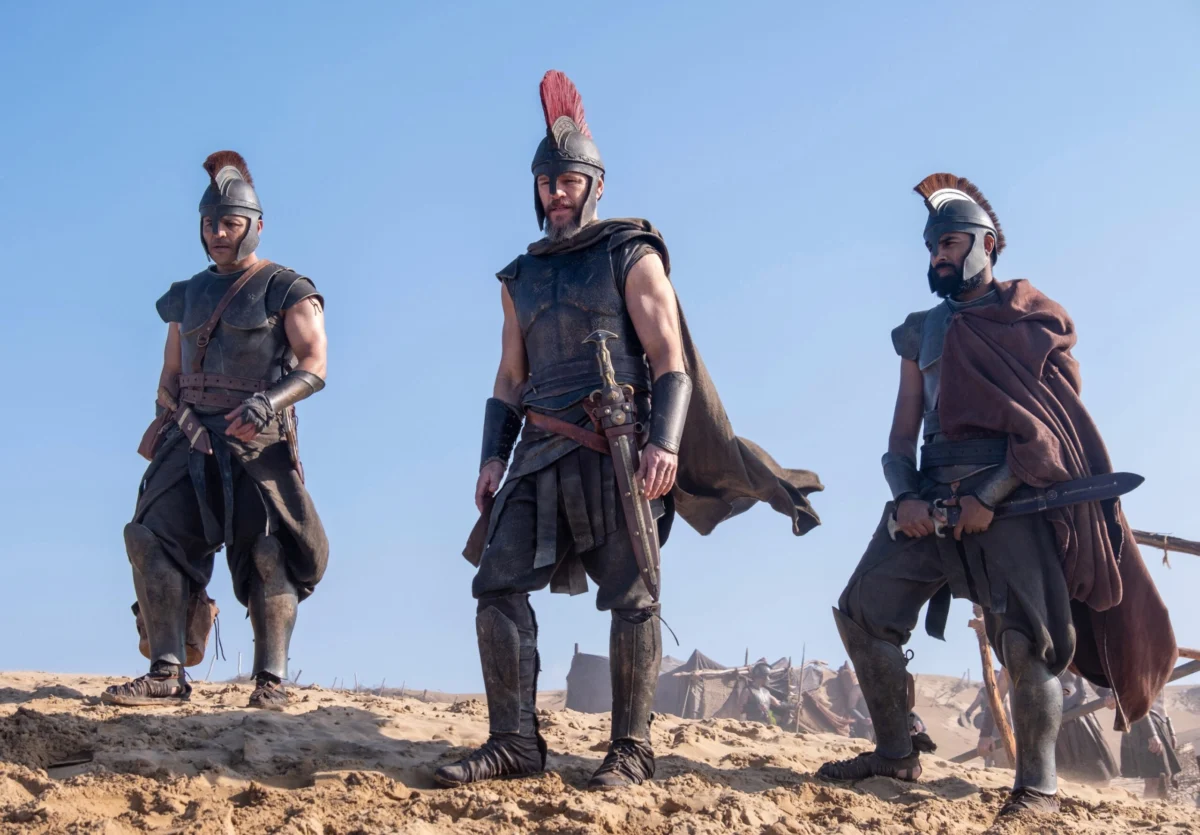
In a cinematic landscape often dominated by established intellectual property, superhero franchises, and lighthearted animation, Christopher Nolan has once again defied the odds—and the conventional wisdom of Hollywood. His latest magnum opus, The Odyssey, has stormed into theaters, generating a staggering $264.1 million in its global opening weekend.
The figure, which comprises $139.6 million from international territories and $124.5 million domestically, marks a historic milestone for an R-rated, three-hour epic that relies on the weight of ancient history rather than the cachet of a modern cinematic universe. By adapting Homer’s 3,000-year-old poem, Nolan has proven that the "event film" is not dead; rather, it has simply been waiting for a visionary capable of translating the scale of the gods into the language of the modern box office.
The Anatomy of an Epic Debut
The financial success of The Odyssey is particularly striking when analyzed against the current climate of the film industry. In an era where audiences are frequently criticized for their perceived short attention spans, a three-hour runtime—coupled with an R-rating—would typically be viewed as a commercial gamble. However, the film has bypassed these barriers with ease.
This triumph is inextricably linked to the "Nolan Brand." Following the massive cultural and financial success of 2023’s Oppenheimer, which not only dominated the global box office but also secured the Academy Award for Best Picture, Nolan has transitioned from a highly respected director to a household name. Audiences are no longer just going to see a movie; they are going to participate in a "Nolan event."
By the Numbers: How the Records Fell
The Odyssey has officially claimed the title of the biggest worldwide opening in Christopher Nolan’s storied career. It outperformed previous heavy hitters like 2012’s The Dark Knight Rises ($249 million) and 2009’s The Dark Knight ($198 million). While critics note that these figures have not been adjusted for inflation, the sheer raw power of the opening weekend performance remains an outlier in contemporary cinema.
To place this in context, the film stands as the third-highest-grossing global debut of the year, trailing only the animation juggernauts The Super Mario Galaxy Movie ($372.5 million) and Toy Story 5 ($312 million). The fact that a serious, R-rated period epic is sitting comfortably alongside multi-billion-dollar family franchises underscores the unique pull of Nolan’s directorial vision.
A Cinematic Odyssey: From Ithaca to the Multiplex
The production of The Odyssey was as ambitious as the source material itself. Written and directed by Nolan, the film features an ensemble cast that reads like a who’s who of A-list talent. Matt Damon leads the production as Odysseus, the weary King of Ithaca, navigating the treacherous waters of the Mediterranean—and the wrath of the gods—in his desperate bid to return home following the Trojan War.
Surrounding Damon is a powerhouse supporting cast, including Tom Holland, Anne Hathaway, Robert Pattinson, Lupita Nyong’o, Zendaya, Charlize Theron, Elliot Page, Jon Bernthal, and John Leguizamo. This blend of seasoned veteran actors and contemporary superstars has helped drive broad demographic appeal, bridging the gap between generations of cinema-goers.
Chronology of the Global Rollout
The film’s international performance has been nothing short of extraordinary. Opening in 73 territories, The Odyssey dominated markets that have long been considered bastions of high-quality cinema.
- United Kingdom and Ireland: $17.4 million
- France: $13.7 million
- Italy: $11.5 million
Across 48 of these territories, the film set a new personal record for Nolan, and for Universal Pictures, it stands as their largest debut in 11 markets. Notably, the film has yet to be released in several major territories, including South Korea, China, and Japan, suggesting that the final global tally could reach historic heights as the "Odyssey" continues its global journey.
The Imax Factor: A New Standard for Premium Viewing
Perhaps the most significant technical achievement behind the film’s success is its production design. The Odyssey holds the distinction of being the first feature film shot entirely with IMAX cameras. This commitment to the medium has paid off handsomely, with premium large-format screens contributing a disproportionate share of the opening weekend revenue.
The film earned $22.2 million internationally and $51.8 million globally from IMAX screens alone—a staggering 23% of total revenue. These figures represent the company’s biggest opening in like-for-like markets, even eclipsing the previous record-holder, Avengers: Endgame. Furthermore, the film is pacing 47% ahead of Oppenheimer, which itself was a massive driver for the premium format.
Richard Gelfond, CEO of IMAX, did not mince words regarding the film’s impact on the industry. "If you don’t see The Odyssey in IMAX, you aren’t seeing it in the way that Chris Nolan intended," Gelfond stated. He characterized the weekend as a "transcendent moment" for the company, predicting that the success of the film would serve as a catalyst for future infrastructure expansion, encouraging the opening of more IMAX theaters globally as audiences increasingly demand high-fidelity cinematic experiences.
Official Responses and Industry Implications
The reception from the industry has been one of awe, with executives at Universal Pictures highlighting the rare synergy between high-concept filmmaking and broad audience engagement.
Veronika Kwan Vandenberg, president of distribution for Universal Pictures International, emphasized the cultural weight of the project. "With The Odyssey, we had the extraordinary opportunity to unite moviegoers worldwide around a story that has resonated across cultures for centuries," she said. "Christopher Nolan’s passion, vision, and unique cinematic voice consistently drive anticipation and attendance on a truly global scale. He, alongside the force that is Emma Thomas, continues to set the standard for ambitious, event filmmaking."
Vandenberg’s sentiment highlights a shift in studio strategy. While many studios have pivoted toward streaming and mid-budget content, the success of The Odyssey proves that there is still a massive, hungry market for "event" cinema—films that require the collective experience of a crowded theater to be fully realized.
What Lies Ahead: The Long Tail of Success
As the film moves into its second and third weeks, the outlook remains overwhelmingly positive. Excellent word-of-mouth and glowing critical reviews suggest that The Odyssey will enjoy a long, sustained run in theaters. Unlike many blockbusters that experience a steep "drop-off" after their opening weekend, films of this caliber—especially those directed by Nolan—tend to exhibit "long legs," attracting repeat viewers and audiences who prefer to wait until the initial hype dies down.
The implications for the film industry are profound. The Odyssey has provided a roadmap for how to market "prestige" films as massive global tentpoles. It has demonstrated that if the scale is sufficient, the technical craft is visible, and the director has built a foundation of trust with the audience, even the most dauntingly long or complex stories can become cultural touchstones.
For now, the focus shifts to the upcoming releases in Asia. As the film prepares to enter the Chinese, South Korean, and Japanese markets, industry analysts are keeping a close eye on whether the film can maintain its current trajectory. If the global reception remains as warm as it has been in the West, The Odyssey will not only be remembered as a career-best for Christopher Nolan but as the film that recalibrated the expectations for what a modern, non-franchise blockbuster can achieve.
The king of Ithaca has finally come home to the big screen, and in doing so, he has reclaimed the cinema for the audience.
 Siti Muinah
  Layla Zulfa