
 By Evan Lee Salim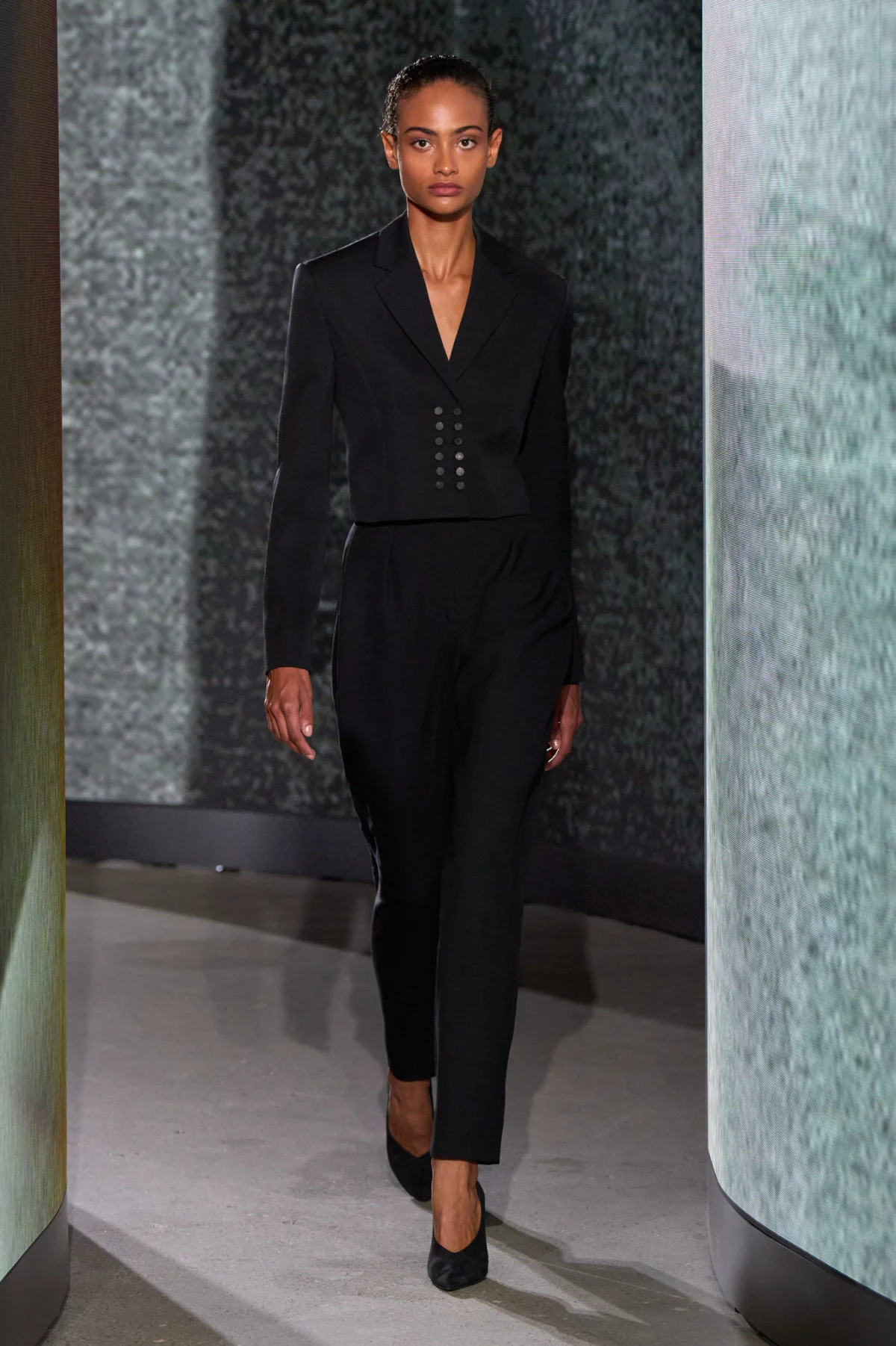
In the high-stakes theater of Paris Fashion Week, few brands occupy a space as sacred as Alaïa. Known for its rigorous technical precision and an almost architectural approach to the female form, the house recently found itself at a crossroads. Following the departure of creative director Pieter Mulier, the brand faced a pivotal question: how does a house built on the singular vision of its founder, Azzedine Alaïa, and recently revitalized by a high-profile successor, maintain its momentum during an interregnum?
The answer arrived this week at the old Fondation Cartier building on the Boulevard Raspail. Returning to the site of Mulier’s final showcase, the brand unveiled its latest collection with a deliberate, tempered grace, proving that the strength of the Alaïa atelier is, in itself, a formidable creative force.
The Chronology of Transition
The current chapter for Alaïa is defined by a strategic pause. Pieter Mulier, who had been instrumental in modernizing the brand’s aesthetic while honoring its heritage, concluded his tenure earlier this year, setting his sights on a high-profile move to Versace, where he is slated to make his debut early next year.
His departure left a vacuum that is often filled with frantic hiring or drastic rebranding in the luxury sector. Instead, the Richemont-owned house chose a path of "civilized transition." The runway show presented this week served as a bridge—a collection conceived not by a singular star designer, but by the collective heartbeat of the brand’s studio.
The show took place in the glass-walled Jean Nouvel-designed museum, a venue that has become synonymous with the brand’s recent history. As editors and industry insiders lined the perimeter, models navigated a labyrinth of curved walls adorned with abstract projections, creating an atmosphere of quiet introspection rather than the frenetic, high-octane energy of the previous season.
Anatomy of the Collection: A Study in Signature Silhouettes
While the show lacked the electric, headline-grabbing fervor of last March’s spectacle, the craftsmanship remained, as always, beyond reproach. The collection was a masterclass in "Alaïa-ness"—a shorthand for a specific kind of sculptural elegance that is instantly recognizable to the trained eye.
The hallmarks of the house were all present, though perhaps executed with a lighter, more delicate touch:
- The Spencer Jacket: Taut black jackets, characterized by their precision-engineered rows of tightly spaced buttons, anchored the formal wear. These pieces reminded the audience that at its core, Alaïa is a house of tailoring.
- The Skater Silhouette: The iconic leather skater skirt made a triumphant return, its pleats spiraling down the silhouette with the grace of a peeled apple. This movement, which mimics the fluidity of fabric in motion, remains one of the house’s most distinct contributions to contemporary fashion.
- Knitwear Evolution: The house’s legendary knit skater dresses were reintroduced in a palette of soft, optimistic hues, including a standout "butter yellow." These garments, which hug the body with a second-skin sensibility, highlighted the technical prowess of the knitwear studio.
However, the most intriguing elements were those that pushed the house’s established codes toward the avant-garde. A burgundy leather dressmaker coat featured a pin-tucked midriff, subtly integrated into a built-in bustier. This demonstrated a move toward "hidden" structure—the garment appearing effortless while relying on complex internal support.
The most innovative designs, arguably, were the jersey dresses and skirts that featured draped, rolled fabric at the hips. By hiking the jersey upward to create the illusion of panniers and incorporating generous, vertical slits, the design team introduced a structural volume that felt both historical and futuristic. It was a bold reinterpretation of the house’s archives, suggesting that even without a singular creative director, the brand is unafraid to experiment with silhouette.
Supporting Data: The Talent Behind the Curtain
The success of this collection is a testament to the internal architecture of the Richemont-owned house. Rather than rushing to name a successor, Alaïa is leaning heavily on its formidable atelier—a group of artisans and technicians who have worked with the house for years, some during the founder’s lifetime.
Central to this effort is the studio director, Boaz Eli. Having joined the house in January 2024, Eli brings an impressive pedigree, with previous roles at Acne Studios, Loewe, and Burberry. His presence provides a crucial link between the brand’s heritage and the contemporary demands of the market. Eli’s leadership, combined with the veteran talent in the atelier, underscores a philosophy of continuity. The house is treating this period not as a void, but as a period of consolidation, where the focus remains entirely on the garment rather than the personality of the designer.
Official Responses and Industry Context
The atmosphere in Paris this season has been thick with speculation. As major houses shift their creative leadership, the industry is hyper-aware of the volatility that follows a high-profile exit. Against this backdrop, Alaïa’s "low-key" approach was perceived as a calculated, and perhaps necessary, move.
Representatives for the brand have maintained that the house is taking its time to decide on its next creative configuration. This measured approach has earned praise from industry observers who argue that the brand’s identity is strong enough to survive a transition period. By refusing to bow to the pressure of the "star designer" industrial complex, Alaïa is reinforcing its status as a house that prioritizes the longevity of its craft over the ephemeral nature of viral marketing.
Implications for the Future of Alaïa
What does this mean for the future of the brand?
First, it signals a return to the brand’s roots as a "couturier’s couturier." By allowing the studio to lead, the brand is reaffirming that the design language established by Azzedine Alaïa is a living, breathing entity that can be interpreted by a team as well as a visionary.
Second, the collection provides a roadmap for how luxury houses can navigate the modern era of constant change. By embracing the transition rather than obscuring it, Alaïa has managed to maintain its integrity. The "civilized" nature of the show was a reminder that fashion, at its highest level, is a craft-based discipline.
As the industry looks toward the next season, the question of a new creative director will inevitably persist. However, this collection has provided a compelling answer to the current state of affairs: the house of Alaïa is in capable hands. Whether or not the brand decides to hire a new high-profile designer, it has proven that its true power lies in its archives, its atelier, and its unwavering commitment to the body.
In a world where fashion is increasingly focused on the "new," Alaïa’s commitment to the "true" offers a refreshing contrast. The brand has successfully navigated the post-Mulier transition by doing what it does best: focusing on the silhouette, respecting the technical constraints of the fabric, and letting the work speak for itself.
For the time being, the house of Alaïa remains a bastion of poise, elegance, and technical excellence—a house that knows exactly who it is, regardless of who sits in the creative director’s chair. As the season progresses, the industry will continue to watch, but for now, the message is clear: the atelier is thriving, the heritage is safe, and the future is being built, stitch by deliberate stitch.
 Nana
Nana  Siti Muinah
  Nila Kartika Wati