
 By Reynand Wu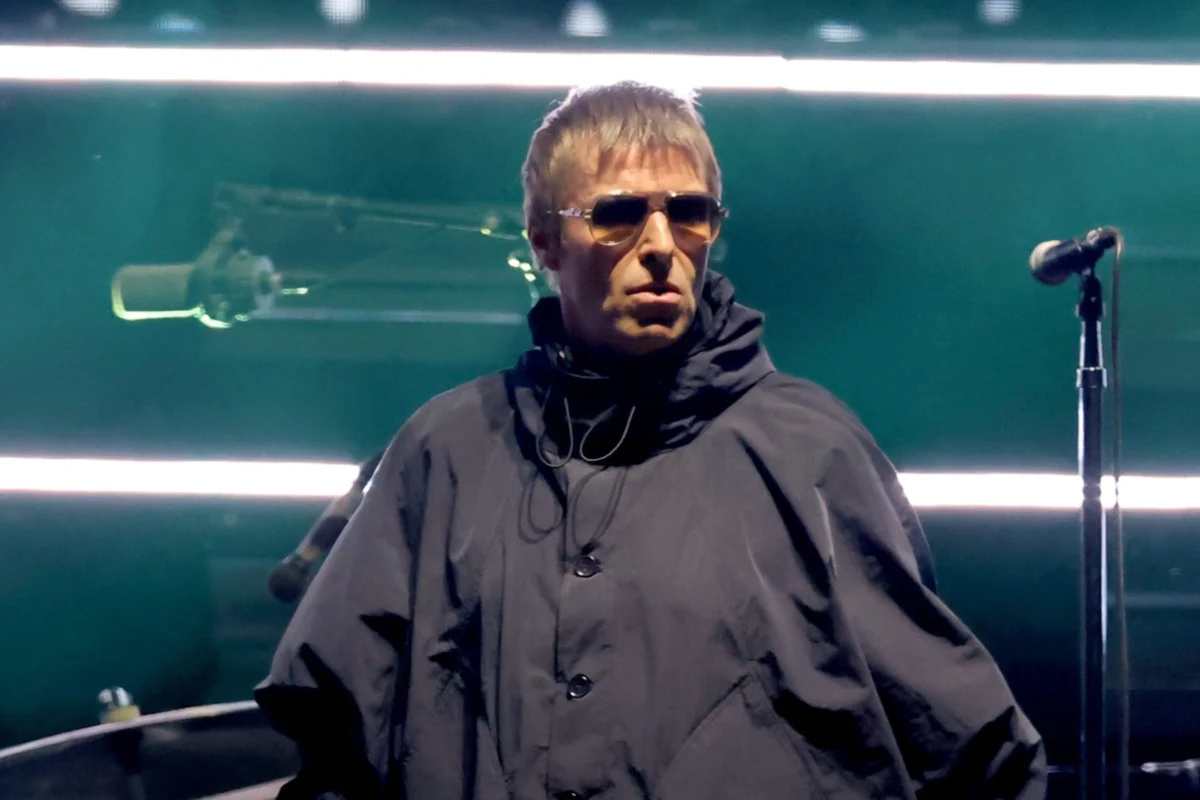
The landscape of international football underwent a seismic shift on July 19, 2026, as the FIFA World Cup final at the New York New Jersey Stadium in East Rutherford, New Jersey, transcended the boundaries of sport. For the first time in the history of the tournament, FIFA integrated a full-scale, star-studded halftime show, signaling a deliberate move toward the high-octane, entertainment-centric model popularized by the American Super Bowl. While the spectacle was designed to capture the global zeitgeist, it proved to be a polarizing affair, drawing both immense technical praise and biting criticism—most notably from rock icon Liam Gallagher.
The Spectacle: A Global Fusion of Sound and Vision
Curated by Coldplay frontman Chris Martin, the 11-and-a-half-minute production was an ambitious attempt to synthesize diverse musical genres into a cohesive narrative of global unity. The performance opened with a high-energy rendition of "Music" by Madonna, instantly establishing a high production value that bridged the gap between legacy pop stardom and modern international appeal.
The transition from the opening number led into a fast-paced medley representing the diverse cultural footprint of the participating musical acts. BTS took the stage to deliver a precision-choreographed performance of their global hit "Dynamite," followed by Justin Bieber, who offered a stark, intimate contrast with an acoustic performance of his track "Everything Hallelujah."
The emotional center of the performance featured Shakira and Burna Boy, who united to perform "Dai Dai," the official anthem of the 2026 World Cup and a current titan on the Billboard Global 200 chart. The musical scope expanded further as Gustavo Dudamel, the world-renowned conductor, led musicians from the New York Philharmonic and the Simón Bolívar Symphony Orchestra of Venezuela in a sweeping, orchestral reimagining of The White Stripes’ "Seven Nation Army"—a song that has become an unofficial anthem for football fans worldwide.
The grand finale saw the return of the various headliners alongside the PS22 Chorus, Kermit the Frog, and Miss Piggy, culminating in a sprawling formation of the word "LOVE" on the pitch, punctuated by an elaborate fireworks display that illuminated the New Jersey skyline.
The "Bad Trip": Liam Gallagher’s Blunt Critique
While the broadcast reached millions, not every viewer was captivated by the transition of the "Beautiful Game" into a pop concert. Oasis frontman Liam Gallagher, never one to mince words, took to X (formerly Twitter) in real-time to express his profound distaste for the halftime production.
"This is like a bad trip," Gallagher posted, his critique quickly gaining traction among his millions of followers. As the segment continued, he doubled down on his sentiment, adding, "It’s a good job I’ve got my spiritual socks on or that halftime entertainment could have tipped me over the edge."
Gallagher’s comments highlight a growing tension within the sports community regarding the "Americanization" of football. For many purists, the World Cup has traditionally been defined by the intensity of the match, the tactical struggle, and the organic chanting of fans. The introduction of an 11-minute scripted variety show is viewed by some as an intrusion that disrupts the emotional flow of the tournament’s most critical moment.
Chronology of a Cultural Pivot
The decision to implement a halftime show was the culmination of months of speculation and a strategic shift by FIFA’s marketing department.
- Pre-Tournament Planning: FIFA officials indicated early in 2026 that they intended to elevate the final match into a "super-event" that could compete with the world’s most-watched television broadcasts.
- The Announcement: Following weeks of rumors involving major global artists, it was confirmed that Chris Martin would serve as the creative director for the inaugural performance.
- The July 19th Broadcast: During the Spain-Argentina final, the halftime break was extended beyond the standard 15 minutes to accommodate the technical requirements of the stage set-up and breakdown.
- The Performance: At approximately 45 minutes past the hour, the stage was deployed. The performance lasted 11 minutes and 30 seconds, utilizing advanced projection mapping and live orchestral accompaniment.
- Immediate Aftermath: Within minutes of the show ending, social media discourse was split between those celebrating the production value and those echoing Gallagher’s frustration.
Supporting Data: Why FIFA Chose the Super Bowl Model
FIFA’s decision to adopt the Super Bowl entertainment model is rooted in data regarding audience engagement and commercial revenue. Historically, the Super Bowl halftime show consistently attracts millions of viewers who may not be football fans but tune in specifically for the music, the commercials, and the cultural spectacle.
By integrating artists such as BTS, Madonna, and Shakira—who possess massive, dedicated fanbases across Asia, Europe, and the Americas—FIFA effectively diversified its demographic reach. Market analysts suggest that the inclusion of such a high-profile lineup can increase advertising rates for the second half of the broadcast by 15-20%, as the audience retention rate during the halftime interval is statistically higher when an entertainment spectacle is presented.
Furthermore, the choice of "Seven Nation Army" for the orchestral arrangement was a calculated move to capitalize on the song’s pre-existing association with football culture. By blending rock, pop, and classical elements, the producers sought to create a "greatest hits" experience that would appeal to the widest possible cross-section of the global population.
Implications for the Future of Football
The success or failure of the 2026 halftime show is not merely measured in views, but in how it alters the fundamental DNA of the World Cup. If the audience engagement metrics prove to be as high as FIFA anticipates, it is almost certain that the halftime show will become a permanent fixture in future tournaments.
However, the resistance—symbolized by Gallagher—poses a challenge for organizers. Football culture is deeply rooted in tradition and tribal identity. When a spectacle is perceived as "corporate" or "synthetic," it risks alienating the core fanbase that sustains the sport. The challenge for future FIFA organizers will be to find a balance between the commercial necessity of the spectacle and the organic, raw energy that makes the World Cup unique.
Furthermore, the logistical challenges presented by this year’s show cannot be ignored. Setting up and dismantling a massive stage on a grass pitch within a limited timeframe poses risks to the quality of the playing surface, which can directly affect the tactical execution of the second half of the match. FIFA will likely need to invest in advanced pitch-protection technology if this model is to be sustained in future iterations of the final.
Conclusion
The 2026 World Cup final will be remembered not only for the tactical battle between Spain and Argentina but also as the moment the tournament officially embraced the global entertainment industrial complex. Whether one views it as a "bad trip" or a masterful expansion of the sporting experience, the inaugural halftime show has irrevocably changed the scope of the event.
Liam Gallagher’s critique serves as a reminder that even in an age of globalized, high-budget entertainment, there remains a vocal constituency that values the sport for its simplicity and its purity. As FIFA moves forward, it must navigate the fine line between innovation and tradition, ensuring that while the world is entertained, the heart of the game remains untouched. For now, the experiment has been conducted, the fireworks have faded, and the debate over the future of football as a television spectacle has only just begun.
 Nana Wu
  Lina Irawan
  Lina Hope